Turbocompresseur russe FAW: 17 Des composants de précision pour une puissance arctique inégalée
Le Turbocompresseur russe FAW est la centrale à induction forcée du moteur CA3250P66K24L1TE5Z, conçu pour fournir des, air riche en oxygène pour une combustion même dans les endroits les plus fins, atmosphères les plus froides. Ce guide explore les circuits de lubrification critiques, architecture de montage, et protection thermique nécessaires pour maintenir la pression de suralimentation et la fiabilité dans la Fédération de Russie.
Turbocompresseur russe FAW
Le mécanisme de base: Ingénierie des turbines et gestion thermique
La pièce maîtresse du système à induction forcée est le Ensemble turbocompresseur (Partie no. 1118010-51W-C00). Au sein du Turbocompresseur russe FAW architecture, ce composant doit combler le fossé entre deux extrêmes thermiques: l'air ambiant glacial entrant dans le compresseur et les gaz d'échappement à 700°C entraînant la turbine. Le boîtier est moulé à partir d'alliages à haute teneur en nickel pour résister aux fissures thermiques lors des cycles de chauffage rapides caractéristiques des démarrages à froid en Russie..
Maintenir l'efficacité du Turbocompresseur russe FAW nécessite une gestion précise de la chaleur rayonnante. Le Bouclier thermique du turbocompresseur (Partie no. 1118031-51W) n'est pas une couverture cosmétique; c'est une barrière thermique critique. En contenant le rayonnement infrarouge émis par le carter de turbine, il protège les tuyaux en caoutchouc et les faisceaux électriques adjacents de la fonte.
En outre, ce bouclier aide à retenir l'énergie thermique dans le carter de la turbine lui-même. Dans le Turbocompresseur russe FAW système, la chaleur est égale à l'énergie; garder les gaz d'échappement chauds garantit qu'ils maintiennent une vitesse maximale pour entraîner la roue de la turbine. Cela se traduit par des temps de démarrage plus rapides et une réduction du décalage du turbo., ce qui est essentiel pour manœuvrer des camions à benne lourde dans la neige profonde ou dans la boue.
Alimentation haute pression: L'élément vital du roulement
L'arbre du Turbocompresseur russe FAW tourne à des vitesses dépassant 100,000 RPM, flottant sur un film microscopique d'huile. Cette huile est livrée via le Ensemble de tuyau d'entrée d'huile de turbocompresseur (Partie no. 1118060-74UN). Ce tuyau en acier est courbé avec précision pour contourner le collecteur d'échappement chaud sans le toucher., empêcher la cokéfaction de l'huile dans la conduite.
La connexion au boîtier central du turbo utilise un Boulon creux (Partie no. 1118071-53D), également connu sous le nom de boulon banjo. Ce boulon comporte des trous transversaux percés avec précision qui mesurent le débit d'huile. Dans le Turbocompresseur russe FAW conception, ces trous agissent comme un restricteur pour empêcher la surpression des joints de roulement, ce qui pourrait forcer l'huile dans le flux d'admission ou d'échappement.
L'étanchéité de ce raccord haute pression repose sur deux unités du Laveuse de scellage (Partie no. CQ72316). Ces rondelles d'écrasement, généralement en cuivre ou en aluminium, se déforme lors de l'application du couple pour créer un joint hermétique. La réutilisation de ces rondelles est l'une des principales causes d'incendies de moteur; une fuite projette ici de l'huile sous pression directement sur le carter chaud de la turbine du Turbocompresseur russe FAW.
A l'interface du bloc, le Joint – Bride d'entrée (Partie no. 1118063-D6) assure un approvisionnement sans fuite. Ce joint doit résister simultanément à une pression d'huile élevée et aux vibrations.. L'intégrité de la ligne d'approvisionnement n'est pas négociable; toute interruption du débit d'huile, même pour une seconde, provoquera le Turbocompresseur russe FAW les roulements se soudent instantanément à l'arbre.
Drainage par gravité: Assurer un retour fluide
Après avoir lubrifié les roulements, l'huile doit sortir rapidement du boîtier central par gravité. Le Ensemble de tuyau de retour d'huile de turbocompresseur (Partie no. 1118080-74UN) gère ce flux crucial. Dans le Turbocompresseur russe FAW système, ce tuyau a un grand diamètre pour éviter le refoulement d'huile. Si l'huile ne peut pas s'écouler assez rapidement, il inonde le boîtier de roulement et fuit au-delà des joints dynamiques, ce qui fait que le moteur brûle de l'huile et émet de la fumée bleue.
La connexion au turbocompresseur est sécurisée par le Plaque de presse – Tuyau de retour d'huile de turbocompresseur (Partie no. 1118083-81D). Cette lourde plaque d'acier répartit la force de serrage du Boulons à bride hexagonale (Partie no. Q1840816) uniformément sur toute la bride. Sans cette plaque, la fine bride du tuyau de retour se déformerait, entraînant des fuites dans Turbocompresseur russe FAW système de vidange.
L'étanchéité est assurée par le Joint – Tuyau de retour d'huile de turbocompresseur (Partie no. 1118094-29D) au sommet et le Joint torique pneumatique hydraulique en caoutchouc (Partie no. CQ7343236B) où le tuyau entre dans le bloc moteur. Ce joint torique est formulé à partir de Viton haute température pour résister au durcissement. Un joint torique défectueux permet à l'huile de s'écouler sur le côté du bloc., un problème courant chez les personnes âgées Turbocompresseur russe FAW installations si l’entretien est négligé.
Stabilité de montage: Crampons, Manches, et expansion
La connexion entre le turbocompresseur et le collecteur d'échappement est l'une des articulations les plus sollicitées du moteur.. Le Turbocompresseur russe FAW utilise quatre Goujons à double extrémité (Partie no. CQ1201025) à cet effet. Les goujons sont préférés aux boulons car ils permettent une application plus précise du couple et sont moins susceptibles de se gripper dans le moulage du collecteur..
Une caractéristique unique du Turbocompresseur russe FAW Le système de montage est l'utilisation du Manche – Turbocompresseur (Partie no. 1118014-53D). Ces douilles d'espacement sont placées sur les goujons. Ils agissent comme des tampons thermiques, permettant à l'ensemble de fixation de se dilater et de se contracter à un rythme différent de celui des brides en fonte. Cette élasticité empêche les crampons de se casser sous l'immense contrainte thermique d'un cycle de régénération ou d'une longue montée..
L'étanchéité entre le collecteur et le turbo est créée par le Joint de turbocompresseur (Partie no. 1118013A81D). Il s'agit d'un acier multicouche (MLS) joint capable de survivre à 800°C. Sécuriser l’ensemble de la pile est la Noix – Turbocompresseur (Partie no. 1118073-29D) unités. Ceux-ci sont généralement cuivrés ou fabriqués dans un alliage spécifique pour éviter le grippage, Assurer le Turbocompresseur russe FAW peut être entretenu à l'avenir sans couper les écrous.
Liste de répartition des composants
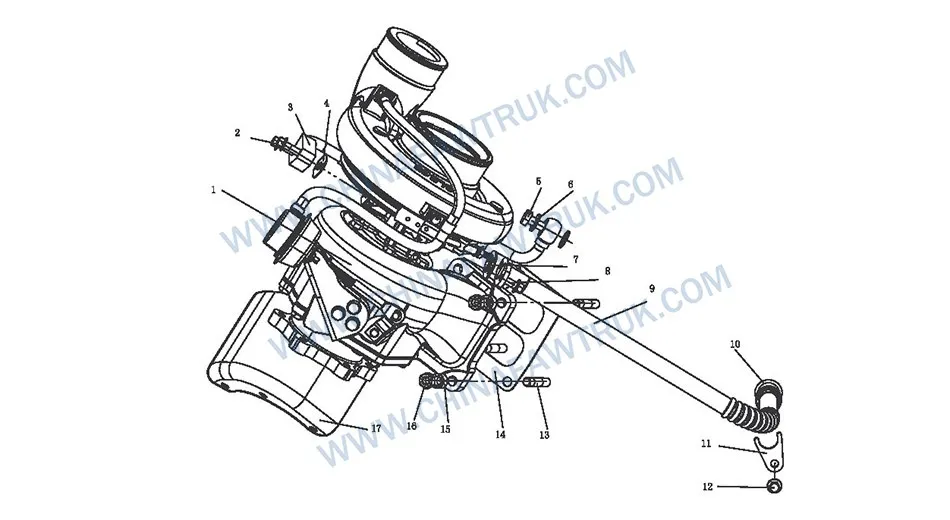
Le tableau suivant répertorie les composants spécifiques composant le Turbocompresseur russe FAW logique. Les gestionnaires de flotte doivent utiliser ces numéros de pièces exacts pour garantir les débits, tolérances thermiques, et le montage correspond à la spécification CA3250P66K24L1TE5Z.
| Non. |
Numéro de pièce |
Nom de la pièce |
Quantité |
| 1 |
1118010-51W-C00 |
Ensemble turbocompresseur (Modèle) |
1 |
| 2 |
Q1840830 |
Boulon de bride hexadécimal (Queue grossière/standard) |
2 |
| 3 |
1118060-74UN |
Ensemble de tuyau d'entrée d'huile de turbocompresseur |
1 |
| 4 |
1118063-D6 |
Joint – Bride d'entrée |
1 |
| 5 |
1118071-53D |
Boulon creux (Boulon de banjo) |
1 |
| 6 |
CQ72316 |
Laveuse de scellage |
2 |
| 7 |
1118094-29D |
Joint – Tuyau de retour d'huile de turbocompresseur |
1 |
| 8 |
Q1840816 |
Boulon de bride hexadécimal (Queue grossière/standard) |
2 |
| 9 |
1118080-74UN |
Ensemble de tuyau de retour d'huile de turbocompresseur |
1 |
| 10 |
CQ7343236B |
Joint torique pneumatique hydraulique en caoutchouc |
1 |
| 11 |
1118083-81D |
Plaque de presse – Tuyau de retour d'huile de turbocompresseur |
1 |
| 12 |
Q1840812 |
Boulon de bride hexadécimal (Queue grossière/standard) |
1 |
| 13 |
CQ1201025 |
Étalon à double extrémité |
4 |
| 14 |
1118013A81D |
Joint de turbocompresseur |
1 |
| 15 |
1118014-53D |
Manche – Turbocompresseur |
4 |
| 16 |
1118073-29D |
Noix – Turbocompresseur |
4 |
| 17 |
1118031-51W |
Bouclier thermique du turbocompresseur |
1 |
Protocoles de diagnostic pour améliorer la santé
Inspecter le Turbocompresseur russe FAW commence par des contrôles visuels des conduites de lubrification. Humidité d'huile autour du Boulon creux ou la bride du tuyau de retour indique un joint compromis. Dans l'hiver russe, ces fuites apparaissent souvent après le refroidissement du moteur et la contraction des composants. Il est essentiel de remédier immédiatement à ces fuites pour éviter une pénurie de pétrole ou un incendie..
Les diagnostics auditifs peuvent révéler des problèmes internes. Un sifflement aigu qui varie en fonction de la charge du moteur suggère une usure des roulements ou des dommages aux pales du compresseur.. Cela résulte souvent d'un débit d'huile restreint à travers le Ensemble de tuyau d'entrée d'huile de turbocompresseur. Vérifier régulièrement la conduite d'alimentation en huile pour déceler toute accumulation de boue est une mesure proactive qui peut sauver le turbo..
Enfin, vérifier l'intégrité du matériel de montage. Lâche Goujons à double extrémité ou des écrous peuvent provoquer des fuites d'échappement entre le collecteur et le turbo. Cela réduit la pression de suralimentation, conduisant à une faible puissance et à de la fumée noire. Si le Joint de turbocompresseur a explosé, il doit être remplacé avec de nouveaux écrous de blocage pour restaurer l’efficacité du système.
Conclusion: Puissance et fiabilité
Le Turbocompresseur russe FAW est un instrument de précision essentiel aux performances du camion-benne CA3250P66K24L1TE5Z. Il fournit la densité de l'air nécessaire pour une combustion efficace dans des environnements difficiles. Chaque composant, du thermique Manche au contrôle du pétrole Boulon de banjo, est conçu pour résister aux contraintes uniques des opérations dans l’Arctique.
Pour les propriétaires de flotte, maintenir cet assemblage avec des pièces d'origine est la clé pour maximiser la disponibilité. Les turbos ou joints génériques ne répondent souvent pas aux spécifications matérielles requises pour les cycles de températures extrêmes.. En investissant dans l'authentique Turbocompresseur russe FAW écosystème, vous vous assurez que votre flotte conserve sa puissance, efficacité, et fiabilité sur les routes les plus difficiles du monde.
Emballage et logistique
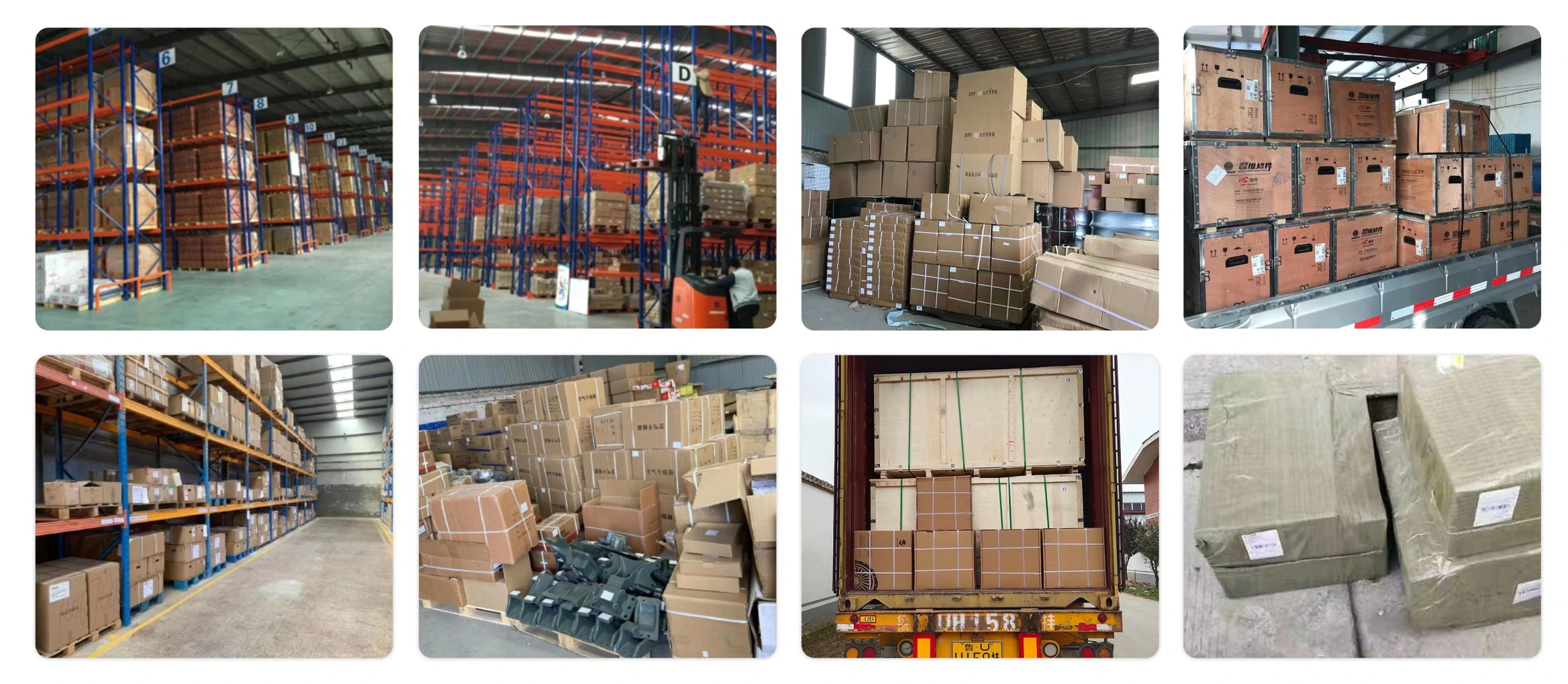
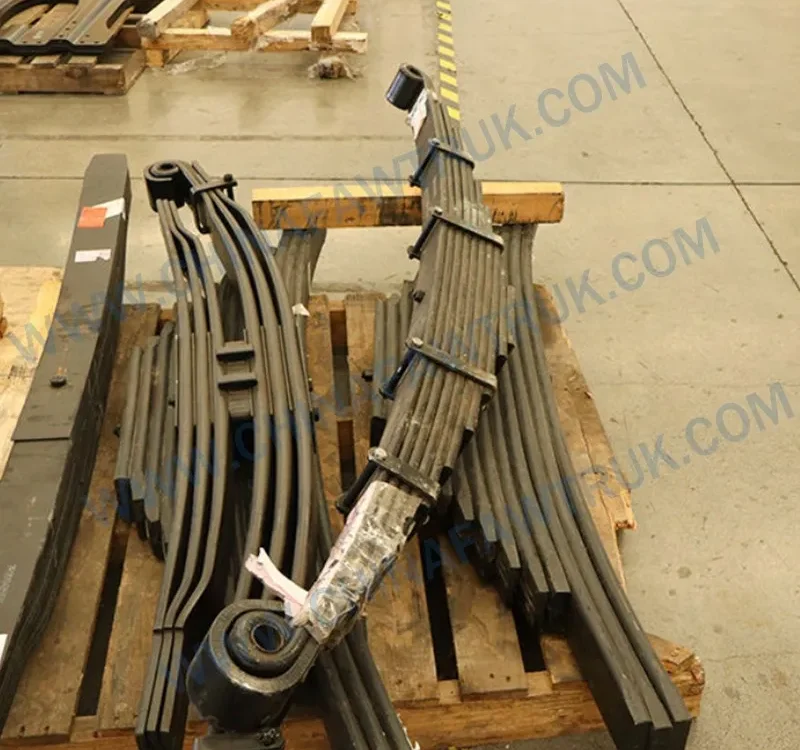
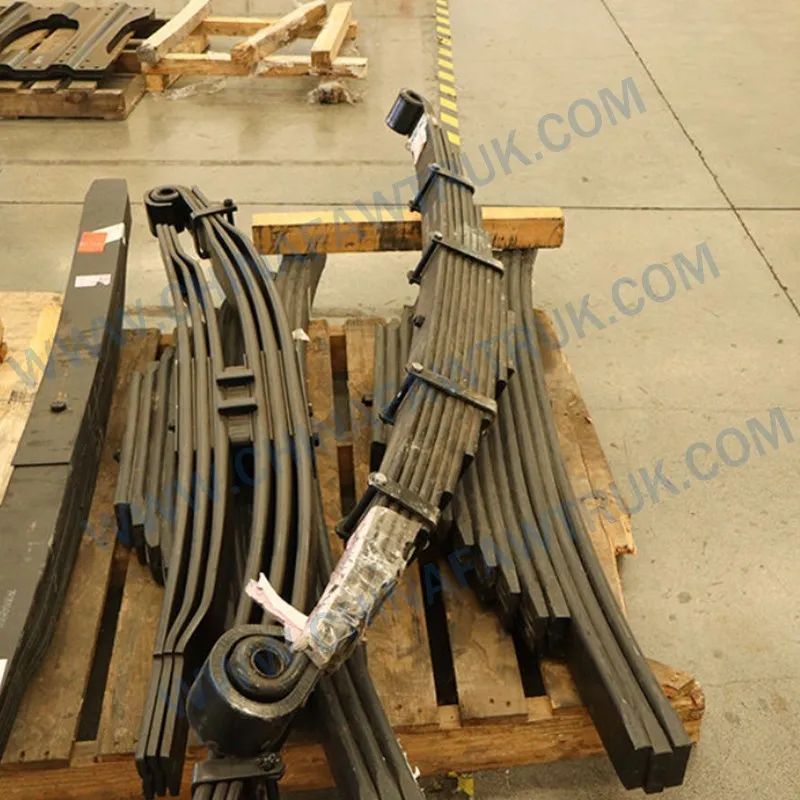
Pièces FAW, y compris l'ensemble bloc-cylindres, sont emballés avec soin pour garantir une livraison en toute sécurité. Chaque composant est sécurisé dans des matériaux de protection pour éviter tout dommage pendant le transport. Le réseau logistique garantit des expéditions ponctuelles dans le monde entier, soutenir des opérations de maintenance efficaces. Vous trouverez ci-dessous une image illustrant l'emballage standard des pièces de camion FAW., mettant en valeur l’attention portée aux détails dans la manipulation et le stockage.
Cette approche d'emballage minimise le risque de corrosion ou de dommages causés par les chocs., s'assurer que les pièces comme l'ensemble bloc-cylindres FAW arrivent en parfait état. Les clients peuvent compter sur la logistique de FAW pour une qualité et une fiabilité constantes.