Filtre fin à carburant russe FAW: 6 Composants de précision pour une pureté diesel imbattable
Le Filtre fin à carburant russe FAW est la défense ultime pour le système d’injection haute pression du camion-benne CA3250P66K24L1TE5Z. Conçu pour l'Arctique russe, cet ensemble sépare les contaminants microscopiques et l'eau du carburant diesel, prévention des pannes d'injecteur à -40°C. Ce guide décortique le noyau du filtre, assemblage de base, et architecture de montage requise pour un fonctionnement sans faille du moteur.

Filtre fin à carburant russe FAW
La technologie de base: Séparation des particules en plusieurs étapes
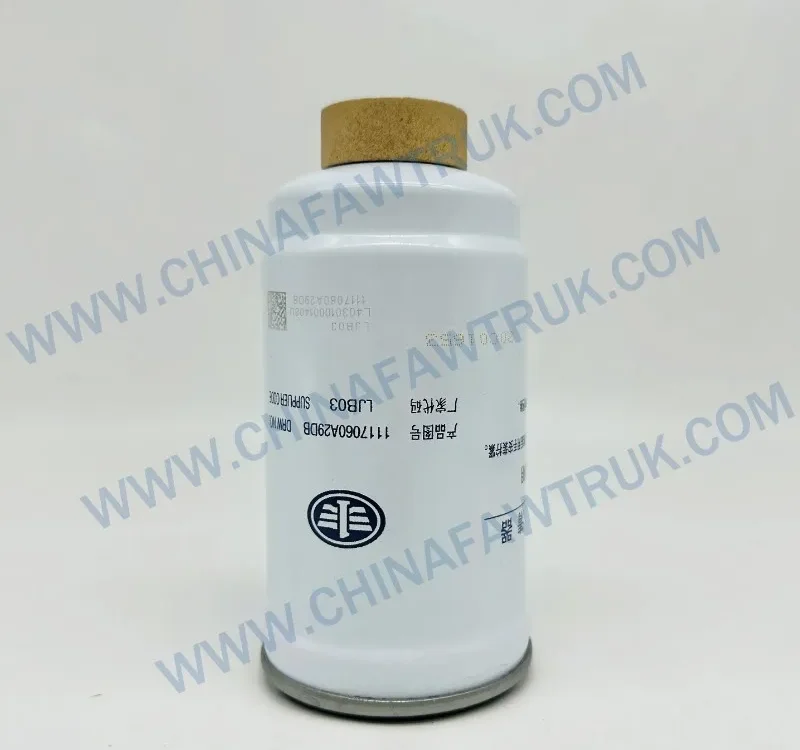
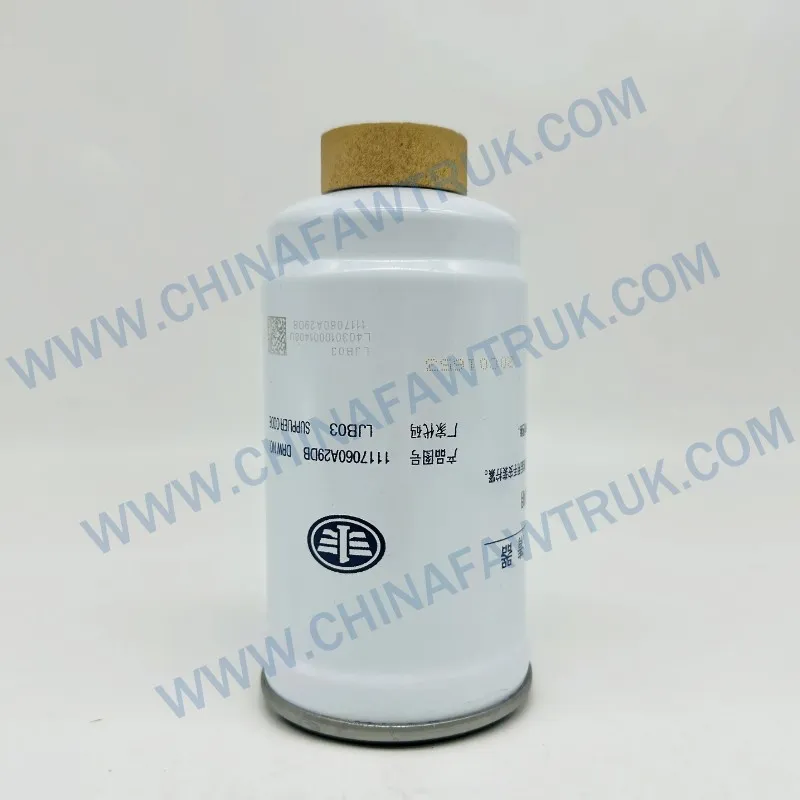
Le cœur opérationnel du système est le Ensemble de noyau de filtre fin à carburant (Partie no. 1117050-55R.). Au sein du Filtre fin à carburant russe FAW architecture, ce composant est chargé de protéger l'injection directe Common Rail (CRDI) système. Les injecteurs modernes fonctionnent à des pressions dépassant 2000 bar, les rendant incroyablement sensibles aux particules. Même les particules de poussière microscopiques peuvent ronger les aiguilles des injecteurs., menant au dribble, mauvaise atomisation, et dommages aux pistons.
Pour lutter contre cela, le Filtre fin à carburant russe FAW utilise un support synthétique multicouche. Contrairement aux filtres en cellulose qui peuvent gonfler et restreindre le débit lorsqu'ils sont exposés à l'eau., cette matrice synthétique conserve son intégrité structurelle. Il est conçu pour capturer des particules aussi petites que 3 microns avec un indice d'efficacité de plus de 99%. Ce niveau de filtration est obligatoire pour répondre aux normes d'émissions et de performances de la Fédération de Russie..
En outre, les médias au sein du Filtre fin à carburant russe FAW est traité avec un revêtement hydrophobe. Cela repousse les molécules d'eau en suspension dans le carburant diesel. Dans l'hiver russe, l'eau dans le système de carburant constitue un danger catastrophique; il peut geler dans les conduites ou bouillir instantanément dans les pointes des injecteurs, les briser. Le filtre fusionne cette eau en grosses gouttelettes qui coulent au fond du bol collecteur., garder le flux d'injection pur.
Architecture de base: Gestion des flux et chauffage
Le support de l'élément filtrant est le Ensemble de base de filtre fin à carburant (Partie no. 1117020-81D). Ce composant en fonte d'aluminium ou en alliage fait office de centre de distribution du carburant.. Il contient les ports d'entrée et de sortie, ainsi que le mécanisme de la pompe d'amorçage utilisé pour purger l'air du système après la maintenance. Dans le contexte du Filtre fin à carburant russe FAW, la base est souvent équipée d'un radiateur électrique intégré ou de passages d'échange de liquide de refroidissement.
Cette capacité de chauffage est essentielle pour empêcher la paraffine. Le carburant diesel contient de la cire de paraffine qui cristallise à basse température, obstruer le média filtrant. Le Filtre fin à carburant russe FAW la base réchauffe le carburant entrant, faire fondre ces cristaux et assurer un flux continu même lorsque les températures ambiantes descendent jusqu'à -45°C. Sans cette gestion thermique, le moteur manquerait de carburant et calerait quelques minutes après le démarrage.
La tolérance d'usinage de la surface d'étanchéité de la base est critique. Il doit présenter une planéité parfaite pour s'accoupler au joint de l'élément filtrant. Toute imperfection ici permettrait au carburant non filtré de contourner l'élément ou permettrait à l'air d'être aspiré dans les conduites de carburant.. La pénétration d'air est une cause majeure de démarrage difficile et de ralenti irrégulier dans les moteurs diesel.. Le Filtre fin à carburant russe FAW la base est soumise à des tests de pression rigoureux pour garantir qu'elle reste sans fuite sous l'aspiration de la pompe de relevage.
Isolation des vibrations: Supports et attaches
L'ensemble du groupe de filtration est solidarisé au châssis ou au bloc moteur via le Ensemble de support de filtre fin à carburant (Partie no. 1117120-81D). Ce support en acier épais est conçu pour isoler le filtre des vibrations haute fréquence du moteur diesel.. Si le Filtre fin à carburant russe FAW ont été montés de manière rigide sans ce support technique, la vibration pourrait provoquer une fatigue du métal dans la cartouche du filtre ou dans la base en aluminium, entraînant des fissures et des fuites de carburant.
La fixation du support nécessite un jeu spécifique de fixations haute résistance. L'Assemblée utilise le Boulon à bride hexagonale (Queue grossière/standard) (Partie no. Q1841075) et des variantes plus petites comme la référence. Q1841030. La conception de la tête à bride est cruciale pour le Filtre fin à carburant russe FAW installation car elle élimine le besoin de rondelles séparées, qui peuvent être perdus lors des réparations sur le terrain. La large bride répartit la charge de serrage, empêchant la tête du boulon de s'incruster dans la peinture du support et de provoquer la corrosion.
En plus, l'assemblée utilise le Écrou hexagonal (Partie no. CQ34010) pour sécuriser les lignes auxiliaires ou les points de montage. Toutes les attaches associées au Filtre fin à carburant russe FAW sont traités avec un revêtement en flocons de zinc ou similaire à haute résistance à la corrosion. Dans le salé, environnement humide des routes russes, la corrosion des boulons peut gripper les fixations, faire de simples changements de filtre un cauchemar. Les spécifications de FAW garantissent que ces boulons restent utilisables pendant toute la durée de vie du camion..
Liste de répartition des composants
Le tableau suivant détaille la répartition complète des pièces pour le Filtre fin à carburant russe FAW assemblée. Les gestionnaires de flotte doivent donner la priorité à l'utilisation de ces numéros de pièces exacts pour maintenir l'efficacité de la filtration et la fiabilité du démarrage à froid du camion-benne CA3250P66K24L1TE5Z..
| Non. |
Numéro de pièce |
Nom de la pièce |
Quantité |
| 1 |
1117010-81D |
Ensemble de filtre fin à carburant (Modèle) |
1 |
| – |
1117020-81D |
Ensemble de base de filtre fin à carburant |
1 |
| – |
1117050-55R. |
Ensemble de noyau de filtre fin à carburant (Élément) |
1 |
| 2 |
1117120-81D |
Ensemble de support de filtre fin à carburant |
1 |
| 3 |
Q1841030 |
Boulon à bride hexagonale (Queue grossière/standard) |
2 |
| 4 |
CQ34010 |
Écrou hexagonal |
2 |
| 5 |
Q1841075 |
Boulon à bride hexagonale (Queue grossière/standard) |
2 |
| 6 |
Q1841020 |
Boulon à bride hexagonale (Queue grossière/standard) |
2 |
Protocoles de maintenance pour la pureté du carburant
Remplacer le Filtre fin à carburant russe FAW est une procédure qui exige une propreté absolue. Avant de retirer l'ancien Ensemble de noyau de filtre fin à carburant, les techniciens doivent nettoyer l'extérieur du boîtier pour empêcher la saleté de tomber sur le côté propre du système de carburant.. Une fois le nouveau filtre installé, le système doit être amorcé à l'aide de la pompe manuelle sur la base. Le fait de ne pas purger tout l'air du Filtre fin à carburant russe FAW entraînera une “bouchon de vapeur” condition, empêcher le démarrage du moteur ou le faire caler immédiatement.
Inspectez régulièrement le Ensemble de base de filtre fin à carburant pour des signes de carburant qui suinte, en particulier autour des connecteurs électriques du chauffage (si équipé) et le piston de la pompe d'amorçage. Par temps extrêmement froid, les joints toriques de la pompe d'amorçage peuvent se raidir et laisser échapper de l'air dans le système. Si la pompe d'amorçage est spongieuse ou ne parvient pas à créer de la pression, la base entière peut nécessiter un entretien ou un remplacement pour restaurer l'intégrité du Filtre fin à carburant russe FAW système.
Vérifiez le Ensemble de support de filtre fin à carburant pour les fissures de contrainte, surtout près des trous de boulons. Le poids d'un filtre rempli de carburant combiné aux vibrations du châssis peut fatiguer le métal au fil du temps.. Assurez-vous que le Boulons à bride hexagonale (Q1841030 et Q1841075) sont correctement serrés. Un ensemble de filtre desserré peut vibrer excessivement, conduisant à un écrouissage des conduites de carburant et à une éventuelle rupture, créant un risque d'incendie important et un temps d'arrêt du véhicule.
Conclusion: Protection du système d'injection
Le Filtre fin à carburant russe FAW est le dernier point de contrôle de la pureté du carburant avant qu'il n'entre dans la coûteuse pompe d'injection haute pression.. Sa capacité à séparer l’eau et à piéger les particules de taille micronique est le principal facteur déterminant la durée de vie du système d’alimentation en carburant du moteur.. Chaque composant, du support hydrophobe dans le noyau au support de montage rigide, est conçu pour résister aux défis uniques de l’environnement opérationnel russe.
Pour les propriétaires de flotte, rien ne remplace l'article authentique. Les filtres du marché secondaire utilisent souvent un support en cellulose de qualité inférieure qui peut gonfler et se boucher par temps froid ou ne pas séparer l'eau émulsionnée.. En investissant dans l'authentique Filtre fin à carburant russe FAW, vous assurez votre flotte contre la panne d'injecteur, perte de puissance, et des temps d'arrêt coûteux, garantir que vos camions restent des actifs fiables et rentables sur la route.
Emballage et logistique
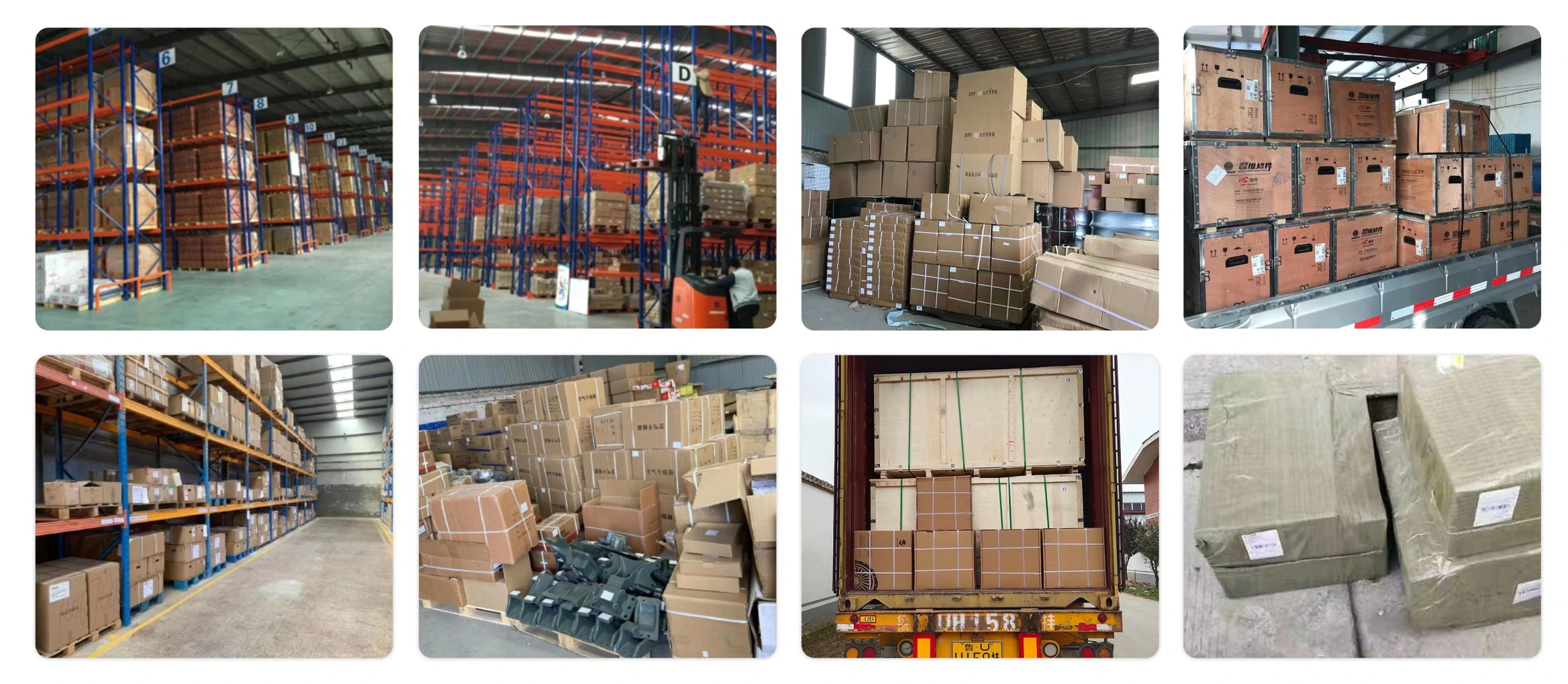
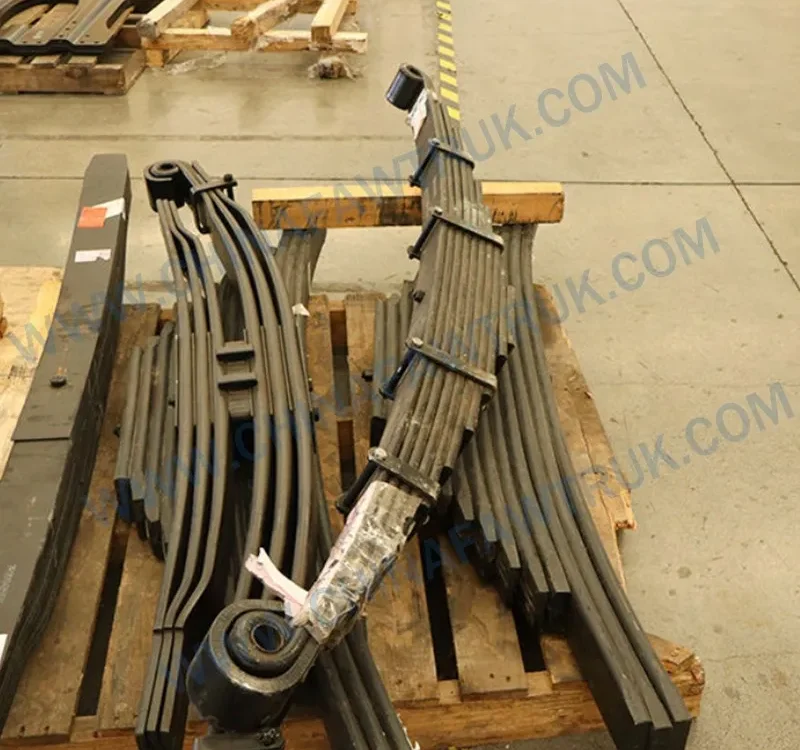
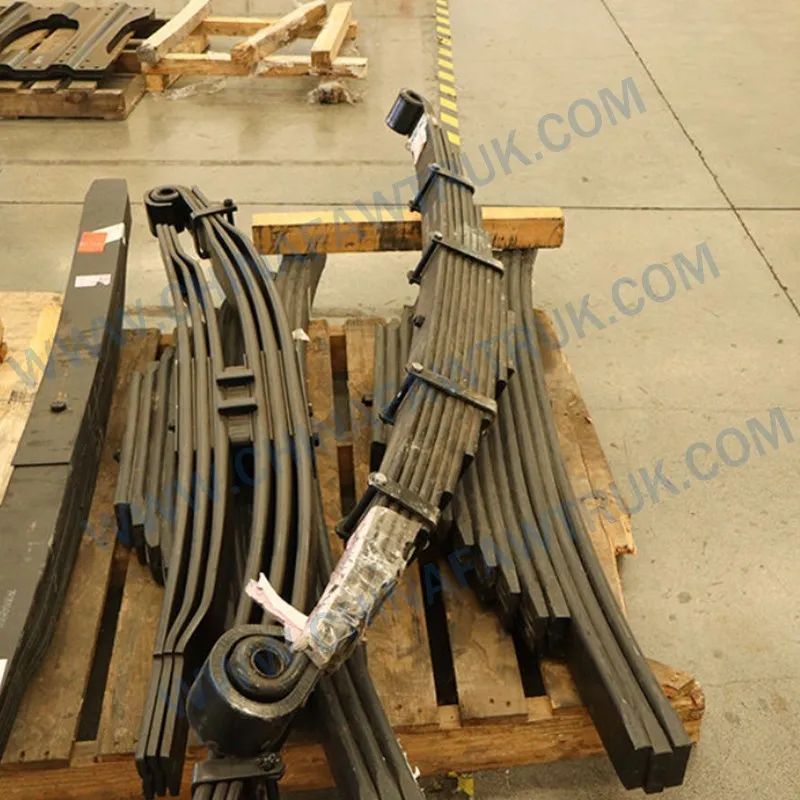
Pièces FAW, y compris l'ensemble bloc-cylindres, sont emballés avec soin pour garantir une livraison en toute sécurité. Chaque composant est sécurisé dans des matériaux de protection pour éviter tout dommage pendant le transport. Le réseau logistique garantit des expéditions ponctuelles dans le monde entier, soutenir des opérations de maintenance efficaces. Vous trouverez ci-dessous une image illustrant l'emballage standard des pièces de camion FAW., mettant en valeur l’attention portée aux détails dans la manipulation et le stockage.
Cette approche d'emballage minimise le risque de corrosion ou de dommages causés par les chocs., s'assurer que les pièces comme l'ensemble bloc-cylindres FAW arrivent en parfait état. Les clients peuvent compter sur la logistique de FAW pour une qualité et une fiabilité constantes.