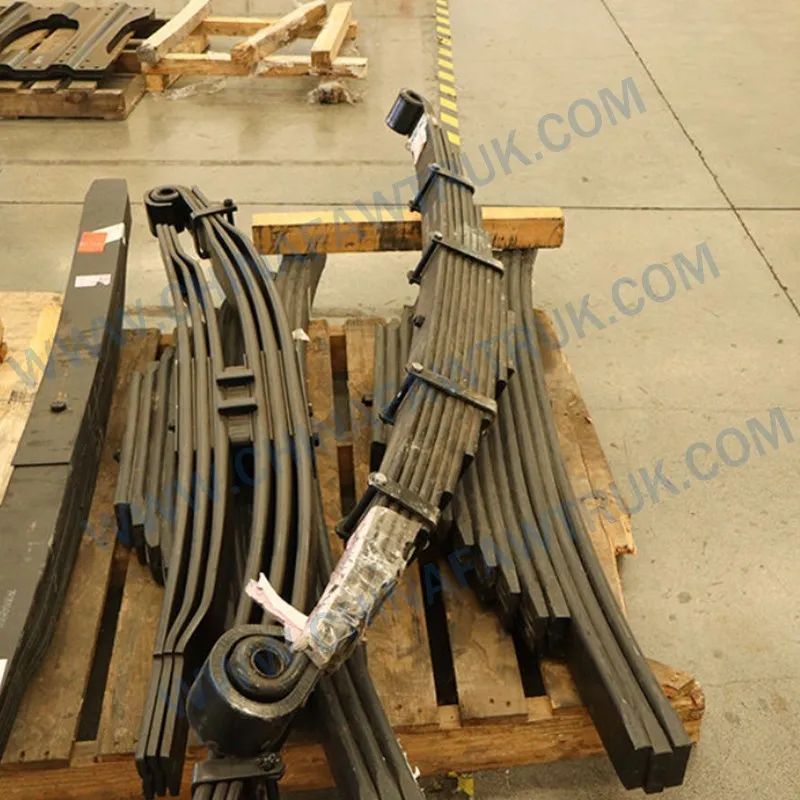
Plaque d'arrêt latérale à ressort à lame arrière russe FAW: Sécurisation 20 Composants stratégiques pour l'alignement des essieux
Le Plaque d'arrêt latérale du ressort à lames arrière logic assembly is a vital stabilization system for the CA3250P66K24L1TE5Z dump truck, specifically engineered to maintain the geometric integrity of the rear bogie. In the grueling conditions of the Russian North, side-loads generated during cornering or traversing sloped terrain can force the leaf spring stack to shift or “fan out.” Le Plaque d'arrêt latérale du ressort à lames arrière prevents this lateral migration, ensuring that the suspension transfers vertical loads efficiently without compromising axle alignment. This guide analyzes the heavy-duty limit plates and the coarse-shank flange bolts that form this essential retention system.

Plaque d'arrêt latérale à ressort à lame arrière russe FAW
Lateral Dynamics and Suspension Integrity
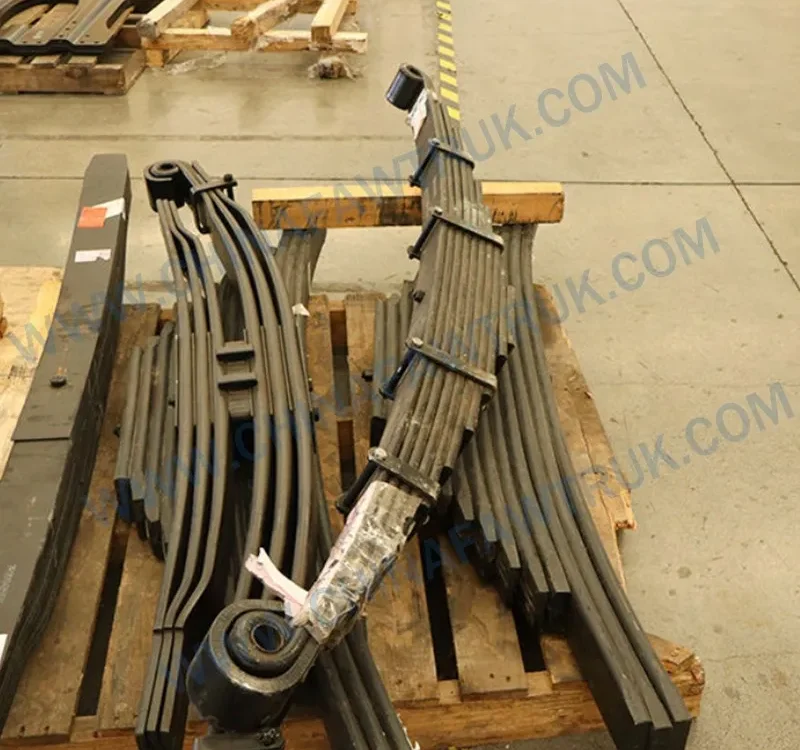
La fonction première du Plaque d'arrêt latérale du ressort à lames arrière is to act as a physical barrier against the sideways movement of the leaf spring leaves. In a multi-leaf suspension system, the individual steel plates are stacked and clamped by a center bolt. Cependant, under heavy cornering loads or when the truck is working on a side slope in a quarry, significant lateral shear forces are applied to the stack. Sans le Plaque d'arrêt latérale du ressort à lames arrière, the leaves could scissoring or fan out, reducing the effective spring rate and potentially allowing the leaves to contact the tires or chassis frame.
This assembly utilizes four units of the Lateral Limit Plate – Ressort de la feuille arrière (Partie no. 2912439-64W). Positioned alongside the spring pack, these plates create a rigid channel that confines the leaves. Le “64W” designation indicates a specific high-strength steel alloy chosen for its wear resistance. As the suspension cycles, the edges of the spring leaves may rub against the Plaque d'arrêt latérale du ressort à lames arrière. A standard mild steel plate would groove quickly, creating play in the system. The FAW component is hardened to resist this abrasion, maintaining a tight tolerance fit for the lifespan of the vehicle.
The presence of the Plaque d'arrêt latérale du ressort à lames arrière is critical for maintaining the “angle de poussée” of the rear axles. If the spring pack shifts laterally, the axle it supports will also shift. This misalignment causes “suivi de chien,” where the rear of the truck travels on a different path than the front. This condition is dangerous on icy Russian roads, as it reduces stability and causes rapid, uneven tire wear. Le Plaque d'arrêt latérale du ressort à lames arrière acts as the guardian of alignment, ensuring the truck tracks true regardless of the load.
En outre, in the extreme cold of -50°C, the leaf springs become stiffer and shock loads are transmitted more abruptly. Le Plaque d'arrêt latérale du ressort à lames arrière must absorb the lateral component of these shocks. The design of the plate includes reinforced mounting points to prevent fatigue cracking at the bolt holes, a common failure point in inferior aftermarket components that lack the “64W” metallurgical specification required for arctic operations.
Architecture de fixation à cisaillement élevé
La rigidité structurelle du Plaque d'arrêt latérale du ressort à lames arrière is entirely dependent on its fastening system. L'assemblée emploie 16 unités du Boulon à bride hexagonale (Partie no. Q1841865T). This specific bolt is described as a “Tige grossière” (Modèle standard), indicating a robust thread profile designed for maximum holding power in heavy-duty castings or frames. Le “1865T” code likely denotes an M18 diameter with a 65mm length and a high-tensile strength class, tel que 10.9.
The choice of a flange bolt for the Plaque d'arrêt latérale du ressort à lames arrière est délibéré. La bride intégrée fait office de rondelle, distributing the clamping force over a wider area of the plate. Cela empêche la tête du boulon de s'enfoncer dans le Plaque d'arrêt latérale du ressort à lames arrière under the immense vibration of off-road driving. Embedding leads to a loss of preload tension, which allows the plate to rattle and eventually shear the bolts. La conception de la bride garantit que la charge de serrage est maintenue uniformément sur toute la surface de contact.
Le “Tige grossière” la spécification du boulon est importante pour la résistance au cisaillement. La partie non filetée de la tige (la longueur de prise) est dimensionné pour se situer exactement dans le plan de cisaillement entre le Plaque d'arrêt latérale du ressort à lames arrière et le support de montage. Cela garantit que les forces latérales agissent sur la tige en acier solide du boulon., pas sur la section filetée la plus faible. Ce détail technique augmente considérablement la résistance au cisaillement de l'assemblage., empêchant les boulons de se casser lorsque le camion glisse latéralement dans une ornière.
L'application du couple est essentielle pour le Plaque d'arrêt latérale du ressort à lames arrière boulons. Parce qu'il y a quatre boulons fixant chaque plaque, ils doivent être serrés dans un ordre spécifique pour garantir que la plaque repose à plat contre son support. Uneven tightening can introduce stress into the plate, leading to premature cracking. Le Plaque d'arrêt latérale du ressort à lames arrière system relies on the friction grip generated by this clamping force to remain immobile against the lateral thrust of the suspension.
Durabilité arctique et science des matériaux
Operating in the Russian winter presents unique challenges for the Plaque d'arrêt latérale du ressort à lames arrière. At temperatures reaching -50°C, metals contract and impact toughness decreases. The steel used for the Lateral Limit Plate – Ressort de la feuille arrière (Partie no. 2912439-64W) is selected for its low ductile-to-brittle transition temperature. While standard steel might shatter like glass if struck by a rock at these temperatures, the FAW plate retains enough ductility to deform slightly without catastrophic failure.
Corrosion is another major threat. Le Plaque d'arrêt latérale du ressort à lames arrière is located in the wheel spray zone, constantly exposed to moisture, boue, and corrosive de-icing chemicals. The components undergo a specialized surface treatment—likely a zinc-flake coating or heavy-duty E-coat—to prevent rust. If rust were to form between the plate and the spring leaves, it would create an abrasive paste that accelerates wear on the spring edges. Maintaining the surface finish of the Plaque d'arrêt latérale du ressort à lames arrière is essential for the longevity of the entire spring pack.
Les boulons (Partie no. Q1841865T) also feature corrosion-resistant plating. In the maintenance context, this ensures that the Plaque d'arrêt latérale du ressort à lames arrière can be removed for service without the bolts seizing in the holes. Seized bolts often require torching to remove, which damages the temper of the surrounding suspension components. The high-quality plating on the Plaque d'arrêt latérale du ressort à lames arrière fasteners is a small detail that significantly reduces long-term maintenance costs.
En plus, the design of the Plaque d'arrêt latérale du ressort à lames arrière comprend des dégagements généreux pour l'évacuation de la boue et de la glace. Si l'espace entre la plaque et le ressort était trop étroit, la glace tassée pourrait exercer une pression sur le ressort, modifier son taux ou provoquer une liaison. La conception FAW permet le mouvement nécessaire tout en empêchant l'accumulation de débris, Assurer le Plaque d'arrêt latérale du ressort à lames arrière remplit sa fonction sans interférer avec l'articulation de la suspension.
Directives d'inspection et de remplacement
Les gestionnaires de flotte devraient exiger des inspections régulières des Plaque d'arrêt latérale du ressort à lames arrière. Le signe d'usure le plus courant est la rainure sur la face intérieure de la plaque, là où les lames du ressort entrent en contact.. Bien qu'un certain polissage soit normal, des rainures profondes indiquent que le Plaque d'arrêt latérale du ressort à lames arrière a fait son travail mais a atteint la fin de sa durée de vie. L'amincissement de la plaque réduit sa résistance structurelle, risquer une défaillance lors d'un événement de charge latérale grave.
Le 16 les boulons de montage doivent être vérifiés pour le serrage. Un lâche Plaque d'arrêt latérale du ressort à lames arrière va trembler, provoquant l'allongement des trous de boulons. Une fois les trous ovalisés, le support de montage lui-même peut avoir besoin d'être réparé ou remplacé. Il est recommandé d'appliquer une clé dynamométrique sur ces boulons à chaque intervalle d'entretien du châssis pour garantir le maintien de la force de serrage.. Le Plaque d'arrêt latérale du ressort à lames arrière s'appuie sur cette rigidité pour fonctionner.
Lors du remplacement de l'ensemble, utilisez toujours des boulons neufs. Les boulons Q1841865T sont sous haute tension et sujets à la fatigue. Réutiliser d'anciens boulons sur le Plaque d'arrêt latérale du ressort à lames arrière présente un risque de cisaillement des boulons. En outre, s'assurer que les surfaces de contact sont propres et exemptes de tartre de rouille avant d'installer le nouveau Plaque d'arrêt latérale du ressort à lames arrière assure une connexion mécanique solide.
Utilisation de pièces d'origine FAW pour le Plaque d'arrêt latérale du ressort à lames arrière garantit que la dureté de l'acier correspond aux lames du ressort. Utiliser une plaque trop dure pourrait user les ressorts; une assiette trop molle s'usera prématurément. Le composant 2912439-64W spécifié en usine établit le bon équilibre tribologique pour le système.
Répartition des composants: Ressort à lames arrière logique de plaque de limite latérale
| Non. |
Numéro de pièce |
Nom de la pièce |
Quantité |
| 1 | Q1841865T | Boulon à bride hexagonale (Tige grossière / Modèle standard) | 16 |
| 2 | 2912439-64W | Lateral Limit Plate – Ressort de la feuille arrière | 4 |
Conclusion: Stabilité latérale assurée
Le Plaque d'arrêt latérale du ressort à lames arrière est un élément fondamental pour la sécurité et la stabilité du camion-benne CA3250P66K24L1TE5Z. En confinant rigoureusement la pile de ressorts à lames, il garantit une maniabilité prévisible et évite une usure accélérée du système de suspension. La combinaison du “64W” plaque résistante à l'usure et robuste “1865T” les boulons à bride créent une solution durable capable de résister aux forces latérales du transport lourd dans l'Arctique sibérien.
Maintenir le Plaque d'arrêt latérale du ressort à lames arrière est une tâche simple mais cruciale. S'assurer que les boulons sont serrés et que les plaques ne sont pas usées protège les ressorts à lames coûteux et le carter d'essieu contre les dommages.. Les exploitants de flotte qui accordent la priorité à l'état de ces plaques de limite bénéficieront d'une réduction des temps d'arrêt et d'une sécurité améliorée des véhicules sur les routes difficiles du secteur minier..
Emballage et logistique
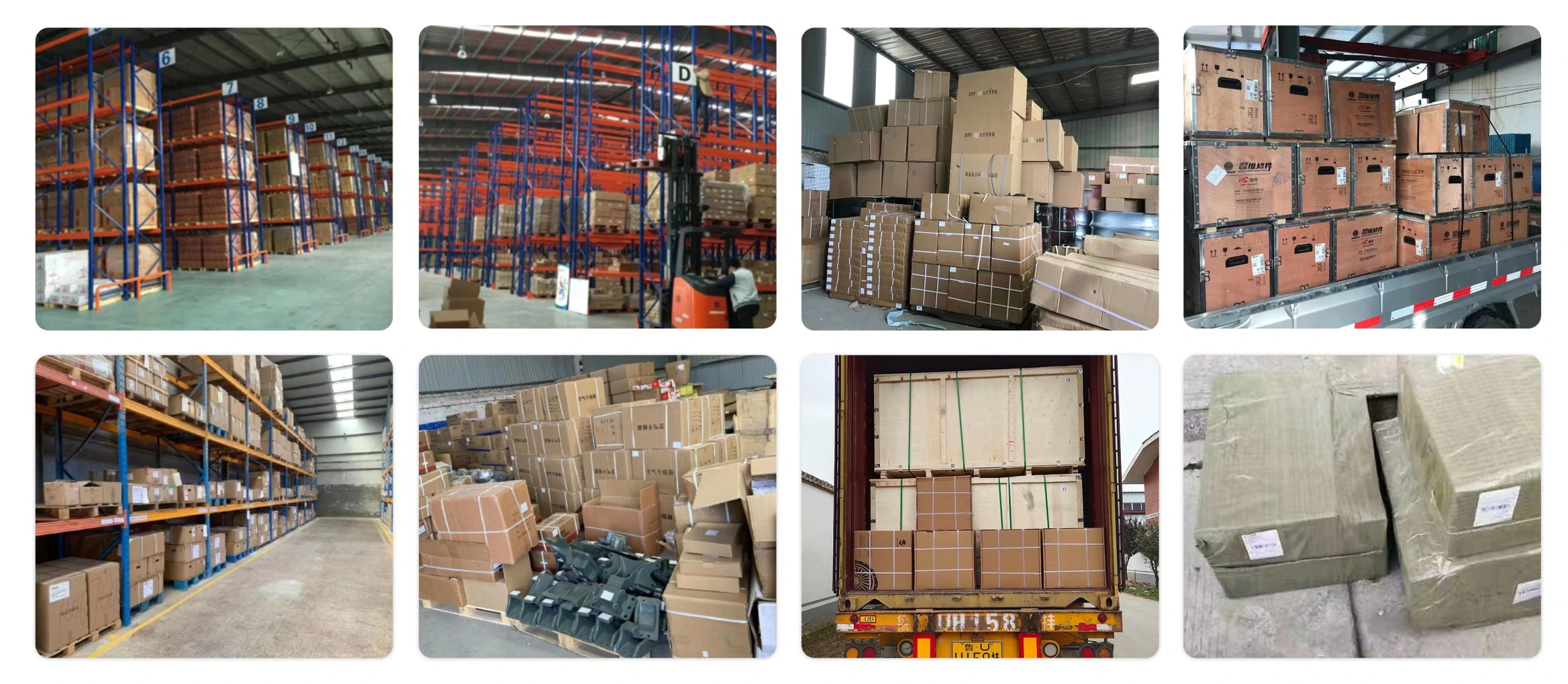
Pièces FAW, y compris l'ensemble bloc-cylindres, sont emballés avec soin pour garantir une livraison en toute sécurité. Chaque composant est sécurisé dans des matériaux de protection pour éviter tout dommage pendant le transport. Le réseau logistique garantit des expéditions ponctuelles dans le monde entier, soutenir des opérations de maintenance efficaces. Vous trouverez ci-dessous une image illustrant l'emballage standard des pièces de camion FAW., mettant en valeur l’attention portée aux détails dans la manipulation et le stockage.
Cette approche d'emballage minimise le risque de corrosion ou de dommages causés par les chocs., s'assurer que les pièces comme l'ensemble bloc-cylindres FAW arrivent en parfait état. Les clients peuvent compter sur la logistique de FAW pour une qualité et une fiabilité constantes.