FAW Russian Rear-Leaf Spring Lateral Stop Plate: Securing 20 Strategic Components for Axle Alignment
The Rear-Leaf Spring Lateral Stop Plate logic assembly is a vital stabilization system for the CA3250P66K24L1TE5Z dump truck, specifically engineered to maintain the geometric integrity of the rear bogie. In the grueling conditions of the Russian North, side-loads generated during cornering or traversing sloped terrain can force the leaf spring stack to shift or “fan out.” The Rear-Leaf Spring Lateral Stop Plate prevents this lateral migration, ensuring that the suspension transfers vertical loads efficiently without compromising axle alignment. This guide analyzes the heavy-duty limit plates and the coarse-shank flange bolts that form this essential retention system.

FAW Russian Rear-Leaf Spring Lateral Stop Plate
Lateral Dynamics and Suspension Integrity
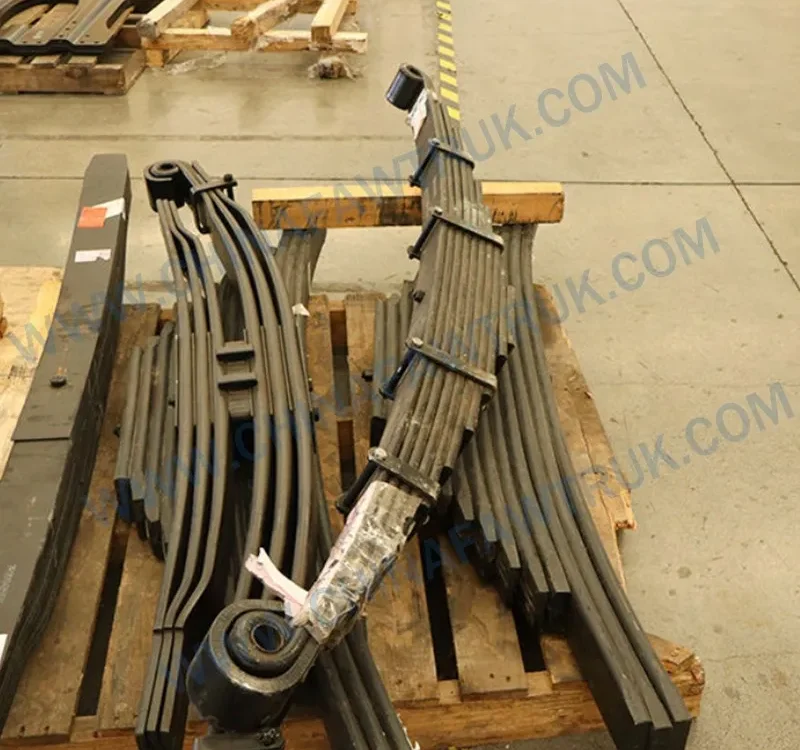
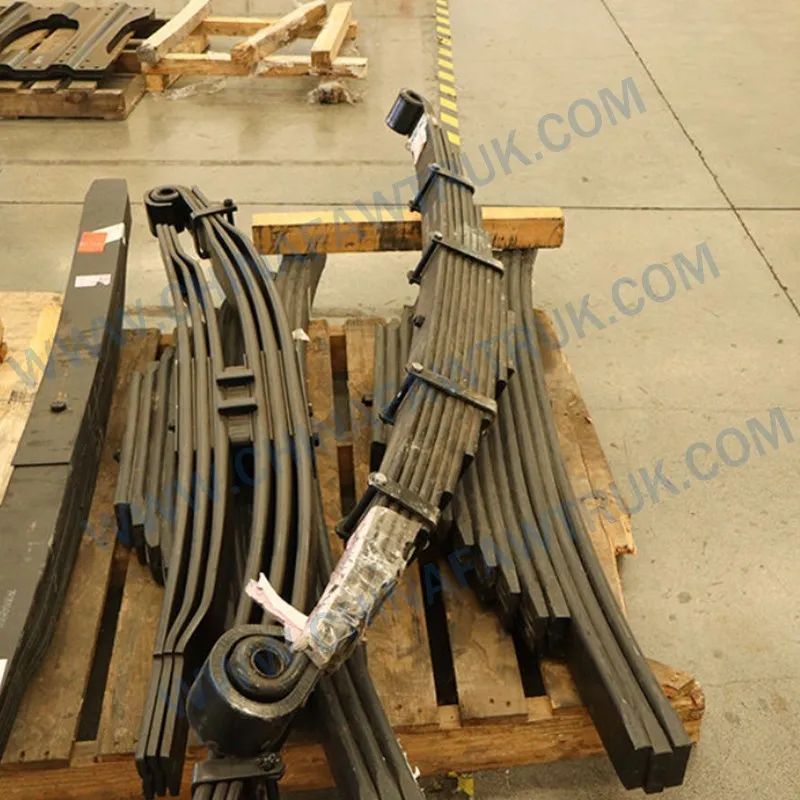
The primary function of the Rear-Leaf Spring Lateral Stop Plate is to act as a physical barrier against the sideways movement of the leaf spring leaves. In a multi-leaf suspension system, the individual steel plates are stacked and clamped by a center bolt. However, under heavy cornering loads or when the truck is working on a side slope in a quarry, significant lateral shear forces are applied to the stack. Without the Rear-Leaf Spring Lateral Stop Plate, the leaves could scissoring or fan out, reducing the effective spring rate and potentially allowing the leaves to contact the tires or chassis frame.
This assembly utilizes four units of the Lateral Limit Plate – Rear Leaf Spring (Part No. 2912439-64W). Positioned alongside the spring pack, these plates create a rigid channel that confines the leaves. The “64W” designation indicates a specific high-strength steel alloy chosen for its wear resistance. As the suspension cycles, the edges of the spring leaves may rub against the Rear-Leaf Spring Lateral Stop Plate. A standard mild steel plate would groove quickly, creating play in the system. The FAW component is hardened to resist this abrasion, maintaining a tight tolerance fit for the lifespan of the vehicle.
The presence of the Rear-Leaf Spring Lateral Stop Plate is critical for maintaining the “thrust angle” of the rear axles. If the spring pack shifts laterally, the axle it supports will also shift. This misalignment causes “dog-tracking,” where the rear of the truck travels on a different path than the front. This condition is dangerous on icy Russian roads, as it reduces stability and causes rapid, uneven tire wear. The Rear-Leaf Spring Lateral Stop Plate acts as the guardian of alignment, ensuring the truck tracks true regardless of the load.
Furthermore, in the extreme cold of -50°C, the leaf springs become stiffer and shock loads are transmitted more abruptly. The Rear-Leaf Spring Lateral Stop Plate must absorb the lateral component of these shocks. The design of the plate includes reinforced mounting points to prevent fatigue cracking at the bolt holes, a common failure point in inferior aftermarket components that lack the “64W” metallurgical specification required for arctic operations.
High-Shear Fastening Architecture
The structural rigidity of the Rear-Leaf Spring Lateral Stop Plate is entirely dependent on its fastening system. The assembly employs 16 units of the Hexagon Flange Bolt (Part No. Q1841865T). This specific bolt is described as a “Coarse Shank” (Standard Type), indicating a robust thread profile designed for maximum holding power in heavy-duty castings or frames. The “1865T” code likely denotes an M18 diameter with a 65mm length and a high-tensile strength class, such as 10.9.
The choice of a flange bolt for the Rear-Leaf Spring Lateral Stop Plate is deliberate. The integrated flange acts as a washer, distributing the clamping force over a wider area of the plate. This prevents the bolt head from embedding into the Rear-Leaf Spring Lateral Stop Plate under the immense vibration of off-road driving. Embedding leads to a loss of preload tension, which allows the plate to rattle and eventually shear the bolts. The flange design ensures that the clamping load is maintained evenly across the mating surface.
The “Coarse Shank” specification of the bolt is significant for shear resistance. The unthreaded portion of the shank (the grip length) is dimensioned to sit exactly within the shear plane between the Rear-Leaf Spring Lateral Stop Plate and the mounting bracket. This ensures that lateral forces are acting on the solid steel shank of the bolt, not on the weaker threaded section. This engineering detail vastly increases the shear strength of the assembly, preventing the bolts from snapping when the truck slides sideways into a rut.
Torque application is critical for the Rear-Leaf Spring Lateral Stop Plate bolts. Because there are four bolts securing each plate, they must be tightened in a specific sequence to ensure the plate seats flat against its mount. Uneven tightening can introduce stress into the plate, leading to premature cracking. The Rear-Leaf Spring Lateral Stop Plate system relies on the friction grip generated by this clamping force to remain immobile against the lateral thrust of the suspension.
Arctic Durability and Material Science
Operating in the Russian winter presents unique challenges for the Rear-Leaf Spring Lateral Stop Plate. At temperatures reaching -50°C, metals contract and impact toughness decreases. The steel used for the Lateral Limit Plate – Rear Leaf Spring (Part No. 2912439-64W) is selected for its low ductile-to-brittle transition temperature. While standard steel might shatter like glass if struck by a rock at these temperatures, the FAW plate retains enough ductility to deform slightly without catastrophic failure.
Corrosion is another major threat. The Rear-Leaf Spring Lateral Stop Plate is located in the wheel spray zone, constantly exposed to moisture, mud, and corrosive de-icing chemicals. The components undergo a specialized surface treatment—likely a zinc-flake coating or heavy-duty E-coat—to prevent rust. If rust were to form between the plate and the spring leaves, it would create an abrasive paste that accelerates wear on the spring edges. Maintaining the surface finish of the Rear-Leaf Spring Lateral Stop Plate is essential for the longevity of the entire spring pack.
The bolts (Part No. Q1841865T) also feature corrosion-resistant plating. In the maintenance context, this ensures that the Rear-Leaf Spring Lateral Stop Plate can be removed for service without the bolts seizing in the holes. Seized bolts often require torching to remove, which damages the temper of the surrounding suspension components. The high-quality plating on the Rear-Leaf Spring Lateral Stop Plate fasteners is a small detail that significantly reduces long-term maintenance costs.
Additionally, the design of the Rear-Leaf Spring Lateral Stop Plate includes generous clearances for mud and ice evacuation. If the space between the plate and the spring were too tight, packed ice could exert pressure on the spring, altering its rate or causing binding. The FAW design allows for the necessary movement while preventing debris accumulation, ensuring the Rear-Leaf Spring Lateral Stop Plate performs its function without interfering with suspension articulation.
Inspection and Replacement Guidelines
Fleet managers should mandate regular inspections of the Rear-Leaf Spring Lateral Stop Plate. The most common sign of wear is grooving on the inner face of the plate where the spring leaves make contact. While some polishing is normal, deep grooves indicate that the Rear-Leaf Spring Lateral Stop Plate has done its job but has reached the end of its service life. Thinning of the plate reduces its structural strength, risking failure during a severe lateral load event.
The 16 mounting bolts should be checked for tightness. A loose Rear-Leaf Spring Lateral Stop Plate will rattle, causing the bolt holes to elongate. Once the holes are ovalized, the mounting bracket itself may need repair or replacement. It is recommended to apply a torque wrench to these bolts at every chassis service interval to ensure the clamping force is maintained. The Rear-Leaf Spring Lateral Stop Plate relies on this rigidity to function.
When replacing the assembly, always use new bolts. The Q1841865T bolts are under high tension and subject to fatigue. Reusing old bolts on the Rear-Leaf Spring Lateral Stop Plate invites the risk of bolt shear. Furthermore, ensuring that the mating surfaces are clean and free of rust scale before installing the new Rear-Leaf Spring Lateral Stop Plate ensures a solid mechanical connection.
Using genuine FAW parts for the Rear-Leaf Spring Lateral Stop Plate guarantees that the steel hardness matches the spring leaves. Using a plate that is too hard could wear the springs; a plate that is too soft will wear out prematurely. The factory-specified 2912439-64W component strikes the correct tribological balance for the system.
Component Breakdown: Rear Leaf Spring Lateral Limit Plate Logic
| No. |
Part Number |
Part Name |
Qty |
| 1 | Q1841865T | Hexagon Flange Bolt (Coarse Shank / Standard Type) | 16 |
| 2 | 2912439-64W | Lateral Limit Plate – Rear Leaf Spring | 4 |
Conclusion: Lateral Stability Assured
The Rear-Leaf Spring Lateral Stop Plate is a fundamental component for the safety and stability of the CA3250P66K24L1TE5Z dump truck. By rigorously confining the leaf spring stack, it ensures predictable handling and prevents accelerated wear on the suspension system. The combination of the “64W” wear-resistant plate and the robust “1865T” flange bolts creates a durable solution capable of withstanding the lateral forces of heavy haulage in the Siberian arctic.
Maintaining the Rear-Leaf Spring Lateral Stop Plate is a simple yet critical task. Ensuring the bolts are tight and the plates are not worn through protects the expensive leaf springs and axle housing from damage. Fleet operators who prioritize the condition of these limit plates will benefit from reduced downtime and enhanced vehicle safety on the challenging roads of the mining sector.
Packaging and Logistics
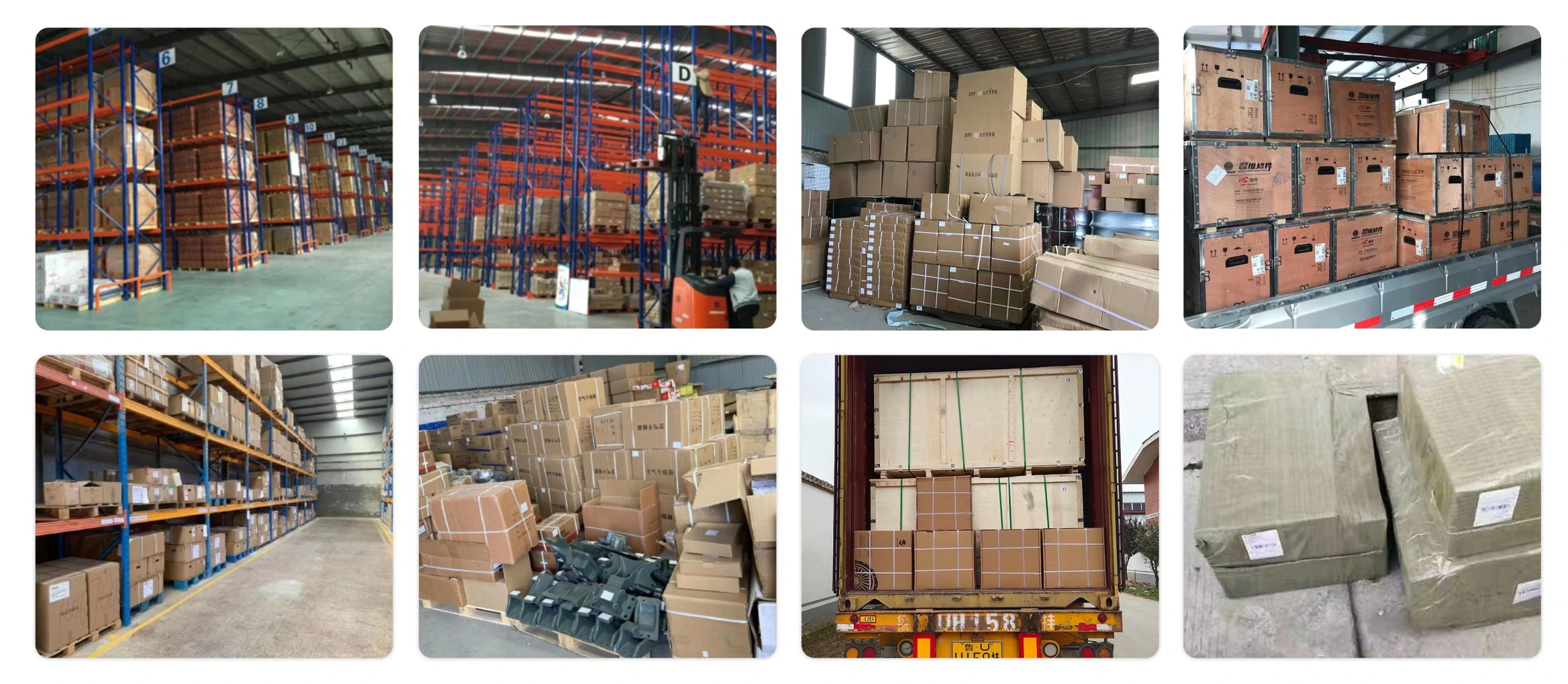
FAW parts, including the Cylinder Block Assembly, are packaged with care to ensure safe delivery. Each component is secured in protective materials to prevent damage during transit. The logistics network guarantees timely shipments worldwide, supporting efficient maintenance operations. Below is an image illustrating the standard packaging for FAW truck parts, showcasing the attention to detail in handling and storage.
This packaging approach minimizes the risk of corrosion or impact damage, ensuring that parts like the FAW Cylinder Block Assembly arrive in perfect condition. Customers can rely on FAW’s logistics for consistent quality and reliability.