by 


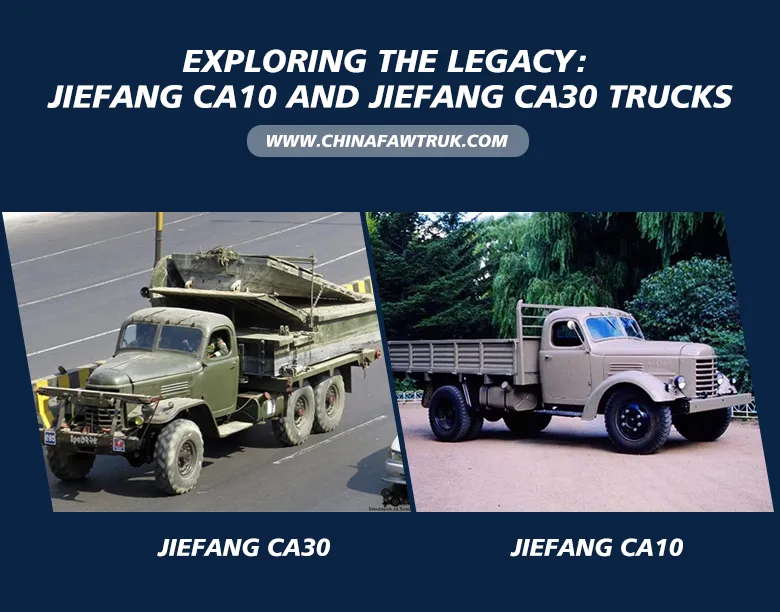
The Jiefang CA10 and Jiefang CA30 trucks stand as monumental icons in the history of Chinese automotive manufacturing. Introduced in the 1950s, these vehicles represented China’s first foray into mass-produced trucks, symbolizing industrial progress and self-reliance. The Jiefang CA10, often hailed as the pioneer, was developed based on the Soviet ZIS-150 model, while the Jiefang CA30 emerged as a robust off-road variant designed for military applications. Both models, under the Jiefang brand, played pivotal roles in shaping infrastructure, logistics, and defense capabilities during China’s formative years. This article delves into the intricate details, historical significance, and technical specifications of these legendary trucks, offering a comprehensive overview for enthusiasts and industry professionals alike. As we explore, the enduring legacy of the Jiefang CA10 and Jiefang CA30 becomes evident, highlighting their engineering marvels and cultural impact.
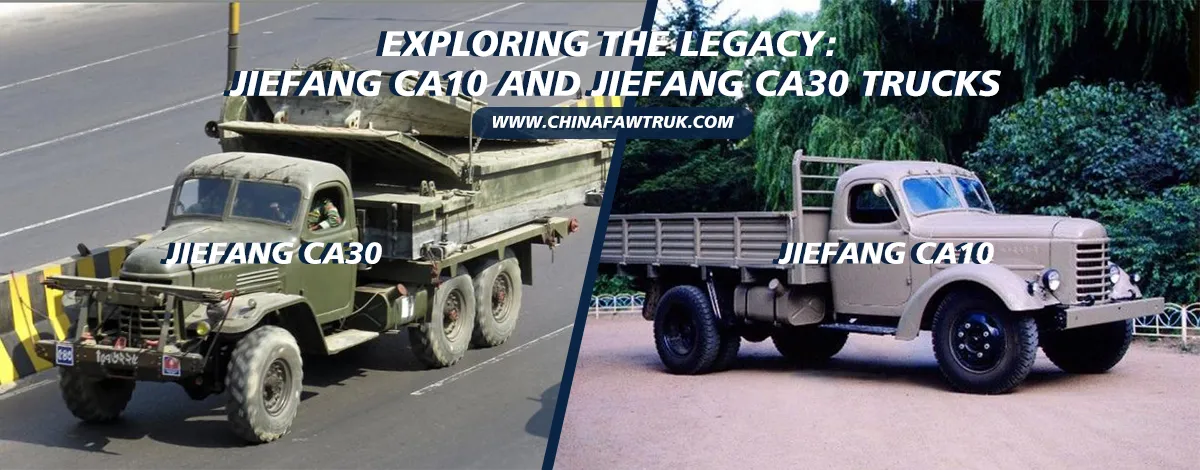
The genesis of the Jiefang CA10 dates back to 1956, when the First Automobile Works (FAW) in Changchun launched production, marking a watershed moment for China’s automotive sector. This truck was essentially a licensed copy of the Soviet ZIS-150, adapted to suit local conditions and manufacturing capabilities. Its name “Jiefang,” meaning “liberation,” reflected the post-revolutionary era’s spirit of progress. The Jiefang CA30 followed shortly after, developed in the late 1950s to meet military demands for a versatile, all-terrain vehicle capable of navigating rough landscapes. Both the Jiefang CA10 and Jiefang CA30 were engineered with durability in mind, using robust materials and simple mechanics to ensure reliability in diverse environments. Over the years, these trucks became ubiquitous on construction sites, farms, and battlefields, cementing their status as workhorses of national development. The production of the Jiefang CA10 continued until the 1980s, with over 1.2 million units built, while the Jiefang CA30 served extensively in the military until being phased out by newer models. Today, they are celebrated as classics, with many preserved in museums and private collections, showcasing the ingenuity of early Chinese engineering.
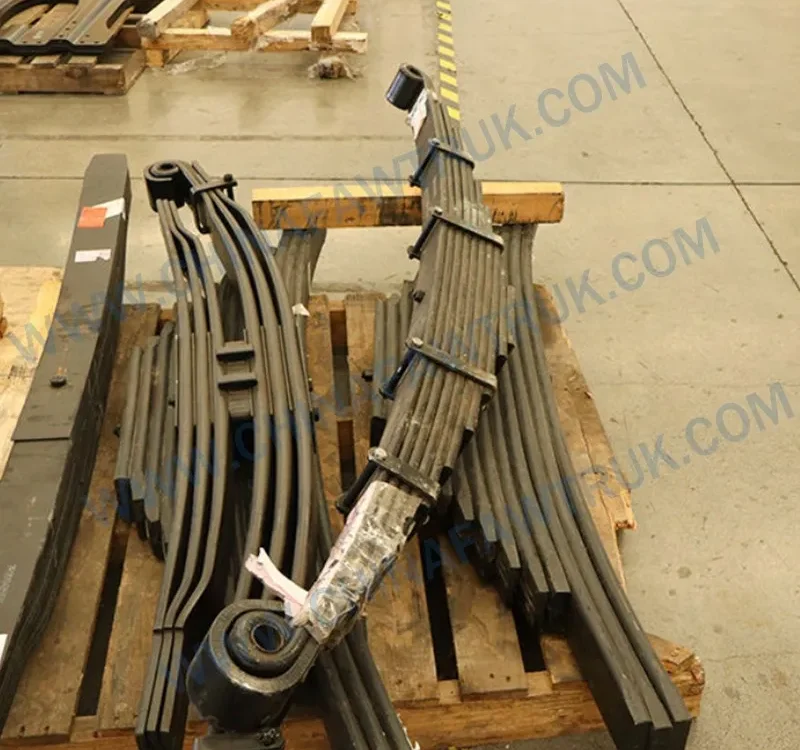
The design philosophy behind the Jiefang CA10 emphasized practicality and ease of maintenance, featuring a straightforward cabin layout and accessible engine components. In contrast, the Jiefang CA30 incorporated enhancements like all-wheel drive and increased ground clearance, making it ideal for off-road operations. Both models utilized a ladder-type frame, leaf spring suspensions, and hydraulic braking systems, which were standard for the era. The development of these trucks also spurred ancillary industries, such as parts manufacturing and repair services, contributing to economic growth. Notably, the Jiefang CA10 and Jiefang CA30 were among the first Chinese vehicles exported to allied nations, fostering international trade relations. Their legacy endures in modern FAW trucks, which inherit the ruggedness and reliability of these pioneers. For historians, the story of the Jiefang CA10 and Jiefang CA30 offers insights into China’s industrialization journey, highlighting how these vehicles transformed transportation logistics and supported nationwide projects.
The Jiefang CA10 was powered by a 5.55-liter inline-six gasoline engine, producing approximately 90 horsepower at 2400 RPM. This engine, derived from the ZIS-150 design, featured a cast-iron block and overhead valves, delivering torque suited for heavy loads. It was paired with a 5-speed manual transmission and a two-speed transfer case in some variants, enabling smooth gear shifts and adequate power distribution. The truck’s payload capacity ranged from 4 to 5 tons, depending on configuration, with a gross vehicle weight of around 8 tons. Dimensions included a wheelbase of 4.6 meters, overall length of 6.7 meters, and a height of 2.3 meters, providing ample cargo space. The braking system comprised drum brakes on all wheels, operated via a hydraulic mechanism, while the suspension used semi-elliptical leaf springs for stability. Fuel consumption averaged 25 liters per 100 kilometers, which was reasonable for its time, and the fuel tank held 150 liters, allowing for extended range.
In comparison, the Jiefang CA30 featured a more powerful 6.0-liter inline-six engine, generating about 110 horsepower to handle off-road demands. This engine incorporated upgrades like improved carburetion and cooling systems, ensuring performance in harsh conditions. The transmission was a 5-speed manual with a robust transfer case for all-wheel drive, coupled with a reduction gear for low-speed crawling. Key off-road attributes included a ground clearance of 300 mm, approach and departure angles of 40 degrees, and a fording depth of 800 mm, making it capable of traversing mud, sand, and shallow waters. The Jiefang CA30 also had a reinforced chassis and larger tires for better traction, along with a winch option for recovery operations. Payload capacity was slightly lower at 3.5 tons due to the added weight of off-road components, but it excelled in mobility and durability. Both the Jiefang CA10 and Jiefang CA30 used simple, reliable electrical systems with 12-volt batteries, and their cabins were spartan yet functional, offering basic instrumentation and seating for two or three personnel.
Over the years, minor updates were introduced to the Jiefang CA10 and Jiefang CA30, such as improved lighting, enhanced seals for weatherproofing, and better upholstery. These modifications extended their service life and adaptability. The engineering of these trucks prioritized modularity, allowing for easy replacement of parts like clutches, brakes, and suspension components. This design approach minimized downtime and facilitated maintenance in remote areas, a crucial factor for their widespread adoption. The legacy of the Jiefang CA10 and Jiefang CA30 is evident in their influence on subsequent FAW models, which integrated more advanced technologies while retaining core robustness. Collectors often seek out original parts for restoration projects, underscoring the enduring appeal of these vehicles. In summary, the technical prowess of the Jiefang CA10 and Jiefang CA30 laid the groundwork for China’s truck manufacturing expertise, demonstrating that simplicity and strength can yield long-lasting results.
| Parameter | Jiefang CA10 | Jiefang CA30 |
|---|---|---|
| Engine Type | Inline-6 Gasoline | Inline-6 Gasoline |
| Displacement | 5.55 Liters | 6.0 Liters |
| Horsepower | 90 HP @ 2400 RPM | 110 HP @ 2600 RPM |
| Transmission | 5-Speed Manual | 5-Speed Manual with AWD |
| Payload Capacity | 4-5 Tons | 3.5 Tons |
| Gross Vehicle Weight | 8 Tons | 7.5 Tons |
| Wheelbase | 4.6 Meters | 4.2 Meters |
| Overall Length | 6.7 Meters | 6.5 Meters |
| Fuel Capacity | 150 Liters | 180 Liters |
| Fuel Consumption | 25 L/100 km | 30 L/100 km |
| Top Speed | 75 km/h | 70 km/h |
| Drivetrain | Rear-Wheel Drive | All-Wheel Drive |
| Ground Clearance | 250 mm | 300 mm |
| Production Years | 1956-1986 | 1958-1980s |
Note: Specifications may vary based on model year and configuration. The Jiefang CA10 and Jiefang CA30 are historical models, and data is compiled from archival sources.
The Jiefang CA10 was predominantly used in civilian sectors, serving as a backbone for transportation and logistics across China. It was commonly deployed in construction projects, hauling materials like cement, steel, and timber, thereby accelerating infrastructure development such as roads, bridges, and buildings. In agriculture, the Jiefang CA10 facilitated the movement of crops and equipment, boosting farm productivity. Additionally, it saw service in public utilities, including waste management and firefighting, due to its reliability and load capacity. The truck’s simplicity made it a favorite among small businesses and state-owned enterprises, fostering economic growth during the mid-20th century. Export versions of the Jiefang CA10 were also sent to countries in Africa and Asia, where they supported similar developmental efforts, enhancing China’s global trade footprint.
Conversely, the Jiefang CA30 was designed for military and rugged terrain operations, playing a critical role in national defense. It was utilized by the People’s Liberation Army for troop transport, artillery towing, and supply chain logistics in remote regions. Its off-road capabilities allowed it to traverse mountains, deserts, and forested areas, making it indispensable during conflicts and peacekeeping missions. The Jiefang CA30 also supported disaster relief efforts, delivering aid to areas affected by floods or earthquakes where conventional vehicles struggled. In later years, some units were adapted for civilian use in mining and forestry, demonstrating their versatility. The durability of the Jiefang CA30 ensured long service lives, with many remaining operational for decades. Both the Jiefang CA10 and Jiefang CA30 contributed to China’s industrialization by providing reliable mobility solutions, and their designs influenced later military and commercial trucks.
Beyond practical applications, these trucks became cultural symbols, featured in films, posters, and literature as emblems of progress and resilience. Enthusiasts today restore and showcase the Jiefang CA10 and Jiefang CA30 at vintage vehicle events, preserving their historical value. The legacy of these models is also evident in modern FAW truck lines, which incorporate advanced features while maintaining the robustness pioneered by the CA series. For exporters and suppliers, understanding the heritage of the Jiefang CA10 and Jiefang CA30 can enhance appreciation for FAW’s product evolution. In summary, the operational history of these trucks underscores their multifaceted impact, from economic development to national security, solidifying their place in automotive annals.
The enduring legacy of the Jiefang CA10 and Jiefang CA30 extends far beyond their production years, influencing subsequent generations of FAW trucks and the broader automotive industry. These models demonstrated that Chinese manufacturers could produce reliable, mass-market vehicles, paving the way for innovations in design and engineering. The lessons learned from the Jiefang CA10 and Jiefang CA30, such as the importance of durability and ease of repair, have been integrated into modern FAW trucks, which now feature advanced electronics, fuel-efficient engines, and enhanced safety systems. Collectively, the Jiefang CA10 and Jiefang CA30 are revered as milestones, symbolizing China’s journey from imitation to innovation in automotive manufacturing.
Moreover, the cultural significance of these trucks cannot be overstated. They appear in museums, historical documentaries, and even as collectible models, educating new generations about industrial history. The Jiefang CA10 and Jiefang CA30 also inspired a sense of national pride, often depicted in art and media as symbols of resilience and hard work. For exporters, highlighting the heritage of the Jiefang CA10 and Jiefang CA30 can attract customers interested in classic vehicles or those seeking reliable, time-tested designs. As FAW continues to evolve, the principles embodied by the Jiefang CA10 and Jiefang CA30—simplicity, strength, and adaptability—remain core to its brand identity, ensuring that these pioneering trucks are never forgotten.
The Jiefang CA10 and Jiefang CA30 are foundational models in Chinese automotive history, renowned for their robustness and versatility. The Jiefang CA10 served as a civilian workhorse, driving economic growth through logistics and construction, while the Jiefang CA30 excelled in military and off-road roles, ensuring national security and disaster response. Both trucks featured straightforward engineering, with specifications tailored to their respective duties, as detailed in the parameter table. Their legacy continues to influence modern FAW trucks, emphasizing durability and practicality. For enthusiasts and professionals, understanding these models provides insight into the evolution of truck manufacturing and FAW’s commitment to quality. As we reflect on their contributions, the Jiefang CA10 and Jiefang CA30 stand as testaments to innovation and endurance in the automotive world.
Explore more about FAW trucks and parts through our dedicated pages.
View All FAW Trucks Browse FAW Truck Parts