Filtre à carburant russe FAW: 8 Composants de précision pour une pureté diesel ultime dans des conditions arctiques
Le Filtre à carburant russe FAW constitue la principale ligne de défense du système d'injection sophistiqué du camion-benne CA3250P66K24L1TE5Z.. Opérer dans des conditions difficiles, L’environnement riche en contaminants des sites miniers et de construction russes nécessite une stratégie de filtration qui va au-delà du simple dépistage. Cet ensemble combine une séparation des particules à haute efficacité avec une technologie avancée de traitement de l'eau pour protéger la pompe à carburant haute pression contre un grippage catastrophique.. Ce guide complet décortique l'architecture du filtre, le système d’alarme de niveau d’eau critique, et la logique de montage robuste requise pour maintenir l'intégrité du carburant lorsque les températures descendent jusqu'à -40 °C..

Filtre à carburant russe FAW
Technologie de base: Séparation biphasée
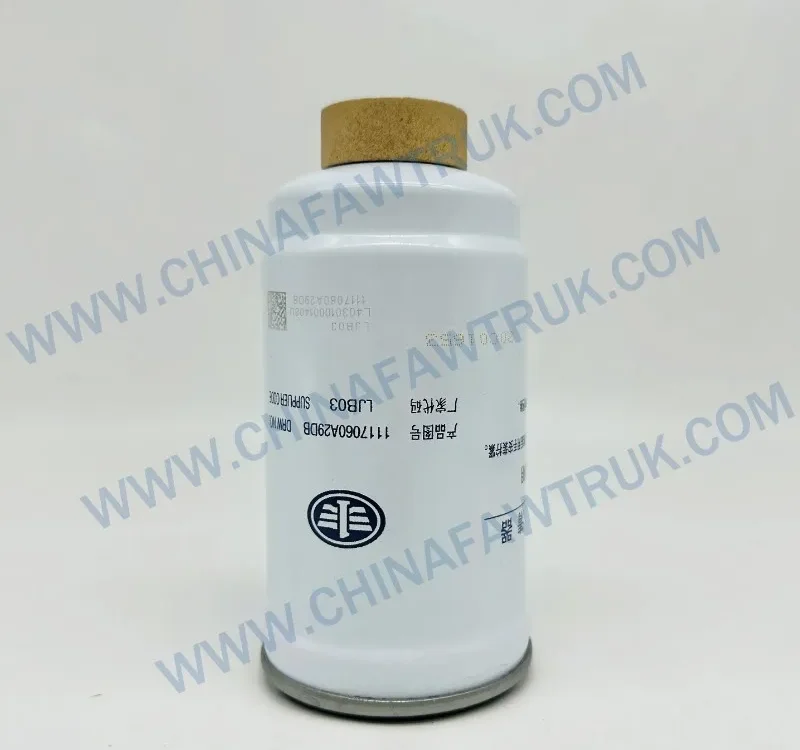
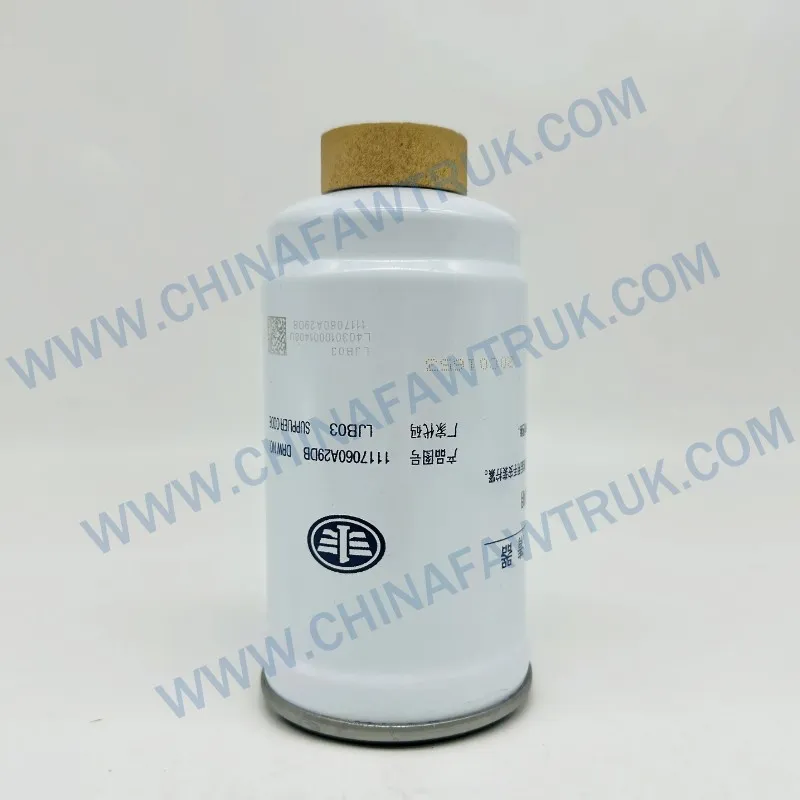
Le cœur fonctionnel du système est le Ensemble de filtre à carburant (Modèle) (Partie no. 1105010-2007-C00), qui abrite le remplaçable Ensemble de noyau de filtre à carburant (Élément) (Partie no. 1105050-2007). Dans le contexte du Filtre à carburant russe FAW, le média filtrant est conçu pour relever les défis spécifiques du carburant diesel russe, qui contient souvent des niveaux plus élevés de soufre, paraffine, et eaux en suspension que les normes européennes.
L'élément filtrant utilise un média composite synthétique multicouche. La couche externe agit comme un écran grossier, piégeant les grosses particules de rouille et les sédiments du réservoir qui pourraient obstruer les plis intérieurs. Les couches internes du Filtre à carburant russe FAW le noyau est conçu pour une filtration fine, capturant les particules jusqu'à 3-5 microns. Ce niveau de précision est obligatoire pour l’injection directe Common Rail (CRDI) systèmes, où les tolérances des injecteurs sont mesurées en sous-microns. Même un grain de poussière invisible à l'œil nu peut endommager l'aiguille de l'injecteur., conduisant à un dribble continu de carburant, fusion des pistons, et destruction du moteur.
Surtout, les médias dans le Filtre à carburant russe FAW est traité avec un hydrophobe (hydrofuge) revêtement. Alors que le carburant diesel circule dans les médias, les gouttelettes d'eau ne peuvent pas passer. Ils perlent à la surface de l'élément filtrant et fusionnent en gouttes plus grosses., qui s'alimentent ensuite par gravité dans le bol de collecte au fond du boîtier. Ce processus de séparation est vital en hiver; si l'eau passe par la pompe haute pression, il peut bouillir instantanément en raison de la chaleur de la pressurisation (1800+ bar), provoquant l'explosion des pointes des injecteurs de l'intérieur vers l'extérieur.
L'intégrité structurelle du Ensemble de noyau de filtre à carburant est également renforcé pour éviter l'effondrement. Par grand froid (-40° C), le carburant diesel cire et épaissit. Cela augmente considérablement la différence de pression à travers le média filtrant.. Un filtre en papier standard imploserait sous cette aspiration, envoyer des débris non filtrés dans le moteur. Le Filtre à carburant russe FAW L'élément est doté d'un tube central interne rigide et d'un support à support métallique pour résister à ces pressions différentielles élevées lors des démarrages à froid., garantir le maintien du débit sans compromettre l'efficacité de la filtration.
Surveillance active: L'alarme de niveau d'eau
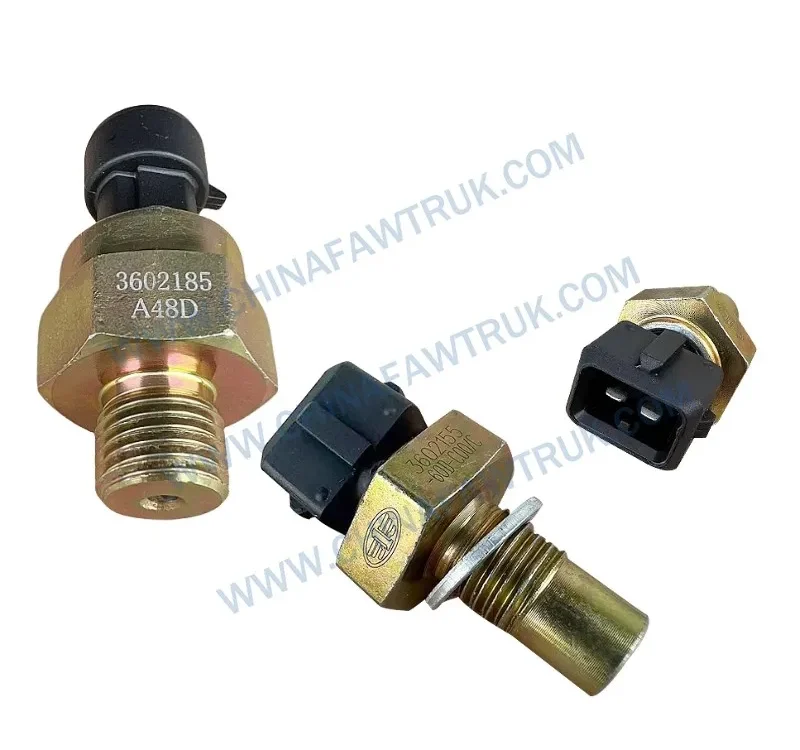
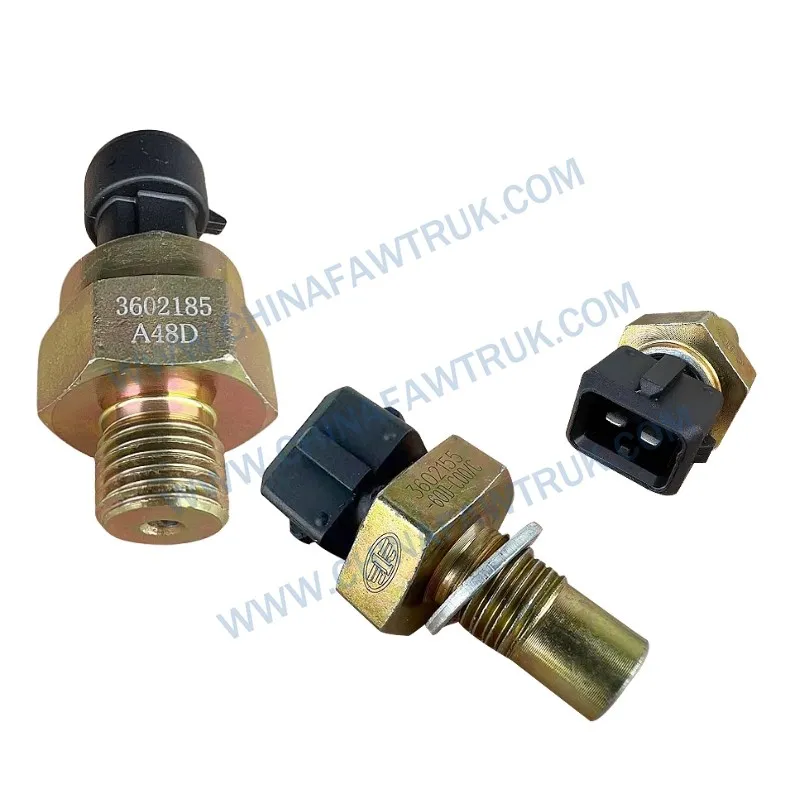
Intégré à la base de l'ensemble de filtre se trouve le Ensemble d'alarme de niveau d'eau (Modèle) (Partie no. 1105150C50A). Ce capteur fournit au conducteur une alerte précoce critique. Depuis le Filtre à carburant russe FAW est conçu pour éliminer l'eau du carburant, cette eau s'accumule dans le bol de collecte. Si le bol se remplit, l'eau sera éventuellement forcée à travers l'élément filtrant et dans le moteur.
Le capteur fonctionne sur le principe de la conductivité électrique. Le carburant diesel est un diélectrique (isolant), alors que l'eau est conductrice. Le Ensemble d'alarme de niveau d'eau comporte deux sondes placées à une hauteur spécifique dans le bol. Lorsque le niveau d'eau séparé augmente suffisamment pour combler ces sondes, le circuit se termine, déclenchement d'un voyant au tableau de bord. Dans le Filtre à carburant russe FAW système, cette alerte permet au conducteur d'arrêter et de vidanger le séparateur d'eau avant que des dommages au moteur ne se produisent.
Pour le marché russe, ce capteur est robuste. Le connecteur externe est scellé contre la pénétration de sel de déneigement et d'humidité., prévenir les fausses alarmes causées par des courts-circuits. Les sondes elles-mêmes sont fabriquées à partir de matériaux résistants à la corrosion pour résister à la nature acide de l'interface eau-carburant. Une alarme fonctionnelle est la sécurité pour l'ensemble Filtre à carburant russe FAW système; sans ça, la capacité de séparation de l'eau est limitée et finalement dépassée.
Ce composant comprend également généralement le mécanisme de la vanne de vidange. Alors que le diagramme répertorie l'ensemble d'alarme, l'intégration physique permet généralement une vidange manuelle. Dans des conditions arctiques, ce robinet de vidange doit être suffisamment robuste pour être actionné avec des mains gantées et résistant au gel.. Le Filtre à carburant russe FAW la conception donne la priorité à cette facilité d'entretien, reconnaissant qu'une vidange quotidienne peut être nécessaire dans les régions où le carburant est de mauvaise qualité.
Isolation des vibrations: Le support robuste
Le groupe de filtration est fixé au châssis ou au bloc moteur via le Support de filtre à carburant (Partie no. 1105121-1767). Il ne s'agit pas d'un simple morceau de métal estampé; il s'agit d'un composant structurel de gros calibre conçu pour supporter le poids important d'un ensemble filtre rempli de carburant. Le Filtre à carburant russe FAW, lorsqu'il est plein de diesel et d'eau séparée, crée une charge en porte-à-faux importante qui est amplifiée par les vibrations intenses du moteur diesel robuste et les chocs des routes minières accidentées.
Si le support était trop flexible, l'ensemble filtre oscillerait, entraînant une fatigue du métal dans les conduites de carburant qui s'y connectent. Cela entraînerait des fuites de carburant ou une entrée d'air, caler le moteur. Le Filtre à carburant russe FAW le support est conçu avec des nervures de renforcement pour élever sa fréquence naturelle au-dessus de la plage de vibrations du moteur, s'assurer que le filtre reste statique par rapport à son point de montage.
Le support sert également de point de mise à la terre pour le boîtier du filtre dans certaines configurations, dissiper l'électricité statique générée par le flux rapide du carburant. L'accumulation d'électricité statique dans les systèmes de carburant peut être dangereuse; le Filtre à carburant russe FAW la conception du montage assure une continuité électrique continue jusqu'à la masse du châssis, atténuer les risques de rejet.
Protection contre la corrosion pour le Support de filtre à carburant est primordial. Positionné bas sur le cadre, il est constamment bombardé de graviers et de sels de déglaçage corrosifs. FAW utilise une épaisse couche de poudre ou une finition zinguée pour éviter la formation de rouille., ce qui pourrait autrement affaiblir les points de montage ou rendre le retrait du filtre difficile en raison de boulons grippés.
Fixation sécurisée: Boulons à bride et contre-écrous
La sécurité du Filtre à carburant russe FAW s'appuie sur un ensemble spécifique de fixations haute résistance. L'Assemblée utilise Boulons à bride hexagonale (Queue grossière/standard) en deux tailles: Partie no. Q1841245 et Q1841450. Le “Tige grossière” la désignation indique un pas de filetage standard conçu pour une résistance à l'arrachement maximale dans la fonte ou l'acier.
La conception de la tête à bride est essentielle pour le Filtre à carburant russe FAW installation. Il élimine le besoin de rondelles séparées, qui tombent facilement et se perdent dans la neige lors des réparations sur le terrain. La large bride répartit la charge de serrage sur une plus grande surface du support, empêchant la tête du boulon de s'enfoncer dans le métal et de perdre de la tension. Cette charge répartie est essentielle pour maintenir le couple dans un environnement à fortes vibrations.
Pour garantir que ces boulons ne reculent jamais, le système emploie Contre-écrous à bride hexagonale (Numéros de pièces. CQ32612 et CQ32614). Ces écrous sont dotés d'une fonction de verrouillage (soit un insert en nylon, soit une forme de filetage déformée) qui crée un couple dominant.. Une fois serré, l'écrou saisit mécaniquement le filetage du boulon. Dans le Filtre à carburant russe FAW application, cela empêche le desserrage du matériel de montage en raison de la résonance harmonique du moteur diesel.
L'utilisation d'écrous standard sans fonctions de verrouillage constituerait un point de défaillance critique. Un support de filtre à carburant desserré peut entraîner des conduites de carburant fracturées et un jet de diesel à haute pression., créant un risque d'incendie important. Le Filtre à carburant russe FAW la stratégie de fixation donne la priorité à la sécurité et à la rétention avant tout, s'assurer que le système de filtration reste solidement fixé pendant toute la durée de vie du véhicule.
Liste de répartition des composants
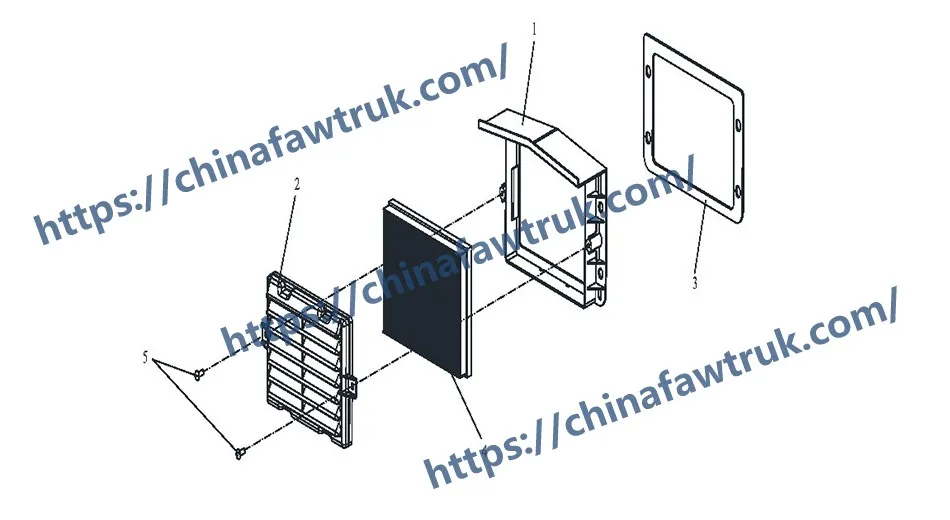
Le tableau suivant fournit l'intégralité, ventilation non éditée de la Filtre à carburant russe FAW assemblée. Chaque boulon, noix, et le capteur est répertorié pour garantir que les équipes de maintenance peuvent se procurer les pièces de rechange exactes nécessaires pour maintenir l'intégrité de la filtration du système de carburant..
| Non. |
Numéro de pièce |
Nom de la pièce |
Quantité |
| 1 |
1105010-2007-C00 |
Ensemble de filtre à carburant (Modèle) |
1 |
| 2 |
1105121-1767 |
Support de filtre à carburant |
1 |
| 3 |
Q1841245 |
Boulon à bride hexagonale (Queue grossière/standard) |
4 |
| 4 |
CQ32612 |
Contre-écrou à bride hexagonale |
4 |
| 5 |
Q1841450 |
Boulon à bride hexagonale (Queue grossière/standard) |
4 |
| 6 |
CQ32614 |
Contre-écrou à bride hexagonale |
4 |
| 1-1 |
1105050-2007 |
Ensemble de noyau de filtre à carburant (Élément) |
1 |
| 1-2 |
1105150C50A |
Ensemble d'alarme de niveau d'eau (Capteur) |
1 |
Protocoles de diagnostic pour la santé des carburants
Maintenir le Filtre à carburant russe FAW est une activité strictement programmée. L'élément filtrant (1-1) doit être remplacé aux intervalles spécifiés, ou plus tôt si la qualité du carburant est suspecte. Un filtre obstrué se manifestera par une perte de puissance sous charge, alors que le moteur manque de carburant. En hiver, cela peut être confondu avec du carburant gélifiant; vérifier la chute de pression à travers le filtre est l'étape de diagnostic définitive.
Le Ensemble d'alarme de niveau d'eau nécessite des tests réguliers. Débranchez le capteur et vérifiez que le voyant du tableau de bord s'allume (ou éteint, selon la logique). Inspecter le câblage à la base du capteur; il est sujet aux dommages causés par les débris projetés par les pneus. Un fil cassé désactivera l'alarme, laissant le moteur vulnérable aux dégâts des eaux. Videz le bol d'eau quotidiennement en hiver pour éviter que l'eau ne gèle et ne fissure le voyant en plastique..
Inspectez le Support de filtre à carburant pour les fissures, en particulier autour des trous de montage pour le Boulons à bride hexagonale. La fatigue due aux vibrations est courante dans les camions à kilométrage élevé. Assurer le Contre-écrous à bride hexagonale sont serrés; s'ils peuvent être tournés à la main, le dispositif de verrouillage est usé, et ils doivent être remplacés. Un ensemble de filtre desserré crée un danger pour les conduites de carburant qui y sont connectées.
Conclusion: Le gardien de la durée de vie du moteur
Le Filtre à carburant russe FAW n'est pas un produit générique; c'est un instrument spécialisé de protection du moteur conçu pour les rigueurs spécifiques de la Fédération de Russie. Sa filtration biphasée élimine les deux plus grandes menaces pour les moteurs diesel modernes: particules et eau.
Le système de montage robuste, doté de supports robustes et de matériel de verrouillage, garantit que le filtre reste opérationnel malgré les vibrations pénibles du travail hors route. Pour les propriétaires de flotte, traiter le Filtre à carburant russe FAW avec le respect qu'il mérite - en utilisant uniquement des noyaux de remplacement d'origine et en respectant les calendriers de vidange - est le moyen le plus efficace d'éviter des pannes coûteuses du système d'injection et d'assurer la rentabilité à long terme du véhicule..
Emballage et logistique
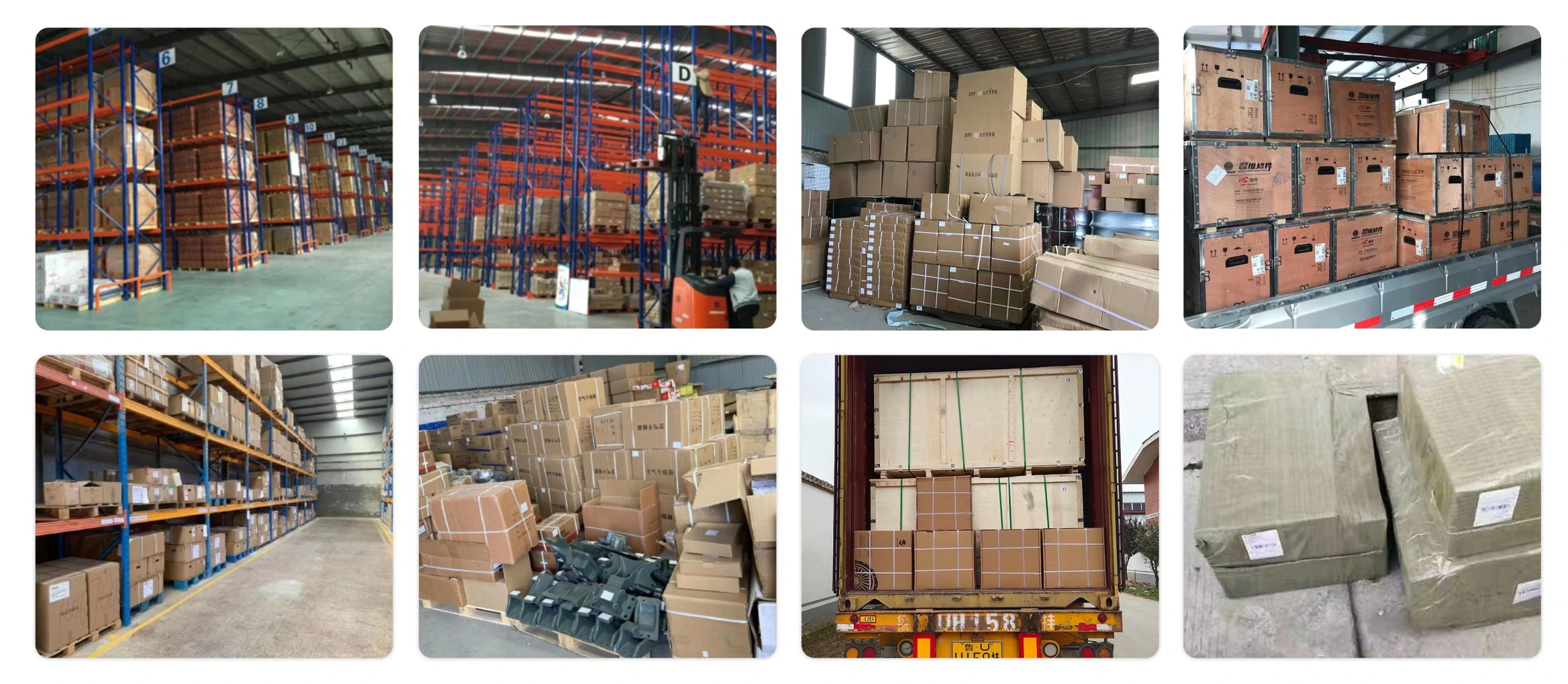
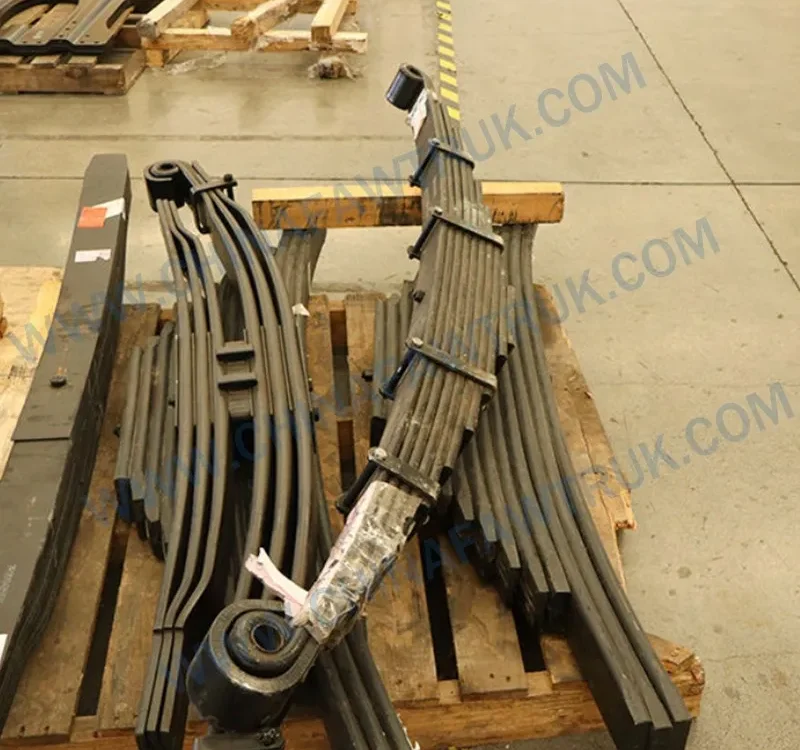
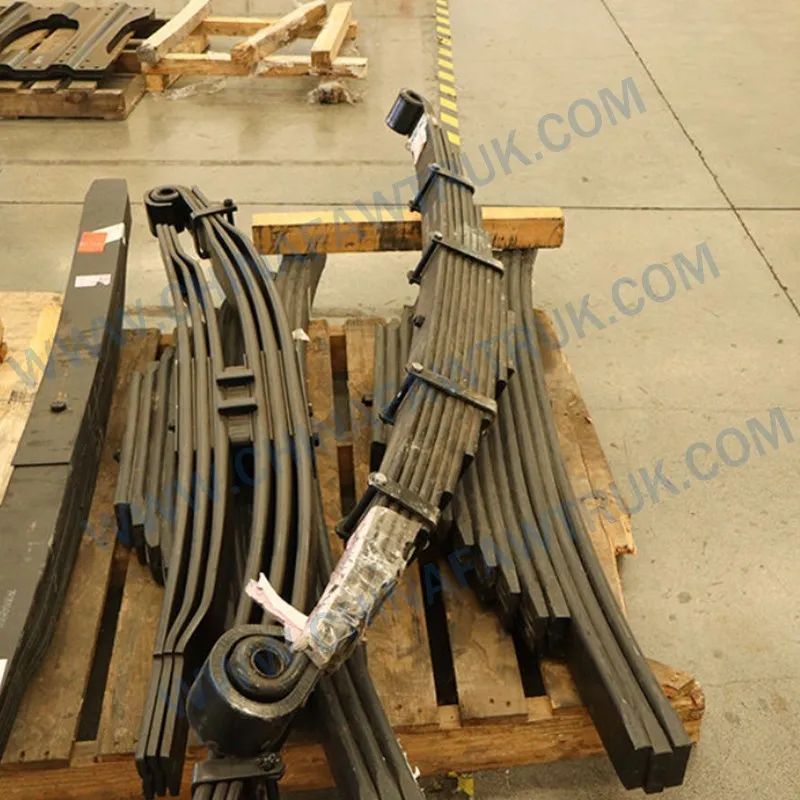
Pièces FAW, y compris l'ensemble bloc-cylindres, sont emballés avec soin pour garantir une livraison en toute sécurité. Chaque composant est sécurisé dans des matériaux de protection pour éviter tout dommage pendant le transport. Le réseau logistique garantit des expéditions ponctuelles dans le monde entier, soutenir des opérations de maintenance efficaces. Vous trouverez ci-dessous une image illustrant l'emballage standard des pièces de camion FAW., mettant en valeur l’attention portée aux détails dans la manipulation et le stockage.
Cette approche d'emballage minimise le risque de corrosion ou de dommages causés par les chocs., s'assurer que les pièces comme l'ensemble bloc-cylindres FAW arrivent en parfait état. Les clients peuvent compter sur la logistique de FAW pour une qualité et une fiabilité constantes.