par 


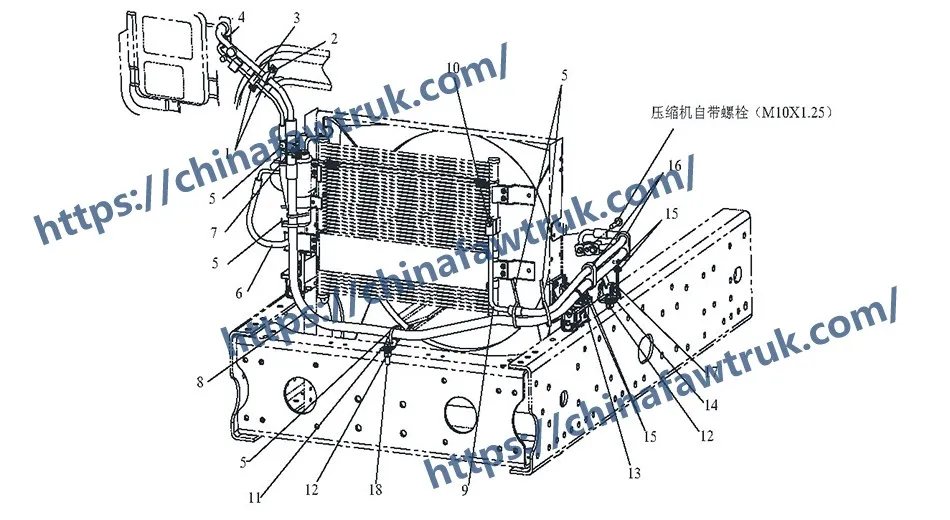
Il s’agit d’une déconstruction technique experte du Protection de ventilateur FAW J6P (également connu sous le nom de « Carénage du ventilateur », Comp 2) et son ensemble de montage en 45 pièces du chapitre 37. Ce système est essentiel à la gestion thermique du FAW Jiefang CA3250P66K2L1T1E 6×4 tombereau. Ce composant n'est pas simple “garde”; c'est un “Logique aérodynamique” outil.

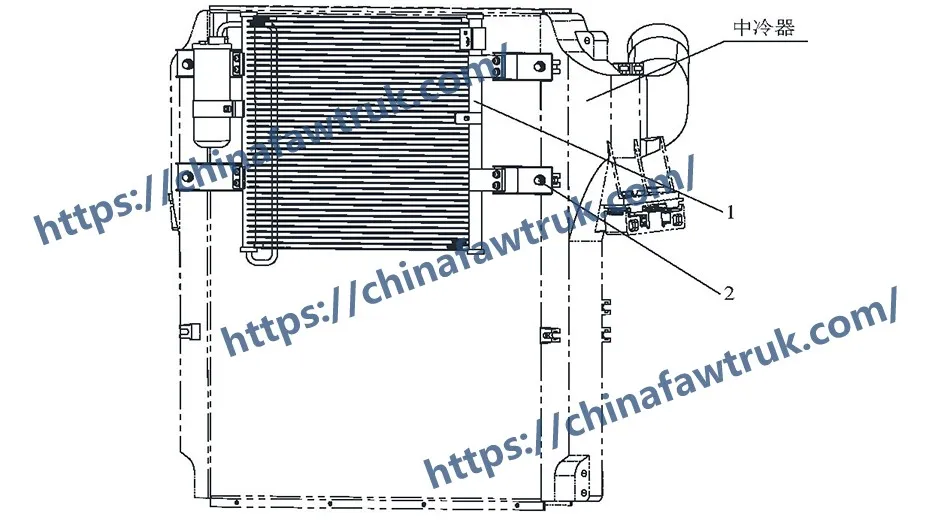
Le Protection de ventilateur FAW J6P crée un “tunnel à vide,” forcer le ventilateur du moteur (voir chapitre 20) tirer 100% de son air *à travers* l'ensemble radiateur’ (Comp 1). Sans ce linceul, un ventilateur est extrêmement inefficace, tirant l'air du “chemin de moindre résistance” (les côtés) et “stabulation.” Ce “Logique de l'entonnoir de flux d'air” est la différence entre un refroidissement maximal et une surchauffe catastrophique.
Ce guide est essentiel pour les techniciens de flotte et les spécialistes des pièces.. Le Protection de ventilateur FAW J6P est constitué d'un polymère composite, et son #1 l'ennemi est la vibration, ce qui provoque des fissures de fatigue. Nous allons déconstruire l'ensemble du système en 46 parties, en se concentrant sur le “Logique du flux d'air” (le garde lui-même), le “Contexte d'échange de chaleur” (le radiateur qu'il dessert), et le “Logique anti-vibration” (le réseau complexe de parenthèses, tirants, et les attaches qui le protègent).
Ce composant est le “héros” de cette assemblée. Tous les autres 45 les pièces sont en service pour la fonction de ce composant.
1. Composant: 'Carénage du ventilateur’ (1309010-14B)
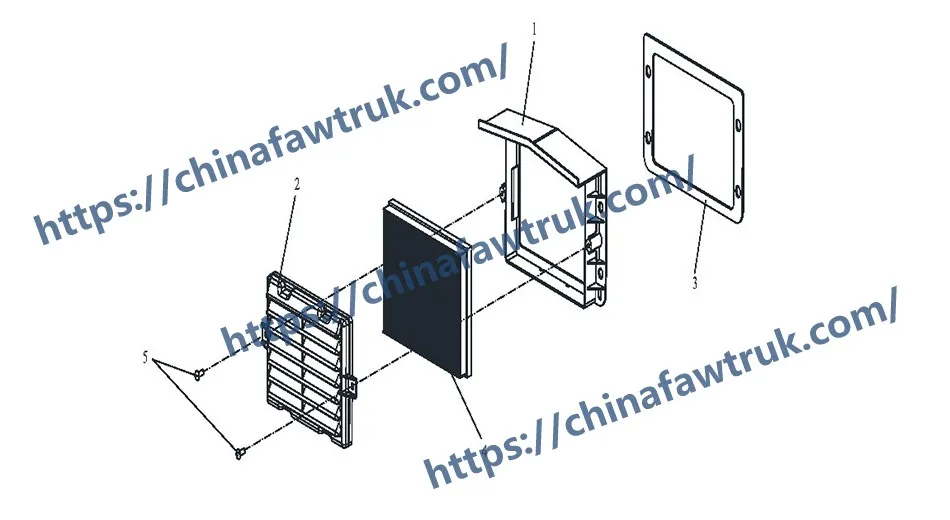
Ce (Comp 2) *est* le Protection de ventilateur FAW J6P. C'est “Logique aérodynamique” est plus complexe qu'il n'y paraît. Ce n'est pas simple “boîte” ou “garde.” C'est un ingénierie “envelopper” ou “tunnel” conçu pour optimiser le flux d'air.
Le “Logique de dégagement des pourboires” est l'élément de conception le plus critique. Cela fait référence au *petit, écart précis* entre les extrémités des pales du ventilateur et l'intérieur “tunnel” de la Protection de ventilateur FAW J6P. Si cet écart est trop grand, air “recircule” du côté haute pression vers le côté basse pression, “stabulation” le ventilateur et détruit son efficacité.
Ce “Logique du vide” est tout son but. Le Protection de ventilateur FAW J6P crée un “scellé” environnement, forcer le ventilateur à tirer un “vide” *sur toute la surface* de l'ensemble radiateur’ (Comp 1) palmes. Cela garantit un refroidissement uniforme et évite “points chauds.”
“Logique matérielle” est également la clé. Cette pièce est réalisée à partir d'un “polymère renforcé de verre” (un composite). Il doit être léger, mais aussi suffisamment rigide pour ne pas “fléchir” ou “chaîne” de la chaleur de 100°C+ rayonnante du moteur. Il doit également absorber une constante, vibrations à haute fréquence.
Le “Logique du mode de défaillance” est “fissuration par fatigue.” Un châssis de camion lourd fléchit constamment. Cette vibration est la #1 ennemi du Protection de ventilateur FAW J6P. Une petite fissure, à partir d'un boulon de montage, volonté “araignée” à travers le linceul, briser le “joint sous vide” et provoquant un effet immédiat, perte drastique des performances de refroidissement.
Le Protection de ventilateur FAW J6P est inutile sans le composant pour lequel il est conçu “servir”: le « Ensemble radiateur ».
1. Composant: 'Ensemble radiateur’ (1301010-14B)
Ce (Comp 1) est le “Logique d'échange de chaleur.” C'est un grand, passif “dissipateur de chaleur” pour le liquide de refroidissement du moteur et celui du turbocompresseur “air de suralimentation” (via le refroidisseur intermédiaire). En tant que “passif” appareil, ça dépend 100% sur *airflow* pour dissiper la chaleur.
Le “Logique symbiotique” est-ce que c'est le Protection de ventilateur FAW J6P (Comp 2) est *monté directement* sur le cadre du « Ensemble radiateur’ (Comp 1). Sa conception “scellés” contre les bords du radiateur. Ce “Logique d'ensemble apparié” garantit que tout air aspiré par le ventilateur *doit* d'abord passer *à travers* les ailettes du radiateur.
La survie du Protection de ventilateur FAW J6P est donc directement “lié” à la survie du radiateur. Le radiateur fournit le “face de montage” et “support structurel” pour le carénage du ventilateur.
Ce groupe représente le complexe “Logique d’isolation des vibrations.” Depuis le Protection de ventilateur FAW J6P est (fragile) composite et le châssis/moteur (vibrant) est en acier, ce système est ce qui empêche le Protection de ventilateur FAW J6P depuis “tremblement” lui-même en morceaux.
1. Le “Logique d'isolement” (Composants 11, 12, 13)
L'ensemble du radiateur’ (qui tient la garde du ventilateur) est assis sur un « Ensemble de traverse inférieure de radiateur’ (1302030-61B). Ce “étagère” est détenu par le 'Support gauche du radiateur’ (1302027-70U) et 'Support droit du radiateur’ (1302028-70U). Ces “prend en charge” utiliser du gros caoutchouc “isolateur” bagues (voir chapitre 38) à “humide” la vibration brute du cadre.
2. Le “Logique anti-balancement” (Composants 18, 19)
C'est le “Logique de force de cisaillement” protection. Le 'Ensemble de biellette de direction’ (1302050-01) et ‘Support supérieur de biellette de direction’ (1302041-14B) sont des stabilisateurs diagonaux. Quand le camion heurte un nid-de-poule, le châssis “fléchit.” Ces tirants empêchent le radiateur et les éléments qui y sont attachés Protection de ventilateur FAW J6P d'être “tordu” ou “influencé,” ce qui provoquerait un instant “fissure de fatigue.”
3. Le “Logique de trame” (Composants 8, 22, 26, 33, 35)
Ce “la toile” en acier (« Plaque de raccordement du radiateur’ (1301020-61B), « Plaque support de radiateur’ (1302040-14B), etc.) est le “Logique structurelle.” Cela crée un “cage rigide” autour du “isolé” radiateur, fournissant les points de montage sécurisés pour le Protection de ventilateur FAW J6P.
Ce dernier groupe comprend tous “Les plus petites unités utilisables” (SSU) et le “Plomberie” qui doit coexister avec Protection de ventilateur FAW J6P.
1. Le “Logique de fixation” (Boulons, Noix, Rondelles)
Cela inclut tout “Logique matérielle,” tel que « Boulon à bride hexagonale’ (Q1840816, Q1841230, etc.), « Boulon combiné’ (CQ1460820), et « Écrous hexagonaux’ (CQ34010, CQ34008, etc.). Ce sont les “Logique résistante aux vibrations” attaches.
Un seul boulon desserré (Par exemple, Comp 7, qui détient le Protection de ventilateur FAW J6Pla plaque de support) va créer un “point chaud de vibration” et “marteau” le carénage composite jusqu'à ce qu'il se fissure. C'est pourquoi la haute résistance, “à bride” (autobloquant) le matériel est essentiel.
2. Le “Logique de plomberie” (Tuyaux & Pinces)
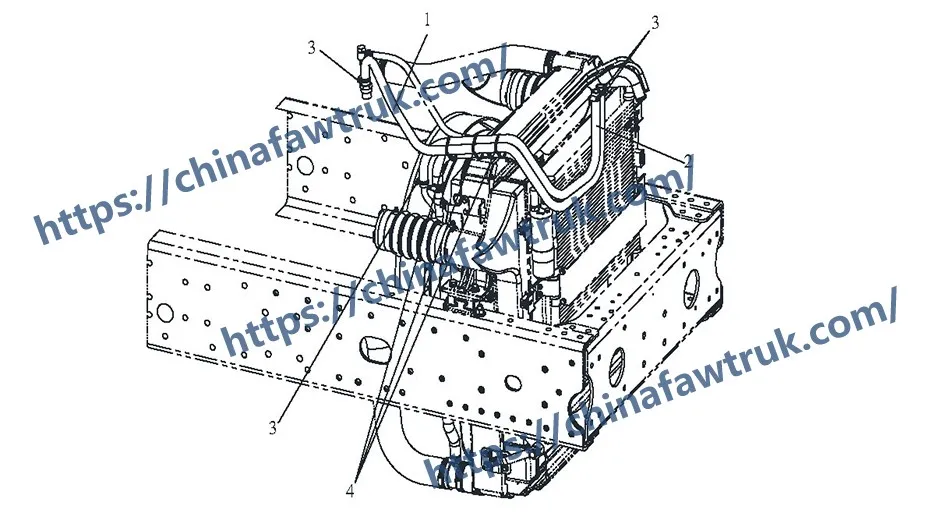
Ce groupe comprend tous les tuyaux (« Tuyau d'arrivée de radiateur’ (1303011-14B), « Tuyau de sortie de radiateur’ (1303021-14B), etc.) et leur couple élevé « Colliers de serrage de type banjo’ (CQ67670B, etc.).
Le “Logique de routage” de cette plomberie est conçue *autour* du Protection de ventilateur FAW J6P. Les flexibles doivent être “flexible” pour absorber les vibrations entre les “moteur” et le “radiateur” assemblée. Ils sont acheminés pour dégager le linceul et, plus important encore, le “filage” ventilateur (Chapitre 20) *à l'intérieur* du linceul.
Le tableau suivant fournit l'intégralité, ventilation détaillée de tous 46 types de composants dans le Protection de ventilateur FAW J6P et ensemble de montage du radiateur (Chapitre 37) Pour le FAW Jiefang CA3250P66K2L1T1E 6×4 tombereau.
| Marque | Partie no. | Nom de la pièce | Quantité |
|---|---|---|---|
| 1 | 1301010-14B | Ensemble radiateur | 1 |
| 2 | 1309010-14B | Enveloppe de ventilateur | 1 |
| 3 | CQ67670B | Collier de serrage type banjo modèle B | 2 |
| 4 | 1303011-14B | Durite d'arrivée de radiateur | 1 |
| 5 | CQ67680B | Collier de serrage type banjo modèle B | 2 |
| 6 | 1303021-14B | Tuyau de sortie de radiateur | 1 |
| 7 | CQ1460820 | Boulon combiné | 8 |
| 8 | 1301020-61B | Ensemble de plaque de connexion de radiateur | 2 |
| 9 | Q1840816 | Boulon à bride hexagonale | 14 |
| 10 | Q1841230 | Boulon à bride hexagonale | 4 |
| 11 | 1302030-61B | Ensemble de traverse inférieure de radiateur | 2 |
| 12 | 1302027-70U | Support gauche du radiateur | 1 |
| 13 | 1302028-70U | Support droit radiateur | 1 |
| 14 | Q1840825 | Boulon à bride hexagonale | 8 |
| 15 | CQ1461025 | Boulon combiné | 4 |
| 16 | CQ1501050 | Boulon à tête hexagonale | 2 |
| 17 | 1302052-01 | Réservoir | 2 |
| 18 | 1302050-01 | Ensemble de biellette de direction | 2 |
| 19 | 1302041-14B | Support supérieur de biellette de direction | 2 |
| 20 | CQ34010 | Écrou hexagonal | 2 |
| 21 | Q40310 | Rondelle élastique | 2 |
| 22 | 1302040-14B | Plaque support radiateur | 2 |
| 23 | Q1840820 | Boulon à bride hexagonale | 2 |
| 24 | Q1841230 | Boulon à bride hexagonale | 4 |
| 25 | CQ34008 | Écrou hexagonal | 2 |
| 26 | 1302043-14B | Plaque d'appui | 2 |
| 27 | CQ32612 | Écrou hexagonal | 4 |
| 28 | 1311034-50UN | Durite de raccordement du refroidisseur intermédiaire | 1 |
| 29 | CQ67635B | Collier de serrage type banjo modèle B | 3 |
| 30 | 1311062-14B | Conduite d'eau de retour | 1 |
| 31 | 1311035-61B | Ensemble de tuyaux en acier de connexion | 1 |
| 32 | CQ1460816 | Boulon combiné | 1 |
| 33 | 1311045-61B | Ensemble de support | 1 |
| 34 | Q1840816 | Boulon à bride hexagonale | 4 |
| 35 | 1301023-50UN | Plaque de liaison supérieure du radiateur | 2 |
| 36 | Q1841020 | Boulon à bride hexagonale | 2 |
| 37 | 1311034-61B | Conduite d'eau de retour avant | 1 |
| 38 | CQ67640B | Collier de serrage type banjo modèle B | 1 |
| 39 | 1311069-76UN | Tuyau de dégazage arrière radiateur | 1 |
| 40 | 1311063-61B | Tuyau de dégazage du radiateur | 1 |
| 41 | 1311025-61B | Ensemble de tuyaux de raccordement | 1 |
| 42 | Q1840816 | Boulon à bride hexagonale | 2 |
| 43 | CQ67622B | Collier de serrage type banjo modèle B | 4 |
| 44 | CQ72314T5 | Oeillet | 2 |
| 45 | 1311024-249 | Boulon de purge d'air Degas | 1 |
| 46 | 1311025-138 | Ensemble de tuyaux de dégazage du moteur | 1 |
Les spécifications pour le Protection de ventilateur FAW J6P Le système est défini par sa fonction d'unité de contrôle du débit d'air principale pour l'ensemble radiateur.
| Demande de véhicule | FAW Jiefang CA3250P66K2L1T1E 6×4 Tombereau |
| Groupe système | Protection de ventilateur FAW J6P & Ensemble de montage de radiateur |
| Logique primaire | Entonnoir du flux d'air & Génération de vide pour le refroidissement |
| Logique secondaire | Isolation des vibrations & Montage structurel |
| Composant principal | 'Carénage du ventilateur’ (1309010-14B) |
| Composant associé | 'Ensemble radiateur’ (1301010-14B) |
| Système de stabilisation | 'Ensemble de biellette de direction’ (1302050-01), ‘Support supérieur de biellette de direction’ (1302041-14B) |
| Système de montage | « Traverse inférieure’ (1302030-61B), 'Supporte’ (1302027-70U, 1302028-70U) |
| Matériel (Garde de ventilateur) | Haute température, Composite polymère renforcé de verre |
| Composants totaux | 46 Types de composants |
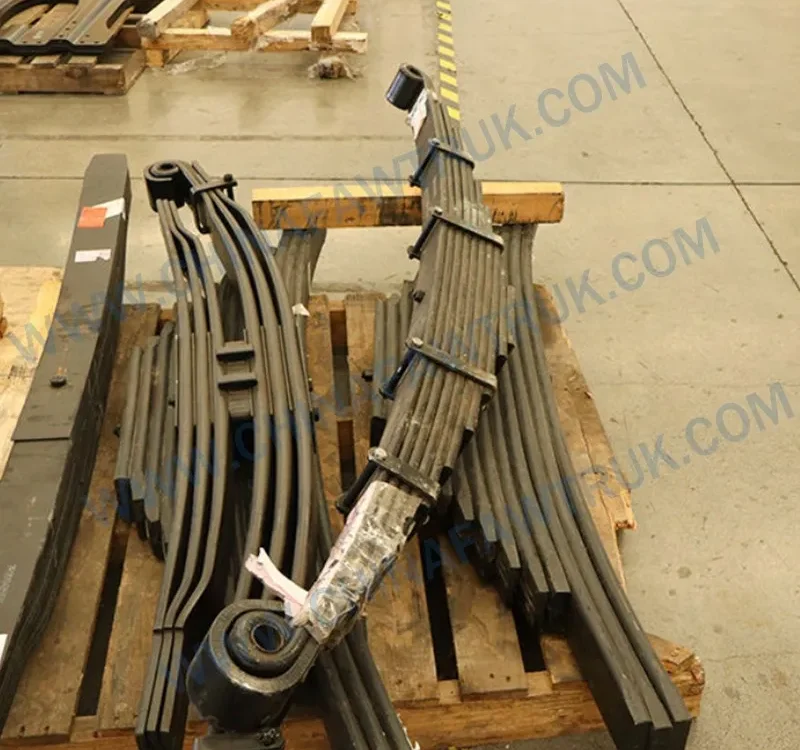
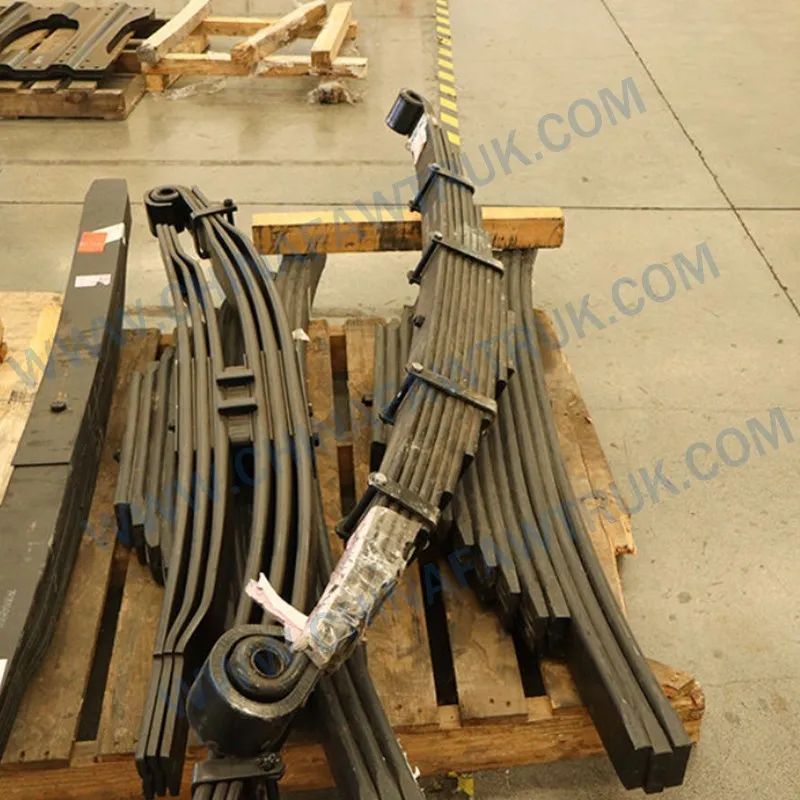
Pièces FAW, y compris l'ensemble bloc-cylindres, sont emballés avec soin pour garantir une livraison en toute sécurité. Chaque composant est sécurisé dans des matériaux de protection pour éviter tout dommage pendant le transport. Le réseau logistique garantit des expéditions ponctuelles dans le monde entier, soutenir des opérations de maintenance efficaces. Vous trouverez ci-dessous une image illustrant l'emballage standard des pièces de camion FAW., mettant en valeur l’attention portée aux détails dans la manipulation et le stockage.
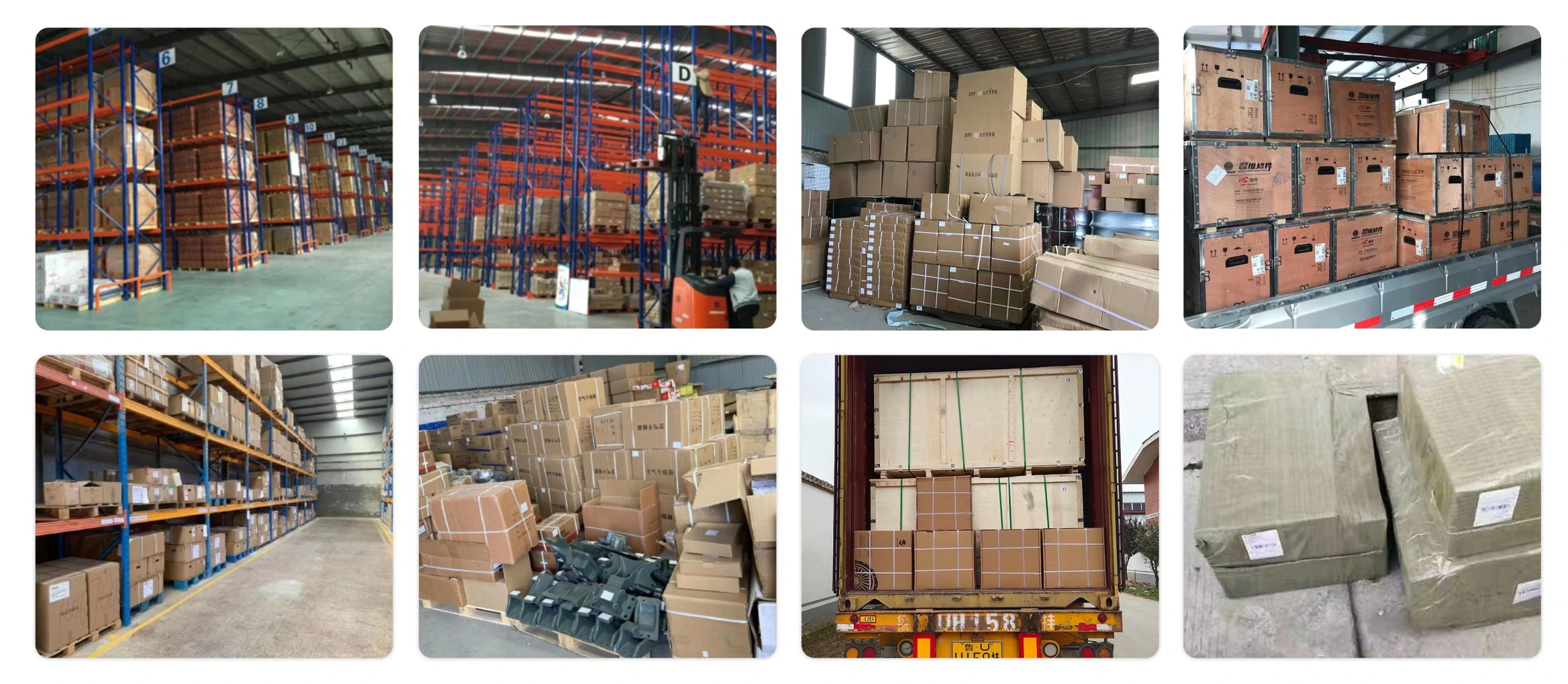
Cette approche d'emballage minimise le risque de corrosion ou de dommages causés par les chocs., s'assurer que les pièces comme l'ensemble bloc-cylindres FAW arrivent en parfait état. Les clients peuvent compter sur la logistique de FAW pour une qualité et une fiabilité constantes.