by 


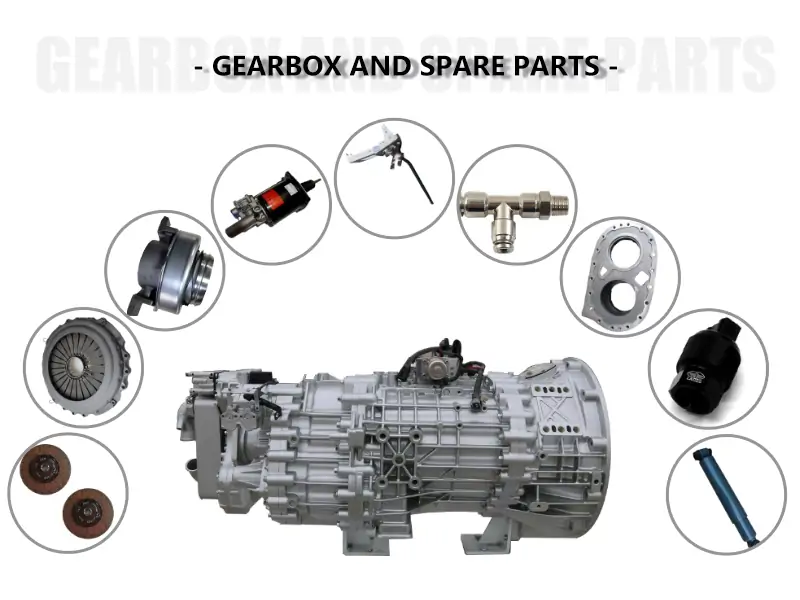
The FAW Transmission Reverse Gear Shaft serves as the structural anchor for the reverse idler mechanism within the FAW 6G55 gearbox. Unlike the rotating main shafts that handle forward propulsion, the FAW Transmission Reverse Gear Shaft is a stationary axis designed to withstand the immense shear forces generated during directional changes. It acts as the fulcrum that allows the Rev. idler gear to bridge the gap between the countershaft and the output shaft, enabling the vehicle to move backward with full torque capacity. The integrity of the FAW Transmission Reverse Gear Shaft is paramount for safe low-speed maneuvering in loading docks and tight logistical hubs.

FAW Transmission Reverse Gear Shaft
The FAW Transmission Reverse Gear Shaft operates under unique stress conditions. When a driver shifts into reverse, the idler gear slides into mesh, creating a sudden lateral load on the shaft. This component must resist deflection to ensure that the gear teeth engage squarely. Any bending or flexing of the FAW Transmission Reverse Gear Shaft would result in edge-loading of the gears, leading to premature pitting and noise. In heavy-duty applications, such as construction or mining, where trucks frequently reverse up steep inclines, the load on this shaft can exceed the engine’s maximum forward torque due to the high reduction ratio of the reverse gear set.
Furthermore, the FAW Transmission Reverse Gear Shaft functions within a splash-lubrication environment. Located in the lower section of the transmission housing, it relies on the oil mist generated by the main gear cluster. The surface finish of the FAW Transmission Reverse Gear Shaft is precision-ground to support the Needle bearing (Part No. WBK30X40X30-6G55), ensuring a hydrodynamic oil film is maintained even at low rotational speeds. This design prevents metal-to-metal contact during the critical moments of initial gear engagement.
Fleet managers should recognize that difficulty in shifting into reverse is often a symptom of wear on the FAW Transmission Reverse Gear Shaft or its associated support saddle. If the shaft becomes pitted or worn, the idler gear will drag, causing grinding noises and increasing driver fatigue. Proactive inspection of this assembly during transmission overhauls is essential to maintaining the “shiftability” and safety of the vehicle.
The FAW Transmission Reverse Gear Shaft (Part No. 6G55-4011) is engineered from high-grade alloy steel, subjected to a specialized induction hardening process. This treatment creates a deep, wear-resistant case capable of withstanding the high contact stresses of the needle bearings, while retaining a tough, ductile core to resist shock loads. This duality is critical; a shaft that is too brittle would snap under the shock of a “rocking” maneuver, while one that is too soft would quickly brinell and fail.
The mounting system for the FAW Transmission Reverse Gear Shaft utilizes a Rev. support saddle (Part No. 6G55-4023) to provide rigid support. This saddle ensures that the shaft remains perfectly parallel to the countershaft and output shaft. The assembly is secured by a high-tensile Inner-hexagon bolt (Part No. Q218B0870T1F3) and a heavy-duty Spring washer (Part No. WTD14X8X1-6G55). The clamping force provided by these fasteners prevents the shaft from rotating or vibrating in its bore, a common failure mode in inferior transmission designs.
The interaction between the FAW Transmission Reverse Gear Shaft and the Rev. idler gear (Part No. 6GT60-4811) is facilitated by dual Needle bearings. These bearings minimize friction and allow the idler gear to spin freely when disengaged. The precise tolerance of the shaft diameter is measured in microns to ensure the correct radial clearance for these bearings. Any deviation would lead to excessive play, gear whine, and eventual destruction of the idler mechanism.
The following table contains the complete parts breakdown for the FAW Transmission Reverse Gear Shaft and associated countershaft components, as detailed in the technical diagrams (Items 1-13).
| No. | Code (Part No.) | Name | Number (Q’ty) |
|---|---|---|---|
| 1 | 2580/2520 | Bearing | 2 |
| 2 | Q43145 | Ring | 1 |
| 3 | 6GT60-2511 | Countershaft 5th gear | 1 |
| 4 | 6GT60-2611 | Countershaft 6th gear | 1 |
| 5 | 6GT60-2411 | Countershaft 4th gear | 1 |
| 6 | 6GT60-2311 | Countershaft 3rd gear | 1 |
| 7 | 6GT60-2011 | Countershaft | 1 |
| 8 | 6GT60-4811 | Rev. idler gear | 1 |
| 9 | WBK30X40X30-6G55 | Needle bearing | 2 |
| 10 | 6G55-4011 | Rev. idler shaft | 1 |
| 11 | 6G55-4023 | Rev. support saddle | 1 |
| 12 | Q218B0870T1F3 | Inner-hexagon bolt | 1 |
| 13 | WTD14X8X1-6G55 | Spring washer | 1 |
Analyzing the FAW Transmission Reverse Gear Shaft reveals its interdependence with the entire intermediate and output shaft assemblies. The shaft does not operate in isolation. For instance, the Rev. support saddle (Part No. 6G55-4023) is responsible for maintaining the axial alignment of the idler gear. If this saddle loosens due to vibration, the FAW Transmission Reverse Gear Shaft can skew, causing the idler gear to run at an angle relative to the countershaft. This misalignment leads to uneven tooth wear and the generation of metallic debris that contaminates the entire transmission.
Lubrication plays a critical role in the longevity of the FAW Transmission Reverse Gear Shaft. The Needle bearings (Part No. WBK30X40X30-6G55) require a constant film of oil to prevent metal-to-metal contact with the shaft surface. In conditions where the transmission fluid level is low, these bearings are often the first to fail, as they are located high in the casing relative to the oil sump. A seized needle bearing will spin the inner race on the stationary shaft, scoring the hardened surface and rendering the FAW Transmission Reverse Gear Shaft unusable.
The Output shaft (Part No. 6G60-3011) also interacts indirectly with the reverse system. The stability of the output shaft bearings affects the gear mesh quality across the entire transmission. If the main shaft bearings wear, the output shaft can deflect under load, altering the contact patch with the reverse idler gear. This systemic flexibility emphasizes why replacing a single component, like the FAW Transmission Reverse Gear Shaft, without inspecting the supporting bearings and shafts, is often a temporary fix.
Finally, the quality of fasteners cannot be overstated. The Inner-hexagon bolt (Part No. Q218B0870T1F3) serves as the primary retention mechanism for the reverse shaft. Reusing this bolt during a rebuild is a common error. The bolt stretches during its initial torque application, reducing its clamping force if reused. A loose bolt allows the FAW Transmission Reverse Gear Shaft to vibrate, leading to fretting wear on the transmission case bore. Once the case bore is worn, the transmission housing itself is compromised, leading to expensive repairs.
Effective maintenance of the FAW Transmission Reverse Gear Shaft begins with auditory diagnostics. A distinctive whining noise while reversing is normal for straight-cut gears, but a change in pitch or a grinding sound indicates bearing distress or gear tooth damage. Operators should be trained to report these sounds immediately. Early detection of a failing Needle bearing can save the shaft from scoring, reducing repair costs significantly.
Regular oil analysis is the gold standard for preventative maintenance. High levels of chrome or nickel in the oil sample often point to bearing race wear or gear tooth spalling. If such contamination is found, the transmission should be inspected, focusing on the high-load areas like the FAW Transmission Reverse Gear Shaft and the main countershaft bearings.
During reassembly, it is crucial to follow factory torque specifications for the Inner-hexagon bolt (Part No. Q218B0870T1F3) and to always use a new Spring washer (Part No. WTD14X8X1-6G55). These components ensure that the shaft remains static under the dynamic loads of operation. Additionally, applying a thread-locking compound adds a layer of security against vibration-induced loosening.
Finally, inspect the mating surfaces of the Rev. support saddle (Part No. 6G55-4023). Any wear or burrs on this component will prevent the FAW Transmission Reverse Gear Shaft from seating correctly. A misaligned shaft will cause the idler gear to “walk” axially, potentially disengaging under load. Replacing the saddle whenever the shaft is replaced is a best practice that ensures long-term reliability.
The FAW Transmission Reverse Gear Shaft is a precision component manufactured to strict metallurgical standards. Genuine FAW parts utilize proprietary steel alloys and heat treatment processes that optimize the balance between surface hardness and core toughness. Aftermarket alternatives often lack this sophisticated engineering, resulting in shafts that are either too soft, leading to rapid wear, or too brittle, prone to catastrophic failure under shock loads.
Moreover, genuine parts guarantee dimensional compatibility. The fit between the FAW Transmission Reverse Gear Shaft and the Needle bearings is critical for maintaining an oil film. Even minor deviations in diameter can lead to bearing seizure or excessive play. By using genuine FAW parts, you ensure that the clearances are maintained within the factory design limits, preserving the integrity of the lubrication system.
Investing in a genuine FAW Transmission Reverse Gear Shaft is an investment in vehicle uptime. The cost of a transmission failure—towing, downtime, and repair—far exceeds the price difference between a genuine shaft and a generic copy. Choose FAW genuine parts to ensure your fleet operates with the reliability and durability engineered into every 6G55 transmission.
FAW parts, including the Cylinder Block Assembly, are packaged with care to ensure safe delivery. Each component is secured in protective materials to prevent damage during transit. The logistics network guarantees timely shipments worldwide, supporting efficient maintenance operations. Below is an image illustrating the standard packaging for FAW truck parts, showcasing the attention to detail in handling and storage.
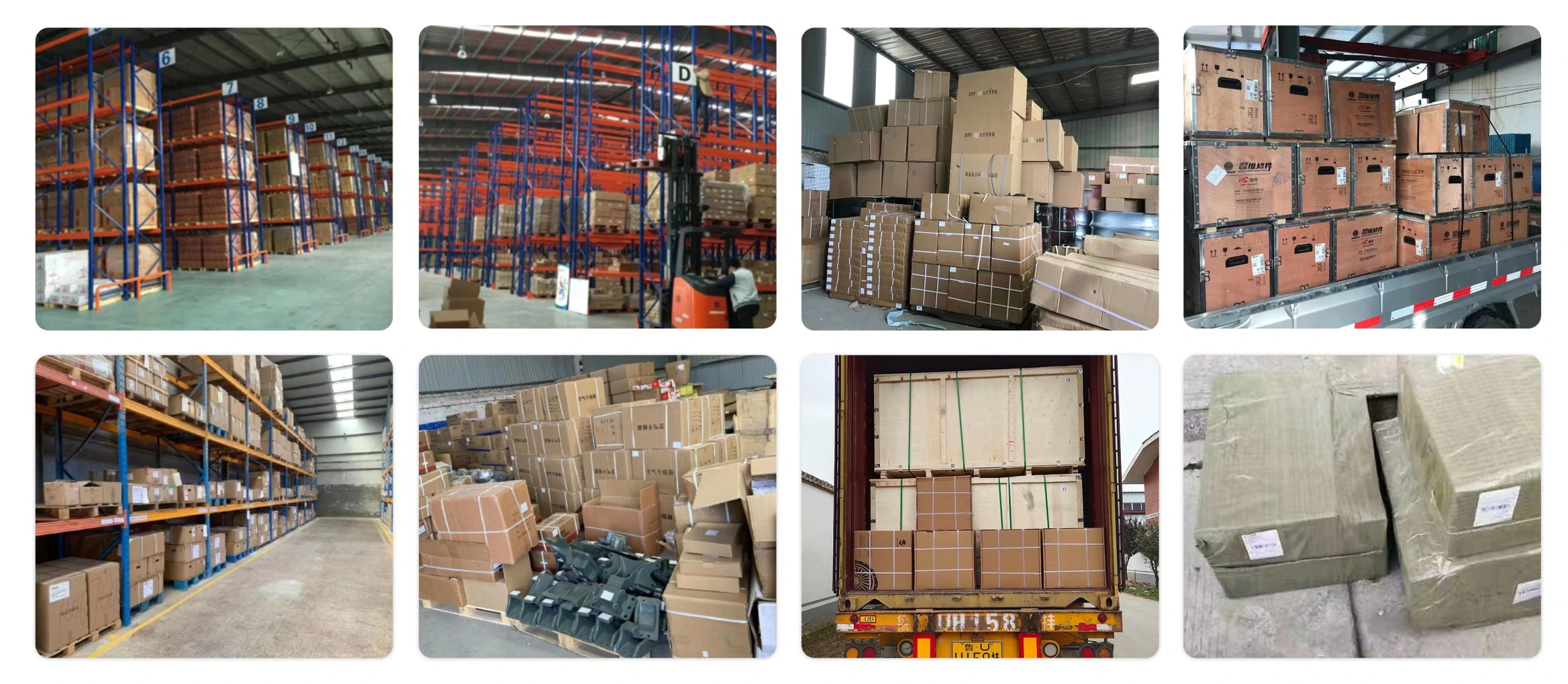
This packaging approach minimizes the risk of corrosion or impact damage, ensuring that parts like the FAW Cylinder Block Assembly arrive in perfect condition. Customers can rely on FAW’s logistics for consistent quality and reliability.