FAW Russian After-Processor Heat Shield: Mastering 4 Critical Defense Layers for Flawless Thermal Reliability
The FAW Russian After-Processor Heat Shield assembly stands as the definitive thermal guardian for the CA3250P66K24L1TE5Z dump truck. In the frozen expanses of the Siberian tundra, this logic assembly ensures that the emission control system retains vital heat for chemical efficiency while protecting chassis components from extreme temperatures. This guide analyzes the engineering behind the FAW Russian After-Processor Heat Shield and its strategic fasteners.

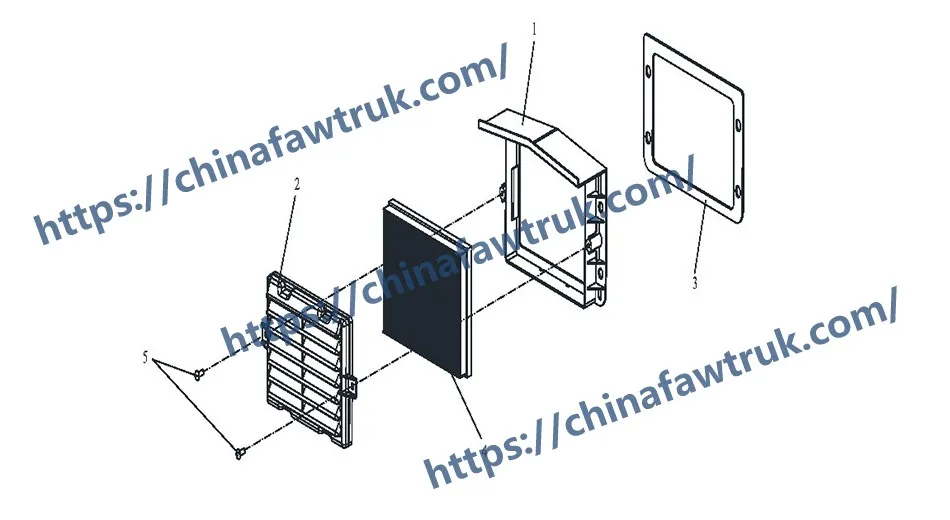
FAW Russian After-Processor Heat Shield
Thermodynamics: The Necessity of Thermal Shielding
To fully appreciate the design of the FAW Russian After-Processor Heat Shield, one must first understand the thermal challenges of the Euro 5 and Euro 6 emissions standards in an Arctic context. The after-treatment system, specifically the Selective Catalytic Reduction (SCR) unit, operates on a delicate chemical balance. For the injected urea (AdBlue) to convert hazardous Nitrogen Oxides (NOx) into harmless nitrogen and water vapor, the internal temperature of the catalyst substrate must remain above 200°C.
In the moderate climates of southern China, ambient air has little effect on this massive thermal mass. However, in the Russian Federation, where winter temperatures frequently plummet below -40°C, the wind chill generated by a moving truck becomes a formidable adversary. Without the intervention of the FAW Russian After-Processor Heat Shield, the convective heat loss from the stainless steel processor body is rapid and catastrophic. The metal skin cools instantly, drawing heat away from the internal exhaust stream.
When the internal temperature drops below the critical threshold, the chemical reaction stalls. The injected urea, instead of vaporizing into ammonia, strikes the cold walls of the mixing chamber and crystallizes. These white, rock-hard crystals accumulate rapidly, blocking the flow of exhaust gases and clogging the delicate ceramic catalyst. By employing the FAW Russian After-Processor Heat Shield, FAW engineers create a stagnant air insulation layer that dramatically slows this heat transfer, keeping the reactor hot and the chemistry active.
Vertical Protection: The Upper Heat Shield
The assembly’s primary defense against overhead hazards is the Upper Heat Shield – After-Processor (Part No. 1204038-77C). Positioned like a roof over the emissions unit, this component plays a dual role in the FAW Russian After-Processor Heat Shield logic. Its first function is the protection of the chassis components located immediately above it. The space constraints of the CA3250P66K24L1TE5Z mean that pneumatic brake lines, electrical harnesses, and hydraulic tipping hoses often route directly over the exhaust system.
During active DPF regeneration, the surface temperature of the processor can spike to over 550°C. Without the Upper Heat Shield – After-Processor, this intense radiant heat would be transferred directly to the rubber and plastic components above. This would lead to the embrittlement of air lines, the melting of wire insulation, and potentially catastrophic hydraulic failures. The shield reflects this energy downwards and sideways, preserving the integrity of the vehicle’s control systems.
The second function is specific to the Russian operating environment: debris deflection. Mining trucks and winter transport vehicles accumulate massive amounts of snow, ice, and frozen mud (slush) on the chassis rails and dump bed overhangs. If a large block of frozen ice were to dislodge and fall directly onto the superheated casing of the after-processor, the resulting thermal shock could crack the housing or shatter the internal ceramic substrates. The Upper Heat Shield – After-Processor acts as a sacrificial umbrella, absorbing this physical impact and allowing the debris to melt harmlessly away from the sensitive FAW Russian After-Processor Heat Shield core.
Core Retention: The Main Heat Shield Body
Encasing the vertical and lateral surfaces of the emissions unit is the primary Heat Shield – After-Processor (Part No. 1204028-77C). This is the workhorse of the FAW Russian After-Processor Heat Shield system. Constructed from stamped aluminized steel, this shield is engineered to provide the bulk of the thermal retention capability. The material choice is critical; aluminized steel offers superior heat reflection properties compared to galvanized steel and resists the high-temperature oxidation that would rapidly corrode lesser materials.
The engineering principle relied upon here is the “stagnant air gap.” Air is a poor conductor of heat, making it an excellent insulator. By maintaining a precision-engineered gap between the Heat Shield – After-Processor and the processor wall, the assembly traps a layer of hot air. This layer acts as a buffer, preventing the Arctic wind from scrubbing heat away from the processor skin. This thermal stability is what allows the SCR system to function efficiently, ensuring compliance with emission regulations even in deep winter.
In addition to thermal retention, the Heat Shield – After-Processor provides vital physical protection for adjacent components. Fuel tanks, battery boxes, and urea reservoirs are often mounted in close proximity to the after-treatment system. The radiant heat from an unshielded processor is sufficient to boil battery electrolytes or overheat diesel fuel, potentially causing vapor lock. By containing this heat, the FAW Russian After-Processor Heat Shield ensures the safety and longevity of the entire powertrain ecosystem.
Fastening Science: Advanced Combination Bolts
The structural integrity of the entire thermal defense system relies on its attachment points. The FAW Russian After-Processor Heat Shield assembly utilizes a specific set of high-specification fasteners: the Combination Bolt (Part No. CQ1460825) and the Combination Bolt (Part No. CQ1460816). While they may appear to be simple hardware, their selection is the result of careful engineering calculation designed to address the specific challenges of thermal cycling and field maintenance.
A “Combination Bolt” is distinguished by having a washer—typically a flange or a split lock washer—permanently captured on the bolt shaft. In the context of field maintenance in a Russian mine, this is a crucial design feature. Attempting to align a loose washer, a shield hole, and a bracket boss while wearing thick winter gloves is incredibly difficult. Captive washers eliminate the risk of dropping small parts into the deep snow, ensuring that every mounting point on the FAW Russian After-Processor Heat Shield is secured with the correct load distribution hardware.
From a metallurgical perspective, these bolts must accommodate extreme differential thermal expansion. As the processor heats up from -30°C to +500°C, the Heat Shield – After-Processor expands at a rate different from the cast iron or heavy steel mounting brackets. This movement can shear standard bolts or cause them to loosen over time. The combination bolts used in the FAW Russian After-Processor Heat Shield feature a broad flange head that distributes this clamping load over a wider area. This prevents the bolt head from crushing the thin sheet metal of the shield or pulling through the mounting hole, ensuring the shield remains secure and rattle-free.
Risk Assessment: The Cost of Compromise
It is a dangerous misconception to view the FAW Russian After-Processor Heat Shield as an optional “trim” piece. Operating a vehicle without this assembly poses severe safety and operational risks. In the dry summer months, the exposed high-temperature surface of the processor creates a significant fire hazard. Dry grass, paper debris, or spilled oil contacting the unshielded metal can ignite instantly. The shield acts as the primary fire suppression barrier.
In the winter context, a missing or damaged Heat Shield – After-Processor guarantees that the after-treatment system will run too cold. This leads directly to the urea crystallization issues mentioned previously, resulting in frequent regeneration failures, engine power loss, and expensive downtime for catalyst cleaning. Fleet managers must treat the integrity of the FAW Russian After-Processor Heat Shield with the same importance as engine cooling or lubrication systems.
Regular inspection of the mounting points is essential. Vibration fatigue often initiates around the bolt holes. If the Combination Bolt (CQ1460816) works loose, the shield will begin to rattle against the processor body. Over time, this metal-on-metal abrasion can wear a hole through the expensive processor casing, turning a minor hardware fix into a major component replacement. Therefore, maintaining the FAW Russian After-Processor Heat Shield is a critical practice for protecting the vehicle’s capital value.
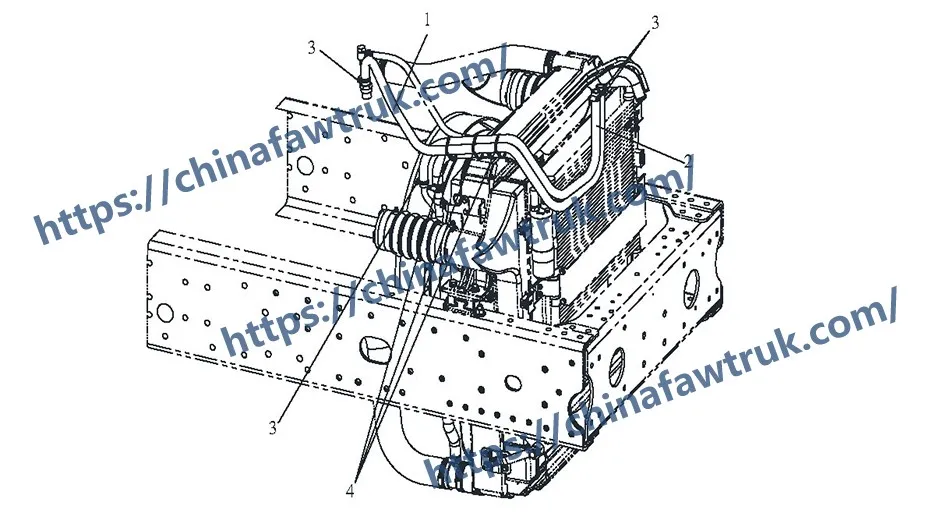
Component Breakdown: 85. After-Processor Heat Shield Logic Assembly
| No. |
Part Number |
Part Name |
Qty |
| 1 |
CQ1460825 |
Combination Bolt |
4 |
| 2 |
1204038-77C |
Upper Heat Shield – After-Processor |
1 |
| 3 |
1204028-77C |
Heat Shield – After-Processor |
1 |
| 4 |
CQ1460816 |
Combination Bolt |
5 |
Conclusion: The Logic of Thermal Fortification
The FAW Russian After-Processor Heat Shield assembly represents a masterclass in thermal management for heavy-duty vehicles. It is not a simple accessory but a calculated engineering solution to the conflicting requirements of extreme internal heat and extreme external cold. By isolating the after-treatment system, it ensures that the CA3250P66K24L1TE5Z remains compliant with environmental regulations while protecting the vehicle’s structural integrity.
For operators in the Russian Federation, the message is clear: the reliability of your truck in winter is directly linked to the condition of this shield. Shortcuts such as removing the shield to save time during maintenance or replacing specialized combination bolts with standard hardware will lead to system failures. Investing in the genuine FAW Russian After-Processor Heat Shield components is an investment in the uptime, safety, and longevity of the entire machine.
Packaging and Logistics
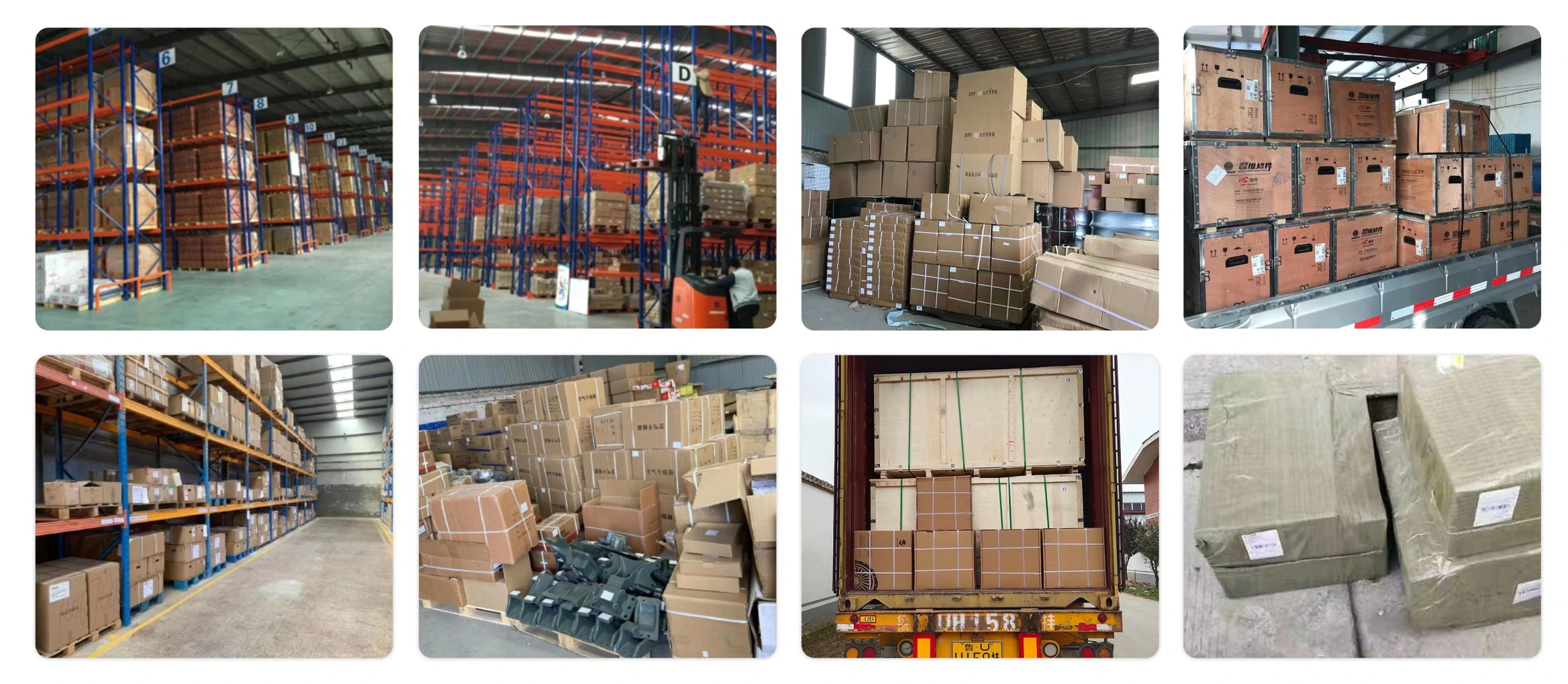
FAW parts, including the Cylinder Block Assembly, are packaged with care to ensure safe delivery. Each component is secured in protective materials to prevent damage during transit. The logistics network guarantees timely shipments worldwide, supporting efficient maintenance operations. Below is an image illustrating the standard packaging for FAW truck parts, showcasing the attention to detail in handling and storage.
This packaging approach minimizes the risk of corrosion or impact damage, ensuring that parts like the FAW Cylinder Block Assembly arrive in perfect condition. Customers can rely on FAW’s logistics for consistent quality and reliability.