FAW درع حراري روسي بعد المعالج: إتقان 4 طبقات دفاع مهمة لموثوقية حرارية لا تشوبها شائبة
ال FAW درع حراري روسي بعد المعالج assembly stands as the definitive thermal guardian for the CA3250P66K24L1TE5Z dump truck. In the frozen expanses of the Siberian tundra, this logic assembly ensures that the emission control system retains vital heat for chemical efficiency while protecting chassis components from extreme temperatures. This guide analyzes the engineering behind the FAW درع حراري روسي بعد المعالج and its strategic fasteners.

FAW درع حراري روسي بعد المعالج
الديناميكا الحرارية: The Necessity of Thermal Shielding
To fully appreciate the design of the FAW درع حراري روسي بعد المعالج, one must first understand the thermal challenges of the Euro 5 واليورو 6 emissions standards in an Arctic context. The after-treatment system, specifically the Selective Catalytic Reduction (SCR) وحدة, operates on a delicate chemical balance. For the injected urea (أدبلو) to convert hazardous Nitrogen Oxides (أكاسيد النيتروجين) إلى نيتروجين وبخار ماء غير ضارين, the internal temperature of the catalyst substrate must remain above 200°C.
In the moderate climates of southern China, ambient air has little effect on this massive thermal mass. لكن, في الاتحاد الروسي, where winter temperatures frequently plummet below -40°C, the wind chill generated by a moving truck becomes a formidable adversary. دون تدخل من FAW درع حراري روسي بعد المعالج, the convective heat loss from the stainless steel processor body is rapid and catastrophic. The metal skin cools instantly, drawing heat away from the internal exhaust stream.
When the internal temperature drops below the critical threshold, the chemical reaction stalls. The injected urea, instead of vaporizing into ammonia, strikes the cold walls of the mixing chamber and crystallizes. These white, rock-hard crystals accumulate rapidly, blocking the flow of exhaust gases and clogging the delicate ceramic catalyst. By employing the FAW درع حراري روسي بعد المعالج, FAW engineers create a stagnant air insulation layer that dramatically slows this heat transfer, keeping the reactor hot and the chemistry active.
Vertical Protection: The Upper Heat Shield
The assembly’s primary defense against overhead hazards is the Upper Heat Shield – بعد المعالج (الجزء لا. 1204038-77ج). Positioned like a roof over the emissions unit, this component plays a dual role in the FAW درع حراري روسي بعد المعالج منطق. Its first function is the protection of the chassis components located immediately above it. The space constraints of the CA3250P66K24L1TE5Z mean that pneumatic brake lines, electrical harnesses, and hydraulic tipping hoses often route directly over the exhaust system.
During active DPF regeneration, the surface temperature of the processor can spike to over 550°C. بدون Upper Heat Shield – بعد المعالج, this intense radiant heat would be transferred directly to the rubber and plastic components above. This would lead to the embrittlement of air lines, the melting of wire insulation, and potentially catastrophic hydraulic failures. The shield reflects this energy downwards and sideways, preserving the integrity of the vehicle’s control systems.
The second function is specific to the Russian operating environment: debris deflection. Mining trucks and winter transport vehicles accumulate massive amounts of snow, الجليد, والطين المتجمد (طين) on the chassis rails and dump bed overhangs. If a large block of frozen ice were to dislodge and fall directly onto the superheated casing of the after-processor, the resulting thermal shock could crack the housing or shatter the internal ceramic substrates. ال Upper Heat Shield – بعد المعالج acts as a sacrificial umbrella, يمتص هذا التأثير الجسدي ويسمح للحطام بالذوبان بعيدًا عن المنطقة الحساسة دون ضرر FAW درع حراري روسي بعد المعالج جوهر.
الاحتفاظ الأساسية: الجسم الرئيسي للدرع الحراري
يعد تغليف الأسطح الرأسية والجانبية لوحدة الانبعاثات هو الأمر الأساسي درع الحرارة – بعد المعالج (الجزء لا. 1204028-77ج). هذا هو العمود الفقري لل FAW درع حراري روسي بعد المعالج نظام. مصنوعة من الفولاذ بالألمنيوم المختوم, تم تصميم هذا الدرع لتوفير الجزء الأكبر من القدرة على الاحتفاظ بالحرارة. اختيار المواد أمر بالغ الأهمية; يوفر الفولاذ المطلي بالألمنيوم خصائص انعكاس حرارة فائقة مقارنة بالفولاذ المجلفن ويقاوم الأكسدة ذات درجة الحرارة العالية التي قد تؤدي إلى تآكل المواد الأقل بسرعة.
المبدأ الهندسي المعتمد هنا هو “فجوة هوائية راكدة.” الهواء موصل رديء للحرارة, مما يجعلها عازل ممتاز. من خلال الحفاظ على فجوة مصممة بدقة بين درع الحرارة – بعد المعالج وجدار المعالج, يحبس التجميع طبقة من الهواء الساخن. تعمل هذه الطبقة كمخزن مؤقت, منع الرياح القطبية الشمالية من إبعاد الحرارة عن سطح المعالج. هذا الاستقرار الحراري هو ما يسمح لنظام SCR بالعمل بكفاءة, ضمان الامتثال للوائح الانبعاثات حتى في فصل الشتاء العميق.
بالإضافة إلى الإحتباس الحراري, ال درع الحرارة – بعد المعالج يوفر الحماية المادية الحيوية للمكونات المجاورة. خزانات الوقود, صناديق البطارية, وغالباً ما يتم تركيب خزانات اليوريا على مقربة من نظام المعالجة اللاحقة. تعتبر الحرارة المشعة الصادرة عن المعالج غير المحمي كافية لغلي إلكتروليتات البطارية أو ارتفاع درجة حرارة وقود الديزل, يحتمل أن يسبب قفل البخار. من خلال احتواء هذه الحرارة, ال FAW درع حراري روسي بعد المعالج يضمن سلامة وطول عمر النظام البيئي لمجموعة نقل الحركة بأكمله.
علم الربط: مسامير الجمع المتقدمة
تعتمد السلامة الهيكلية لنظام الدفاع الحراري بأكمله على نقاط الارتباط الخاصة به. ال FAW درع حراري روسي بعد المعالج assembly utilizes a specific set of high-specification fasteners: ال تركيبة الترباس (الجزء لا. CQ1460825) و تركيبة الترباس (الجزء لا. CQ1460816). While they may appear to be simple hardware, their selection is the result of careful engineering calculation designed to address the specific challenges of thermal cycling and field maintenance.
أ “تركيبة الترباس” is distinguished by having a washer—typically a flange or a split lock washer—permanently captured on the bolt shaft. In the context of field maintenance in a Russian mine, this is a crucial design feature. Attempting to align a loose washer, a shield hole, and a bracket boss while wearing thick winter gloves is incredibly difficult. Captive washers eliminate the risk of dropping small parts into the deep snow, ensuring that every mounting point on the FAW درع حراري روسي بعد المعالج is secured with the correct load distribution hardware.
From a metallurgical perspective, these bolts must accommodate extreme differential thermal expansion. As the processor heats up from -30°C to +500°C, ال درع الحرارة – بعد المعالج expands at a rate different from the cast iron or heavy steel mounting brackets. This movement can shear standard bolts or cause them to loosen over time. The combination bolts used in the FAW درع حراري روسي بعد المعالج feature a broad flange head that distributes this clamping load over a wider area. This prevents the bolt head from crushing the thin sheet metal of the shield or pulling through the mounting hole, ensuring the shield remains secure and rattle-free.
Risk Assessment: The Cost of Compromise
It is a dangerous misconception to view the FAW درع حراري روسي بعد المعالج as an optional “تقليم” قطعة. Operating a vehicle without this assembly poses severe safety and operational risks. In the dry summer months, يشكل السطح المكشوف ذو درجة الحرارة المرتفعة للمعالج خطرًا كبيرًا على نشوب حريق. العشب الجاف, حطام الورق, أو يمكن أن يشتعل الزيت المسكوب الذي يلامس المعدن غير المحمي على الفور. يعمل الدرع كحاجز أساسي لإخماد الحرائق.
في سياق الشتاء, مفقودة أو التالفة درع الحرارة – بعد المعالج يضمن أن نظام ما بعد المعالجة سيكون باردًا جدًا. وهذا يؤدي مباشرة إلى قضايا تبلور اليوريا المذكورة سابقا, مما أدى إلى فشل التجديد المتكرر, فقدان قوة المحرك, ووقت التوقف باهظ الثمن لتنظيف المحفز. يجب على مديري الأسطول التعامل مع سلامة FAW درع حراري روسي بعد المعالج بنفس أهمية أنظمة تبريد أو تزييت المحرك.
يعد الفحص المنتظم لنقاط التثبيت أمرًا ضروريًا. غالبًا ما يبدأ إجهاد الاهتزاز حول فتحات الترباس. إذا تركيبة الترباس (CQ1460816) يعمل فضفاضة, سيبدأ الدرع في الهز على جسم المعالج. متأخر , بعد فوات الوقت, this metal-on-metal abrasion can wear a hole through the expensive processor casing, turning a minor hardware fix into a major component replacement. لذلك, الحفاظ على FAW درع حراري روسي بعد المعالج is a critical practice for protecting the vehicle’s capital value.
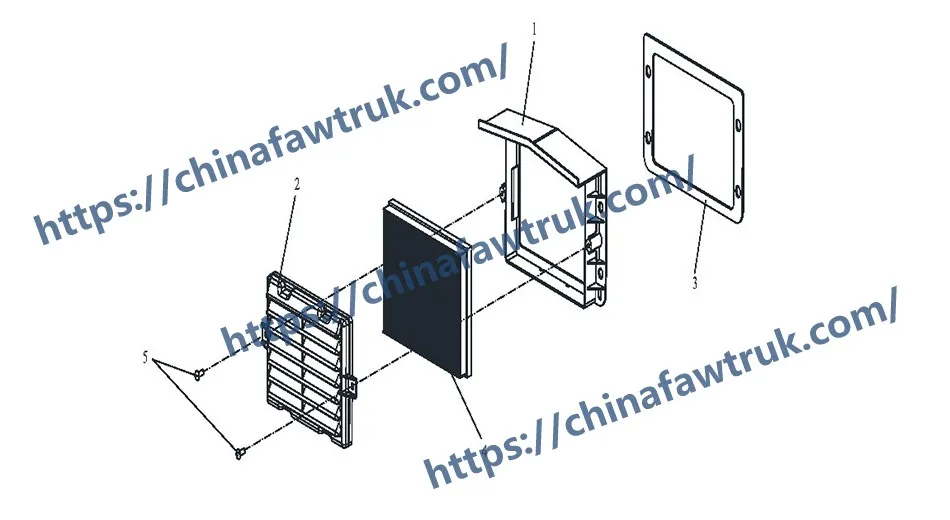
انهيار المكون: 85. After-Processor Heat Shield Logic Assembly
| لا. |
رقم الجزء |
جزء اسم |
الكمية |
| 1 |
CQ1460825 |
تركيبة الترباس |
4 |
| 2 |
1204038-77ج |
Upper Heat Shield – بعد المعالج |
1 |
| 3 |
1204028-77ج |
درع الحرارة – بعد المعالج |
1 |
| 4 |
CQ1460816 |
تركيبة الترباس |
5 |
خاتمة: The Logic of Thermal Fortification
ال FAW درع حراري روسي بعد المعالج assembly represents a masterclass in thermal management for heavy-duty vehicles. It is not a simple accessory but a calculated engineering solution to the conflicting requirements of extreme internal heat and extreme external cold. By isolating the after-treatment system, it ensures that the CA3250P66K24L1TE5Z remains compliant with environmental regulations while protecting the vehicle’s structural integrity.
For operators in the Russian Federation, الرسالة واضحة: the reliability of your truck in winter is directly linked to the condition of this shield. Shortcuts such as removing the shield to save time during maintenance or replacing specialized combination bolts with standard hardware will lead to system failures. الاستثمار في حقيقية FAW درع حراري روسي بعد المعالج components is an investment in the uptime, أمان, and longevity of the entire machine.
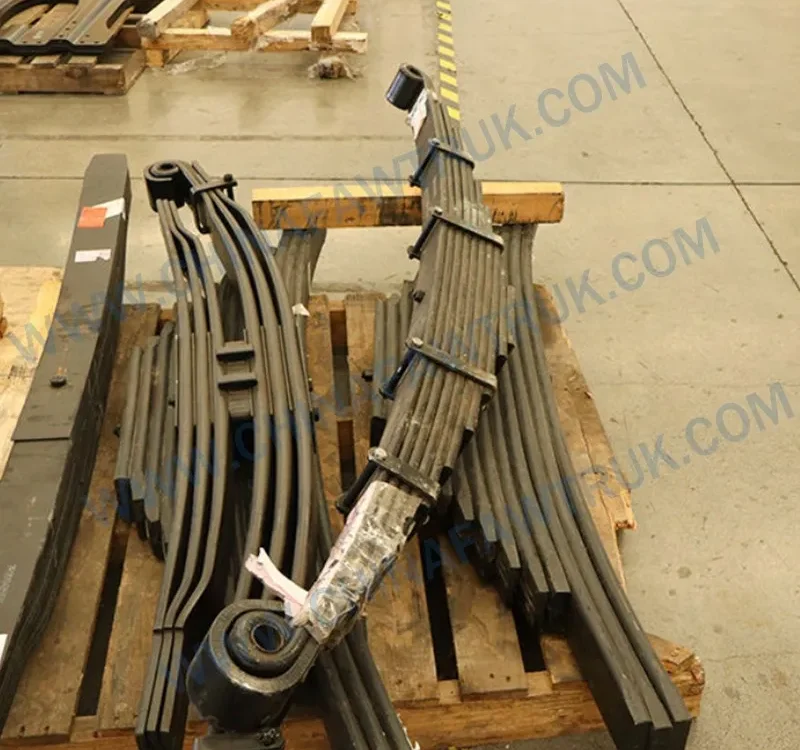
التعبئة والتغليف والخدمات اللوجستية
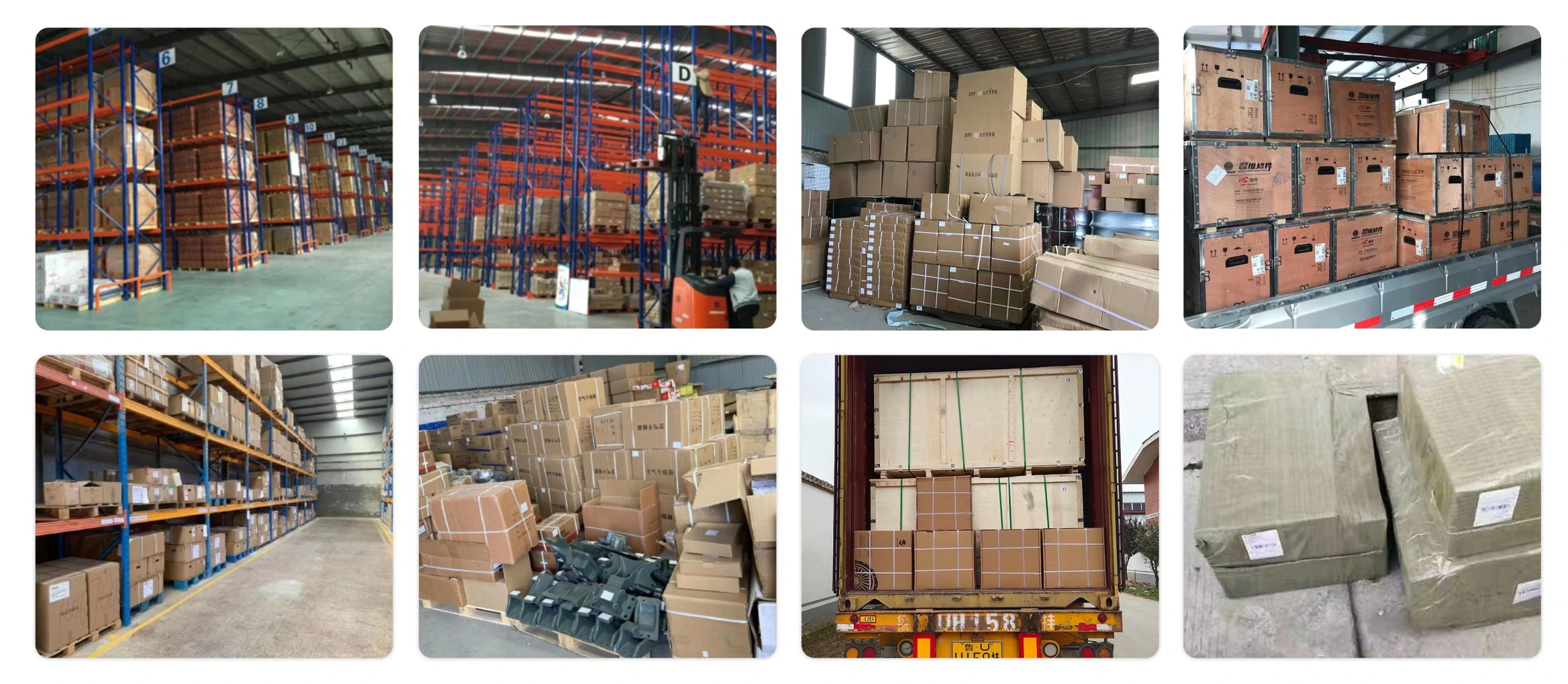
أجزاء فاو, بما في ذلك مجموعة كتلة الأسطوانة, يتم تعبئتها بعناية لضمان الولادة الآمنة. يتم تأمين كل مكون في مواد واقية لمنع الضرر أثناء النقل. تضمن الشبكة اللوجستية الشحنات في الوقت المناسب في جميع أنحاء العالم, دعم عمليات الصيانة الفعالة. فيما يلي صورة توضح العبوة القياسية لقطع غيار شاحنات FAW, إظهار الاهتمام بالتفاصيل في التعامل والتخزين.
يقلل أسلوب التغليف هذا من مخاطر التآكل أو التلف الناتج عن الصدمات, ضمان وصول أجزاء مثل FAW Cylinder Block Assembly في حالة ممتازة. يمكن للعملاء الاعتماد على الخدمات اللوجستية التي تقدمها FAW للحصول على الجودة والموثوقية المتسقة.