FAW Russian Accelerator Pedal: Precision Electronic Control for Severe Arctic Environments
The FAW Russian Accelerator Pedal serves as the critical interface between the operator and the immense torque of the CA3250P66K24L1TE5Z heavy-duty dump truck. Unlike mechanical linkages of the past, this drive-by-wire system translates driver intent into precise digital signals for the engine control unit (ECU). Engineered specifically for the Russian Federation, this assembly features reinforced polymer composites, redundant sensor logic, and specialized mounting hardware designed to maintain sensitivity and return authority even when cabin temperatures drop to -40°C. This guide provides an in-depth technical analysis of the pedal assembly and its fixation logic.

FAW Russian Accelerator Pedal
Electronic Sensor Logic: The Heart of the Assembly
The core functional unit of this system is the Electronic Accelerator Pedal Assembly (Part No. 1108010-42A-C00). In the modern architecture of the FAW Russian Accelerator Pedal, the component is no longer a simple mechanical lever pulling a cable; it is a sophisticated dual-channel potentiometer or Hall-effect sensor array. This design change is mandatory for meeting Euro 5 and Euro 6 emission standards, which require the ECU to have absolute authority over fuel injection timing and throttle plate position based on load, temperature, and driver demand.
The internal sensor mechanism is designed with redundancy. It typically outputs two separate voltage signals to the ECU (often referred to as APP1 and APP2). Signal 1 might operate from 0.5V to 4.5V, while Signal 2 operates at half that voltage or on an inverted slope. The FAW Russian Accelerator Pedal logic requires the ECU to constantly compare these two signals. If the correlation between them deviates by more than a set percentage, the system identifies a fault and enters “limp mode,” limiting engine RPM to prevent runaway acceleration. This safety feature is critical in the rugged terrain of Russian mining sites where vibration could theoretically damage a single-track sensor.
For the Russian market, the electronics within the FAW Russian Accelerator Pedal are encapsulated (potted) in a high-grade resin. This waterproofing protects the sensitive conductive tracks and wiper arms from the ingress of melted snow and saline solutions tracked into the cab by the driver’s boots. Without this potting, salt corrosion would quickly alter the resistance values of the pedal, causing erratic engine idling or dead spots in the acceleration curve.
Furthermore, the electromagnetic compatibility (EMC) of the FAW Russian Accelerator Pedal is heavily shielded. Modern dump trucks are filled with radio frequency interference from radios, GPS trackers, and high-current solenoids. The sensor housing includes shielding to prevent induced currents from creating “ghost” acceleration signals, ensuring that the truck only moves when the driver explicitly commands it.
Material Science: Hysteresis and Arctic Durability
The mechanical construction of the FAW Russian Accelerator Pedal utilizes a glass-fiber reinforced polymer composite. This material selection is deliberate for cold-weather operations. Traditional metal pedals can act as a heat sink, making the cab feel colder near the floor, and are prone to rust from boot moisture. The polymer body provides thermal insulation and is completely immune to corrosion. However, the specific polymer blend used in the FAW Russian Accelerator Pedal is formulated to resist becoming brittle at -40°C, a common failure mode for standard plastics which can shatter under the impact of a heavy work boot.
A key engineering characteristic of the pedal is its hysteresis. Hysteresis refers to the intentional difference in force required to press the pedal down versus the force required to hold it in a steady position. The FAW Russian Accelerator Pedal is designed with specific friction generation elements that allow the driver to hold a steady speed on bumpy Russian roads without leg fatigue. Without this friction damping, every bump in the road would cause the driver’s foot to bounce, sending jagged acceleration signals to the engine and causing “driveline shunt.”
The return spring mechanism is perhaps the most safety-critical mechanical component. In the FAW Russian Accelerator Pedal, dual return springs are often employed. If one spring fractures due to fatigue or metal defects, the second spring is sufficient to return the engine to idle. The steel used for these springs is high-grade spring steel with specific tempering to prevent “relaxation” or loss of tension over millions of cycles, ensuring the pedal always returns to the 0% position immediately upon release.
The pivot point of the pedal utilizes self-lubricating bushings. In the dusty, dirty environment of a construction site, external grease attracts grit which forms a grinding paste. The dry-lubricated bushings of the FAW Russian Accelerator Pedal reject dust and require no maintenance. Crucially, they are designed with clearances that accommodate thermal contraction, ensuring the pedal does not bind or become stiff when the cabin temperature is well below freezing.
Fixation Logic: The Role of the Flange Bolt
Securing the pedal to the cab floor requires a robust fastening strategy, executed by three units of the Hexagon Flange Bolt (Coarse Shank/Standard) (Part No. Q1840835M). While these might appear to be standard fasteners, their specification is vital to the integrity of the FAW Russian Accelerator Pedal installation. The bolts feature a “Coarse Shank” thread profile, which provides superior bite and pull-out resistance, particularly if the receiving nuts are welded cage nuts or threaded inserts within the floor pan composite.
The flange head design of the Q1840835M bolt is specifically chosen for mounting plastic components. A standard hex head bolt would require a separate washer. If that washer were omitted or lost, the small head would dig into the plastic base of the FAW Russian Accelerator Pedal, creating stress risers that lead to cracking. The integral flange distributes the clamping load over a wide surface area, ensuring the polymer base is held securely without crushing. This distributed load is essential for resisting the lateral forces applied when a driver climbs into the cab or braces their foot during emergency braking.
The suffix “M” in the part number typically denotes a specific surface coating, likely a zinc-flake or Geomet coating. This provides superior corrosion resistance compared to standard zinc plating. The floor of a truck cab is a moisture trap, constantly exposed to wet, salty boots. If the mounting bolts corrode, they can seize, making pedal replacement impossible without drilling, or worse, the head can rot off, leaving the FAW Russian Accelerator Pedal loose and dangerous.
The triangular mounting pattern formed by the three bolts provides geometric stability. This triangulation prevents the pedal base from rocking or twisting under heavy foot pressure. A stable base is critical for the accuracy of the internal sensor; if the housing flexes, it can introduce mechanical noise into the sensor reading. The FAW Russian Accelerator Pedal relies on this rigid fixation to deliver the precision expected by the engine management system.
Component Breakdown List
The following table lists the complete parts breakdown for the FAW Russian Accelerator Pedal assembly. Fleet managers and technicians should ensure that only these specific part numbers are used during replacement to maintain the safety and calibration of the throttle system.
| No. |
Part Number |
Part Name |
Qty |
| 1 |
1108010-42A-C00 |
Electronic Accelerator Pedal Assembly (Pattern) |
1 |
| 2 |
Q1840835M |
Hexagon Flange Bolt Coarse Shank (Standard) |
3 |
Diagnostic Protocols for Throttle Integrity
Troubleshooting the FAW Russian Accelerator Pedal typically involves analyzing data stream values via a diagnostic tool. However, physical inspection is equally important. Check the mounting base for cracks around the bolt holes. If the pedal feels loose or “squishy” underfoot, it often indicates that the bolts have loosened or the plastic base has fractured due to over-torquing.
Inspect the wiring connector at the top of the pedal assembly. Look for signs of “wicking,” where water travels down the wire insulation into the connector. In the FAW Russian Accelerator Pedal, green corrosion on the pins is a death sentence for the signal accuracy. Ensure the locking tab on the connector is intact; a loose connector can cause intermittent power loss over bumps, a dangerous situation for a loaded dump truck.
Test the pedal’s mechanical action. Press it by hand; it should move smoothly without grit or binding and snap back immediately when released. If there is a “sticky” spot, internal condensation may have frozen or dirt has entered the pivot mechanism. Since the unit is sealed, internal mechanical binding requires the replacement of the entire Electronic Accelerator Pedal Assembly. Do not attempt to open or lubricate the internal electronics, as this will compromise the environmental seal.
Finally, verify the signal output voltage. With the key on and engine off, the voltage on Signal 1 should rise linearly from approximately 0.7V at idle to 4.2V at wide-open throttle (WOT). If the voltage jumps or drops to zero in the middle of the sweep, the potentiometer tracks inside the FAW Russian Accelerator Pedal are worn. This wear usually occurs at the “cruise” position where the pedal spends most of its time.
Conclusion: The Critical Link
The FAW Russian Accelerator Pedal is a deceptive component; it looks simple, but it is a complex integration of polymer engineering, precision electronics, and safety logic. It must function flawlessly millions of times in environments that freeze standard plastics and corrode standard metals.
The specific calibration of the Electronic Accelerator Pedal Assembly ensures that the CA3250P66K24L1TE5Z delivers its power smoothly and predictably, essential for maintaining traction on icy Russian roads. Substituting this part with a generic pedal risks incompatible signal curves, fault codes, and unsafe vehicle behavior.
For fleet owners, ensuring the integrity of this control interface is paramount. By inspecting the mounting hardware and checking for connector corrosion, you protect the drivability of the vehicle. Using genuine FAW parts guarantees that the pedal’s resistance to cold and vibration matches the original design intent, keeping your drivers in control and your fleet operational.
Packaging and Logistics
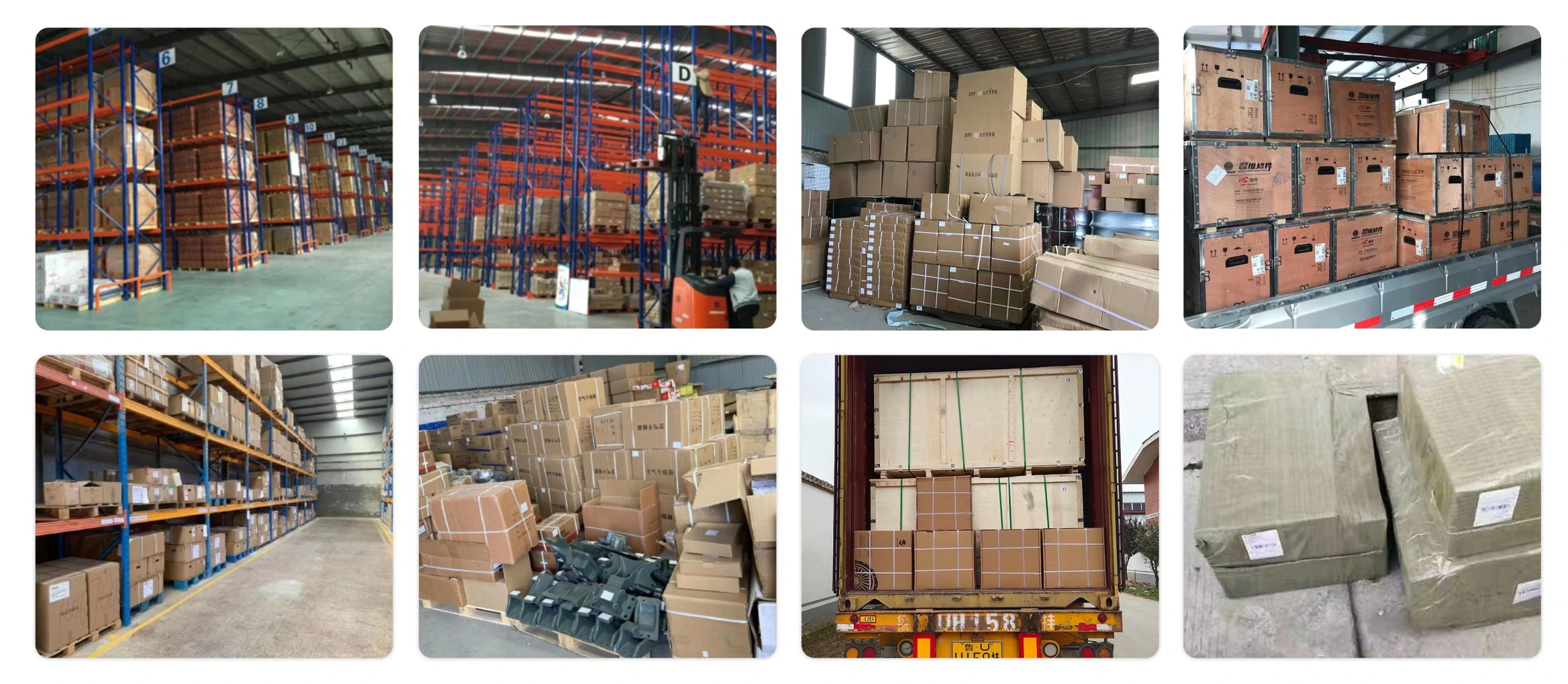
FAW parts, including the Cylinder Block Assembly, are packaged with care to ensure safe delivery. Each component is secured in protective materials to prevent damage during transit. The logistics network guarantees timely shipments worldwide, supporting efficient maintenance operations. Below is an image illustrating the standard packaging for FAW truck parts, showcasing the attention to detail in handling and storage.
This packaging approach minimizes the risk of corrosion or impact damage, ensuring that parts like the FAW Cylinder Block Assembly arrive in perfect condition. Customers can rely on FAW’s logistics for consistent quality and reliability.