by 


Welcome to this essential technical breakdown of the FAW J6P Reverse Gear assembly, a core sub-system within the CA10TA160M gearbox for the FAW Jiefang CA3250P66K2L1T1E 6×4 dump truck. This guide is for technicians, deconstructing the 5 critical components that form the entire FAW J6P Reverse Gear idler system for precise maintenance.

The FAW J6P Reverse Gear is more than just a convenience; it is a high-torque component essential for a dump truck’s duty cycle. It must handle immense forces while maneuvering the fully-loaded vehicle into tight, off-road loading and dumping zones. This deconstruction will analyze the idler logic and its high-load support system.
This group contains the core component of the FAW J6P Reverse Gear system. Its sole purpose is to reverse the direction of rotation from the countershaft before it reaches the mainshaft, thus providing backward motion.
1. Component: ‘Reverse idler gear’ (1701481-A7G)
This (Comp 3) is the ‘Reverse idler gear’, the heart of the FAW J6P Reverse Gear. Unlike forward gears, which often involve two gears (drive and driven), reverse requires a third gear to be inserted into the power path.
The Idler Logic is simple but essential. In a forward gear, the countershaft (spinning, for example, Clockwise) directly drives the mainshaft gear (making it spin Counter-Clockwise). To achieve reverse, the gearbox slides this ‘Reverse idler gear’ (Comp 3) into the path.
Now, the power flows differently: Countershaft (Clockwise) -> ‘Reverse idler gear’ (Counter-Clockwise) -> Mainshaft/Sleeve (Clockwise). By adding this one “idler,” the mainshaft (Second Axis) is now driven in the *same* direction as the countershaft, resulting in a reversed output at the wheels. This is the entire purpose of the FAW J6P Reverse Gear.
The Gear Cut Logic is also important. This gear often has “spur” (straight-cut) teeth. While “helical” (angled) teeth are quieter for forward gears, spur teeth are stronger and, crucially, much easier to slide in and out of mesh. This is why many manual transmissions have a characteristic “whine” only when in reverse—it is the sound of the spur-cut FAW J6P Reverse Gear.
This gear must be incredibly robust. It is responsible for handling the “low reverse” ratio, which is often the highest torque-multiplication ratio in the entire gearbox, used for backing a 30-ton, fully-loaded truck up a steep grade. Its strength is paramount to the FAW J6P Reverse Gear system’s reliability.
The ‘Reverse idler gear’ (Comp 3) is an “idler,” which means it must spin freely on a stationary axis. This group of components provides that stationary axle and the high-load bearing it spins on. This is the core mounting system for the FAW J6P Reverse Gear.
1. Component: ‘Shaft – reverse idler gear’ (1701482-A7G)
This (Comp 5) is the ‘Shaft – reverse idler gear’. This is not a “shaft” in the sense of a spinning component; it is a “pin” or “axle.” It is a short, thick, hardened steel pin that is pressed or bolted *rigidly* into the gearbox housing. It does *not* rotate.
The Fixed Axle Logic is its purpose. It provides the smooth, hardened, and perfectly-aligned surface for the idler gear to spin *around*. Its structural integrity is essential. Any flex or “walking” of this shaft would cause the FAW J6P Reverse Gear to misalign with the countershaft gear, leading to a “howling” noise, catastrophic gear tooth wear, and eventual failure.
2. Component: ‘Needle bearing’ (1701485-A7G)
This (Comp 4) is the ‘Needle Bearing’. This is the critical “anti-friction” component of the FAW J6P Reverse Gear system. This bearing, a cage full of small-diameter steel rollers, is pressed *inside* the bore of the ‘Reverse idler gear’ (Comp 3).
The Freewheeling Logic is its function. The *inner* race of this needle bearing is the hardened surface of the ‘Shaft’ (Comp 5). The *outer* race is the inside of the gear (Comp 3). This setup allows the ‘Reverse idler gear’ to spin at very high speeds (matching the countershaft RPM) with minimal friction and maximum load-carrying capacity.
This type of bearing is used because it is extremely compact (small diameter) but has a very high *radial* load capacity, which is perfect for the “pushing” force between the gear teeth. A failure in this bearing, often from oil starvation, is a common failure point for any FAW J6P Reverse Gear assembly.
This final group of components (two of each) is responsible for the precise *positioning* of the ‘Reverse idler gear’ assembly on its shaft. Their logic is to control “axial thrust” and “end play” for the FAW J6P Reverse Gear.
1. Component: ‘Gasket – reverse idler gear’ (1701487-A7G) – Qty 2
This (Comp 2) is the ‘Gasket – reverse idler gear’. In this application, “gasket” is a synonym for “thrust washer.” These are two identical, flat, low-friction washers.
The Thrust Logic is their critical function. One washer is placed on the “front” face of the ‘Reverse idler gear’ (Comp 3), and the other is placed on the “back” face. They sit *between* the spinning gear and the stationary retention hardware (the snap rings).
When the FAW J6P Reverse Gear is under load, the helical or spur-cut teeth naturally create a strong “axial” (fore-and-aft) force. These thrust washers (Comp 2) absorb this force, providing a sacrificial, low-friction wear surface. Without them, the spinning steel gear would eat into the stationary snap rings and gearbox housing, destroying the FAW J6P Reverse Gear assembly.
2. Component: ‘Snap ring – reverse idler shaft’ (1701488-A7G) – Qty 2
This (Comp 1) is the ‘Snap ring’. These two rings are the “hard stops” that hold the entire FAW J6P Reverse Gear assembly together on its shaft.
The Retention Logic is simple but effective. The ‘Shaft – reverse idler gear’ (Comp 5) is machined with two grooves, one near each end. These ‘Snap rings’ (Comp 1) are expanded and “snapped” into these grooves.
This creates a “sandwich”: (Snap Ring) -> (Gasket/Thrust Washer) -> (Gear with Needle Bearing) -> (Gasket/Thrust Washer) -> (Snap Ring). This complete, captive assembly provides the precise, controlled “axial end play” (in-and-out movement) that the FAW J6P Reverse Gear needs to function correctly without binding or “walking” off-center.
The following table provides the complete, detailed breakdown of all 5 component types in the FAW J6P Reverse Gear idler assembly for the FAW Jiefang CA3250P66K2L1T1E 6×4 dump truck.
| Mark | Part No. | Part Name | Quantity |
|---|---|---|---|
| 1 | 1701488-A7G | Snap ring – reverse idler shaft | 2 |
| 2 | 1701487-A7G | Gasket – reverse idler gear | 2 |
| 3 | 1701481-A7G | Reverse idler gear | 1 |
| 4 | 1701485-A7G | Needle bearing | 1 |
| 5 | 1701482-A7G | Shaft – reverse idler gear | 1 |
The specifications for the FAW J6P Reverse Gear assembly are defined by its function as a high-torque idler system, built for durability and precise positioning.
| Vehicle Application | FAW Jiefang CA3250P66K2L1T1E 6×4 Dump Truck |
| System Group | FAW J6P Reverse Gear Idler Assembly |
| Associated Gearbox | CA10TA160M (10-Speed) |
| Primary Logic | Rotational Direction Reversal (Idler Gear) |
| Core Component (Gear) | ‘Reverse idler gear’ (1701481-A7G) |
| Core Component (Shaft) | ‘Shaft – reverse idler gear’ (1701482-A7G) |
| Core Component (Bearing) | ‘Needle bearing’ (1701485-A7G) |
| Thrust Control | ‘Gasket – reverse idler gear’ (1701487-A7G) – Qty 2 |
| Retention System | ‘Snap ring – reverse idler shaft’ (1701488-A7G) – Qty 2 |
| Total Component Types | 5 |
| Associated System | Mainshaft (Second Axis) Reverse Gear Sleeve |
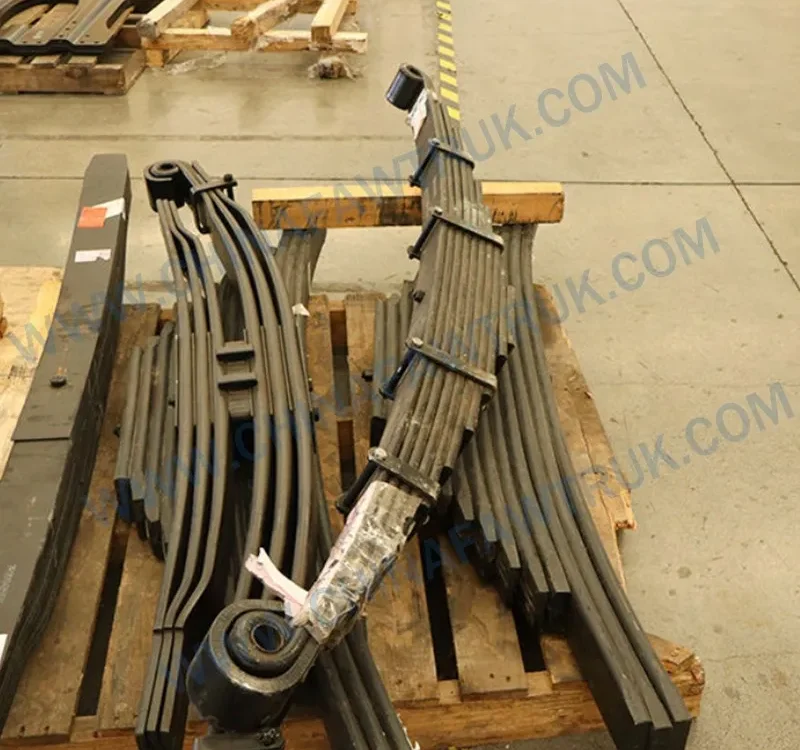
FAW parts, including the Cylinder Block Assembly, are packaged with care to ensure safe delivery. Each component is secured in protective materials to prevent damage during transit. The logistics network guarantees timely shipments worldwide, supporting efficient maintenance operations. Below is an image illustrating the standard packaging for FAW truck parts, showcasing the attention to detail in handling and storage.
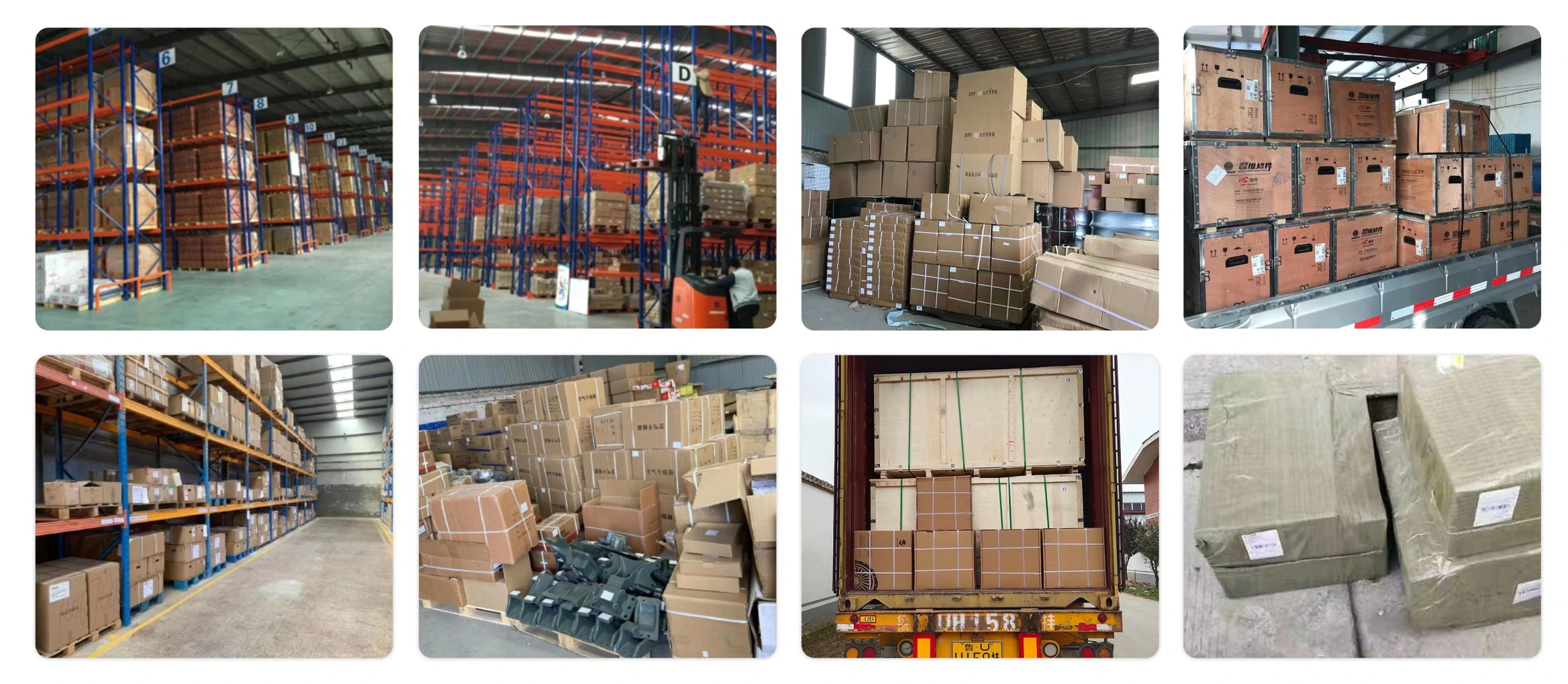
This packaging approach minimizes the risk of corrosion or impact damage, ensuring that parts like the FAW Cylinder Block Assembly arrive in perfect condition. Customers can rely on FAW’s logistics for consistent quality and reliability.