por 


Bienvenido a esta inmersión profunda en el Bloqueo de parada-Parabrisas delantero Para FAW Jiefang CA3250P66K2L1T1E 6×4 camión volcado. Esto puede parecer una parte simple., pero es un componente crítico para proteger el parabrisas y la estructura de la cabina.. Esta guía analizará este único, Tipo de pieza esencial para garantizar un servicio correcto..
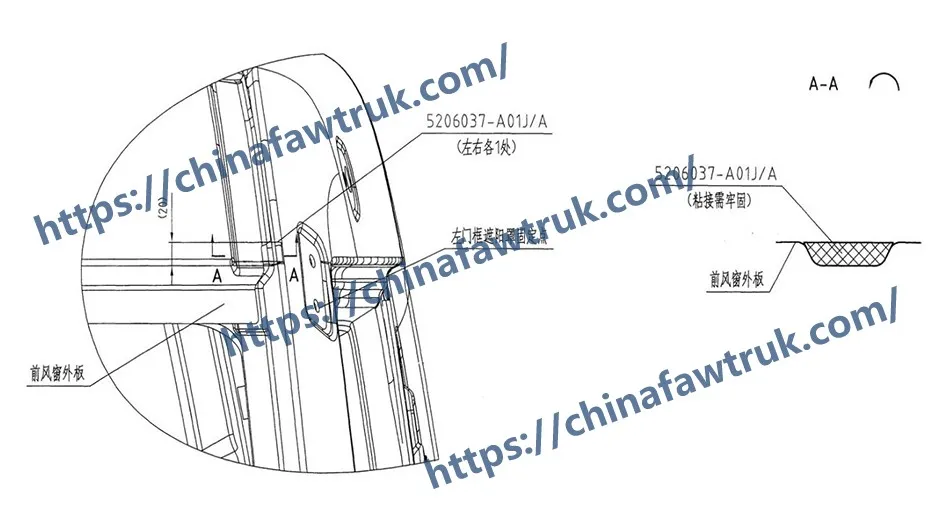
El Bloqueo de parada-Parabrisas delantero es un especializado, componente absorbente de energía de alta densidad. Su función principal es actuar como órgano final., Punto de contacto diseñado entre la cabina basculante y la carrocería fija., Específicamente para proteger el cristal del parabrisas delantero.. Cuando se baja la cabina, este bloque evita una dura, discorde “metal sobre metal” impacto.
Esta parte es vital. sin el Bloqueo de parada-Parabrisas delantero, Los repetidos golpes y vibraciones al bajar la cabina eventualmente fatigarían el sello de uretano del parabrisas., conduciendo a fugas, o incluso romper el propio cristal. También evita daños a los mecanismos de bisagra y pestillo de la cabina..
Este desmontaje analizará la pieza. (5206037-A01J) en detalle. Exploraremos su ciencia material crítica., su ubicación precisa, y sus modos de falla comunes. para un tecnico, un faltante o dañado Bloqueo de parada-Parabrisas delantero es un artículo de reemplazo no negociable para evitar costosos, daños en cascada a la cabina y al parabrisas del vehículo.
Este sistema consta de un solo tipo de componente., utilizado por duplicado para la estabilidad. Es el principal amortiguador de energía para la cabina del camión..
1. Componente: 'Stop Block-Parabrisas delantero (Ensamblado según 5206003-A01J/A)’ (5206037-A01J) – Cantidad 2
Este (Marca 1) es el componente central. El número de pieza `5206037-A01J` se refiere al bloque individual en sí.. la cantidad de 2 confirma que este es un sistema simétrico, con uno Bloqueo de parada-Parabrisas delantero Se utiliza en el lado izquierdo y uno en el lado derecho del marco inferior de la cabina..
La lógica de las notas de montaje: la nota “Ensamblado según 5206003-A01J/A” Es una instrucción importante para el técnico o la línea de montaje.. Significa que este bloque no está simplemente atornillado.; es parte de un estándar de ensamblaje más amplio (5206003-A01J/A). Este estándar probablemente define el *método* de instalación., especificando el hardware exacto, valores de par, o incluso el uso de un adhesivo o fijador de roscas necesario para crear el conjunto completo., sistema fiable de protección del parabrisas.
La lógica simétrica: El uso de dos bloques es una decisión de ingeniería crítica para la estabilidad.. Al tener dos puntos de contacto distintos (izquierda y derecha), El peso y la carga sustanciales de la cabina descendente se distribuyen uniformemente por todo el chasis.. Esto evita que la cabina se tuerza o se balancee mientras se asienta.. un solo, El bloque central actuaría como punto de pivote., creando inestabilidad y ejerciendo tensión asimétrica en el mecanismo de bloqueo de la cabina y el sello de uretano flexible del parabrisas.
La lógica del servicio: Debido a esta lógica de carga simétrica, un técnico debe *siempre* reemplazar estos bloques en pares. si uno Bloqueo de parada-Parabrisas delantero se encuentra dañado, aplanado, o desaparecido, es seguro que el otro bloque ha sido sometido al doble de la carga prevista y también está fatigado o dañado. Reemplazar solo uno resultará en un aterrizaje de cabina desigual, lo que frustra el propósito del sistema, crea nuevos puntos de estrés, y conducirá al fallo prematuro de la nueva pieza..
A Bloqueo de parada-Parabrisas delantero es un componente definido por su ciencia material. No está hecho de simple plástico o caucho básico..
La lógica material: Este componente está fabricado a partir de una alta densidad., elastómero de alta dureza. Los materiales más habituales son el EPDM. (monómero de etileno propileno dieno) caucho o un poliuretano microcelular especializado. Este material se elige por sus propiedades específicas y cruciales..
La lógica de la absorción de energía: La característica más importante del material es su “resistencia a la compresión.” Está diseñado para comprimirse significativamente bajo una carga pesada. (el peso de la cabina) y luego volver a su forma original. Esta acción disipa la energía cinética., proporcionando un suave, aterrizaje controlado. un sólido, El bloque de plástico rígido sería demasiado duro., transmitir el impacto directamente al parabrisas. Una espuma blanda colapsaría y no ofrecería protección.. Este Bloqueo de parada-Parabrisas delantero es el perfecto, término medio diseñado.
La lógica de la durabilidad: Se elige EPDM o poliuretano industrial por su extrema durabilidad.. Este Bloqueo de parada-Parabrisas delantero debe ser 100% impermeable y, más importante, resistente a todos los fluidos automotrices comunes. Debe resistir la exposición diaria al fluido hidráulico. (desde el sistema de inclinación de la cabina), diesel, aceite de motor, y sal de carretera sin hincharse, agrietamiento, o volverse quebradizo. Esto garantiza una vida útil de muchos años y miles de ciclos de inclinación de la cabina..
La lógica del diseño: La forma física del Bloqueo de parada-Parabrisas delantero está diseñado con precisión. No es un simple cubo. Cuenta con un específico, en ángulo o contorneado “cara de contacto” diseñado para acoplarse perfectamente con un designado “pista de aterrizaje” en el chasis del camión. La base del bloque a menudo se diseña con una “Ranura en T” o “champiñón” Forma que se bloquea mecánicamente en un soporte en el marco de la cabina.. este diseño, además de cualquier perno, evita que el bloque sea “pelado” o “esquilado” fuera de su soporte por fuerzas laterales.
La función del Bloqueo de parada-Parabrisas delantero depende enteramente de su ubicación precisa.
La lógica de la colocación: Estos dos bloques están montados en el borde más bajo y delantero del subchasis estructural de la cabina., normalmente se encuentra directamente debajo de las esquinas izquierda y derecha del parabrisas delantero. Esta ubicación está calibrada en fábrica para ser la primera parte de la cabina en hacer contacto con el bastidor del chasis cuando la cabina desciende hidráulicamente desde su posición inclinada..
La lógica de la protección del parabrisas: El objetivo principal y más obvio es proteger el parabrisas.. El parabrisas es grande., caro, y pieza estructuralmente crítica de vidrio laminado. Es “flotó” en un sello de uretano flexible. Cualquier impacto directo, o cualquier importante “retocando” del bastidor de la cabina cuando se cierra de golpe, puede enfocar y fracturar fácilmente el vidrio, causando una grieta. Este Bloqueo de parada-Parabrisas delantero garantiza que la cabina *nunca* pase de su posición designada, seguro “hogar” posición, salvando el parabrisas del impacto.
La bisagra & Lógica de protección de pestillo: Una función secundaria crucial de la Bloqueo de parada-Parabrisas delantero es para proteger las bisagras de pivote principal de la cabina (en el frente) y el mecanismo de bloqueo (en la parte trasera). Absorbiendo el impacto final de la cabina descendente, Estos bloques reducen drásticamente la “portazo” Fuerza y carga de impacto que de otro modo se transferirían a estos componentes críticos.. Esta reducción de la carga de impacto aumenta la vida útil de los pasadores de las bisagras., casquillos, y los ganchos del pestillo, evitando el desgaste y la desalineación.
La lógica NVH: Estos bloques también sirven para un ruido vital., vibración, y dureza (Nvh) función. Cuando la cabina está completamente bajada y asegurada, los bloques permanecen bajo un ligero “precarga” compresión. Esta constante, La presión hacia arriba, similar a un resorte, garantiza que la parte delantera de la cabina se mantenga firmemente contra el chasis., eliminando cualquier micromovimiento. Esto evita que la parte delantera de la cabina chirríe., “tirando,” o traqueteo contra el chasis al conducir por carreteras en mal estado.
El Bloqueo de parada-Parabrisas delantero Es un elemento de desgaste y debe inspeccionarse periódicamente..
La lógica del modo de falla: Después de miles de ciclos de inclinar y bajar la cabina, El elastómero eventualmente se fatigará.. Las fallas más comunes son:
1. **Conjunto de compresión:** El material pierde su “elasticidad” y se aplana permanentemente. Ya no ofrece amortiguación., actuando efectivamente como un duro, disco inútil.
2. **Agrietamiento/desgarro:** El material se vuelve quebradizo con el tiempo., ozono, y exposición a líquidos, y comienza a agrietarse, lágrima, o delaminarse de su base de montaje.
3. **Desaparecido:** El fracaso más grave, donde un bloque fatigado ha sido completamente arrancado de su soporte y ha desaparecido.
La lógica de la inspección: Cualquier técnico que realice un servicio que requiera inclinar la cabina tiene la responsabilidad profesional de inspeccionar visualmente estos dos bloques como parte del procedimiento.. Si los bloques están visiblemente agrietados, aplanado (mostrando conjunto de compresión), o desaparecido, deben ser reemplazados. Este es un elemento crítico de seguridad del servicio..
La lógica del reemplazo: Como indica el diagrama de piezas., el Bloqueo de parada-Parabrisas delantero es un solo componente (5206037-A01J). El reemplazo implica desatornillar o soltar el bloque viejo de su soporte en el marco de la cabina e instalar el nuevo., siguiendo el estándar de montaje (5206003-A01J/A). Como se indica en Core 1, deben reemplazarse en pares para garantizar un aterrizaje uniforme.
La lógica de las consecuencias: Ignorar un fracaso Bloqueo de parada-Parabrisas delantero es un error costoso. La consecuencia inmediata será una dura “sonido metálico” cuando se baja la cabina. el largo plazo, consecuencias costosas son un parabrisas roto (una reparación muy costosa), “incitado” o bujes de bisagra de cabina dañados, o un mecanismo de cierre de cabina defectuoso, todos los cuales son mucho más complejos y costosos de arreglar que reemplazar estos simples, bloques esenciales.
La siguiente tabla proporciona la información completa, desglose detallado de la 1 tipo de componente especificado para el Bloqueo de parada-Parabrisas delantero sistema en el FAW Jiefang CA3250P66K2L1T1E 6×4 camión volcado.
| Marca | Número de pieza. | Nombre de la pieza | Cantidad |
|---|---|---|---|
| 1 | 5206037-A01J | Bloqueo de parada-Parabrisas delantero (Ensamblado según 5206003-A01J/A) | 2 |
Las especificaciones para el Bloqueo de parada-Parabrisas delantero se definen por su papel como elemento crítico, amortiguador absorbente de energía para la cabina.
| Solicitud de vehículo | FAW Jiefang CA3250P66K2L1T1E 6×4 Camión de la basura |
| Grupo de sistema | Bloqueo de parada-Parabrisas delantero |
| Componente primario | 'Stop Block-Parabrisas delantero’ (5206037-A01J) |
| Material | Caucho EPDM de alta dureza o poliuretano microcelular |
| Característica clave 1 | Alta absorción de energía |
| Característica clave 2 | Alta resistencia al endurecimiento por compresión |
| Característica clave 3 | Químico & Resistente a fluidos (Aceite, Diesel, Hidráulico) |
| Función 1 | Protege el parabrisas delantero del impacto |
| Función 2 | Protege las bisagras de la cabina & Pestillos por carga de impacto |
| Función 3 | Control NVH (Previene los ruidos de la cabina) |
| Nota de servicio | Deben ser reemplazados en pares si están dañados., departamento, o desaparecido. |
piezas FAW, incluido el conjunto del bloque de cilindros, Se empaquetan con cuidado para garantizar una entrega segura.. Cada componente está asegurado con materiales protectores para evitar daños durante el transporte.. La red logística garantiza envíos puntuales en todo el mundo., apoyando operaciones de mantenimiento eficientes. A continuación se muestra una imagen que ilustra el embalaje estándar de las piezas de camiones FAW., mostrando la atención al detalle en el manejo y almacenamiento.
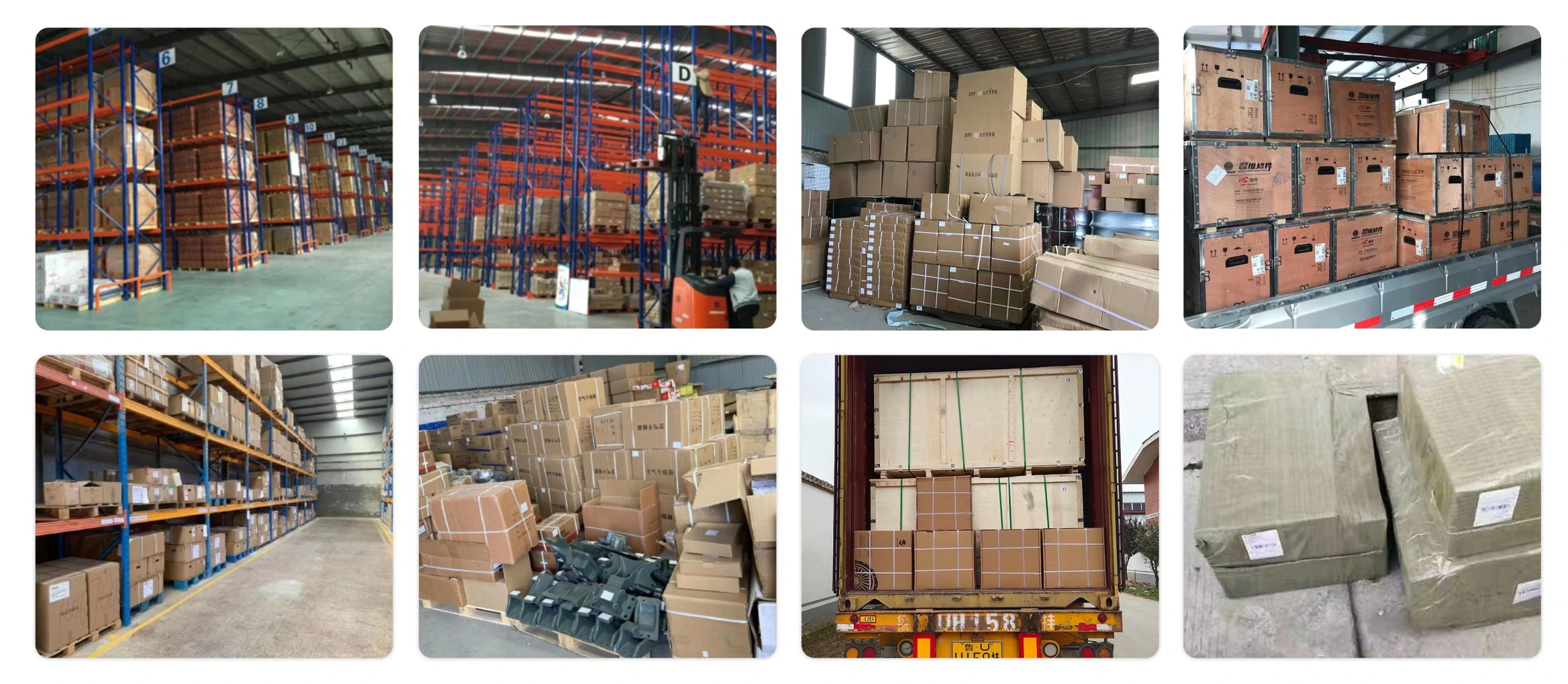
Este enfoque de embalaje minimiza el riesgo de corrosión o daños por impacto., asegurando que piezas como el conjunto de bloque de cilindros FAW lleguen en perfectas condiciones. Los clientes pueden confiar en la logística de FAW para obtener calidad y confiabilidad constantes.