por 


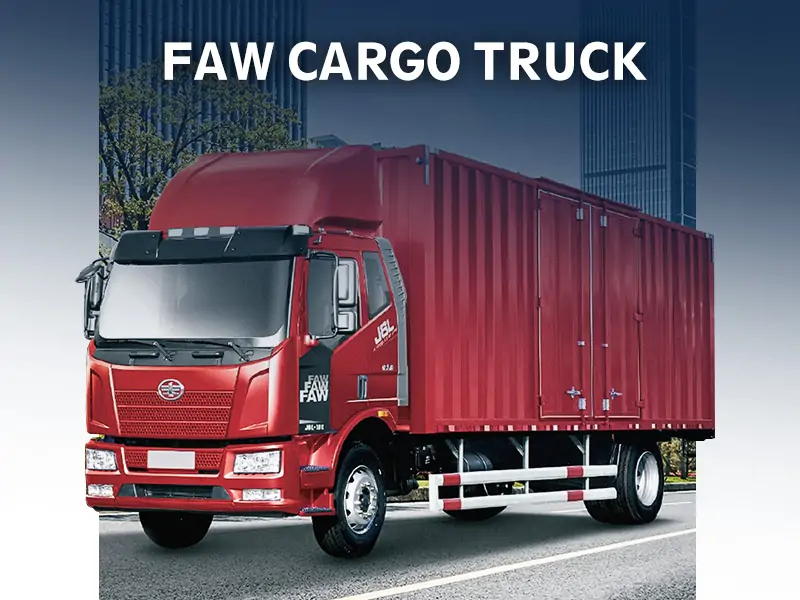
Bienvenidos a esta experta deconstrucción del Filtro de aceite centrífugo FAW J6P (Conjunto principal P/N 1017010-29D). Este es el “pulido” sistema para el motor en el FAW Jiefang CA3250P66K2L1T1E 6×4 camión volcado.
Este no es el filtro de aceite *principal* del motor.. es un secundario, alta eficiencia “Conjunto de lógica de derivación” diseñado para un propósito: para eliminar los contaminantes microscópicos que un filtro estándar no puede.
El “lógica” del Filtro de aceite centrífugo FAW J6P es usar “fuerza centrífuga” (girando en 6,000+ RPM) Separar la partícula más destructiva en un motor diésel.: Hollín.

El “Lógica de doble filtro” es la clave para entender esto Filtro de aceite centrífugo FAW J6P. Un estándar “flujo completo” filtro de papel (como el 1012010-36D) debe permitir 100% del aceite para pasar a través de él fácilmente. Esto significa que sólo puede detener partículas *más grandes* (P.EJ., 20-30 micrones). Diesel “Hollín,” sin embargo, suele ser inferior a 5 micrones. Este hollín es demasiado pequeño para que lo atrape el filtro principal., pero es *altamente* abrasivo y es la causa principal del desgaste del motor.. El “Omitir lógica” del Filtro de aceite centrífugo FAW J6P es eso “grifos” acerca de 10% del flujo de aceite, y girándolo a gran velocidad, Genera la fuerza G necesaria para lanzar este microscópico., hollín pesado del aceite. Esta guía técnica es un recurso esencial para los reconstructores de motores., gerentes de mantenimiento, y especialistas en repuestos. Deconstruiremos todo el grupo tipo 3 componentes.. Analizaremos el “Lógica de separación centrífuga” (el conjunto principal y su rotor interno), el “Lógica de flujo de derivación” (cómo funciona con la presión del aceite), y el “Sellando & Lógica de montaje” (la junta y los pernos) que definen esta crítica Filtro de aceite centrífugo FAW J6P sistema.
Esta es la asamblea principal., el núcleo de la Filtro de aceite centrífugo FAW J6P. Es “lógica” no es para “filtrar” pero a “separado” usando la física.
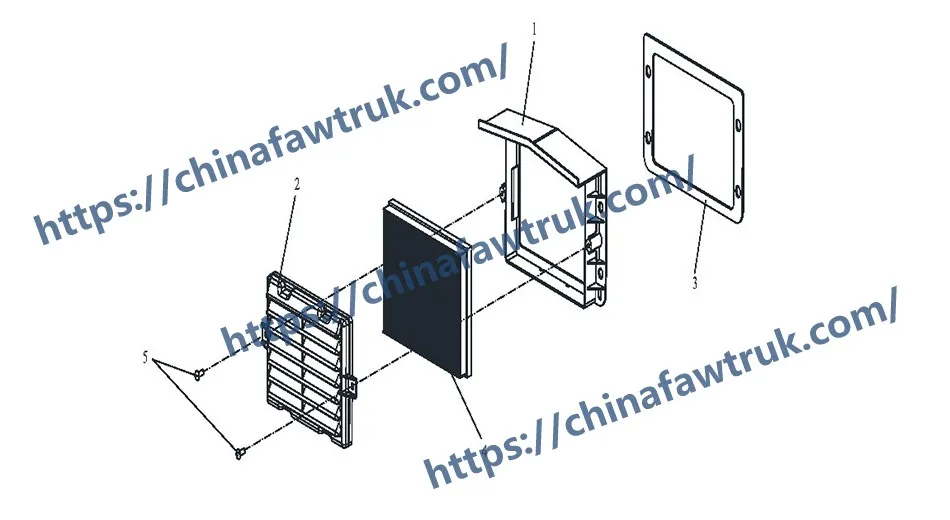
1. Componente: 'Conjunto de filtro de aceite centrífugo’ (1017010-29D)
Este (compensación 1) es el conjunto completo de carcasa y rotor.. Consta de dos partes principales: un estacionario “alojamiento” que se atornilla al motor, y una alta velocidad, interno “rotor” donde ocurre la limpieza.
2. El “Lógica del rotor” (Interno):
Dentro del Filtro de aceite centrífugo FAW J6P la vivienda es un equilibrio, Rotor liviano que gira a velocidades increíblemente altas. (6,000+ RPM). El “Lógica centrífuga” es eso “sucio” El aceite se alimenta al centro de este rotor giratorio.. La inmensa fuerza G (miles de gs) creado por el giro separa el aceite y los contaminantes por *masa*. el limpio, El aceite más ligero permanece en el centro., mientras que el más pesado, partículas más densas (Hollín, metal, sílice/suciedad) son “colgado” hacia afuera con extrema fuerza.
3. El “Lógica de captura de hollín” (Interno):
Este es el “servicio” parte del Filtro de aceite centrífugo FAW J6P. A medida que las pesadas partículas de hollín son lanzadas hacia afuera, ellos “impacto” y “palo” a la pared interior del rotor. Más de miles de millas, Estas partículas se acumulan para formar una espesa, denso, negro “torta de lodo.” Esto es *prueba* de que el filtro está funcionando.. El “Lógica de servicio” es que durante un cambio de aceite, este rotor debe ser retirado y el “torta de lodo” debe ser raspado físicamente. Este es el “filtrar” que limpies y vuelvas a instalar, que es una característica clave de mantenimiento del Filtro de aceite centrífugo FAW J6P.
Este Filtro de aceite centrífugo FAW J6P no tiene partes móviles conectadas a los engranajes o correas del motor. Es “lógica” es que es *impulsado* por el mismo aceite que limpia.
1. El “Derivación” Lógica:
Este Filtro de aceite centrífugo FAW J6P está conectado a un “derivación” circuito. Esto significa que 100% del aceite de la 'Bomba de aceite FAW J6P’ va al *principal* “flujo completo” filtro de papel primero. Esto es “Lógica de protección,” ya que garantiza que el motor *siempre* reciba un flujo completo de aceite *filtrado*. A “grifo” o “sangrar” La línea luego toma aproximadamente 10-15% de esto “limpio” aceite y lo dirige al Filtro de aceite centrífugo FAW J6P para “pulido.”
2. El “propulsor a reacción” Lógica (Interno):
Así gira el rotor. El aceite introducido en el Filtro de aceite centrífugo FAW J6P fluye hacia el centro del rotor. En la parte inferior del rotor hay dos (2) diminuto, oponerse “boquillas de chorro.” El aceite a alta presión es expulsado *fuera* de estas boquillas a alta velocidad.. Este “Lógica de propulsión a chorro” (como un aspersor de jardín) es lo que crea el “fuerza reaccionaria” que hace girar el rotor a miles de RPM. Luego, el aceite simplemente cae de las boquillas y drena nuevamente al cárter de aceite.. Este es un increíblemente robusto, Diseño autoalimentado con una sola parte móvil.. Este “Lógica de chorro” es el motor del Filtro de aceite centrífugo FAW J6P.
Este grupo final “lógica” es proporcionar un seguro, a prueba de vibraciones, y montaje sin fugas para el Filtro de aceite centrífugo FAW J6P alojamiento.
1. Componente: 'Empaquetadora – Filtro de aceite centrífugo’ (1017022-29D)
Este (compensación 3) es el “Lógica de sellado de alta presión.” Esta junta proporciona el sello crítico entre el 'conjunto del filtro de aceite centrífugo’ (compensación 1) y el bloque del motor (o módulo de enfriador de aceite). Es “lógica” es contener la totalidad, flujo de aceite a alta presión desde la bomba de aceite que se alimenta *hacia* el Filtro de aceite centrífugo FAW J6P. Una falla de esta junta es un “fuga catastrófica” que descargará el suministro de aceite del motor en segundos, lo que lleva a la incautación total del motor. Está hecho de una alta temperatura., resistente al aceite, Material resistente al aplastamiento para garantizar un sellado perfecto..
2. Componente: «Perno de brida hexagonal’ (Q1840825)
La lista pide cuatro (4) de estos pernos (compensación 2). Este es el “Lógica de sujeción a prueba de vibraciones.” Estos cuatro pernos deben sujetar todo el Filtro de aceite centrífugo FAW J6P carcasa firmemente contra el motor. El “Lógica de brida” es critico: la lavadora incorporada “brida” Distribuye la carga de sujeción uniformemente a través del soporte de montaje del filtro.. Esto asegura que la 'Junta’ (compensación 3) se tritura perfectamente uniformemente, y evita que las vibraciones de alta frecuencia del motor diesel “caminando” los tornillos se aflojan con el tiempo.
La siguiente tabla proporciona la información completa, desglose detallado de todos 3 tipos de componentes identificados en este Filtro de aceite centrífugo FAW J6P Montaje para FAW Jiefang CA3250P66K2L1T1E 6×4 camión volcado.
| Marca | Número de pieza. | Nombre de la pieza | Cantidad |
|---|---|---|---|
| 1 | 1017010-29D | Conjunto de filtro de aceite centrífugo | 1 |
| 2 | Q1840825 | Perno de brida hexagonal | 4 |
| 3 | 1017022-29D | Empaquetadora – Filtro de aceite centrífugo | 1 |
Las especificaciones para el Filtro de aceite centrífugo FAW J6P se definen por su función como sistema de alta velocidad, derivación “pulido” filtrar.
| Solicitud de vehículo | FAW Jiefang CA3250P66K2L1T1E 6×4 Camión de la basura |
| Grupo de sistema | Filtro de aceite centrífugo FAW J6P (Sistema de derivación) |
| N/P del conjunto principal | 1017010-29D |
| Lógica primaria | Separación centrífuga (Hollín & Eliminación de microcontaminantes) |
| Tipo de filtración | “Derivación” Circuito (pule un % del flujo de aceite) |
| Lógica de manejo | Autoalimentado mediante presión de aceite (Boquillas de chorro interno) |
| Lógica de servicio | El rotor interno debe limpiarse manualmente “torta de lodo” |
| Sistema de montaje | «Perno de brida hexagonal’ (Q1840825) – Cantidad 4 |
| Sistema de sellado | 'Empaquetadora – Filtro de aceite centrífugo’ (1017022-29D) – Cantidad 1 |
| Beneficio | Extiende drásticamente la vida útil del aceite y reduce el desgaste del motor debido al hollín.. |
| Sistema asociado | Trabaja en paralelo con el principal. (flujo completo) Bomba de aceite FAW J6P & filtrar. |
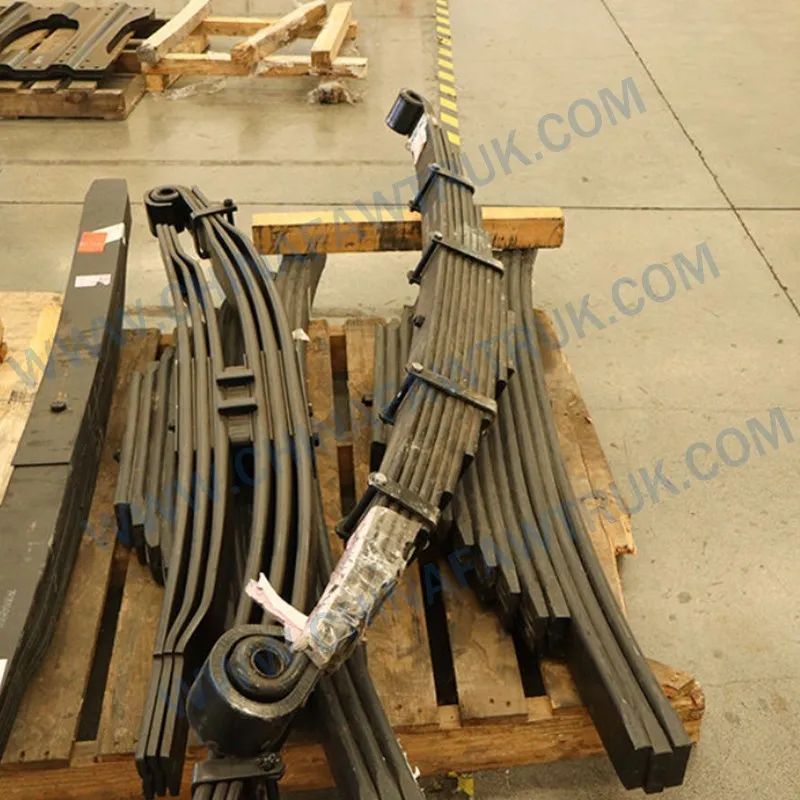
piezas FAW, incluido el conjunto del bloque de cilindros, Se empaquetan con cuidado para garantizar una entrega segura.. Cada componente está asegurado con materiales protectores para evitar daños durante el transporte.. La red logística garantiza envíos puntuales en todo el mundo., apoyando operaciones de mantenimiento eficientes. A continuación se muestra una imagen que ilustra el embalaje estándar de las piezas de camiones FAW., mostrando la atención al detalle en el manejo y almacenamiento.
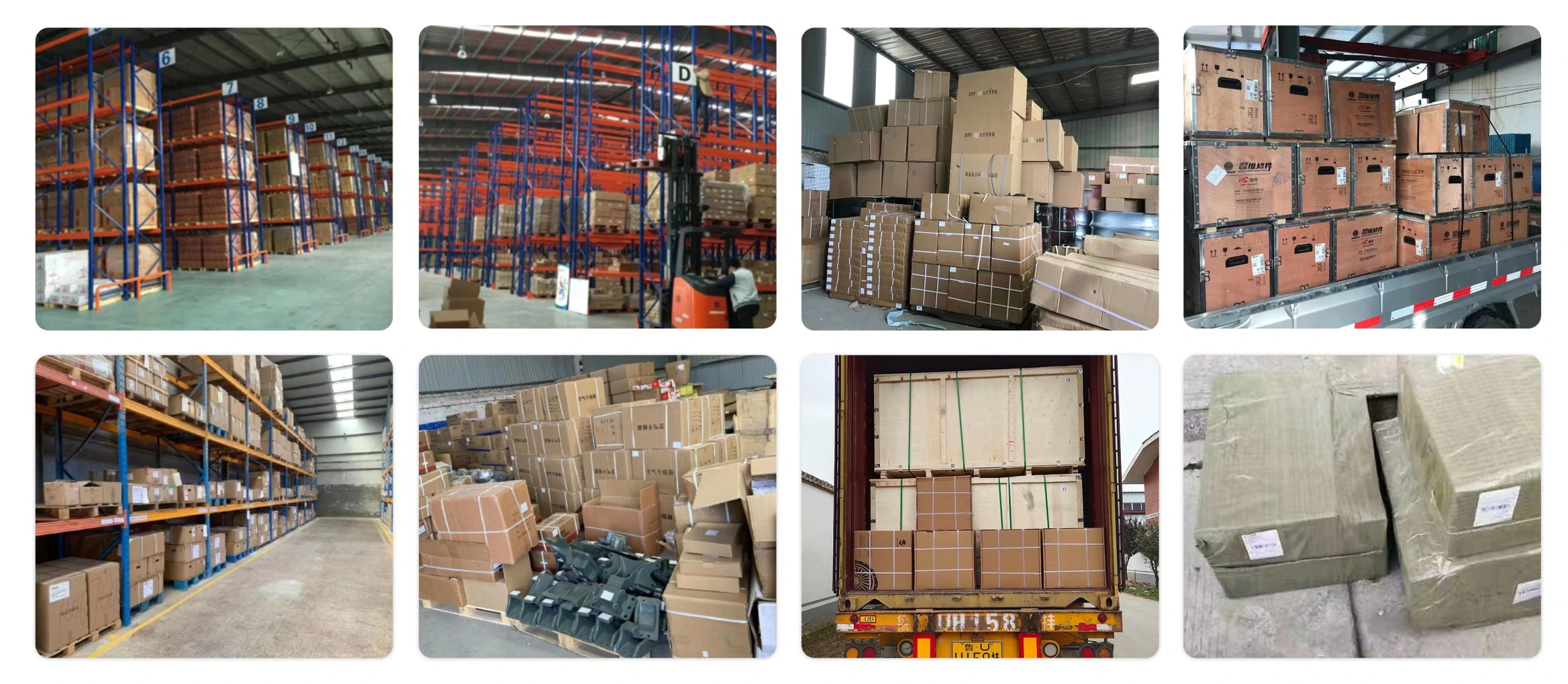
Este enfoque de embalaje minimiza el riesgo de corrosión o daños por impacto., asegurando que piezas como el conjunto de bloque de cilindros FAW lleguen en perfectas condiciones. Los clientes pueden confiar en la logística de FAW para obtener calidad y confiabilidad constantes.