by 


Welcome to this in-depth deconstruction of the Auxiliary Gearbox Range Cylinder, the pneumatic “muscle” for the CA10TA160M 10-speed transmission. This system is a core part of the FAW Jiefang CA3250P66K2L1T1E 6×4 dump truck. This guide is for technicians, analyzing the 8 components that allow the Auxiliary Gearbox Range Cylinder to function.

The Auxiliary Gearbox Range Cylinder is the “shifter” for the Hi/Lo range. It uses the truck’s compressed air to move the internal synchronizer, doubling the gear ratios. Its logic is to provide fast, reliable, “on-the-fly” range shifts, which is essential for a heavy-duty dump truck. This deconstruction will explore the pneumatic actuator and its mechanical linkages.
This component is the “muscle” of the entire range-shifting system. Its logic is to convert the truck’s compressed air (pneumatic) energy into a powerful, linear (push/pull) mechanical force. This is the primary function of the Auxiliary Gearbox Range Cylinder.
1. Component: ‘Cylinder assy – auxiliary box’ (1701640-A7G)
This (Comp 3) is the main ‘Cylinder Assembly’. This is a “pneumatic slave cylinder” that bolts to the outside of the gearbox sub-enclosure. It is the core of the Auxiliary Gearbox Range Cylinder system.
The Dual-Action Logic is its key function. This cylinder is not spring-returned; it is “powered” in both directions. It has two air ports, one for “Hi” range and one for “Lo” range, controlled by a solenoid valve (or a manual air switch in the cab).
When the driver selects “Hi” range, compressed air is sent to one port, pushing an internal piston (and its attached rod) *forward*. When they select “Lo” range, air is sent to the *other* port, pushing the piston *backward*. This positive, powered-in-both-directions action is what makes the Auxiliary Gearbox Range Cylinder fast and reliable.
The Force Logic is also critical. The piston inside this Auxiliary Gearbox Range Cylinder has a large surface area. When 120 PSI of air pressure is applied, it generates hundreds of pounds of force. This immense force is necessary to overcome the strong detent springs of the ‘Sliding gear sleeve’ (on the Sub-Box Spindle) and to move the synchronizer cones, ensuring a swift, non-grinding shift.
This group represents the “levers” that translate the linear push/pull motion of the Auxiliary Gearbox Range Cylinder into the pivoting, “fork” motion required *inside* the gearbox to move the synchronizer sleeve.
1. Component: ‘Shift fork – auxiliary box synchronizer’ (1701632-A7G)
This (Comp 1) is the ‘Shift Fork’. This is a single, heavy-duty lever, likely made of forged steel or cast iron for extreme rigidity. It is the final link in the Auxiliary Gearbox Range Cylinder‘s chain of command.
The Pivot Logic is its function. This fork sits on a pivot shaft inside the gearbox. The “tines” (forked end) sit in the external groove of the ‘Sliding gear sleeve’ (on the Sub-Box Spindle). The “arm” (solid end) extends out to be connected to the Auxiliary Gearbox Range Cylinder.
When the cylinder (Comp 3) pushes the arm *forward*, the fork pivots, pulling the ‘Sliding gear sleeve’ *backward* to engage Low range (or vice-versa). This fork must be strong enough to handle the full, hundreds-of-pounds force from the Auxiliary Gearbox Range Cylinder without flexing or breaking.
2. Component: ‘Bent arm joint assy’ (1701670-A7G) – Qty 2
This (Comp 6) is the ‘Bent arm joint assembly’. This is the critical “joint” or “linkage arm” that connects the piston rod of the Auxiliary Gearbox Range Cylinder (Comp 3) to the ‘Shift fork’ (Comp 1).
The Articulation Logic is its purpose. The cylinder’s piston rod moves in a perfect straight line, but the ‘Shift fork’ (Comp 1) moves in an *arc* (like a hinge). This ‘Bent arm joint’ (Comp 6) is a small connecting rod with pivot points at both ends. It allows for this slight change in angle, preventing the assembly from binding up.
This component is a “high-stress” pivot point that experiences the full force of the Auxiliary Gearbox Range Cylinder with every single range shift. It is held in place by specialized “guide neck” bolts (Comp 7) to ensure it pivots smoothly and accurately.
This final group contains all the essential hardware to mount the Auxiliary Gearbox Range Cylinder to the sub-enclosure, seal it against leaks, and safely secure the high-force linkages.
1. Component: ‘Gasket – auxiliary box cylinder’ (1701646-A7G)
This (Comp 2) is the “static seal” for the Auxiliary Gearbox Range Cylinder. It is a precisely-cut gasket (not an O-ring) that fits between the mounting flange of the ‘Cylinder assy’ (Comp 3) and the machined surface of the sub-enclosure.
The Dual-Seal Logic is its critical function. This gasket has two jobs: 1) It must provide a perfect, high-pressure *air seal* for the pneumatic passages that run from the housing into the cylinder. 2) It must provide a perfect *oil seal* to keep the high-temperature gear oil *inside* the gearbox. A failure of this one gasket (Comp 2) would cause a high-pitched air leak (failed shifting) and a messy oil leak.
2. The “Cylinder Mounting” Group (Comp 4, 5)
This group includes: ‘Spring washer’ (Comp 4, Qty 4) and ‘Hexagon head bolt’ (Comp 5, Qty 4).
The Clamping Logic is their function. These are the four high-tensile bolts that securely mount the entire Auxiliary Gearbox Range Cylinder (Comp 3) onto the sub-enclosure, compressing the ‘Gasket’ (Comp 2) to create the seal. The ‘Spring washers’ (Comp 4) provide essential “anti-vibration” logic, using constant tension to prevent the bolts from backing out.
3. The “Linkage Locking” Group (Comp 7, 8)
This group includes: ‘Hexagon head bolt with hole and guide neck’ (Comp 7, Qty 2) and ‘Steel wire lock line’ (Comp 8).
The Pivot Logic is the function of the ‘guide neck’ on Comp 7. This is a specialized bolt. The “guide neck” is a smooth, unthreaded shoulder that acts as the “axle” or “pivot pin” for the ‘Bent arm joints’ (Comp 6).
The Safety Lock Logic is the most critical part of this Auxiliary Gearbox Range Cylinder linkage. The “head with hole” on Comp 7 is for the ‘Steel wire lock line’ (Comp 8). After the two bolts (Comp 7) are tightened, this steel wire is threaded through the holes in both bolt heads and then twisted tight. This is a positive, physical locking mechanism that makes it *impossible* for the bolts to vibrate loose—a critical fail-safe for a high-force, high-vibration linkage.
The following table provides the complete, detailed breakdown of all 8 component types in the Auxiliary Gearbox Range Cylinder assembly for the FAW Jiefang CA3250P66K2L1T1E 6×4 dump truck.
| Part No. | Part Name | Quantity |
|---|---|---|
| 1701632-A7G | Shift fork – auxiliary box synchronizer | 1 |
| 1701646-A7G | Gasket – auxiliary box cylinder | 1 |
| 1701640-A7G | Cylinder assy – auxiliary box | 1 |
| Q40310 | Spring washer | 4 |
| CQ1501025S | Hexagon head bolt | 4 |
| 1701670-A7G | Bent arm joint assy | 2 |
| CQ1711250S | Hexagon head bolt with hole and guide neck | 2 |
| Q50516200 | Steel wire lock line | 1 |
The specifications for the Auxiliary Gearbox Range Cylinder are defined by its function as the pneumatic actuator for the Hi/Lo range selector.
| Vehicle Application | FAW Jiefang CA3250P66K2L1T1E 6×4 Dump Truck |
| System Group | Auxiliary Gearbox Range Cylinder |
| Associated Gearbox | CA10TA160M (Auxiliary Box) |
| Primary Logic | Pneumatic Actuation for Hi/Lo Range Shifting |
| Actuator | ‘Cylinder assy – auxiliary box’ (1701640-A7G) |
| Actuation Type | Dual-Action Pneumatic (Air-Powered) |
| Mechanical Link | ‘Shift fork – auxiliary box synchronizer’ (1701632-A7G) |
| Linkage Joint | ‘Bent arm joint assy’ (1701670-A7G) |
| Sealing | ‘Gasket – auxiliary box cylinder’ (1701646-A7G) |
| Safety Lock | ‘Steel wire lock line’ (Q50516200) for pivot bolts |
| Total Component Types | 8 |
| Associated System | Sub-Box Spindle Synchronizer Sleeve |
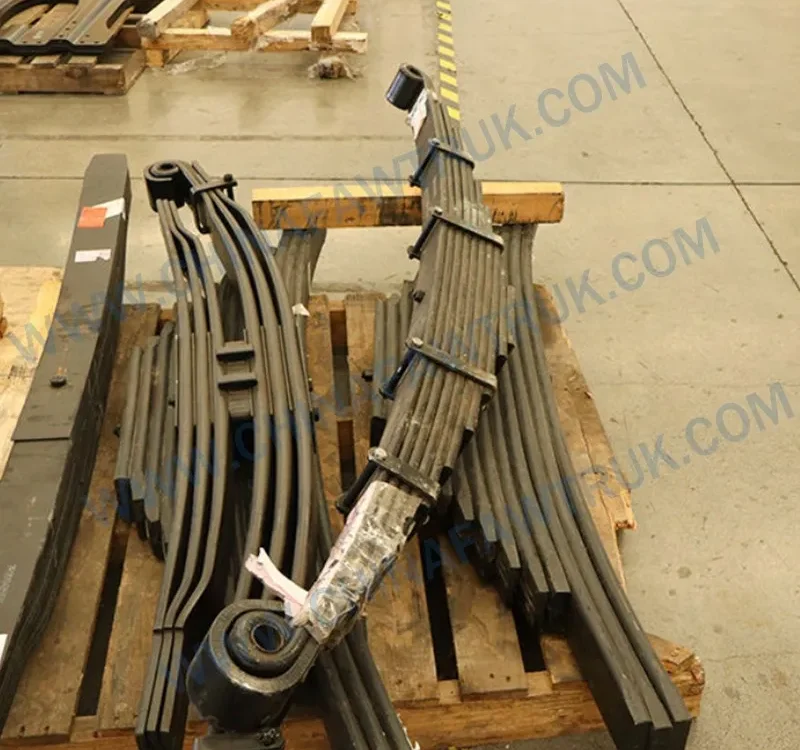
FAW parts, including the Cylinder Block Assembly, are packaged with care to ensure safe delivery. Each component is secured in protective materials to prevent damage during transit. The logistics network guarantees timely shipments worldwide, supporting efficient maintenance operations. Below is an image illustrating the standard packaging for FAW truck parts, showcasing the attention to detail in handling and storage.
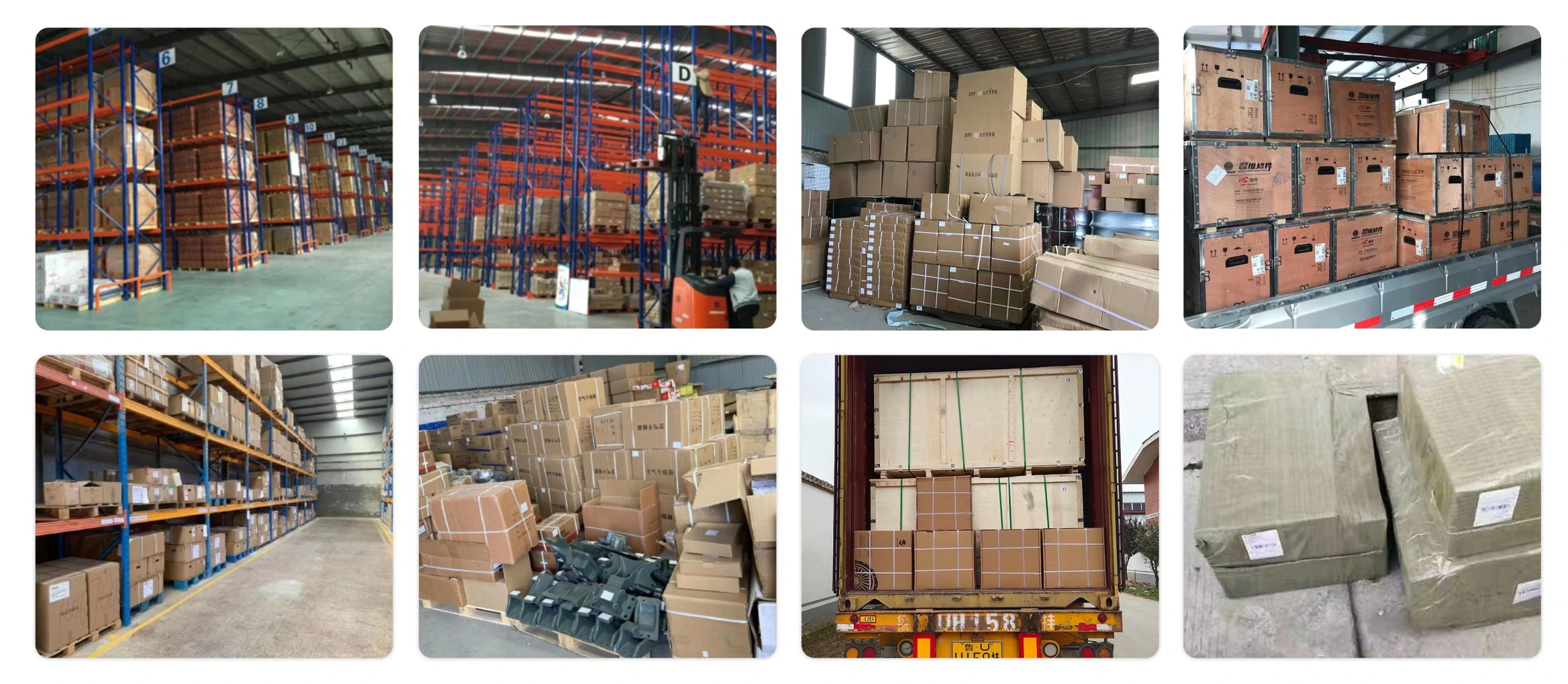
This packaging approach minimizes the risk of corrosion or impact damage, ensuring that parts like the FAW Cylinder Block Assembly arrive in perfect condition. Customers can rely on FAW’s logistics for consistent quality and reliability.