Blocage de la couverture de toit russe FAW: Kit d'étanchéité essentiel en 2 pièces pour une étanchéité parfaite aux intempéries de l'Arctique
Le Blocage de la couverture de toit russe FAW l'assemblage est une solution d'étanchéité essentielle conçue pour le camion-benne CA3250P66K24L1TE5Z. Situé au sommet de la cabane, ce système scelle les ouvertures de fabrication qui seraient autrement vulnérables à la pénétration de l'eau. En Fédération de Russie, où les charges de neige sur le toit peuvent persister pendant des mois, l'intégrité de ces bouchons est la principale défense contre les fuites intérieures, assurer un environnement de fonctionnement sec et protégé.
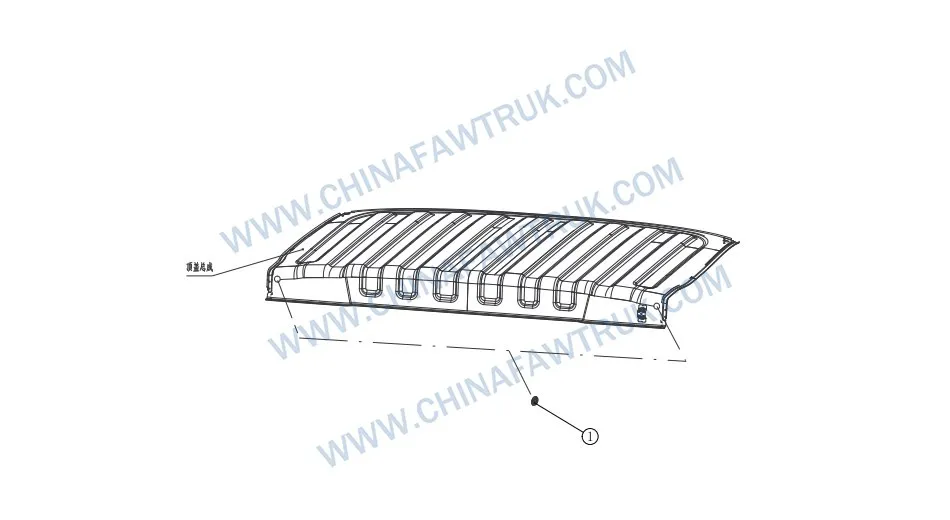
Blocage de la couverture de toit russe FAW
| Non. |
Numéro de pièce |
Nom de la pièce |
Quantité |
| 1 | 5704161-A86 | Prise – Couverture de toit | 2 |
Défense contre la pénétration des eaux aériennes
La fonction première du Blocage de la couverture de toit russe FAW est de maintenir l’intégrité étanche du toit de la cabine. Pendant le processus de fabrication de la cabine J6P, divers trous sont estampés dans le panneau de toit pour accueillir des gabarits de positionnement ou des équipements en option comme des cornes de toit et des barres lumineuses. Pour les configurations de camion-benne standard, ces ouvertures inutilisées doivent être scellées. Le Prise – Couverture de toit (Partie no. 5704161-A86) est spécialement conçu pour fermer ces vulnérabilités. Contrairement aux chevilles murales verticales, les bouchons de toit doivent résister à l'eau stagnante. Au dégel du printemps russe, la neige fondante peut s'accumuler sur le toit, exercer une pression hydrostatique sur les joints.
Un échec dans le Blocage de la couverture de toit russe FAW le système entraîne des conséquences immédiates et dommageables. L'eau pénétrant par le toit pénètrera dans l'isolation de la garniture de pavillon., provoquant un affaissement et des taches d’eau disgracieuses. De manière plus critique, la gravité dirige cette eau vers le bas sur la console supérieure, qui abrite des composants électroniques sensibles tels que le tachygraphe, radio, et commandes d'éclairage intérieur. En scellant efficacement ces deux points critiques, le Blocage de la couverture de toit russe FAW évite les courts-circuits électriques coûteux et préserve l’hygiène de l’intérieur de la cabine.
La conception du Prise – Couverture de toit intègre une large bride qui chevauche considérablement le bord du trou. Ce chevauchement crée une surface d'étanchéité primaire. Le Blocage de la couverture de toit russe FAW la logique veut que l'étanchéité soit maintenue même si le panneau de toit fléchit sous le poids de la neige abondante ou lors d'une torsion du châssis sur des routes accidentées. Le bouchon agit comme un capuchon structurel, maintenir la continuité de la peau du toit et empêcher le bruit du vent de siffler à travers les trous ouverts à vitesse d'autoroute.
Résilience matérielle dans les conditions arctiques
Le choix des matériaux pour le Blocage de la couverture de toit russe FAW est motivé par les cycles thermiques extrêmes de l’environnement russe. Le toit d'un camion est soumis aux fluctuations de température les plus sévères de tous les panneaux de carrosserie.. En été, le rayonnement solaire direct peut chauffer le métal à plus de 60°C, alors que les nuits d'hiver peuvent descendre jusqu'à -50°C. Le Prise – Couverture de toit est moulé à partir d'un polymère haute performance stabilisé aux UV ou d'un mélange de caoutchouc EPDM qui résiste à la dégradation thermique. Les plastiques standards se fissureraient ou rétréciraient dans ces conditions, briser le sceau.
Le “A86” la spécification dans le numéro de pièce suggère une formulation de matériau optimisée pour la ductilité par temps froid. Même à des températures cryogéniques, le Blocage de la couverture de toit russe FAW les composants doivent rester suffisamment flexibles pour maintenir un ajustement serré avec le panneau de toit en acier. Si la fiche devenait rigide, la contraction différentielle entre le bouchon en plastique et le toit en acier ouvrirait un espace, permettant à l'eau de fonte de s'infiltrer. Le Blocage de la couverture de toit russe FAW assure une étanchéité dynamique qui bouge avec les matériaux.
En outre, le matériau doit être résistant aux attaques chimiques. La toiture est souvent exposée aux retombées industrielles, sève d'arbre, et pluies potentiellement acides. Le Blocage de la couverture de toit russe FAW les fiches ne sont pas réactives, en s'assurant qu'ils ne se dégradent pas ou ne se farinent pas avec le temps. Cette stabilité chimique est vitale pour conserver l’aspect esthétique du véhicule, car des bouchons décolorés ou effondrés nuiraient à l’aspect professionnel de la flotte et indiqueraient de mauvaises normes d’entretien.
Logique d'installation et conservation
La rétention sécurisée est une fonctionnalité d'ingénierie clé du Blocage de la couverture de toit russe FAW. Le toit d'un camion-benne se déplaçant à grande vitesse subit une portance aérodynamique et des vibrations importantes. Un bouchon mal ajusté pourrait être aspiré par le vide créé au-dessus de la cabine ou se détacher par la chaussée.. Le Prise – Couverture de toit utilise un “verrouillage à pression” conception à barbe ou corps extensible qui l'ancre fermement depuis le dessous de la tôle. Cette rétention positive garantit que le Blocage de la couverture de toit russe FAW reste en place pendant toute la durée de vie du véhicule.
Mise en place du Blocage de la couverture de toit russe FAW nécessite souvent une application spécifique de mastic pour 100% fiabilité. Alors que le bouchon est doté de joints mécaniques, les protocoles d'usine peuvent nécessiter un cordon de mastic butyle ou silicone autour de la bride pendant l'assemblage. Cette redondance garantit que même si l'ajustement mécanique se détend légèrement au fil des années de service, la liaison chimique empêche le passage de l'eau. Les techniciens de flotte qui remplacent ces bouchons doivent toujours nettoyer soigneusement la surface de contact pour garantir le bon fonctionnement. Blocage de la couverture de toit russe FAW adhère correctement.
Le profil du Prise – Couverture de toit est conçu pour être discret et aérodynamique. Un bouchon saillant créerait le bruit du vent et perturberait le flux d'air sur le toit.. Le Blocage de la couverture de toit russe FAW affleure les contours du toit, contribuant à l'élégance générale de la cabine. Cet ajustement affleurant empêche également le bouchon d'être accroché par des branches basses ou des brosses de lavage automatisées., protéger l’intégrité du joint dans divers scénarios de fonctionnement.
Stratégie d'inspection et de remplacement
Malgré leur apparence simple, les composants du Blocage de la couverture de toit russe FAW exiger une inspection périodique. Parce qu'ils sont situés sur le toit, ils sont souvent “hors de vue, hors de l'esprit” jusqu'à ce qu'une fuite se produise. Les gestionnaires de flotte devraient inclure une inspection du toit dans le cadre de l'entretien annuel, surtout avant la saison hivernale. Vérification de l'état des deux Prise – Couverture de toit les unités peuvent éviter des dommages intérieurs coûteux. Signes de dommages causés par les UV, comme des fissures ou une décoloration, indiquer que le Blocage de la couverture de toit russe FAW approche la fin de sa durée de vie.
Si une fuite est suspectée, un test d'eau peut vérifier l'intégrité du Blocage de la couverture de toit russe FAW. En pulvérisant de l'eau sur les bouchons du toit pendant qu'un observateur vérifie l'humidité de la garniture de pavillon intérieure., les techniciens peuvent isoler la panne. Il est important de faire la différence entre un bouchon qui fuit et un joint de pare-brise ou un feu de position qui fuit.. Un diagnostic précis évite le remplacement inutile du Blocage de la couverture de toit russe FAW quand la faute est ailleurs.
Quand le remplacement est nécessaire, en utilisant le véritable Prise – Couverture de toit est essentiel. Les œillets en caoutchouc génériques n'ont souvent pas la stabilité aux UV et le diamètre précis requis pour l'estampage du toit FAW.. Un bouchon mal ajusté est une fuite garantie. Le véritable Blocage de la couverture de toit russe FAW la pièce est fabriquée selon les tolérances exactes de la cabine, assurant un ajustement rapide qui rétablit la norme d'étanchéité d'usine immédiatement après l'installation.
Conclusion: Petites fiches, Grande protection
Le Blocage de la couverture de toit russe FAW l'assemblage prouve que la taille n'est pas égale à l'importance. Ces deux modestes bouchons constituent la dernière barrière entre les rudes éléments arctiques et l'intérieur confortable de la cabine.. En scellant le toit contre l'eau stagnante et la glace, ils protègent les systèmes électriques et les garnitures intérieures du véhicule contre les dégâts des eaux.
Pour les exploitants de flotte, maintenir le Blocage de la couverture de toit russe FAW est une tâche de maintenance simple mais vitale. S'assurer que ces joints sont intacts évite la dégradation progressive de l'environnement de la cabine.. En traitant ces composants avec la même attention que les pièces mécaniques, les opérateurs veillent à ce que leur flotte reste au sec, sûr, et professionnel, prêt à relever les défis du secteur russe du transport lourd.
Emballage et logistique
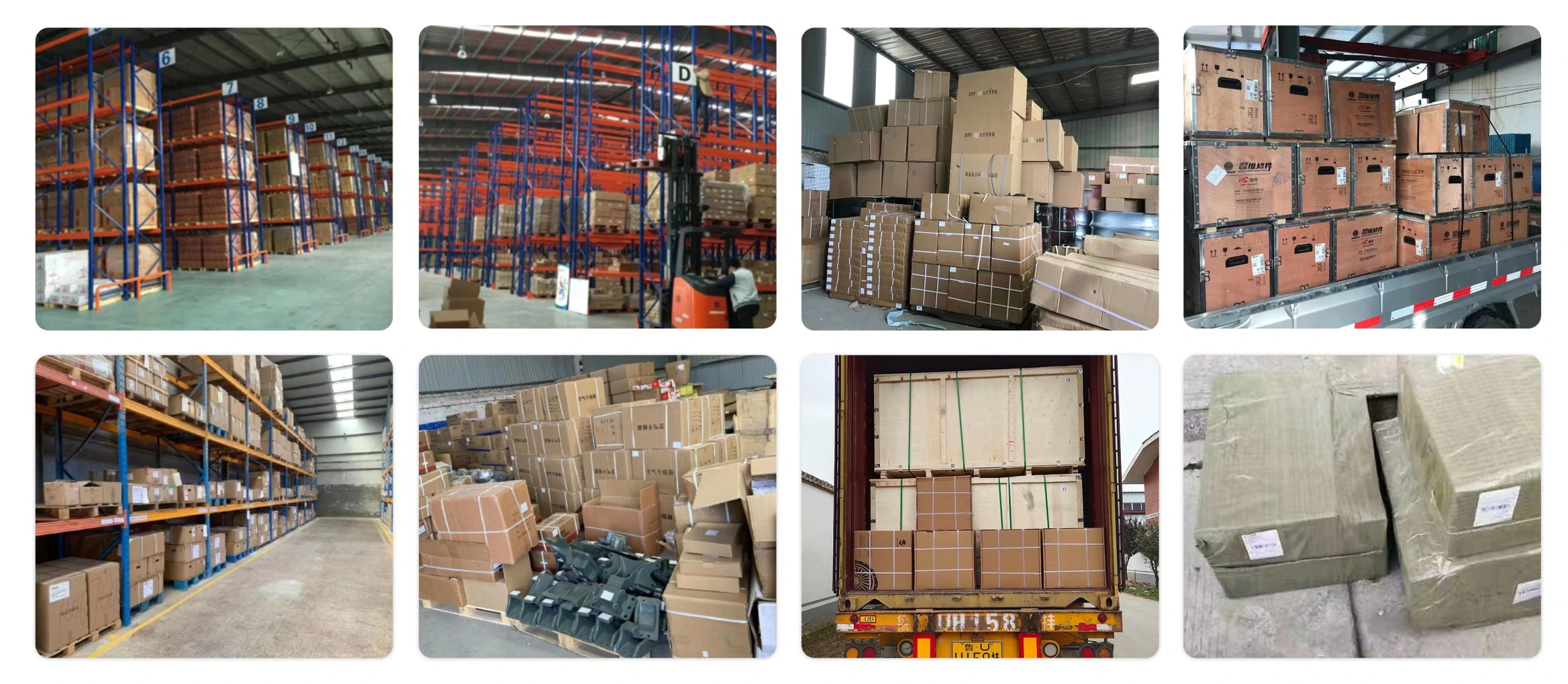
Pièces FAW, y compris l'ensemble bloc-cylindres, sont emballés avec soin pour garantir une livraison en toute sécurité. Chaque composant est sécurisé dans des matériaux de protection pour éviter tout dommage pendant le transport. Le réseau logistique garantit des expéditions ponctuelles dans le monde entier, soutenir des opérations de maintenance efficaces. Vous trouverez ci-dessous une image illustrant l'emballage standard des pièces de camion FAW., mettant en valeur l’attention portée aux détails dans la manipulation et le stockage.
Cette approche d'emballage minimise le risque de corrosion ou de dommages causés par les chocs., s'assurer que les pièces comme l'ensemble bloc-cylindres FAW arrivent en parfait état. Les clients peuvent compter sur la logistique de FAW pour une qualité et une fiabilité constantes.