Assemblage russe à deux axes FAW: Maîtriser 13 Composants critiques pour la gestion précise du couple
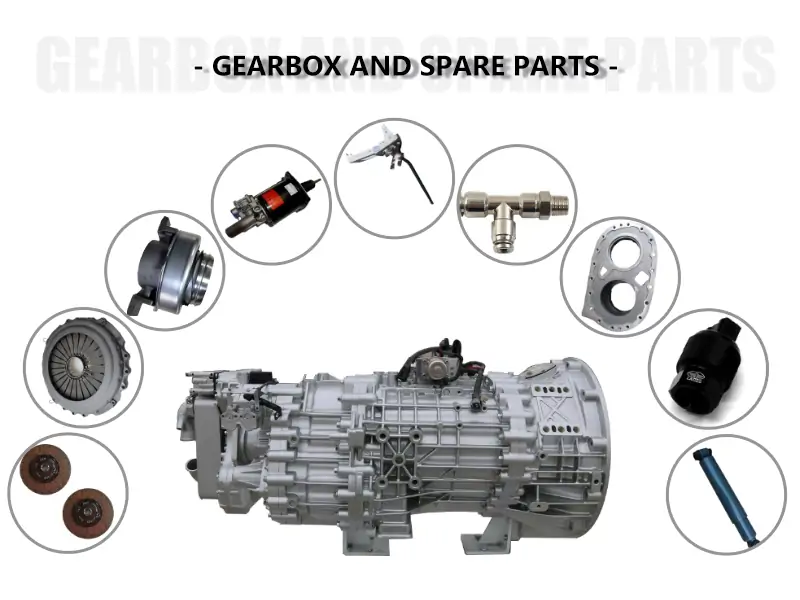
Le Assemblage russe à deux axes FAW, techniquement connu sous le nom d'arbre principal de transmission, est l'épine dorsale de la fourniture de couple du camion-benne CA3250P66K24L1TE5Z. Situé au cœur de la boîte de vitesses, cet ensemble gère l'interaction complexe des engrenages coulissants et des clés de verrouillage pour définir la vitesse et la puissance du véhicule. Ce guide décortique le 13 composants essentiels garantissant un changement de vitesse fluide dans les conditions arctiques.
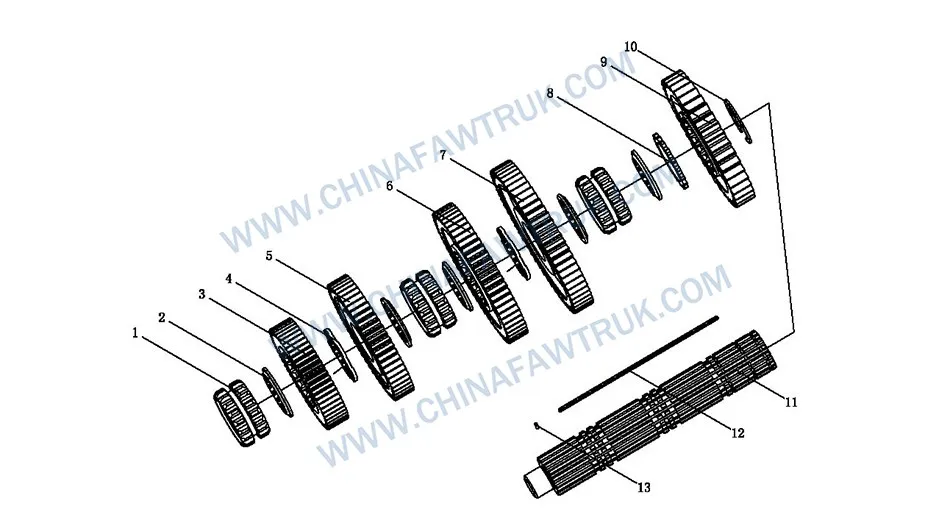
Assemblage russe à deux axes FAW
Architecture de base: La colonne vertébrale cannelée
La fondation du Assemblage russe à deux axes FAW est le 2ème arbre (Partie no. 1701301-A8P). Ce composant en acier massif fait office de support de sortie pour la transmission.. Contrairement à l'arbre d'entrée qui apporte de la puissance, le Assemblage russe à deux axes FAW l'arbre détermine comment cette puissance est modulée avant d'atteindre le différentiel. Il doit résister aux forces de torsion extrêmes, surtout lorsqu'un camion-benne entièrement chargé tente de se déplacer sur une pente raide, pente glacée. L'arbre est usiné en acier allié à haute résistance, carburé pour créer un dur, surface résistante à l'usure tout en conservant une solidité, noyau ductile pour éviter la rupture sous des charges de choc.
Une caractéristique unique du Assemblage russe à deux axes FAW est son mécanisme de verrouillage, le Clé à trois faces (Partie no. 1701332-A7G). Contrairement aux conceptions traditionnelles à clé unique, cette clé trilatérale répartit la charge de couple sur trois points de contact distincts. Cette conception réduit considérablement la contrainte de cisaillement sur n'importe quel point de l'arbre.. Dans le contexte du Assemblage russe à deux axes FAW, c'est essentiel pour la longévité. L'engagement et le désengagement constants des engrenages créent une charge cyclique qui ferait rapidement disparaître une rainure de clavette standard.. La clé à trois côtés garantit que les composants fixes restent rigidement verrouillés sur l'arbre pendant toute la durée de vie du véhicule..
Sécuriser cette clé est la Anneau élastique – Clé à trois faces (Partie no. 1701333-A7G). Cette bague de retenue empêche la clé de migrer axialement sous l'effet des vibrations.. Dans l’environnement à fortes vibrations d’un groupe motopropulseur diesel, les composants non sécurisés “marcher” hors de position. Le Assemblage russe à deux axes FAW utilise cet anneau élastique comme butée positive, garantissant que le mécanisme de transfert de couple reste intact même lorsque l'huile de transmission est froide et visqueuse, exercer une traînée sur les composants internes.
Logique d'engrenage: Rapports optimisés pour le transport lourd
Le Assemblage russe à deux axes FAW porte toute la suite des vitesses avant et arrière. Cela inclut le 1er engrenage – 2ème arbre (Partie no. 1701317-A7G), 2ème équipement – 2ème arbre (Partie no. 1701321-A7G), 3ème vitesse – 2ème arbre (Partie no. 1701322-A7G), et 5ème vitesse – 2ème arbre (Partie no. 1701323-A1K). Chacun de ces engrenages flotte sur l'arbre principal sur des roulements à aiguilles ou des bagues. Ils sont en prise constante avec l'arbre intermédiaire mais ne transmettent pas de puissance tant qu'ils ne sont pas verrouillés sur l'arbre par le manchon coulissant.. La précision de la finition de l'alésage des engrenages dans le Assemblage russe à deux axes FAW est vital.
Dans l'Arctique russe, le liquide de transmission s'épaissit à -40°C. Si le jeu entre le train flottant et l'arbre est trop serré, la traînée visqueuse fera ramper le véhicule même au point mort. Si trop lâche, les engrenages vont trembler et gémir. Le Assemblage russe à deux axes FAW présente des dégagements optimisés qui équilibrent la roue libre par temps froid et la stabilité par temps chaud. Les engrenages eux-mêmes sont à coupe hélicoïdale pour maximiser la zone de contact des dents, répartir la charge et réduire le bruit. Cette géométrie est essentielle pour le Assemblage russe à deux axes FAW pour gérer la multiplication massive du couple requise pour le déversement hors route.
L'assemblée abrite également le Marche arrière – 2ème arbre (Partie no. 1701311-A7G). La marche arrière subit souvent les charges de couple les plus élevées lors de la marche arrière d'un camion chargé sur une pente.. Le Assemblage russe à deux axes FAW garantit que cet équipement est solidement soutenu. Il est positionné par le Anneau de localisation – Marche arrière (Partie no. 1701312-A7G), ce qui empêche la poussée axiale de désengager l'engrenage sous charge. Cette rétention positive est un élément de sécurité, s'assurer que le camion ne dérape pas lors des manœuvres critiques.
Logique d'engagement: Le manchon coulissant
L'acte même de changer de vitesse est facilité par le Manchon d'engrenage coulissant (Partie no. 1701316-A8P). Dans le Assemblage russe à deux axes FAW, ce composant fait office de pont. Cannelé au moyeu de l'arbre principal, il coulisse axialement pour engager les dents de crabot de l'engrenage flottant sélectionné. La durabilité des cannelures internes de ce manchon est le facteur déterminant de la qualité du changement de vitesse. Les cannelures ébavurées ou usées entraînent des changements de vitesse difficiles ou “bloc d'engrenage,” où le conducteur ne peut pas engager une vitesse.
Le Assemblage russe à deux axes FAW utilise un manchon coulissant fabriqué en acier traité thermiquement avec un profil de chanfrein spécifique sur les bords d'attaque des dents. Ce profil permet de guider le manchon sur l'engrenage, adoucir la transition même si les vitesses ne sont pas parfaitement adaptées. Dans le cadre d’une transmission poids lourd non synchronisée ou partiellement synchronisée, cette caractéristique de conception réduit la fatigue du conducteur et empêche le grincement des engrenages. Le manchon doit également résister à l'usure des plaquettes de fourchette de changement de vitesse, s'assurer que le Assemblage russe à deux axes FAW maintient des crans de changement de vitesse précis au fil du temps.
Le mouvement du manchon est limité par le Broche cylindrique élastique (Partie no. Q5280310) et matériel associé. Ces petits composants jouent un rôle majeur dans le Assemblage russe à deux axes FAW. Ils garantissent que le mécanisme de changement de vitesse reste aligné et que le manchon ne dépasse pas, ce qui pourrait conduire à l'engagement simultané de deux vitesses - un mode de défaillance catastrophique qui verrouille la transmission et peut briser le boîtier.
Logique d'espacement: Rondelles de limite
Maintenir l'espacement correct entre les engrenages en rotation est la fonction du Rondelle de limite – Engrenage (Partie no. 1701327-A7G) et Rondelle de limite inter-arbres (Partie no. 1701318-A7G). Le Assemblage russe à deux axes FAW emploie cinq des premiers et deux des seconds. Ce ne sont pas de simples entretoises; ce sont des surfaces d'appui rectifiées avec précision. Ils absorbent les charges de poussée axiale générées par les engrenages hélicoïdaux et empêchent les engrenages de frotter les uns contre les autres ou contre le carter..
Dans le Assemblage russe à deux axes FAW, le matériau de ces rondelles est généralement un acier trempé ou un composite en alliage de bronze. Ils doivent résister à des vitesses de surface élevées et à des charges de compression importantes. Si une rondelle s'use, le jeu axial de l'engrenage augmente. Un jeu final excessif permet à l'engrenage de s'incliner légèrement sur l'arbre, conduisant à de mauvais modèles de contact avec les dents, augmentation du bruit, et finalement, rupture de dent d'engrenage.
Le placement stratégique de ces rondelles au sein du Assemblage russe à deux axes FAW facilite également l'écoulement de l'huile. Ils sont souvent conçus avec des rainures ou des fentes d'huile qui permettent au lubrifiant de pénétrer entre la rondelle et la face de l'engrenage.. Ce film de lubrification hydrodynamique empêche le grippage et le grippage, en particulier lors de la conduite sur autoroute à grande vitesse lorsque les vitesses relatives entre l'arbre et les engrenages flottants sont à leur maximum. Cette attention portée à la tribologie garantit la Assemblage russe à deux axes FAW survit aux conditions de fonctionnement les plus difficiles.
Répartition des composants: 105. Assemblage logique de composants à deux axes
| Non. |
Numéro de pièce |
Nom de la pièce |
Quantité |
| 1 |
1701316-A8P |
Manchon d'engrenage coulissant |
1 |
| 2 |
1701327-A7G |
Rondelle de limite – Engrenage |
5 |
| 3 |
1701323-A1K |
5ème vitesse – 2ème arbre |
1 |
| 4 |
1701318-A7G |
Rondelle de limite inter-arbres |
2 |
| 5 |
1701322-A7G |
3ème vitesse – 2ème arbre |
1 |
| 6 |
1701321-A7G |
2ème équipement – 2ème arbre |
1 |
| 7 |
1701317-A7G |
1er engrenage – 2ème arbre |
1 |
| 8 |
1701312-A7G |
Anneau de localisation – Marche arrière |
1 |
| 9 |
1701311-A7G |
Marche arrière – 2ème arbre |
1 |
| 10 |
1701333-A7G |
Anneau élastique – Clé à trois faces |
1 |
| 11 | 1701301-A8P |
2ème arbre (Arbre principal) |
1 |
| 12 |
1701332-A7G |
Clé à trois faces |
1 |
| 13 | Q5280310 |
Broche cylindrique élastique |
1 |
Conclusion: Le cœur de la transmission
Le Assemblage russe à deux axes FAW est le système nerveux central qui délivre la puissance du camion. Il coordonne le ballet mécanique complexe des engrenages, clés, et des manchons coulissants pour convertir le couple brut du moteur en vitesse de roue utilisable. Sa conception reflète un profond engagement technique en faveur de la fiabilité par temps extrêmement froid., de la sélection des alliages d'acier à la précision des tolérances de jeu.
Pour les techniciens de transmission, la reconstruction de cet assemblage nécessite le strict respect de la liste des pièces. La substitution d'une clé générique ou d'une rondelle d'épaisseur incorrecte perturbera l'équilibre interne délicat du Assemblage russe à deux axes FAW, conduisant à un échec rapide. En utilisant des composants FAW authentiques, les opérateurs s’assurent que leur transmission reste une solution robuste, maillon efficace de la chaîne de transmission, capable de conquérir les emplois les plus difficiles de la planète.
Emballage et logistique
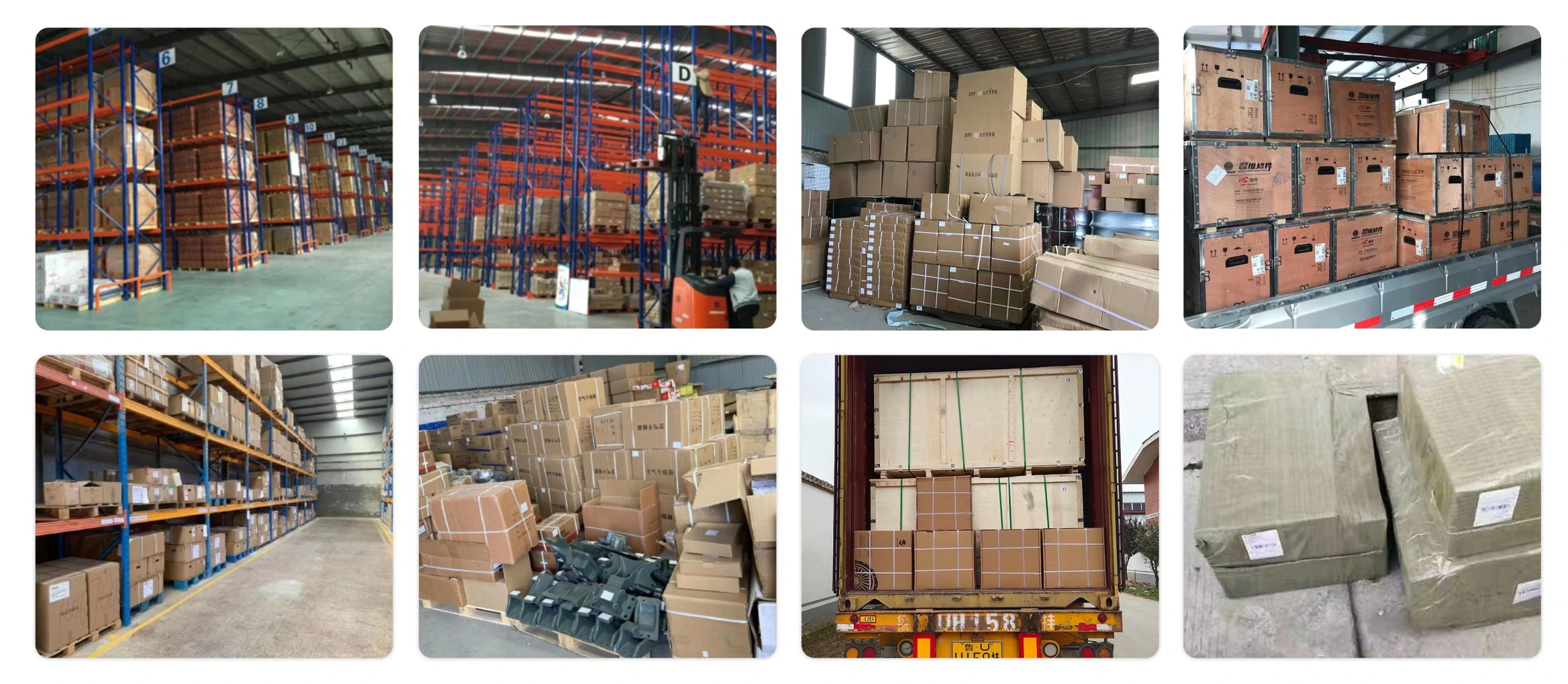
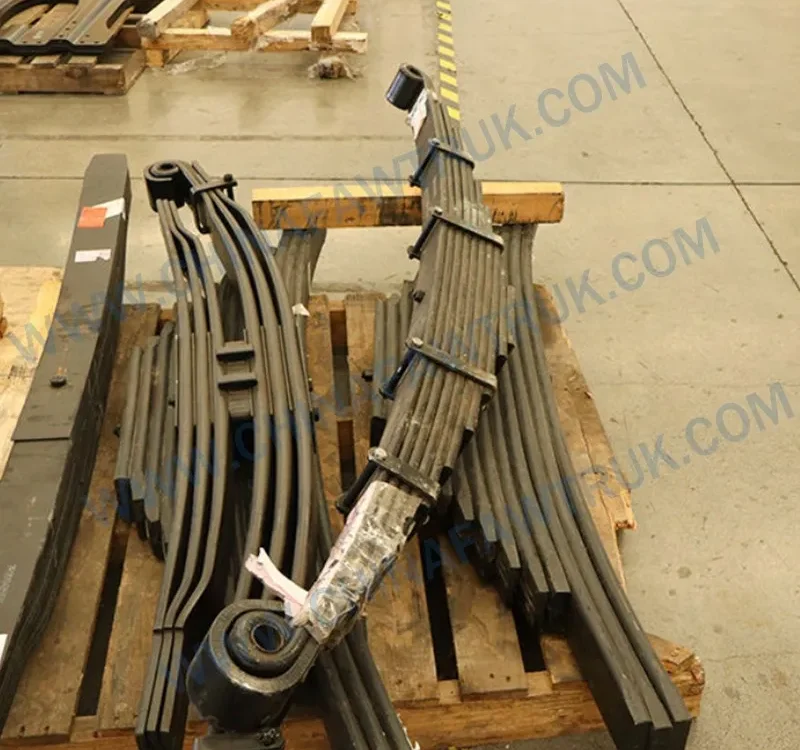
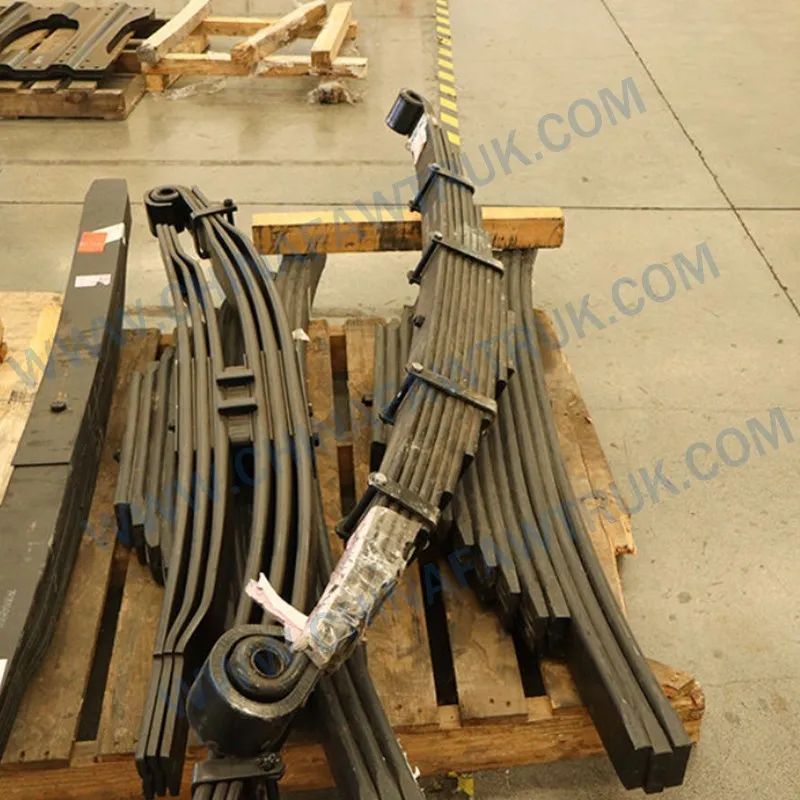
Pièces FAW, y compris l'ensemble bloc-cylindres, sont emballés avec soin pour garantir une livraison en toute sécurité. Chaque composant est sécurisé dans des matériaux de protection pour éviter tout dommage pendant le transport. Le réseau logistique garantit des expéditions ponctuelles dans le monde entier, soutenir des opérations de maintenance efficaces. Vous trouverez ci-dessous une image illustrant l'emballage standard des pièces de camion FAW., mettant en valeur l’attention portée aux détails dans la manipulation et le stockage.
Cette approche d'emballage minimise le risque de corrosion ou de dommages causés par les chocs., s'assurer que les pièces comme l'ensemble bloc-cylindres FAW arrivent en parfait état. Les clients peuvent compter sur la logistique de FAW pour une qualité et une fiabilité constantes.