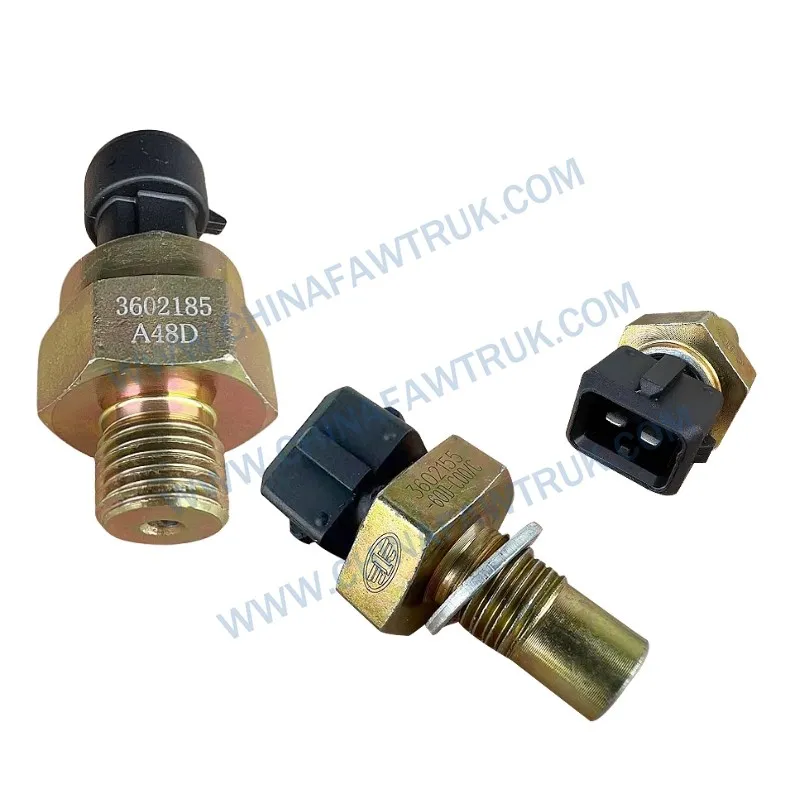
Logique du capteur de température atmosphérique russe FAW: Orchestration 4 Éléments de précision pour une combustion arctique optimisée
Le Capteur de température atmosphérique russe FAW L'assemblage logique est l'unité de sensibilisation à l'environnement pour le camion-benne CA3250P66K24L1TE5Z.. Dans le climat extrême de la Fédération de Russie, où les températures ambiantes peuvent varier de -50°C à +30°C, le système de gestion du moteur repose entièrement sur le Capteur de température atmosphérique russe FAW pour calculer la densité de l'air et déterminer la masse précise d'injection de carburant. Ce guide analyse l'unité de capteur, son architecture de montage spécialisée, et les fixations essentielles qui garantissent que cet instrument sensible survit aux vibrations et à la corrosion du secteur minier.
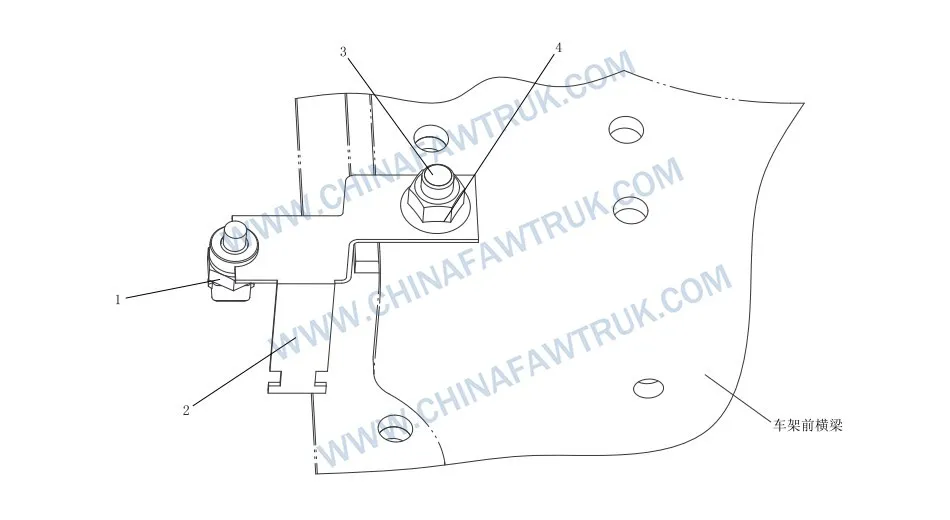
Capteur de température atmosphérique russe FAW
| Non. |
Numéro de pièce |
Nom de la pièce |
Quantité |
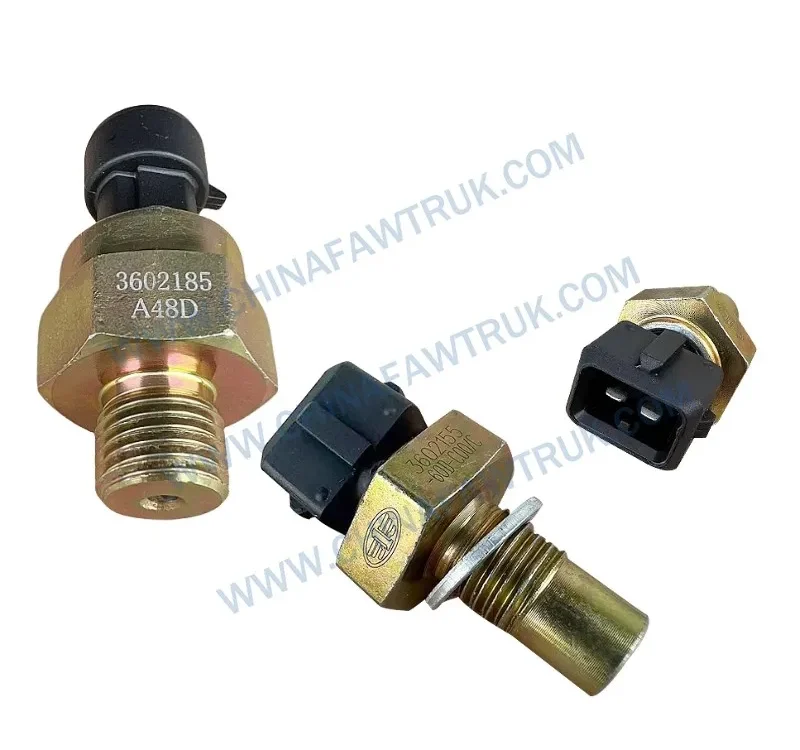
| 1 | 3602155-60D-C00 | Ensemble de capteurs de température | 1 |
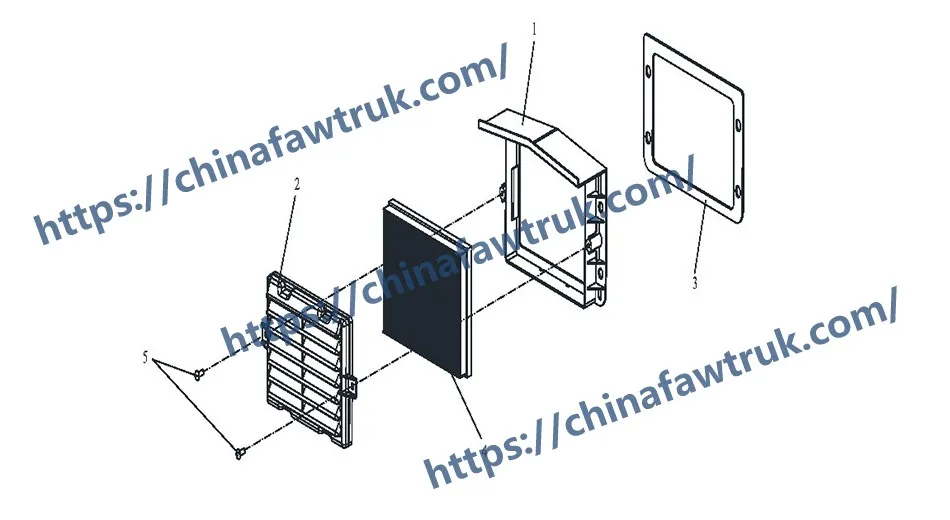
| 2 | 3602520-64R. | Ensemble de support de capteur de température atmosphérique | 1 |
| 3 | Q1841440 | Boulon à bride hexagonale (Queue grossière/standard) | 1 |
| 4 | CQ39614 | Écrou à bride hexagonale | 1 |
Détection de précision dans des conditions cryogéniques
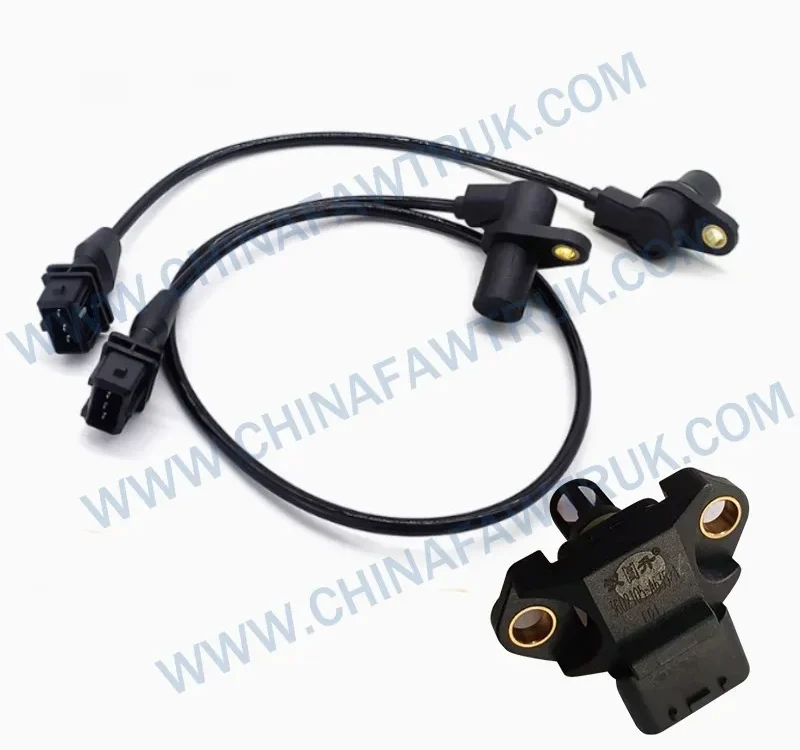
La principale unité fonctionnelle du Capteur de température atmosphérique russe FAW l'assemblage est le Ensemble de capteurs de température (Partie no. 3602155-60D-C00). Ce n'est pas une thermistance générique; il s'agit d'un capteur spécialisé de qualité automobile conçu avec un coefficient de température négatif (CTN) élément enfermé dans une coque en polymère thermoconducteur. Dans le contexte du Capteur de température atmosphérique russe FAW, ce composant sert de point de référence pour toute la stratégie de contrôle moteur. Le “60D-C00” la désignation indique une courbe d'étalonnage spécifique optimisée pour le moteur CA3250P66K24L1TE5Z, offrant une résolution améliorée à l'extrémité inférieure du spectre de température, spécifiquement entre -40°C et 0°C.
Dans l'Arctique russe, la densité de l'air varie considérablement par rapport aux zones tempérées. L'air froid est plus dense, contenant plus d'oxygène par mètre cube. Sans données précises du Capteur de température atmosphérique russe FAW, l'ECU pourrait sous-estimer la masse d'air entrant dans les cylindres, conduisant à un mélange de carburant pauvre. Un mélange pauvre dans un moteur diesel à haute compression en hiver peut rendre le démarrage difficile, ralenti difficile, et dans les cas graves, incapacité à générer suffisamment de chaleur de combustion pour réchauffer le bloc. Le Ensemble de capteurs de température garantit que le moment et la durée de l'injection de carburant sont parfaitement adaptés à la densité de l'air d'admission, facilitant les démarrages à froid immédiats et la fourniture de puissance en douceur.
La construction du Ensemble de capteurs de température aborde également la question du décalage thermique. La pointe de détection est exposée au flux d'air mais protégée par une structure en cage pour éviter les dommages causés par les débris de la route ou l'impact de la glace.. Cette conception permet au Capteur de température atmosphérique russe FAW réagir presque instantanément aux changements des conditions ambiantes, par exemple, quand le camion passe d'un atelier chauffé à un blizzard. Cette réponse rapide empêche le moteur de tourner “riche” ou “maigre” pendant la période de transition critique, optimiser l'économie de carburant et réduire les émissions d'hydrocarbures bruts pendant la phase de réchauffement.
Intégrité structurelle: L'assemblage du support
Le montage d'un instrument de précision sur un camion-benne robuste nécessite une interface robuste, fourni ici par le Ensemble de support de capteur de température atmosphérique (Partie no. 3602520-64R.). Ce support est plus qu'un simple morceau de métal; c'est une unité d'isolation technique. L'emplacement du Capteur de température atmosphérique russe FAW est critique – il doit être dans un courant d’air frais, loin de la chaleur du moteur, mais protégé des projections directes des roues. Le Ensemble de support de capteur de température atmosphérique positionne le capteur avec précision pour répondre à ces exigences contradictoires, souvent près du tuba d'admission ou derrière la calandre, protégé du panache thermique du radiateur.
Le choix du matériau pour le Ensemble de support de capteur de température atmosphérique reflète la réalité corrosive des routes russes, qui sont fortement traités avec des sels de déglaçage à base de chlorure. FAW utilise un acier épais pour ce support, traité avec un revêtement zinc-nickel en plusieurs étapes ou un processus de revêtement électronique. Cela garantit que le support ne rouille pas et ne tombe pas en panne., ce qui laisserait le Capteur de température atmosphérique russe FAW suspendu à son faisceau de câbles - un scénario qui conduit inévitablement à une fatigue des câbles, court-circuit du signal, et un “Vérifier le moteur” lumière qui met le véhicule à la terre.
En outre, la rigidité du Ensemble de support de capteur de température atmosphérique empêche les vibrations harmoniques. Les moteurs diesel génèrent d'importantes vibrations basse fréquence qui peuvent briser les joints de soudure électroniques délicats.. Le support est conçu avec des nervures de renforcement pour élever sa fréquence naturelle au-dessus de la plage de vibrations au ralenti du moteur.. En stabilisant le Ensemble de capteurs de température, le support garantit que le flux de données reste propre et ininterrompu, prouvant que l'ingénierie mécanique est tout aussi vitale pour le Capteur de température atmosphérique russe FAW système en tant que conception électronique.
Logique de fixation: Sécurisation en cas de vibrations élevées
La sécurité de l'ensemble logique dépend de la Boulon à bride hexagonale (Queue grossière/standard) (Partie no. Q1841440) et le Écrou à bride hexagonale (Partie no. CQ39614). Bien que ceux-ci puissent sembler être du matériel standard, leur spécification fait partie intégrante du Capteur de température atmosphérique russe FAW fiabilité. Le “Tige grossière” la désignation du boulon indique une conception optimisée pour la résistance au cisaillement. Dans l’environnement à fortes vibrations d’un châssis de camion-benne, les boulons à filetage fin peuvent parfois se desserrer ou se dénuder plus facilement si le support se déplace. Le profil de filetage grossier permet un engagement plus profond, résister aux micro-mouvements qui entraînent le retrait des fixations.
Le Écrou à bride hexagonale (Partie no. CQ39614) complète le boulon en répartissant la charge de serrage sur une surface plus large du support. Cette bride intégrée élimine le besoin d'une rondelle séparée, réduisant le nombre de pièces et les points de défaillance potentiels lors du service sur site. La face de la bride est souvent dentelée, mordre dans le Ensemble de support de capteur de température atmosphérique pour créer une serrure mécanique. Pour le Capteur de température atmosphérique russe FAW, cette action de verrouillage constitue la principale défense contre les secousses constantes induites par la conduite sur des routes de transport en carton ondulé ou sur un sol gelé..
En plus, la métallurgie de ces fixations est sélectionnée pour minimiser la corrosion galvanique. Le Ensemble de support de capteur de température atmosphérique et le rail du châssis peut être de différentes qualités d'acier. Le Boulon à bride hexagonale fait office de pont entre eux. L'utilisation d'un boulon avec le revêtement sacrificiel approprié garantit que la fixation ne se coince pas en place., permettant un retrait facile si le capteur doit être déplacé ou le support remplacé. Entretien du Capteur de température atmosphérique russe FAW nécessite de vérifier le couple de serrage de ces fixations pour garantir que le système reste physiquement sécurisé.
Intégration et maintenance du système
Le Capteur de température atmosphérique russe FAW n'est pas un composant isolé; c'est un nœud dans le réseau de zone de contrôleur du véhicule (PEUT). Le Ensemble de capteurs de température se connecte au faisceau principal du châssis via un connecteur étanche aux intempéries. Alors que le connecteur lui-même fait partie de la queue de cochon du capteur, sa sécurité est gérée par la bracketry. Un acheminement correct garantit que l'eau ne pénètre pas dans les fils dans le corps du capteur.. Tout compromis dans l'isolation du câblage à proximité du Ensemble de support de capteur de température atmosphérique peut conduire à signaler une corruption, ce qui fait que l'ECU passe par défaut à un “mode sans échec” valeur (généralement -40°C ou +20°C), ce qui peut sérieusement nuire aux performances du moteur.
Diagnostic pour le Capteur de température atmosphérique russe FAW implique de vérifier la résistance aux bornes du capteur par rapport à un graphique de température. Les techniciens doivent également inspecter le Boulon à bride hexagonale et Écrou à bride hexagonale pour l'étanchéité et la corrosion. Un support desserré peut faire vibrer le capteur contre le châssis., endommager physiquement le boîtier en plastique ou l'élément interne. Dans l'environnement poussiéreux d'une mine, la pointe du capteur peut également être recouverte de boue ou de crasse, l'isoler de l'air ambiant. Nettoyer le Ensemble de capteurs de température est une tâche de maintenance simple mais vitale pour garantir des lectures précises.
Finalement, le Capteur de température atmosphérique russe FAW dicte la façon dont le moteur respire. En garantissant que le rapport air-carburant est correct pour la densité spécifique de l'air, il protège le moteur d'une surchauffe (maigre) ou laver les cylindres avec un excès de carburant (riche). Les exploitants de flotte doivent reconnaître que ce petit assemblage, retenu par un seul Boulon à bride hexagonale, est la clé de voûte de l’efficacité énergétique. Remplacer un défectueux Ensemble de capteurs de température avec une pièce d'origine FAW restaure la capacité du moteur à s'adapter au rude environnement russe, assurant longévité et puissance.
Conclusion: Petite partie, Impact massif
Le Capteur de température atmosphérique russe FAW l'assemblage logique prouve que la taille n'est pas synonyme d'importance dans l'ingénierie automobile moderne. Ces 4 composants : le capteur, support, boulon, et l’écrou – forment un lien vital entre l’environnement et le cerveau informatique du moteur. La précision du Ensemble de capteurs de température permet au CA3250P66K24L1TE5Z de fonctionner efficacement dans l'un des climats les plus hostiles au monde.
Pour les professionnels de la maintenance, la simplicité du Capteur de température atmosphérique russe FAW l’Assemblée ne doit pas conduire à la complaisance. Assurer la Ensemble de support de capteur de température atmosphérique est sécurisé et le capteur est propre est essentiel pour des performances optimales du véhicule. En respectant la ventilation fournie et en utilisant uniquement des attaches d'origine comme celles Boulon à bride hexagonale, les opérateurs veillent à ce que leur flotte reste réactive, efficace, et prêt pour le froid.
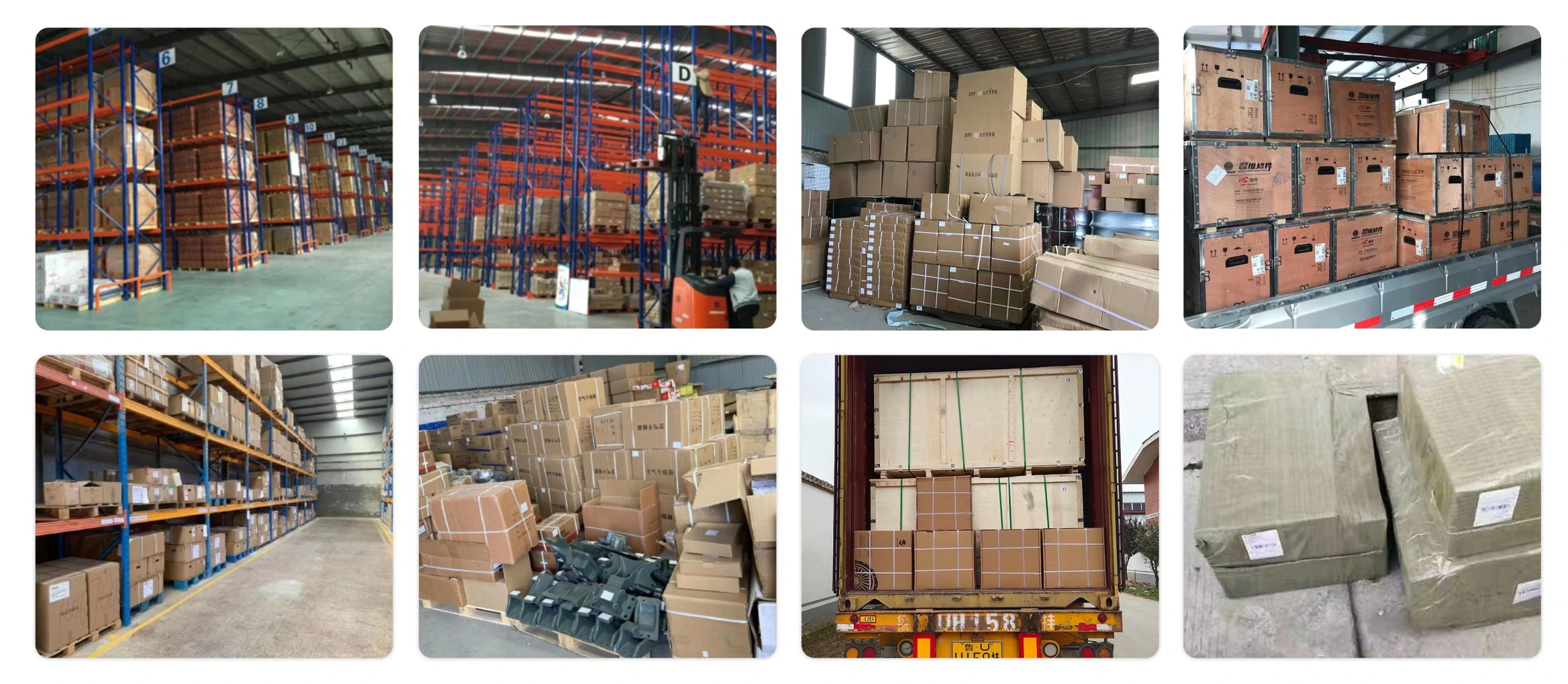
Emballage et logistique
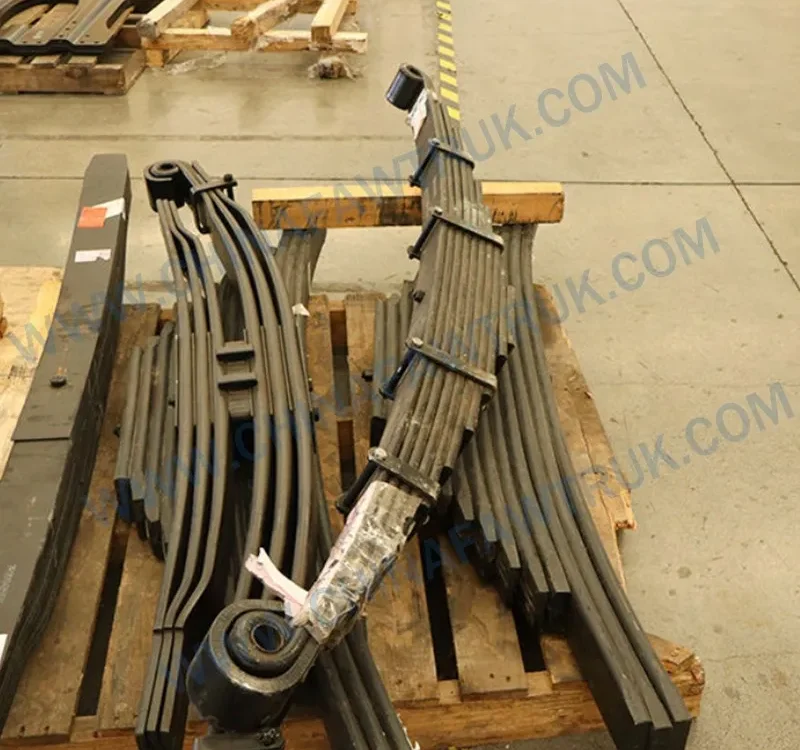
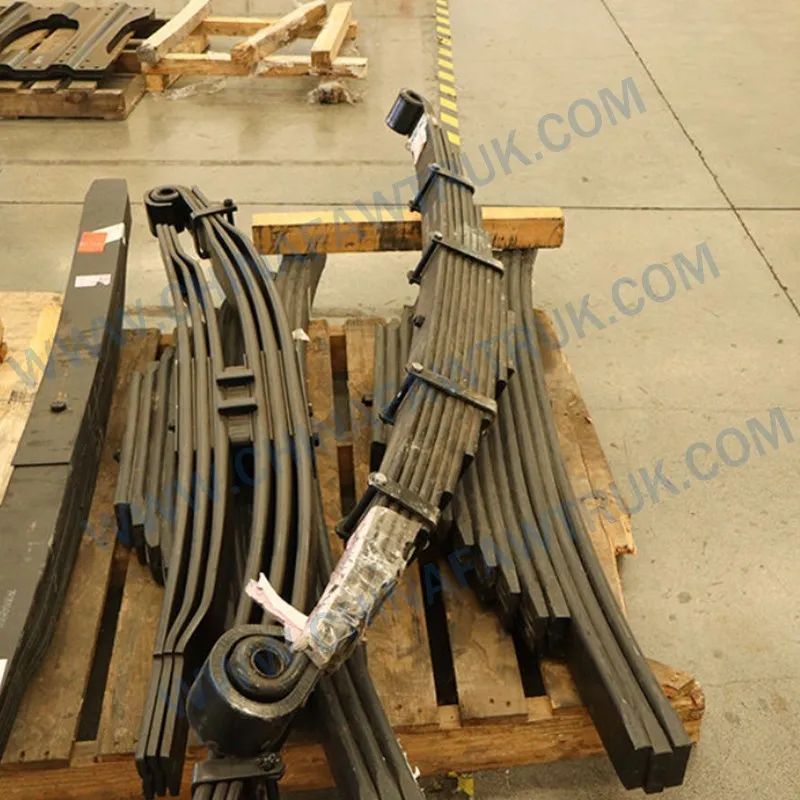
Pièces FAW, y compris l'ensemble bloc-cylindres, sont emballés avec soin pour garantir une livraison en toute sécurité. Chaque composant est sécurisé dans des matériaux de protection pour éviter tout dommage pendant le transport. Le réseau logistique garantit des expéditions ponctuelles dans le monde entier, soutenir des opérations de maintenance efficaces. Vous trouverez ci-dessous une image illustrant l'emballage standard des pièces de camion FAW., mettant en valeur l’attention portée aux détails dans la manipulation et le stockage.
Cette approche d'emballage minimise le risque de corrosion ou de dommages causés par les chocs., s'assurer que les pièces comme l'ensemble bloc-cylindres FAW arrivent en parfait état. Les clients peuvent compter sur la logistique de FAW pour une qualité et une fiabilité constantes.