FAW Russian Front Spring Ring: 5 Critical Components for Articulated Suspension Dynamics
The FAW Russian Front Spring Ring assembly (technically known as the shackle assembly) is the dynamic pivot interface for the CA3250P66K24L1TE5Z dump truck’s front suspension. It facilitates the necessary change in leaf spring length during compression and rebound cycles. Engineered for the Siberian wilderness, this assembly combines hardened steel pins with robust castings to prevent suspension binding at -50°C. This guide analyzes the shackle geometry, the lubrication logic, and the high-shear fastening system that defines this essential suspension node.

FAW Russian Front Spring Ring
Shackle Architecture and Kinetic Movement
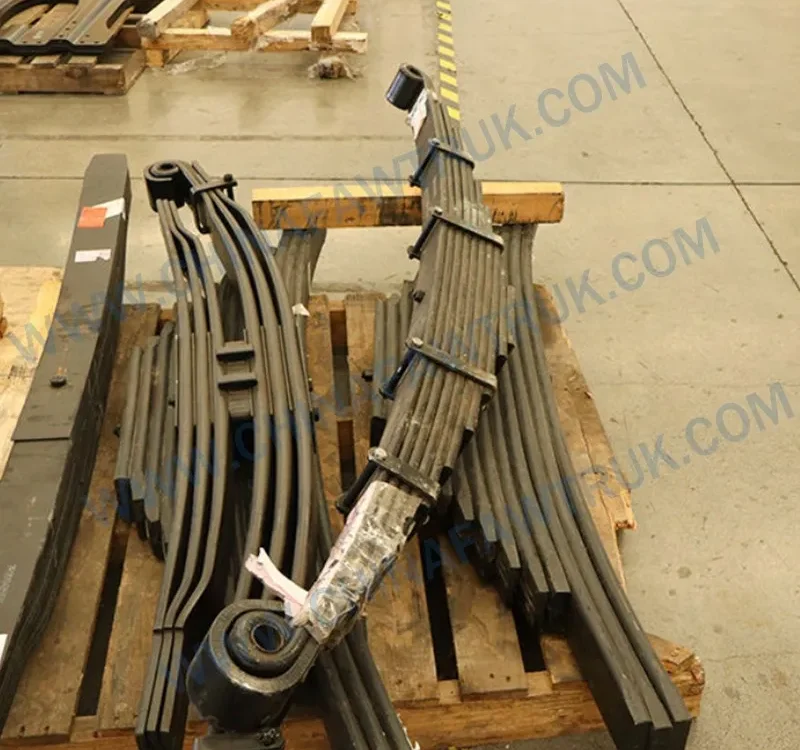
The central component of the FAW Russian Front Spring Ring system is the Shackle – Front Leaf Spring (Part No. 2902466-50A). This heavy-duty casting acts as the swinging link between the chassis frame and the rear eye of the front leaf spring. As the truck traverses uneven terrain, the leaf spring flattens and effectively lengthens. The FAW Russian Front Spring Ring accommodates this elongation by pivoting backwards. Without this articulation, the spring would bind, transferring massive shock loads directly to the frame and potentially snapping the main leaf.
The “50A” suffix in the part number indicates a specific metallurgy tailored for cold-weather ductility. In the Russian Arctic, standard cast iron can become brittle and prone to fracture under impact. The FAW Russian Front Spring Ring shackle is manufactured from a high-grade nodular iron or cast steel that retains its toughness even at extremely low temperatures. This ensures that the suspension remains compliant and safe, preventing catastrophic detachment of the axle during high-speed travel on frozen haul roads.
The geometric design of the FAW Russian Front Spring Ring shackle is optimized to prevent “inversion.” Inversion occurs when the shackle flips past its center point during extreme suspension droop (e.g., when the truck jumps or is lifted). The FAW design incorporates physical stops or geometry limits to ensure the shackle always returns to its correct operating angle. This reliability is crucial for maintaining the correct ride height and steering geometry of the vehicle.
Wear resistance is another key feature. The bore of the FAW Russian Front Spring Ring shackle is machined to precise tolerances to accept the mounting pins. Over time, the abrasive slurry of mud and ice found in mining environments can wear these bores oval. The FAW Russian Front Spring Ring design allows for sufficient material thickness to withstand years of abrasion before replacement is necessary, reducing the total cost of ownership for fleet operators.
Pin Technology and Load Transfer
The pivot action of the FAW Russian Front Spring Ring relies on the Pin – Front Leaf Spring Front Bracket (Part No. 2902471-69A). These pins serve as the axles upon which the shackle swings. They are subjected to immense shear forces, carrying the static weight of the truck’s front end plus the dynamic loads generated by braking and cornering. The FAW Russian Front Spring Ring pins are machined from high-tensile alloy steel, ground to a mirror finish, and induction hardened to resist wear.
The “69A” specification implies a surface treatment designed to resist corrosion and galling. In the FAW Russian Front Spring Ring assembly, the pin rotates slightly within the bushing with every millimeter of suspension travel. If the pin surface is rough or corroded, it acts like a file, rapidly destroying the bushing. The polished surface of the FAW pin ensures low friction and longevity. Furthermore, the pins in the FAW Russian Front Spring Ring system are often chrome-plated to provide a hard, slick surface that repels moisture and prevents rust seizure.
Proper installation of these pins is critical. They must be securely locked into the bracket to prevent rotation relative to the bracket itself; the rotation should only occur between the pin and the bushing. The FAW Russian Front Spring Ring design typically uses a locking bolt or a cotter pin arrangement (implied by the assembly logic) to immobilize the pin. If the pin were to rotate in the bracket holes, it would wear out the expensive chassis bracket, necessitating a complex structural repair.
The diameter of the FAW Russian Front Spring Ring pin is calculated to provide a massive safety factor against shear failure. Even in the event of an overload situation, such as the truck being dropped into a quarry pit, the pins are designed to bend rather than snap. This ductile failure mode provides a warning to the operator—usually in the form of a listing vehicle—rather than an immediate loss of the axle, highlighting the safety-first engineering of the FAW Russian Front Spring Ring.
Lubrication Logic: The Lifeblood of the Joint
The longevity of the FAW Russian Front Spring Ring is entirely dependent on effective lubrication. The system utilizes the Curved Neck Grease Nipple (Part No. CQ70145) to deliver chassis grease directly to the loaded zone of the pin and bushing interface. The curved neck design is a deliberate choice for the FAW Russian Front Spring Ring, allowing maintenance technicians to access the fitting with a grease gun even when the wheel is turned or the suspension is compressed, which would otherwise block a straight fitting.
In the extreme cold of Russia, grease tends to thicken and channel, failing to coat the moving parts. The FAW Russian Front Spring Ring pins typically feature internal cross-drilled channels that distribute the fresh grease evenly along the length of the bushing. The pressure of the incoming grease also serves a secondary function: it flushes out old, contaminated grease, pushing out water, sand, and road salt that may have engaged the seal. Regular greasing of the FAW Russian Front Spring Ring is the most important preventative maintenance task.
If the grease nipple becomes clogged or damaged—a common occurrence due to flying rocks—the joint will run dry. A dry FAW Russian Front Spring Ring joint generates intense heat and friction, leading to metal-on-metal seizing. Once seized, the suspension cannot articulate, causing a harsh ride and transmitting damaging shock loads to the chassis. Therefore, the simple CQ70145 nipple is a guardian of the entire FAW Russian Front Spring Ring assembly’s health.
Fleet managers operating in arctic conditions often switch to synthetic low-temperature greases (NLGI 0 or 00) for the FAW Russian Front Spring Ring. These lubricants remain flowable at -40°C, ensuring that the critical film strength is maintained during the first few kilometers of operation after a cold soak. The design of the FAW Russian Front Spring Ring is compatible with these advanced lubricants, ensuring reliable performance in any climate.
Fastening Security and Assembly
The structural integrity of the FAW Russian Front Spring Ring assembly is secured by high-strength fasteners. The Hexagon Head Bolt (Part No. CQ1511280) and the Hexagon Nut (Part No. CQ34112) are used to clamp the shackle components or lock the pins in place. These are not standard hardware store bolts; they are Grade 8.8 or 10.9 fasteners designed to withstand significant shear and tensile loads. In the FAW Russian Front Spring Ring application, bolt stretch and torque retention are critical.
Vibration is a constant enemy in dump truck operations. The nuts used in the FAW Russian Front Spring Ring assembly often feature self-locking threads or are paired with lock washers to prevent backing off. A loose bolt in the shackle assembly can allow the pin to migrate, leading to suspension collapse. Therefore, torque checks on the FAW Russian Front Spring Ring fasteners should be part of every scheduled service interval.
The assembly logic of the FAW Russian Front Spring Ring allows for field serviceability. Unlike riveted assemblies, the bolted construction means that individual worn components, such as the pins or the shackle plates, can be replaced without removing the entire spring pack. This modularity is a significant advantage for the FAW Russian Front Spring Ring, reducing downtime and repair costs for operators working in remote locations where parts availability may be limited.
When rebuilding the FAW Russian Front Spring Ring, it is imperative to replace the bolts and nuts. Reusing fasteners that have been subjected to years of stress and corrosion cycles introduces a weak link into the system. New fasteners ensure that the clamping force specification is met, restoring the FAW Russian Front Spring Ring to its original factory reliability and safety standards.
Component Breakdown: Front Spring Shackle Logic Assembly
| No. |
Part Number |
Part Name |
Qty |
| 1 | CQ34112 | Hexagon Nut | 4 |
| 2 | CQ1511280 | Hexagon Head Bolt | 4 |
| 3 | CQ70145 | Curved Neck Grease Nipple | 4 |
| 4 | 2902471-69A | Pin – Front Leaf Spring Front Bracket | 4 |
| 5 | 2902466-50A | Shackle – Front Leaf Spring | 2 |
Conclusion: Ensuring Suspension Articulation
The FAW Russian Front Spring Ring assembly is the unsung hero of the truck’s suspension system. By enabling the leaf springs to flex and articulate, it absorbs the punishment of the road, protecting the chassis and the driver. The integration of robust “50A” castings, hardened “69A” pins, and accessible lubrication points creates a system capable of enduring the harsh realities of Siberian logistics.
For maintenance professionals, the FAW Russian Front Spring Ring requires regular attention. Keeping the grease points purged and checking the fastener torque are simple steps that prevent complex and expensive failures. By using genuine FAW parts for replacement, operators ensure that the specific metallurgy and dimensional precision of the original design are maintained, guaranteeing the vehicle’s readiness for the next heavy load.
Packaging and Logistics
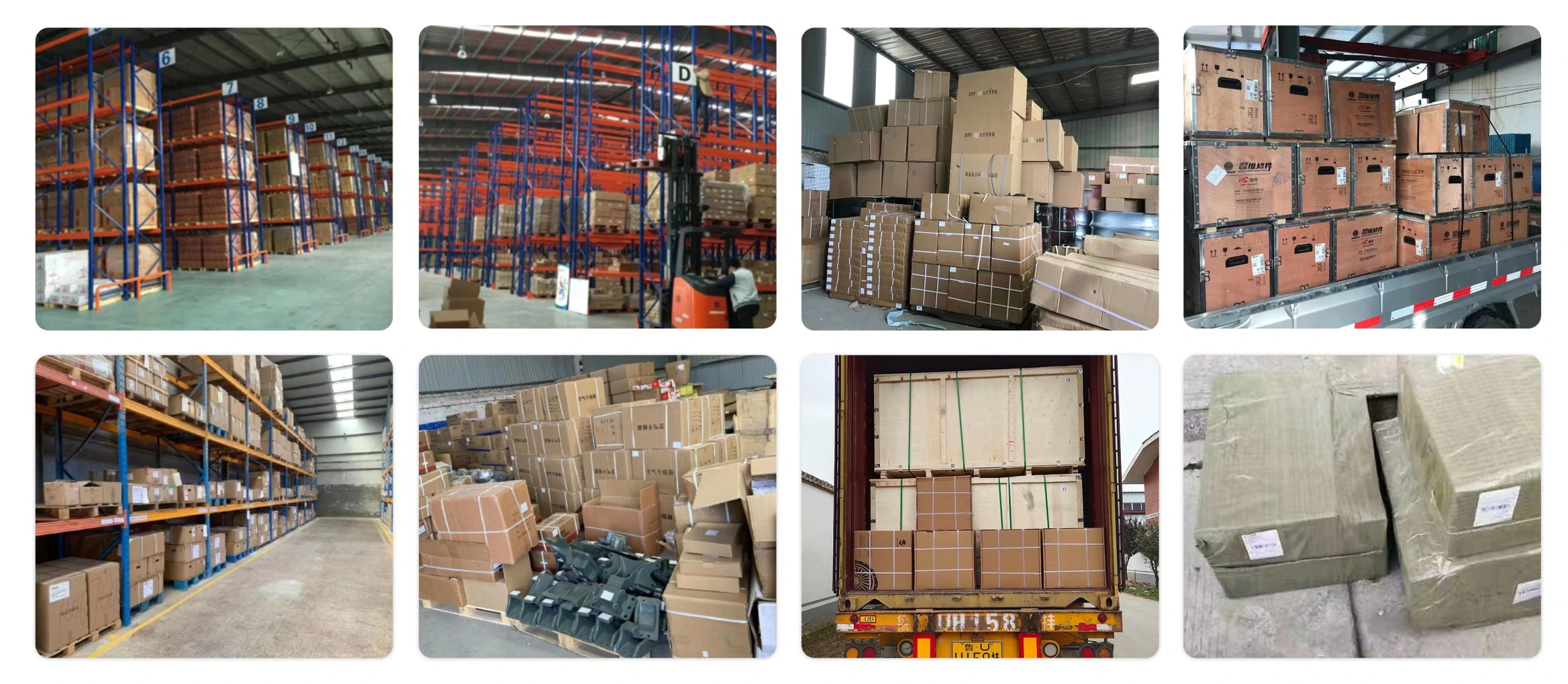
FAW parts, including the Cylinder Block Assembly, are packaged with care to ensure safe delivery. Each component is secured in protective materials to prevent damage during transit. The logistics network guarantees timely shipments worldwide, supporting efficient maintenance operations. Below is an image illustrating the standard packaging for FAW truck parts, showcasing the attention to detail in handling and storage.
This packaging approach minimizes the risk of corrosion or impact damage, ensuring that parts like the FAW Cylinder Block Assembly arrive in perfect condition. Customers can rely on FAW’s logistics for consistent quality and reliability.