por 


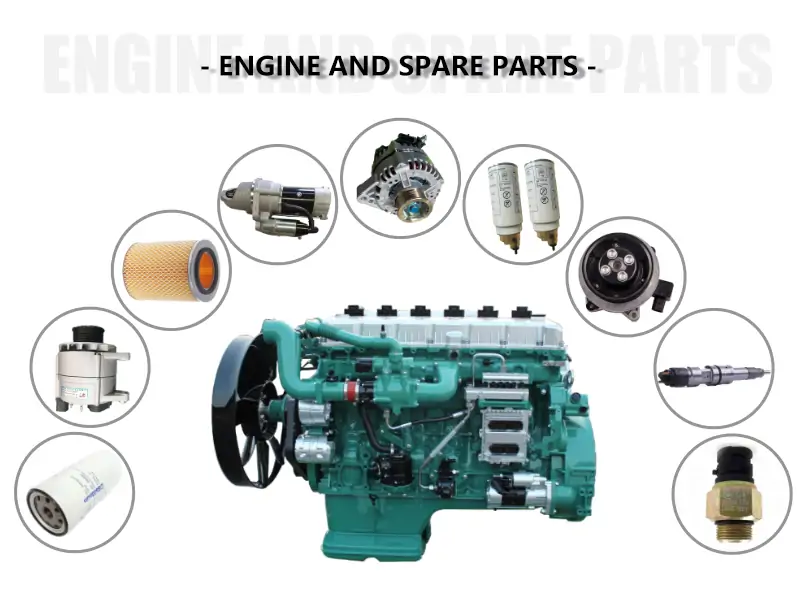
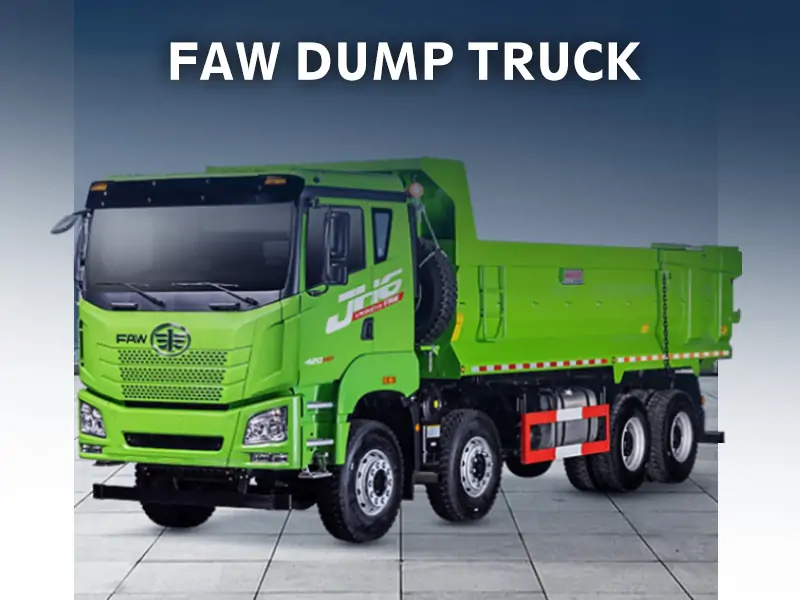
Bienvenidos a esta experta deconstrucción del Bloque de cilindros FAW J6P, el componente central (N/P 1002014-36D) para el motor en el FAW Jiefang CA3250P66K2L1T1E 6×4 camión volcado. Esto no es sólo una parte; es el “base” del tren motriz. El “lógica” del Bloque de cilindros FAW J6P Será el chasis estructural del motor., que contiene fuerzas de combustión, alojamiento del cigüeñal, y proporcionar la columna vertebral rígida y todos los conductos de fluidos..
El “lógica de diseño” de este específico Bloque de cilindros FAW J6P se centra en una durabilidad extrema y capacidad de servicio a largo plazo. la ingenieria (como lo implican las asambleas relacionadas) apunta a un “revestimiento húmedo” diseño compatible, lo que significa que las paredes del cilindro son reemplazables. Esta es una característica crítica para aplicaciones de servicio pesado., permitiendo que el motor sea reconstruido para “como nuevo” especificaciones varias veces, ampliando drásticamente su vida útil. Un fracaso en el Bloque de cilindros FAW J6P es la falla de motor más catastrófica posible, Es por eso que su ciencia de materiales y precisión de fabricación son primordiales..
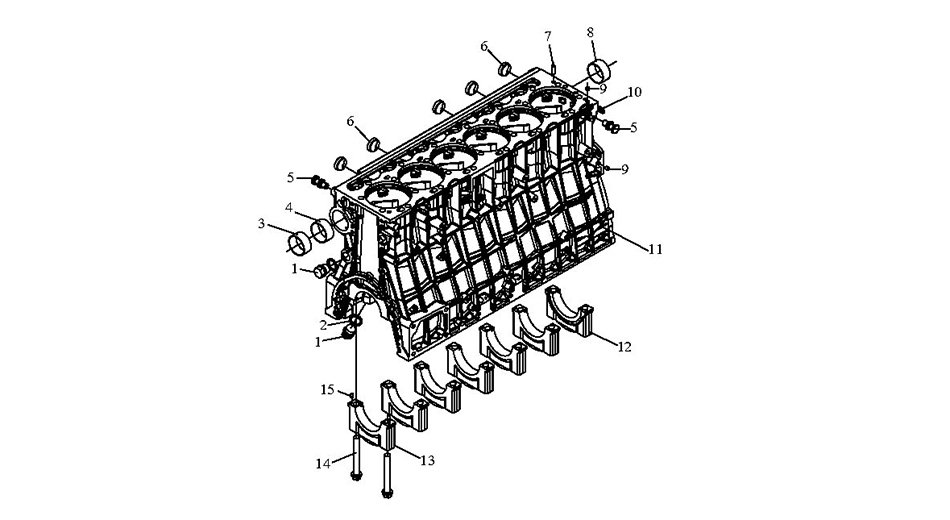
Esta guía técnica es un recurso esencial para los especialistas en reconstrucción de motores., técnicos de servicio pesado, y gerentes de repuestos de flotas. Deconstruiremos todo el grupo de 15 componentes asociados con el desnudo Bloque de cilindros FAW J6P. Analizaremos el “Soporte del cigüeñal” lógica (las gorras, perno, y alfileres), el “Soporte del árbol de levas” lógica (el conjunto de 11 arbustos), y el critico “Sellado de fundición” lógica (los diversos tapones y sellos que hacen que la fundición sea hermética al agua y al aceite). Éste es el análisis definitivo de la Bloque de cilindros FAW J6P centro.
Todo este grupo de componentes se centra alrededor de la propia fundición principal.. Este es el corazón de la estructura del motor y el núcleo del Bloque de cilindros FAW J6P.
1. Componente: «Bloque de cilindros’ (1002014-36D)
Este es el componente principal. La lista de piezas muestra una cantidad de dos. (2), lo que puede indicar una doble parte (P.EJ., bloque y bancada) diseño o diferentes variantes. Suponiendo que este es el bloque principal, es “lógica de fundición” es fuerza absoluta. Está hecho de un alto grado., aleación de hierro con alto contenido de níquel, con extensas nervaduras internas y gruesas “webs principales” (las secciones que sujetan el cigüeñal) para evitar que el bloque se doble o “caminando” bajo la inmensa carga de la combustión diesel.
Es “lógica fluida” es igualmente complejo. Contiene una enorme “chaqueta de agua” (los conductos internos para el refrigerante) que rodea los orificios del cilindro, y un separado, alta presión “galería de aceite” Sistema que se perfora a través del bloque para entregar aceite a los cojinetes principales del cigüeñal y hasta la culata del cilindro.. El “lógica de mecanizado” de esto Bloque de cilindros FAW J6P es su característica más precisa: la parte superior “cubierta” Está fresado perfectamente plano para sellar la junta de culata., y el “orificios principales” Están perforados con una tolerancia de diez milésimas de pulgada para garantizar que el cigüeñal gire perfectamente..
Este grupo de componentes tiene una lógica.: para asegurar el cigüeñal del motor en el Bloque de cilindros FAW J6P con una alineación perfecta y una inmensa fuerza de sujeción.
1. Componentes: «Tapa de cojinete de bancada’ (1002011-36D) & 'Tapa del cojinete de bancada trasera’ (1002012-36D)
Este es el “lógica de contención.” El cigüeñal descansa en el “sillas de montar” del Bloque de cilindros FAW J6P. Estas 'tapas de cojinetes principales’ (compensación 13) son la otra mitad que “gorras” el cigüeñal, creando un círculo perfecto para los rodamientos. Su “lógica de precisión” es critico: Estas tapas están mecanizadas *mientras están atornilladas al bloque* (aburrido de línea). Esto significa gorra 1 *solo* encaja en la posición 1, Tapa 2 en posición 2, etc., y deben mirar en la dirección correcta. La tapa del cojinete de bancada trasera’ (compensación 12) es especial, ya que es más grande y también contiene la principal “empuje” Cojinetes que controlan el movimiento de adelante hacia atrás del cigüeñal. (finalizar el juego).
2. Componentes: «Perno del cojinete principal’ (1002013-36D) & 'Pasador’ (Q5210612)
Este es el “alineación y sujeción” lógica. Los 'clavijas’ (compensación 15), con una cantidad de 14 (dos por cada uno de los 7 tapas principales), proporcionar el “lógica de alineación.” Su trabajo es garantizar que la tapa esté perfectamente alineada de lado a lado *antes* de apretar los pernos.. Los 'Pernos del cojinete principal’ (compensación 14), también 14, proporcionar el “lógica de sujeción.” Estos no son tornillos estándar.; son de alta resistencia, par a rendimiento (TTY) sujetadores. Su lógica es estirarse ligeramente cuando se les aplica torsión., actuando como un resorte de alta tensión para proporcionar una enorme, fuerza de sujeción constante que evita que las tapas “caminando” bajo carga. Esta es una parte crítica para la seguridad del Bloque de cilindros FAW J6P asamblea.
Este motor es un “leva en bloque” (OHV) diseño, lo que significa que el árbol de levas está montado dentro del Bloque de cilindros FAW J6P. La lógica de este grupo es apoyar ese eje giratorio..
Componentes: 'Casquillo de árbol de levas delantero/intermedio/trasero’ (1006024A29D, 1006028A29D, 1006029A29D)
Este es el “rodamiento de sacrificio” lógica. El árbol de levas no se apoya directamente sobre el hierro fundido del bloque.. En cambio, se monta en estos “arbustos” (o “cojinetes de leva”). Estas son fundas de metal blando que son “apretado” en los orificios del Bloque de cilindros FAW J6P. Su “lógica” es doble: 1) Proporcionan una suave, Superficie de baja fricción para que gire el árbol de levas.. 2) Ellos son “sacrificatorio.” Si se produce falta de petróleo, el suave arbusto será destruido, ahorrando el árbol de levas mucho más caro y Bloque de cilindros FAW J6P del daño. La lista de piezas requiere 1 'Frente’ (compensación 3), 5 'Intermedio’ (compensación 4), y 5 'Trasero’ (compensación 8) arbustos, totalizando 11, lo que sugiere un sistema complejo o de múltiples ejes (P.EJ., árbol de levas y eje de equilibrio) todos son apoyados dentro del Bloque de cilindros FAW J6P.
Este grupo final “lógica” es sellar todos los “agujeros” dejados de la fabricación y para proporcionar acceso a servicios. un desnudo Bloque de cilindros FAW J6P La fundición está llena de pasajes para la arena. (del casting), refrigerante, y aceite (de la perforación).
1. El “Chaqueta refrigerante” Lógica: 'Tapón de taza’ (Q72240, Q72224)
Estos son comúnmente llamados “tapones de congelación.” Su “lógica” es sellar el grande, agujeros circulares (compensación 6, 10) en el lado de la Bloque de cilindros FAW J6P que fueron necesarios para retirar el núcleo de arena interno después del vaciado. Simplemente se martillan para crear un sello hermético para la camisa de refrigerante..
2. El “Galería de aceite” Lógica: 'Tapón de cabeza hexagonal’ (Q/WC3413-1994) & 'Junta de cobre’ (Q/WC3403-1994)
La galería principal de petróleo se perfora desde el frente hacia la parte trasera del bloque.. Este “enchufar” (compensación 1) es de alta presion, perno roscado. Es “lógica” es sellar permanentemente el final de esa galería petrolera. La 'junta de cobre’ (compensación 2) es un suave, Sello de un solo uso que se aplasta para crear un perfecto, alta presión, sello hermético al aceite. Tapones adicionales como 'Tapón de sello de aceite’ (compensación 7) y 'Bloque de cilindros’ (compensación 9) cumplen funciones similares para otros conductos de fluidos, asegurando la integridad de la Bloque de cilindros FAW J6P.
3. El “Utilidad” Lógica: «Cáncamo de elevación’ (1002021-29D)
Este componente “lógica” es puramente para servicio. El Bloque de cilindros FAW J6P (y el motor completo) es increíblemente pesado. Estos dos 'cáncamos de elevación’ (compensación 5) tienen capacidad de carga, pernos de acero de alta resistencia que se atornillan al bloque. Proporcionan un punto de fijación seguro y equilibrado para una grúa o polipasto, permitiendo la extracción e instalación seguras del Bloque de cilindros FAW J6P.
La siguiente tabla proporciona la información completa, desglose detallado de todos 15 tipos de componentes asociados con el desnudo Bloque de cilindros FAW J6P Para FAW Jiefang CA3250P66K2L1T1E 6×4 camión volcado.
| Marca | Número de pieza. | Nombre de la pieza | Cantidad |
|---|---|---|---|
| 1 | Q/WC3413-1994 | Tornillo de cabeza hexagonal M27x2 | 2 |
| 2 | Q/WC3403-1994 | Junta de cobre 27×38 | 2 |
| 3 | 1006024A29D | Casquillo del árbol de levas delantero | 1 |
| 4 | 1006028A29D | Casquillo intermedio del árbol de levas | 5 |
| 5 | 1002021-29D | Cáncamo de elevación | 2 |
| 6 | Q72240 | Tapón | 2 |
| 7 | 1002022-36D | Tapón de sello de aceite-bloque de cilindros | 2 |
| 8 | 1006029A29D | Casquillo del árbol de levas trasero | 5 |
| 9 | 1002023-36D | Bloque de cilindros enchufables | 1 |
| 10 | Q72224 | Tapón | 1 |
| 11 | 1002014-36D | Bloque cilíndrico | 2 |
| 12 | 1002012-36D | Tapa del cojinete principal trasero | 1 |
| 13 | 1002011-36D | Tapa de cojinete principal | 1 |
| 14 | 1002013-36D | Perno de rodamiento | 14 |
| 15 | Q5210612 | Pasador | 14 |
Las especificaciones para el desnudo. Bloque de cilindros FAW J6P se definen por su función como base estructural del motor.
| Solicitud de vehículo | FAW Jiefang CA3250P66K2L1T1E 6×4 Camión de la basura |
| Grupo de sistema | Bloque de cilindros FAW J6P (Desnudo, Útil) |
| Componente principal N.º de pieza. | 1002014-36D ('Bloque de cilindros') |
| Tipo de diseño de bloque | Leva en bloque (OHV), “Forro húmedo” Diseño compatible |
| Lógica primaria | Integridad estructural, Alineación del cigüeñal/árbol de levas, Gestión de fluidos |
| Material | Aleación de hierro fundido de alta resistencia |
| Sistema de soporte del cigüeñal | «Tapa de cojinete de bancada’ (1002011-36D, 1002012-36D) |
| Sistema de sujeción del cigüeñal | «Perno del cojinete principal’ (1002013-36D) – Cantidad 14 (Tipo de teletipo) |
| Alineación del cigüeñal | 'Pasador’ (Q5210612) – Cantidad 14 |
| Sistema de soporte del árbol de levas | «Casquillo del árbol de levas’ (1006024/28/29A29D) – Cantidad 11 total |
| Lógica de sellado (Fundición) | 'Tapón de taza’ (Q72240, Q72224) para camisa refrigerante |
| Lógica de sellado (Galería de fluidos) | 'Tapón de cabeza hexagonal’ (Q/WC3413-1994) con junta de cobre’ (Q/WC3403-1994) |
| Lógica de servicio | «Cáncamo de elevación’ (1002021-29D) para un manejo seguro |
piezas FAW, incluido el conjunto del bloque de cilindros, Se empaquetan con cuidado para garantizar una entrega segura.. Cada componente está asegurado con materiales protectores para evitar daños durante el transporte.. La red logística garantiza envíos puntuales en todo el mundo., apoyando operaciones de mantenimiento eficientes. A continuación se muestra una imagen que ilustra el embalaje estándar de las piezas de camiones FAW., mostrando la atención al detalle en el manejo y almacenamiento.
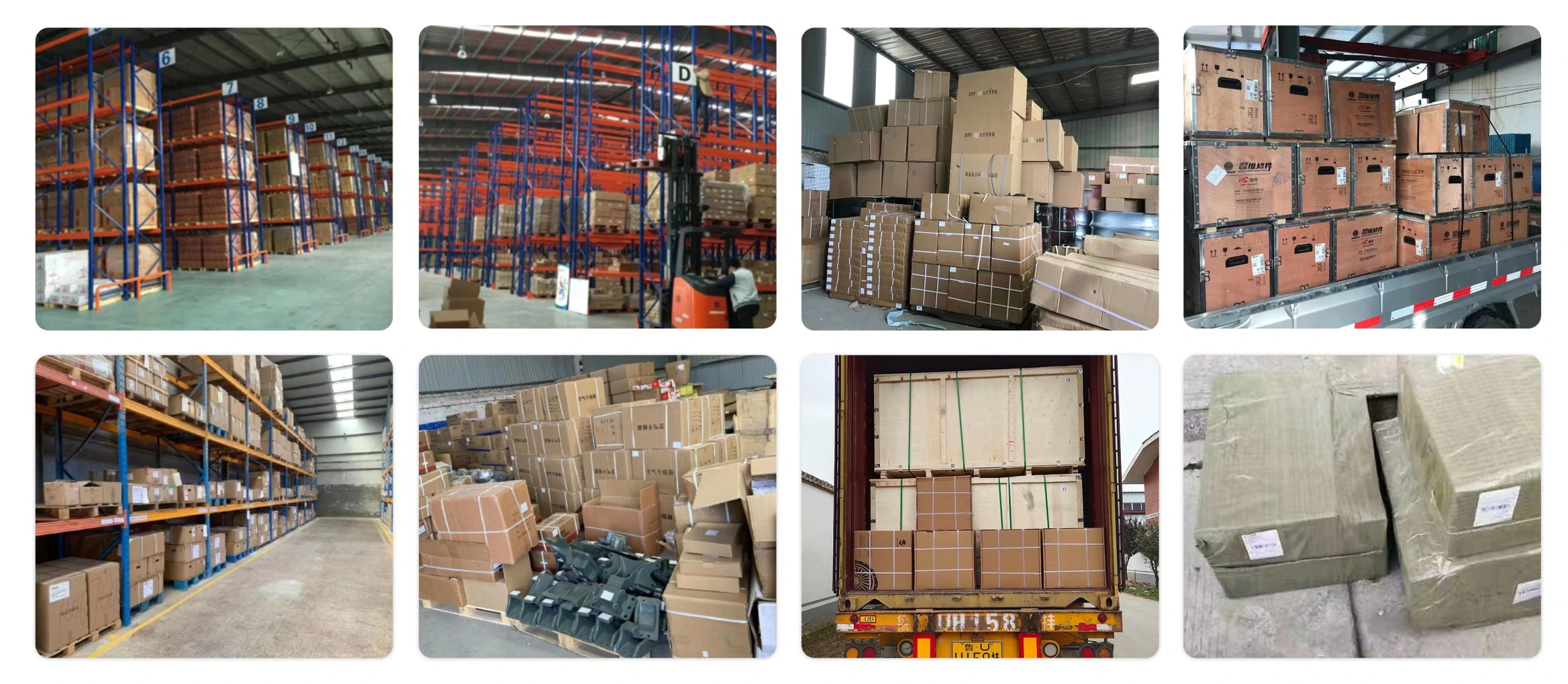
Este enfoque de embalaje minimiza el riesgo de corrosión o daños por impacto., asegurando que piezas como el conjunto de bloque de cilindros FAW lleguen en perfectas condiciones. Los clientes pueden confiar en la logística de FAW para obtener calidad y confiabilidad constantes.