FAW Russian Fuel Fine Filter: 6 Precision Components for Unbeatable Diesel Purity
The FAW Russian Fuel Fine Filter is the ultimate defense for the CA3250P66K24L1TE5Z dump truck’s high-pressure injection system. Engineered for the Russian Arctic, this assembly separates microscopic contaminants and water from diesel fuel, preventing injector failure at -40°C. This guide dissects the filter core, base assembly, and mounting architecture required for flawless engine operation.

FAW Russian Fuel Fine Filter
The Core Technology: Multi-Stage Particle Separation
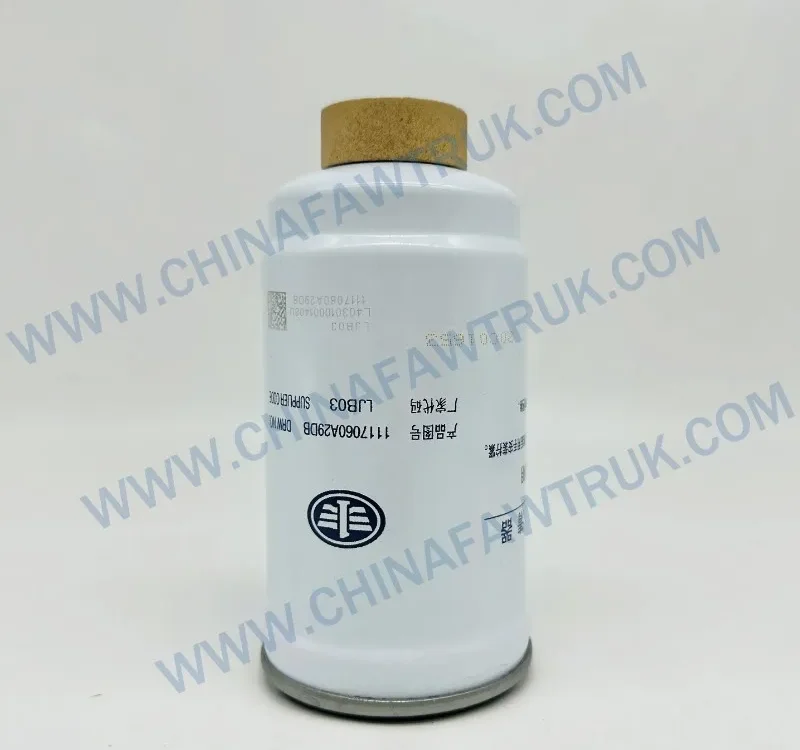
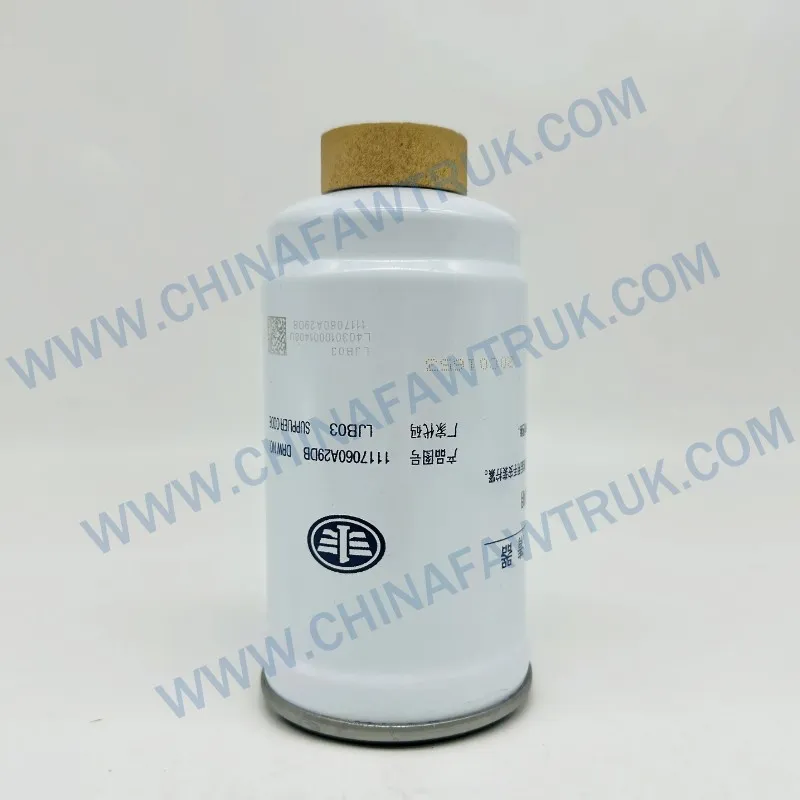
The operational heart of the system is the Fuel Fine Filter Core Assembly (Part No. 1117050-55R). Within the FAW Russian Fuel Fine Filter architecture, this component is tasked with protecting the Common Rail Direct Injection (CRDI) system. Modern injectors operate at pressures exceeding 2000 bar, making them incredibly sensitive to particulate matter. Even microscopic dust particles can scour the injector needles, leading to dribbling, poor atomization, and piston damage.
To combat this, the FAW Russian Fuel Fine Filter utilizes a multi-layered synthetic media. Unlike cellulose filters which can swell and restrict flow when exposed to water, this synthetic matrix maintains its structural integrity. It is designed to capture particles as small as 3 microns with an efficiency rating of over 99%. This level of filtration is mandatory for meeting the emissions and performance standards of the Russian Federation.
Furthermore, the media within the FAW Russian Fuel Fine Filter is treated with a hydrophobic coating. This repels water molecules suspended in the diesel fuel. In the Russian winter, water in the fuel system is a catastrophic hazard; it can freeze in the lines or flash-boil in the injectors tips, shattering them. The filter coalesces this water into large droplets that sink to the bottom of the collection bowl, keeping the injection stream pure.
Base Architecture: Flow Management and Heating
Supporting the filter element is the Fuel Fine Filter Base Assembly (Part No. 1117020-81D). This cast aluminum or alloy component acts as the distribution hub for the fuel. It contains the inlet and outlet ports, as well as the priming pump mechanism used to bleed air from the system after maintenance. In the context of the FAW Russian Fuel Fine Filter, the base is often equipped with an integrated electric heater or coolant exchange passages.
This heating capability is essential for preventing paraffin waxing. Diesel fuel contains paraffin wax which crystallizes at low temperatures, clogging the filter media. The FAW Russian Fuel Fine Filter base warms the incoming fuel, melting these crystals and ensuring continuous flow even when ambient temperatures drop to -45°C. Without this thermal management, the engine would starve of fuel and stall minutes after starting.
The machining tolerance of the base sealing surface is critical. It must provide a perfect flatness to mate with the filter element gasket. Any imperfection here would allow unfiltered fuel to bypass the element or allow air to be sucked into the fuel lines. Air ingress is a major cause of hard starting and erratic idling in diesel engines. The FAW Russian Fuel Fine Filter base is subjected to rigorous pressure testing to ensure it remains leak-free under the suction of the lift pump.
Vibration Isolation: Brackets and Fasteners
The entire filtration unit is secured to the chassis or engine block via the Fuel Fine Filter Bracket Assembly (Part No. 1117120-81D). This heavy-gauge steel bracket is designed to isolate the filter from the high-frequency vibrations of the diesel engine. If the FAW Russian Fuel Fine Filter were mounted rigidly without this engineered support, the vibration could cause metal fatigue in the filter canister or the aluminum base, leading to cracks and fuel leaks.
Securing the bracket requires a specific set of high-tensile fasteners. The assembly uses the Hexagon Flange Bolt (Coarse Shank/Standard) (Part No. Q1841075) and smaller variants like Part No. Q1841030. The flange head design is crucial for the FAW Russian Fuel Fine Filter installation as it eliminates the need for separate washers, which can be lost during field repairs. The wide flange distributes the clamping load, preventing the bolt head from embedding into the bracket paint and inviting corrosion.
Additionally, the assembly utilizes the Hexagon Nut (Part No. CQ34010) for securing auxiliary lines or mounting points. All fasteners associated with the FAW Russian Fuel Fine Filter are treated with a zinc-flake or similar high-corrosion-resistance coating. In the salty, wet environment of Russian roads, bolt corrosion can seize fasteners, making simple filter changes a nightmare. FAW’s specification ensures these bolts remain serviceable for the life of the truck.
Component Breakdown List
The following table details the comprehensive parts breakdown for the FAW Russian Fuel Fine Filter assembly. Fleet managers should prioritize using these exact part numbers to maintain the filtration efficiency and cold-start reliability of the CA3250P66K24L1TE5Z dump truck.
| No. |
Part Number |
Part Name |
Qty |
| 1 |
1117010-81D |
Fuel Fine Filter Assembly (Pattern) |
1 |
| – |
1117020-81D |
Fuel Fine Filter Base Assembly |
1 |
| – |
1117050-55R |
Fuel Fine Filter Core Assembly (Element) |
1 |
| 2 |
1117120-81D |
Fuel Fine Filter Bracket Assembly |
1 |
| 3 |
Q1841030 |
Hexagon Flange Bolt (Coarse Shank/Standard) |
2 |
| 4 |
CQ34010 |
Hexagon Nut |
2 |
| 5 |
Q1841075 |
Hexagon Flange Bolt (Coarse Shank/Standard) |
2 |
| 6 |
Q1841020 |
Hexagon Flange Bolt (Coarse Shank/Standard) |
2 |
Maintenance Protocols for Fuel Purity
Replacing the FAW Russian Fuel Fine Filter is a procedure that demands absolute cleanliness. Before removing the old Fuel Fine Filter Core Assembly, technicians must clean the exterior of the housing to prevent loose dirt from falling into the clean side of the fuel system. Once the new filter is installed, the system must be primed using the hand pump on the base. Failure to bleed all air from the FAW Russian Fuel Fine Filter will result in a “vapor lock” condition, preventing the engine from starting or causing it to stall immediately.
Regularly inspect the Fuel Fine Filter Base Assembly for signs of weeping fuel, particularly around the heater electrical connectors (if equipped) and the primer pump plunger. In extremely cold weather, the O-rings in the primer pump can stiffen and leak air into the system. If the primer pump feels spongy or fails to build pressure, the entire base may need servicing or replacement to restore the integrity of the FAW Russian Fuel Fine Filter system.
Check the Fuel Fine Filter Bracket Assembly for stress cracks, especially near the bolt holes. The weight of a fuel-filled filter combined with chassis vibration can fatigue the metal over time. Ensure that the Hexagon Flange Bolts (Q1841030 and Q1841075) are torqued correctly. A loose filter assembly can vibrate excessively, leading to work-hardening of the fuel lines and eventual rupture, creating a significant fire hazard and vehicle downtime.
Conclusion: Protecting the Injection System
The FAW Russian Fuel Fine Filter is the final checkpoint for fuel purity before it enters the expensive high-pressure injection pump. Its ability to separate water and trap micron-sized particles is the primary factor determining the lifespan of the engine’s fuel system. Every component, from the hydrophobic media in the core to the rigid mounting bracket, is engineered to withstand the unique challenges of the Russian operating environment.
For fleet owners, there is no substitute for the genuine article. Aftermarket filters often use inferior cellulose media that can swell and clog in cold weather or fail to separate emulsified water. By investing in the genuine FAW Russian Fuel Fine Filter, you are insuring your fleet against injector failure, power loss, and costly downtime, ensuring that your trucks remain reliable and profitable assets on the road.
Packaging and Logistics
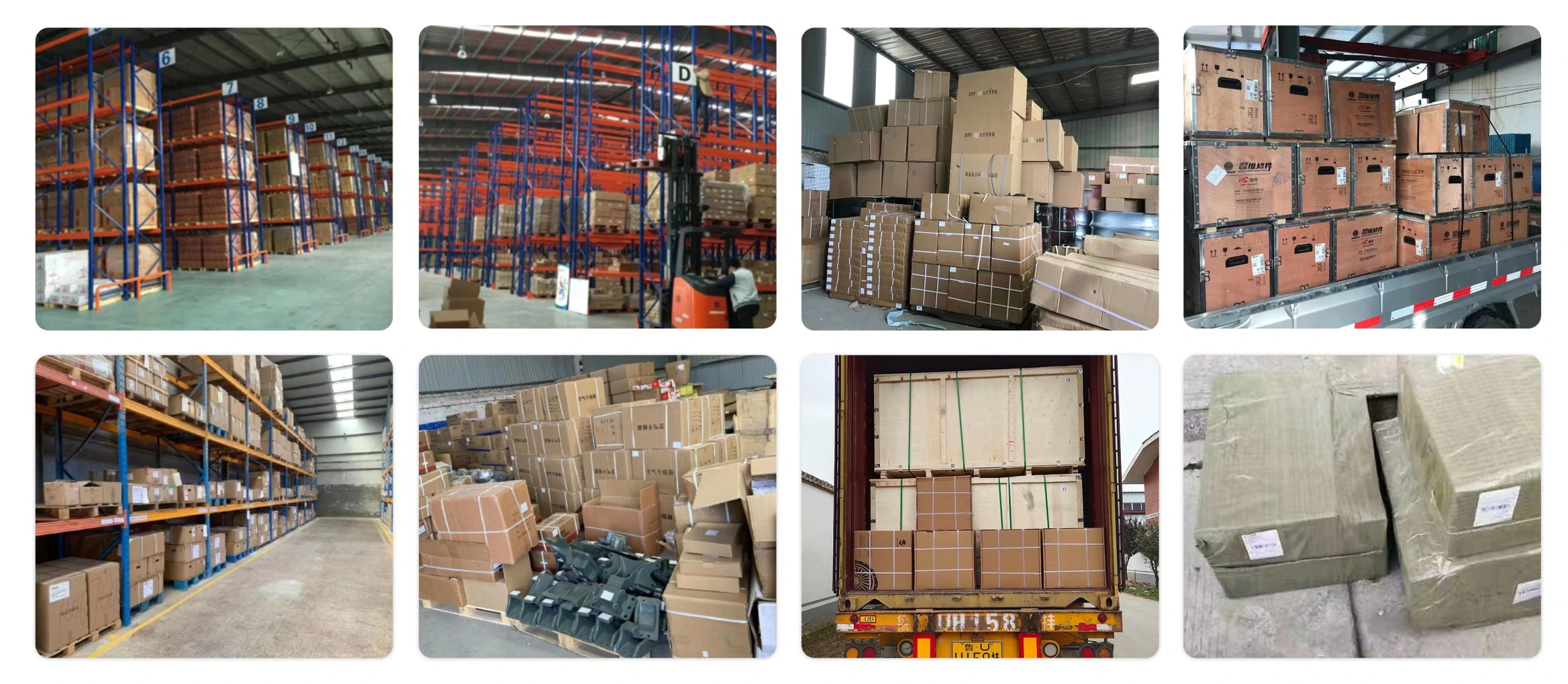
FAW parts, including the Cylinder Block Assembly, are packaged with care to ensure safe delivery. Each component is secured in protective materials to prevent damage during transit. The logistics network guarantees timely shipments worldwide, supporting efficient maintenance operations. Below is an image illustrating the standard packaging for FAW truck parts, showcasing the attention to detail in handling and storage.
This packaging approach minimizes the risk of corrosion or impact damage, ensuring that parts like the FAW Cylinder Block Assembly arrive in perfect condition. Customers can rely on FAW’s logistics for consistent quality and reliability.