FAW Russian Transfer-Case Control Mechanism: Engineering 4 Strategic Control Pathways for Absolute Arctic Traction
The FAW Russian Transfer-Case Control Mechanism logic assembly acts as the pneumatic and electronic nervous system for the vehicle’s all-wheel-drive capability. Situated between the chassis air supply and the massive transfer gearbox, this system manages the critical engagement of differential locks and high/low ranges. In the frozen expanse of the Russian Federation, where mechanical linkage can freeze solid, this air-actuated logic ensures that the CA3250P66K24L1TE5Z dump truck maintains traction and maneuverability without hesitation.

FAW Russian Transfer-Case Control Mechanism Logic Assembly
Control Logic: The Solenoid Outlet Network
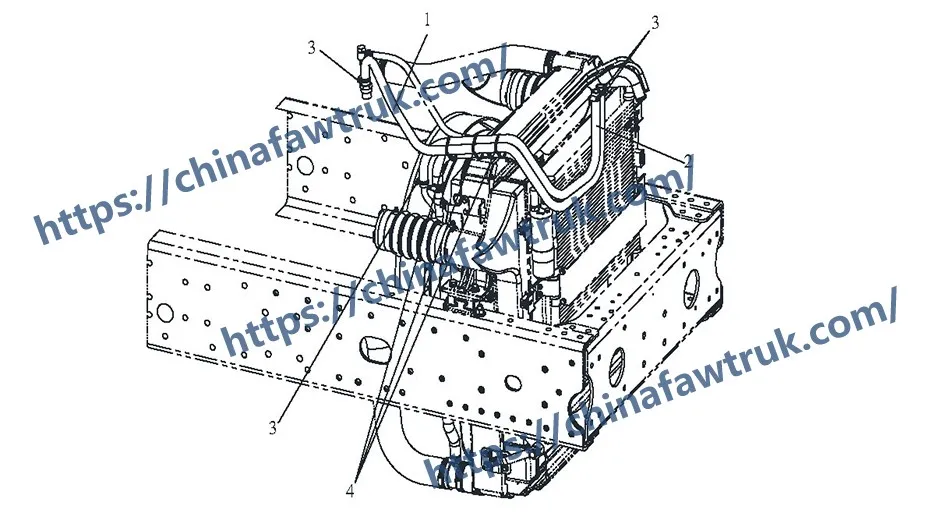
The core functionality of the FAW Russian Transfer-Case Control Mechanism relies on the precise delivery of compressed air. This is achieved through the Control Air Pipe Assembly – Solenoid Valve Outlet (Part No. 1804630-55R). Three of these assemblies are utilized to manage distinct functions, likely including the high/low range shift and front axle engagement. These pipes are the arteries of the system, carrying the pneumatic signal from the chassis-mounted solenoid valves directly to the actuator cylinders on the transfer case.
In the context of the FAW Russian Transfer-Case Control Mechanism, the material science of these pipes is paramount. They are manufactured from high-grade Nylon-11 or Nylon-12 composites, specifically formulated to resist “cold embrittlement.” At -40°C, standard plastic tubing becomes as fragile as glass and will shatter under the vibration of the drivetrain. The “55R” designation indicates a reinforced, cold-weather specification that remains flexible and durable even in the deepest Siberian winter, ensuring the driver’s commands reach the gearbox instantly.
The routing of these pipes within the FAW Russian Transfer-Case Control Mechanism is meticulously engineered. They must navigate the twisting chassis rails and the hot transmission housing without chafing or melting. The assembly utilizes specific pre-formed bends to ensure the lines stay clear of moving parts like the propeller shafts. A rupture in any of these lines would leave the transfer case stuck in its current gear, potentially stranding the vehicle in a hazardous location. Therefore, the structural integrity of these pipes is the foundation of the truck’s off-road reliability.
Traction Logic: The Inter-Axle Differential Lock
For extreme off-road conditions, the FAW Russian Transfer-Case Control Mechanism includes a dedicated circuit for the inter-axle differential lock. This is managed by the Inter-axle Differential Lock Control Air Pipe Assembly – Solenoid Valve Outlet (Part No. 1804640-70W). This specific pipe carries the “lock” command. When pressurized, it forces a dog clutch inside the transfer case to engage, mechanically locking the front and rear output shafts together.
The “70W” suffix suggests an even higher grade of thermal protection or wall thickness compared to the standard lines, reflecting the critical nature of this function. In the FAW Russian Transfer-Case Control Mechanism, the differential lock is the “get out of trouble” feature. If this line fails due to ice blockage or kinking, the truck loses its 6×6 capability. The pipe is designed to withstand higher burst pressures to ensure the locking collar engages with sufficient force to hold against massive engine torque.
Furthermore, the response time of this circuit within the FAW Russian Transfer-Case Control Mechanism is vital. When a driver senses wheel slip on an icy incline, they flip the lock switch. The air must travel from the solenoid to the transfer case instantly. The smooth internal bore of the 1804640-70W pipe minimizes flow resistance, ensuring that the lock engages before the vehicle loses momentum. This responsiveness is a key safety feature for heavy dump trucks operating on slippery mining roads.
Data Logic: The Electronic Speed Sensor
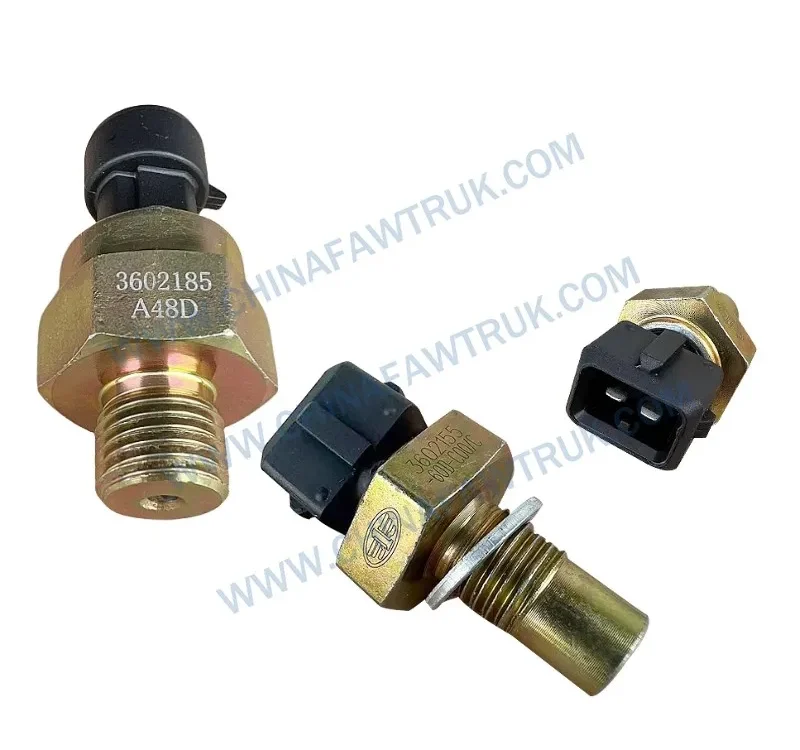
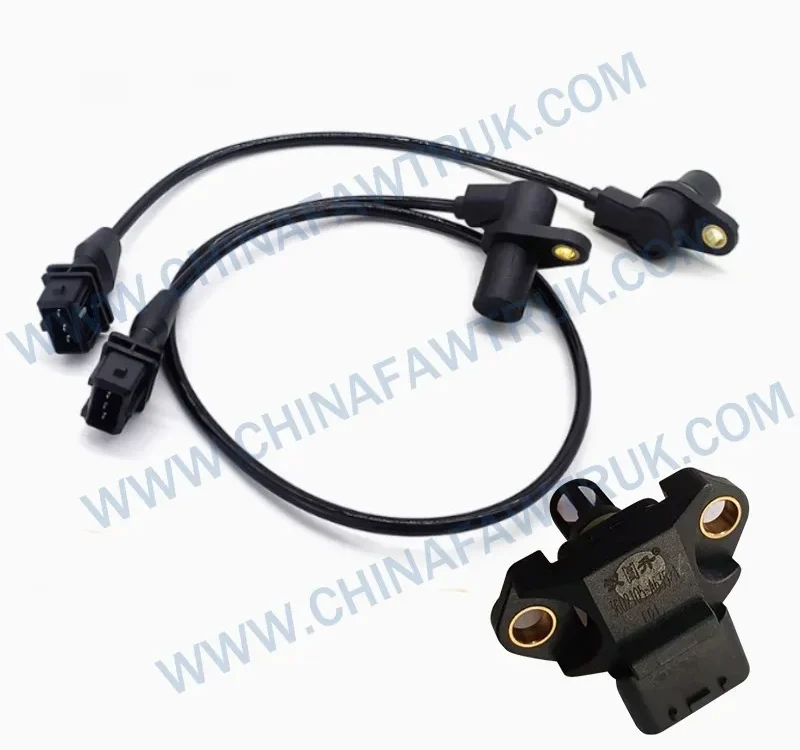
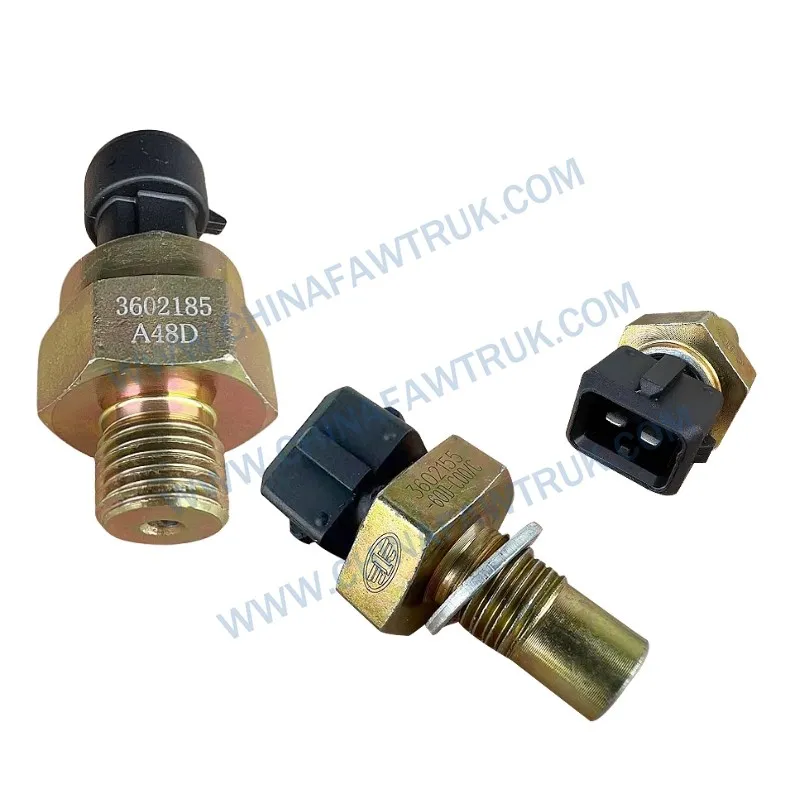
Integrated into the FAW Russian Transfer-Case Control Mechanism is the Electronic Vehicle Speed Odometer Sensor Assembly (Part No. 3802020-76A). Unlike older mechanical cable drives which often snapped in the cold, this solid-state sensor uses the Hall Effect or magnetic induction to read the rotation of the transfer case output shaft. This data is critical not just for the speedometer, but for the entire vehicle management system.
In the FAW Russian Transfer-Case Control Mechanism logic, the speed signal prevents accidental low-range engagement at highway speeds. The ECU monitors the pulse from this sensor; if the speed is too high, it inhibits the range-shift solenoid, protecting the transfer case from catastrophic over-revving. The sensor itself is sealed in a ruggedized housing designed to withstand immersion in water, mud, and oil, common conditions for chassis-mounted components.
The electrical connector on the sensor is a high-reliability, weather-pack type. In the corrosive salt spray of Russian highways, electrical contacts degrade quickly. The FAW Russian Transfer-Case Control Mechanism sensor features gold-plated pins and a multi-ribbed silicone seal to prevent signal loss. Accurate speed data is essential for the driver to judge braking distances on ice, making this sensor a vital component of the truck’s active safety suite.
Interface Logic: Tapered Elbow Joints
The interface between the rigid transfer case housing and the flexible air lines is managed by the Terminal Elbow Joint – Tapered Pipe Joint Connection (Part No. CQ63505). There are 4 of these fittings used in the FAW Russian Transfer-Case Control Mechanism. The use of a tapered thread (likely NPT or BSPT) creates a self-sealing interference fit that tightens as it is screwed in. This mechanical seal is bolstered by pre-applied thread sealant to prevent air leaks under high vibration.
The “Elbow” geometry is a specific space-saving requirement. The transfer case is tucked tightly between the chassis rails. Straight fittings would cause the air lines to bend sharply, kinking the hose and restricting airflow. The 90-degree elbows allow the lines of the FAW Russian Transfer-Case Control Mechanism to exit parallel to the housing, maintaining a smooth radius for the tubing. This reduces stress on the hose connections and prevents fatigue cracking of the nylon lines.
Furthermore, these fittings are typically made from brass or plated steel to resist galvanic corrosion when mated to the iron or aluminum transfer case. A corroded fitting can seize, snapping off during maintenance and requiring expensive drilling repairs. The high-quality metallurgy of the CQ63505 fittings ensures that the FAW Russian Transfer-Case Control Mechanism remains serviceable, allowing for easy hose replacement in the field without damaging the expensive transfer case ports.
Component Breakdown: 120. Transfer Case Control Mechanism Logic Assembly
| No. |
Part Number |
Part Name |
Qty |
| 1 |
1804630-55R |
Control Air Pipe Assembly – Solenoid Valve Outlet |
3 |
| 2 |
1804640-70W |
Inter-axle Differential Lock Control Air Pipe Assembly |
1 |
| 3 |
3802020-76A |
Electronic Vehicle Speed Odometer Sensor Assembly |
1 |
| 4 |
CQ63505 |
Terminal Elbow Joint – Tapered Pipe Joint Connection |
4 |
Conclusion: The Nerve Center of Traction
The FAW Russian Transfer-Case Control Mechanism may appear to be a collection of hoses and sensors, but it is the critical enabler of the truck’s all-wheel-drive performance. Without this assembly’s ability to reliably transmit pneumatic commands and electronic data in freezing temperatures, the massive transfer case would be a dead weight. The engineering behind the cold-resistant polymers and sealed sensors ensures that the CA3250P66K24L1TE5Z remains a capable and controllable asset.
For fleet maintenance, this system requires vigilant inspection. Air leaks or damaged sensors are often the root cause of “transmission failure” diagnoses. By keeping the FAW Russian Transfer-Case Control Mechanism in peak condition using genuine, specified components, operators guarantee that their vehicles can deploy their full tractive power whenever and wherever it is needed, conquering the toughest routes in the Russian Federation.
Packaging and Logistics
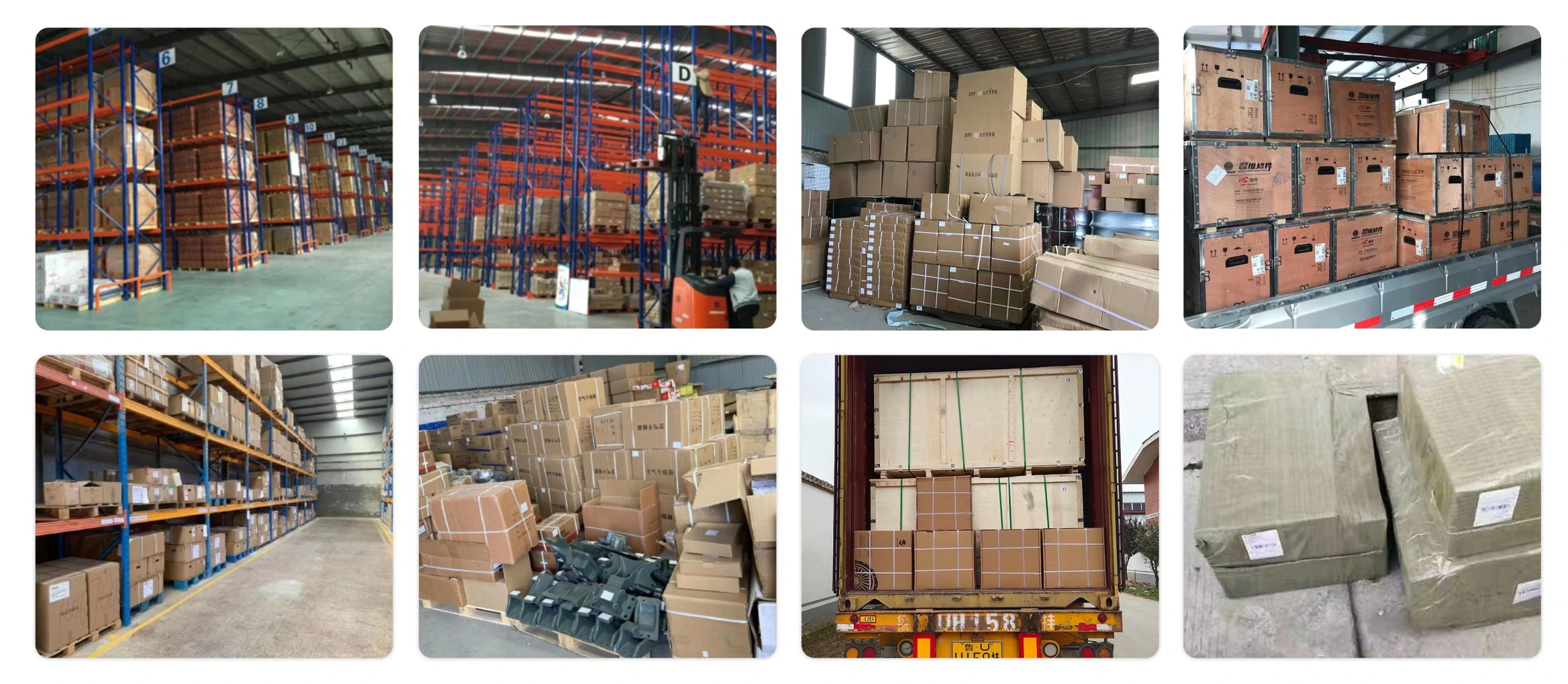
FAW parts, including the Cylinder Block Assembly, are packaged with care to ensure safe delivery. Each component is secured in protective materials to prevent damage during transit. The logistics network guarantees timely shipments worldwide, supporting efficient maintenance operations. Below is an image illustrating the standard packaging for FAW truck parts, showcasing the attention to detail in handling and storage.
This packaging approach minimizes the risk of corrosion or impact damage, ensuring that parts like the FAW Cylinder Block Assembly arrive in perfect condition. Customers can rely on FAW’s logistics for consistent quality and reliability.