FAW Russian Front Leaf Spring: Engineering 18 Elastic Layers for Superior Arctic Suspension
The FAW Russian Front Leaf Spring assembly is the primary suspension interface for the CA3250P66K24L1TE5Z dump truck, tasked with isolating the chassis from the brutal topography of Siberian mining roads. Engineered with a specialized “55R” cryogenic metallurgy, this multi-leaf pack provides the critical balance between load-bearing rigidity and dynamic articulation required at -50°C. This technical guide explores the graduated spring architecture, the high-tension clamping logic, and the damping mechanisms that define this heavy-duty system.

FAW Russian Front Leaf Spring
Metallurgy and Leaf Stack Dynamics
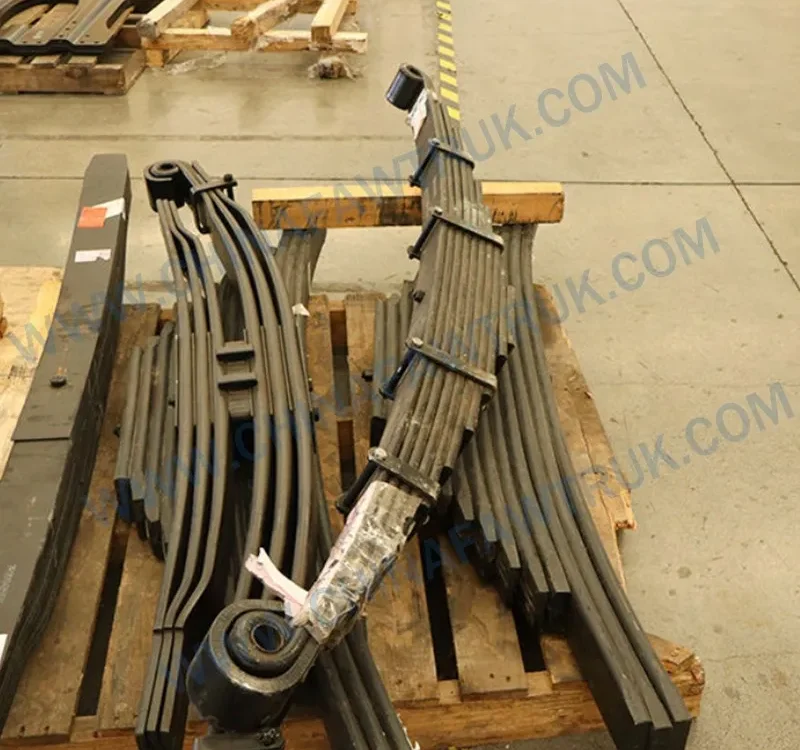
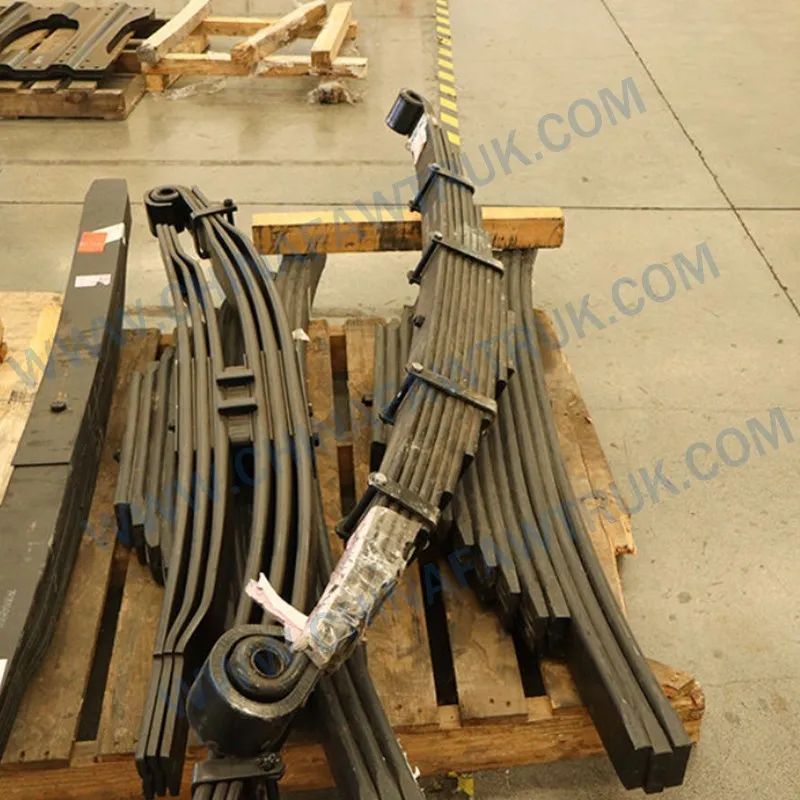
The core of the suspension system is the FAW Russian Front Leaf Spring assembly (Part No. 2902010-55R). This unit is composed of nine distinct steel plates, graduated in length to create a parabolic rate of resistance. The stack begins with the First Leaf – Front Leaf Spring (Part No. 2902201-55R), which acts as the master leaf featuring the spring eyes for chassis attachment. It is supported by the Second Leaf (Part No. 2902202-55R) through to the Ninth Leaf (Part No. 2902211-55R). In the FAW Russian Front Leaf Spring configuration, these plates are forged from a high-silicon manganese alloy steel that is heat-treated to resist hydrogen embrittlement—a common cause of spring failure in extreme cold environments.
The inter-leaf friction within the FAW Russian Front Leaf Spring stack provides a natural damping effect, absorbing high-frequency road vibrations before they reach the shock absorbers. The “55R” designation indicates a specific tempering process that ensures the steel maintains its elasticity limit even when the ambient temperature drops below freezing. Standard springs often snap under shock loads in these conditions, but the FAW Russian Front Leaf Spring is designed to flex deeply, absorbing the kinetic energy of a fully loaded dump truck hitting a frozen rut without yielding permanently.
Maintaining the alignment of these nine leaves is the Center Bolt – Front Leaf Spring (Part No. 2902161-364). This bolt is more than just a fastener; it acts as the shear pin for the axle. It locates the axle housing relative to the spring pack. If the FAW Russian Front Leaf Spring center bolt were to shear, the axle would shift on the spring, causing “dog-tracking” and severe instability. The FAW design uses a high-tensile steel for this bolt to withstand the immense horizontal shear forces generated during heavy braking on ice.
To reduce friction and noise, the assembly likely utilizes anti-squeak pads between the leaves (implied by the general design logic of the FAW Russian Front Leaf Spring). Proper lubrication and the integrity of these inter-leaf surfaces are crucial. If rust builds up between the leaves of the FAW Russian Front Leaf Spring, the pack effectively becomes a solid block of steel, losing its suspension capability and transmitting damaging shock loads directly to the chassis frame rails.
Clamping Force and U-Bolt Technology
The attachment of the FAW Russian Front Leaf Spring to the axle is achieved through a massive clamping force provided by the U-bolts. The system uses two distinct U-bolt profiles: U-bolt – Front Leaf Spring (Part No. 2902411-55R) and U-bolt – Front Leaf Spring (Part No. 2902412-55R). The difference in part numbers suggests a specific geometry tailored to the axle housing’s differential shape or caster wedge requirements. These U-bolts are the single most critical fasteners in the suspension; they stretch elastically during installation to provide a permanent clamping load that holds the FAW Russian Front Leaf Spring firmly against the axle seat.
Securing these U-bolts requires the Nut – Fastening U-bolt (Part No. 2902413-76A) and the Washer – Fastening U-bolt (Part No. 2912413-41A). These are not standard hardware; the nuts are deep-threaded, high-grade fasteners designed to handle torque settings often exceeding 400 Nm. The washers are hardened to prevent them from crushing or dishing under this immense load. In the FAW Russian Front Leaf Spring system, maintaining U-bolt torque is vital. If the nuts loosen, the spring pack will flex at the center bolt hole, leading to inevitable breakage of the leaves near the mounting point.
The interface between the U-bolts and the spring is managed by the Cover Plate – Front Leaf Spring (Part No. 2902406-40B1). This casting distributes the downward force of the U-bolts evenly across the width of the top leaf, preventing stress concentrations that could crack the steel. Additionally, the Cushion – Front Leaf Spring (Part No. 2902432-40) acts as a buffer, likely positioned between the spring and the axle or cover plate, to reduce high-frequency noise transmission and accommodate minor surface irregularities, ensuring the FAW Russian Front Leaf Spring seats perfectly.
Retorquing the FAW Russian Front Leaf Spring U-bolts is a mandatory maintenance procedure. In the cold Russian environment, thermal contraction of the steel bolts can lead to a loss of preload. Fleet operators are advised to check these fasteners after the first 1,000 km and at regular service intervals thereafter. A loose U-bolt is the primary cause of premature FAW Russian Front Leaf Spring failure, making this simple check a high-value activity for preventing downtime.
Alignment and Rebound Control
While the U-bolts handle the vertical load, the integrity of the leaf stack during rebound (when the wheel drops into a hole) is maintained by the clamps. The FAW Russian Front Leaf Spring utilizes the Clamp – Auxiliary Leaf Spring 9th Leaf (Part No. 2913132-243) and the Clamp – Auxiliary Leaf Spring 5th Leaf (Part No. 2913131-243). These clamps wrap around the leaf pack to prevent the individual leaves from fanning out sideways or separating vertically during extreme articulation. Without these clamps, the FAW Russian Front Leaf Spring would lose its structural coherence on rough terrain.
The assembly of these clamps involves precision spacers, specifically the Spacer – Front Leaf Spring Clamp (Part No. 2912171-03). These spacers ensure that the clamp bolt is tightened against a solid stop, allowing the leaves to slide longitudinally as they flatten out under load, but restricting vertical separation. If the clamps are too tight, they bind the FAW Russian Front Leaf Spring, causing a harsh ride; if too loose, they rattle and allow leaf misalignment. The spacer tube ensures the perfect gap is maintained automatically.
The pivot points of the spring are bushed to allow for rotation. The list includes the Bushing – Rear Leaf Spring (Part No. 2912121-03) (Note: often shared with front spring rear shackle). These bushings act as the bearing surface for the spring pins. In the abrasive, gritty mud of a mine site, these bushings wear over time. The FAW Russian Front Leaf Spring uses high-quality bronze or bi-metal bushings that offer extended service life and resistance to pounding out under impact loads.
The clamps are secured using the Hex Head Bolt (Part No. CQ15010115) and the Hex Thin Nut (Part No. CQ35010). The use of a thin nut here acts as a jam nut or lock nut, keeping the assembly compact to avoid interference with other chassis components. The Round Head Rivet (Part No. Q4501024) is likely used to permanently fix the clamp bracket to the specific leaf plate (e.g., the 5th and 9th leaves). This permanent fixation ensures that the clamps remain in the correct position along the length of the FAW Russian Front Leaf Spring, providing consistent support.
Arctic Maintenance and Inspection
Maintaining the FAW Russian Front Leaf Spring requires vigilance. In extreme cold, steel becomes notch-sensitive. Any deep scratches or corrosion pits on the tension side of the leaf (the bottom surface) can become the initiation point for a crack. Regular cleaning and visual inspection of the FAW Russian Front Leaf Spring stack for cracks, particularly near the U-bolts and spring eyes, is essential. A broken leaf transfers more stress to the remaining leaves, leading to a cascade failure of the entire pack if not addressed immediately.
The condition of the Bushing (Part No. 2912121-03) should be checked by prying against the spring eye. Excessive play indicates wear that will lead to vague steering and tire misalignment. Replacing these bushings is a cost-effective way to restore the handling precision of the CA3250P66K24L1TE5Z. Furthermore, checking the Hex Nut (Part No. CQ34114) on the center bolt ensures the pack remains tight.
Finally, the FAW Russian Front Leaf Spring must be treated as a matched system. When replacing leaves, it is critical to use genuine FAW parts with the “55R” suffix. Aftermarket springs may have the correct dimensions but lack the specific heat treatment and alloy composition required for -50°C operation. Using inferior steel in the FAW Russian Front Leaf Spring assembly is a safety hazard, as brittle fracture at highway speeds can lead to loss of vehicle control.
Component Breakdown: Front Leaf Spring Logic Assembly
| No. |
Part Number |
Part Name |
Qty |
| 1 | 2902413-76A | Nut – Fastening U-bolt | 4 |
| 2 | 2912413-41A | Washer – Fastening U-bolt | 4 |
| 3 | 2902411-55R | U-bolt – Front Leaf Spring | 1 |
| 4 | 2902412-55R | U-bolt – Front Leaf Spring | 1 |
| 5 | 2902406-40B1 | Cover Plate – Front Leaf Spring | 1 |
| 6 | 2902432-40 | Cushion – Front Leaf Spring | 1 |
| 7 | 2902010-55R | Front Leaf Spring Assembly | 1 |
| 7-1 | 2902201-55R | Front Leaf Spring 1st Leaf | 1 |
| 7-2 | 2902202-55R | Front Leaf Spring 2nd Leaf | 1 |
| 7-3 | 2902203-55R | Front Leaf Spring 3rd Leaf | 1 |
| 7-4 | 2902204-55R | Front Leaf Spring 4th Leaf | 1 |
| 7-5 | 2902206-55R | Front Leaf Spring 5th Leaf | 1 |
| 7-6 | 2902207-55R | Front Leaf Spring 6th Leaf | 1 |
| 7-7 | 2902208-55R | Front Leaf Spring 7th Leaf | 1 |
| 7-8 | 2902209-55R | Front Leaf Spring 8th Leaf | 1 |
| 7-9 | 2902211-55R | Front Leaf Spring 9th Leaf | 1 |
| 7-10 | 2913132-243 | Clamp – Auxiliary Leaf Spring 9th Leaf | 2 |
| 7-11 | CQ15010115 | Hex Head Bolt | 4 |
| 7-12 | 2913131-243 | Clamp – Auxiliary Leaf Spring 5th Leaf | 2 |
| 7-13 | CQ35010 | Hex Thin Nut | 4 |
| 7-14 | 2912171-03 | Spacer – Front Leaf Spring Clamp | 4 |
| 7-15 | CQ34114 | Hex Nut | 1 |
| 7-16 | 2902161-364 | Center Bolt – Front Leaf Spring | 1 |
| 7-17 | 2912121-03 | Bushing – Leaf Spring | 2 |
| 7-18 | Q4501024 | Round Head Rivet | 4 |
Conclusion: Suspension Reliability
The FAW Russian Front Leaf Spring assembly is more than just a set of metal plates; it is the critical link between the road and the load. Designed to withstand the thermal and mechanical extremes of the Russian mining sector, its reliability is paramount for vehicle safety. From the specific alloy of the leaves to the high-tensile strength of the U-bolts, every component is engineered to perform as a unified system.
For fleet managers, strict adherence to maintenance schedules—specifically re-torquing U-bolts and inspecting for leaf separation—is the best defense against suspension failure. By investing in genuine FAW parts for the FAW Russian Front Leaf Spring, operators ensure that their trucks maintain the factory-specified ride height, handling characteristics, and load capacity, guaranteeing continued productivity in the harshest environments on Earth.
Packaging and Logistics
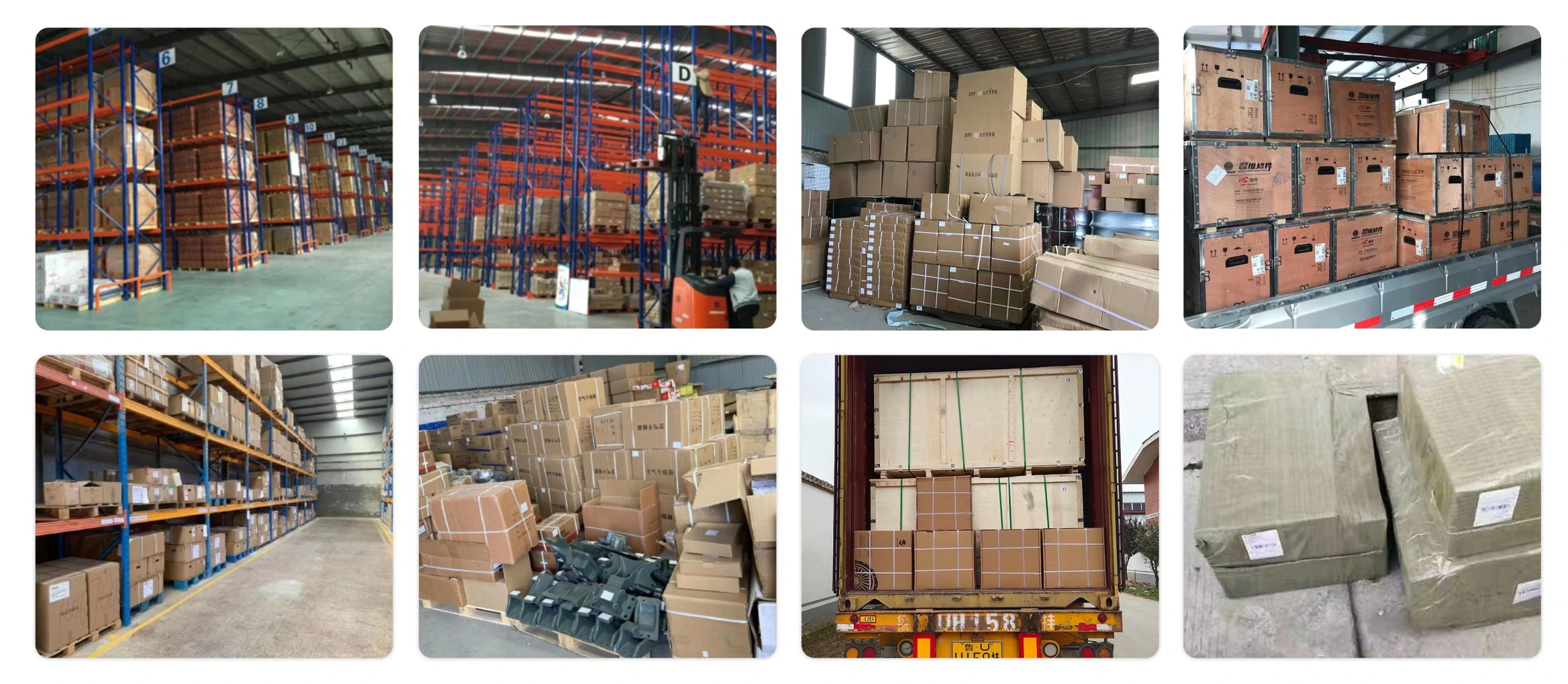
FAW parts, including the Cylinder Block Assembly, are packaged with care to ensure safe delivery. Each component is secured in protective materials to prevent damage during transit. The logistics network guarantees timely shipments worldwide, supporting efficient maintenance operations. Below is an image illustrating the standard packaging for FAW truck parts, showcasing the attention to detail in handling and storage.
This packaging approach minimizes the risk of corrosion or impact damage, ensuring that parts like the FAW Cylinder Block Assembly arrive in perfect condition. Customers can rely on FAW’s logistics for consistent quality and reliability.