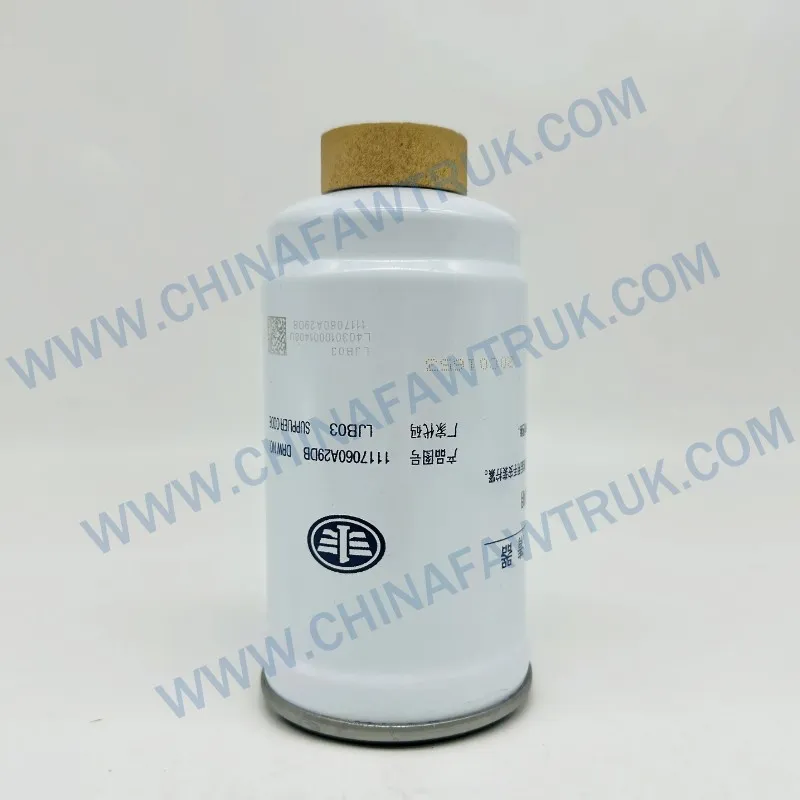
FAW Russian Centrifugal Oil Filter: 3 Critical Components for Superior Soot Elimination
The FAW Russian Centrifugal Oil Filter is the ultimate secondary filtration stage for the CA3250P66K24L1TE5Z engine. Unlike standard filters, this centrifuge utilizes rotational physics to capture sub-micron soot particles, extending oil life significantly. This guide explores the assembly’s mounting logic and sealing architecture, essential for maintaining engine purity in the harsh Russian logistics environment.

FAW Russian Centrifugal Oil Filter
The Core Mechanism: Rotational Dynamics and Soot Capture
The centerpiece of this system is the Centrifugal Oil Filter Assembly (Part No. 1017010-29D). This device operates on a bypass principle, diverting a small percentage of the engine’s oil pressure to drive an internal rotor. In the context of the FAW Russian Centrifugal Oil Filter, this rotor spins at speeds exceeding 6,000 RPM, generating centrifugal forces 2,000 times greater than gravity. This force flings heavy contaminants, specifically microscopic soot and carbon sludge, against the inner wall of the rotor cover where they form a dense cake.
This filtration method is vastly superior to standard paper elements for soot removal. Paper filters can only trap particles down to about 20 microns; the FAW Russian Centrifugal Oil Filter can separate particles as small as 1 micron. In the Russian Arctic, engines often run rich during extended cold idling, producing excessive soot. Without this centrifugal cleaning, the soot acts as a fine abrasive, wearing down camshaft lobes and main bearings rapidly.
The assembly is engineered to be self-propelling. High-pressure oil enters the central spindle and is ejected through twin opposing nozzles at the base of the rotor. The reaction force from these oil jets drives the rotation. The FAW Russian Centrifugal Oil Filter requires no electrical power or mechanical belt drive, making it an incredibly reliable, passive maintenance system. However, its efficiency depends entirely on maintaining adequate oil pressure and ensuring the nozzles remain unblocked by ice or sludge.
Material selection for the rotor housing involves high-strength aluminum or steel alloys to withstand the hoop stresses generated by high-speed rotation. The bearings within the assembly are precision-machined bushings designed to float on a film of oil. The FAW Russian Centrifugal Oil Filter is balanced to a fraction of a gram; any imbalance caused by improper cleaning or damage would cause vibration severe enough to crack the mounting bracket or destroy the spindle.
Securing the Load: Fine Shank Bolt Engineering
Mounting a high-speed rotating assembly to a vibrating diesel engine requires exceptional fastening hardware. The system utilizes four units of the Hexagon Flange Bolt – Fine Shank (R-Type) (Part No. Q1820840). These are not standard hardware store bolts. The “Fine Shank” or “Reduced Shank” design indicates that the unthreaded portion of the bolt shaft is thinner than the threaded portion, or specifically engineered to have a certain elasticity.
This design feature allows the bolt to act as a tension spring. When torqued, the shank stretches within its elastic limit. This stored tension maintains a constant clamping load on the FAW Russian Centrifugal Oil Filter base, even as the aluminum housing expands and contracts at a different rate than the cast iron engine block. This thermal compensation is critical in the Russian environment, where engine temperatures fluctuate from -40°C to +90°C.
The “R-Type” designation typically refers to a specific thread profile or radius under the bolt head, designed to reduce stress risers and prevent fatigue snapping. Given the mass of the FAW Russian Centrifugal Oil Filter and the cantilevered load it places on the mounting points, these bolts endure significant shear stress. Using standard bolts with a rigid shank would likely lead to loosening or shearing, causing the filter unit to detach and leading to catastrophic oil loss.
The Critical Interface: Gasket Technology
The interface between the centrifuge and the engine block is sealed by the Gasket – Centrifugal Oil Filter (Part No. 1017022-29D). This gasket manages two distinct fluid paths: the high-pressure feed oil entering the centrifuge and the low-pressure gravity drain returning to the sump. A breach between these two paths within the FAW Russian Centrifugal Oil Filter system would short-circuit the oil flow, preventing the rotor from spinning up to speed.
Material science is paramount here. The gasket is typically composed of a metal-core fiber composite or a high-temperature elastomer. It must resist “creep” or relaxation over time. In the FAW Russian Centrifugal Oil Filter application, the gasket is subjected to pulsating pressure waves. If the material compresses too much, the bolt tension drops; if it is too hard, it won’t seal surface imperfections on the mounting pad.
Furthermore, the gasket must be resistant to chemical attack from the soot-laden oil. Over time, acidic combustion byproducts accumulate in the oil. An inferior gasket would degrade, swell, or disintegrate, blocking the oil drain passages. The genuine gasket used in the FAW Russian Centrifugal Oil Filter is engineered to survive extended drain intervals, ensuring that the seal remains hermetic for tens of thousands of kilometers.
Why the Centrifuge is Vital for Arctic Operations
The inclusion of the FAW Russian Centrifugal Oil Filter is not an afterthought; it is a strategic response to the operating conditions of the CA3250P66K24L1TE5Z dump truck. In Russia, trucks often operate in “severe duty” cycles involving heavy loads, steep grades, and extended idling. Idling in cold weather prevents complete fuel combustion, washing cylinder walls with diesel and increasing the rate of soot formation in the crankcase.
Standard full-flow oil filters are designed to trap particles larger than 20 microns to protect bearings. However, soot particles are often less than 1 micron. Without the FAW Russian Centrifugal Oil Filter, these particles aggregate, thickening the oil and forming sludge. This sludge can block oil passages and starve critical components of lubrication, leading to premature engine failure.
By actively removing this soot, the centrifugal filter maintains oil viscosity and dispersancy for longer periods. This allows fleet operators to safely extend oil drain intervals, reducing maintenance costs. The FAW Russian Centrifugal Oil Filter effectively polishes the oil, keeping it cleaner than a standard filter ever could, which is the key to achieving million-kilometer durability in the engine’s rotating assembly.
Component Breakdown List
The following table details the specific logical assembly for the FAW Russian Centrifugal Oil Filter. While the part count is low, the specificity of the fasteners and gaskets is critical for the system’s safe operation and sealing integrity.
| No. |
Part Number |
Part Name |
Qty |
| 1 |
1017010-29D |
Centrifugal Oil Filter Assembly |
1 |
| 2 |
Q1820840 |
Hexagon Flange Bolt – Fine Shank (R-Type) |
4 |
| 3 |
1017022-29D |
Gasket – Centrifugal Oil Filter |
1 |
Maintenance Protocols for Rotational Health
Unlike standard filters that are thrown away, the FAW Russian Centrifugal Oil Filter is a serviceable item. During every oil change, the rotor cover must be removed and the caked-on soot scraped out. Mechanics should verify that the rotor spins freely by hand; any resistance suggests bearing wear or sludge buildup on the spindle.
Inspect the two drive nozzles at the base of the rotor. In cold climates, sludge can congeal here, blocking the jets and preventing rotation. Use compressed air or a fine wire to ensure these jets are completely clear. If the FAW Russian Centrifugal Oil Filter does not spin, it does not clean, and the engine loses its primary defense against soot.
When reassembling, always use a new Gasket – Centrifugal Oil Filter and torque the Hexagon Flange Bolts to the factory specification. Over-torquing can warp the base, while under-torquing can lead to leaks. Listen for the characteristic “whirring” sound of the centrifuge spinning down after the engine is shut off; this is the audible sign of a healthy FAW Russian Centrifugal Oil Filter.
Conclusion: The Unsung Hero of Engine Life
The FAW Russian Centrifugal Oil Filter is a testament to the engineering depth of the CA3250P66K24L1TE5Z powertrain. It provides a level of oil cleanliness that standard filtration simply cannot match, crucial for the extended service life demanded by Russian logistics operators.
Every component, from the balanced rotor assembly to the specialized Fine Shank mounting bolts, is designed to ensure reliable operation under high G-forces and extreme thermal cycling.
For fleet owners, ensuring this system is correctly serviced and utilizing genuine FAW replacement parts is the most effective way to combat engine wear. A functioning FAW Russian Centrifugal Oil Filter means cleaner oil, longer drain intervals, and a healthier engine capable of surviving the toughest winters.
Packaging and Logistics
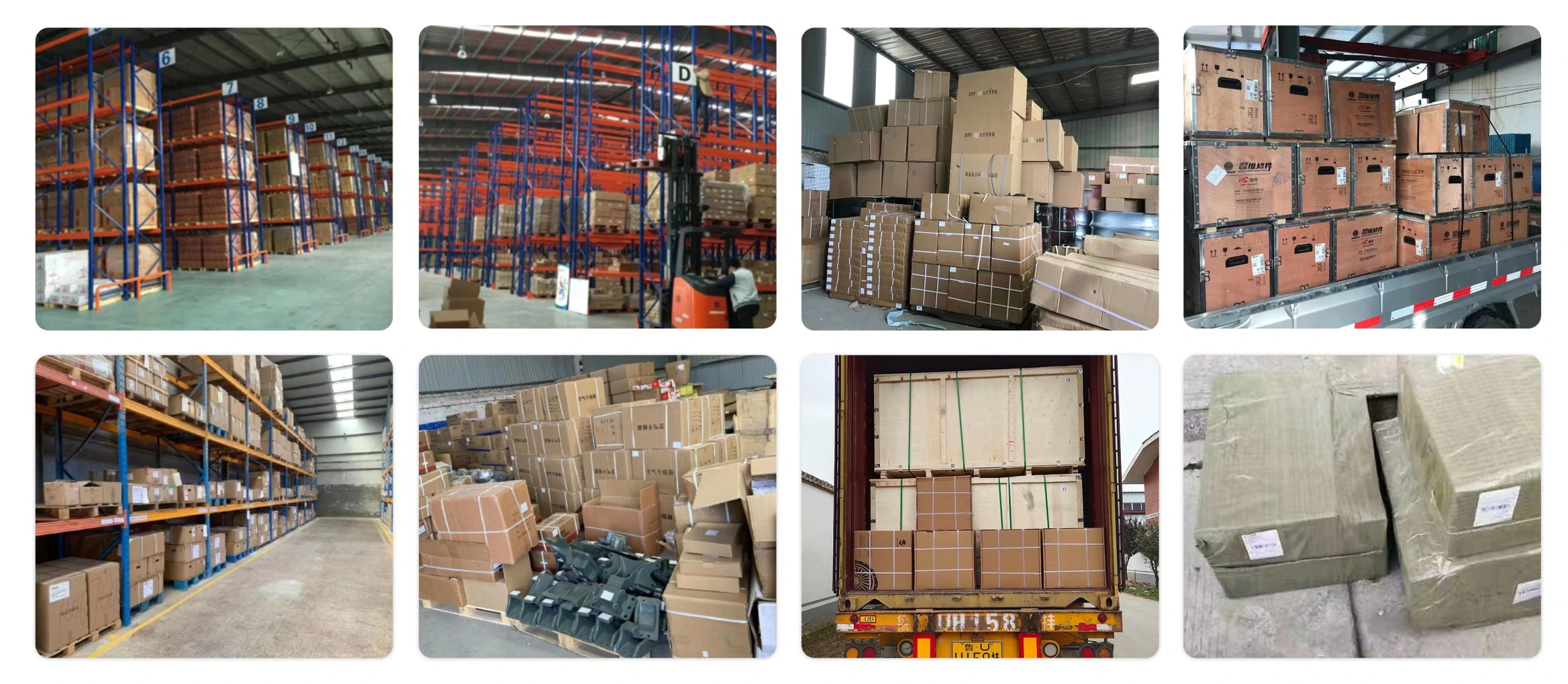
FAW parts, including the Cylinder Block Assembly, are packaged with care to ensure safe delivery. Each component is secured in protective materials to prevent damage during transit. The logistics network guarantees timely shipments worldwide, supporting efficient maintenance operations. Below is an image illustrating the standard packaging for FAW truck parts, showcasing the attention to detail in handling and storage.
This packaging approach minimizes the risk of corrosion or impact damage, ensuring that parts like the FAW Cylinder Block Assembly arrive in perfect condition. Customers can rely on FAW’s logistics for consistent quality and reliability.