by 


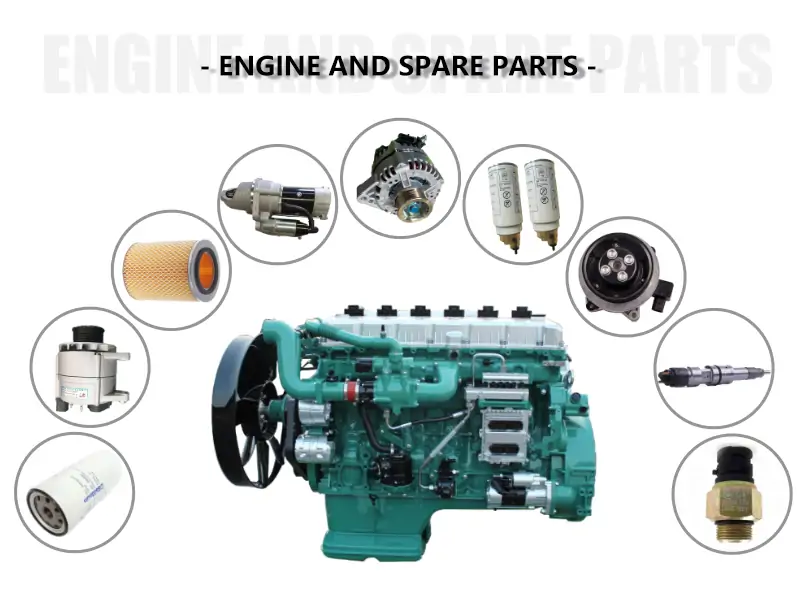
Welcome to this expert deconstruction of the FAW J6P Engine, the model CA6DL2-35E3F powerhouse for the FAW Jiefang CA3250P66K2L1T1E 6×4 dump truck. This is not a simple overview; it is a deep analysis of the “logic” of this powertrain. The core design logic of the FAW J6P Engine is built on two principles: relentless, heavy-duty reliability for extreme conditions and simplified, modular field serviceability for maximum uptime.

The “Serviceability Logic” of this FAW J6P Engine is its most defining feature. The main assembly (1000410J14B) is not just a motor; it is a complete, pre-assembled, and dyno-tested “long block” replacement. This “logic” means that all critical sub-assemblies—the ‘Fuel injection pump’, ‘Turbocharger’, ‘Water pump’, ‘Oil cooler’, ‘Oil-gas separator’, and ‘Rotor filter’—are treated as integrated, serviceable units. This design philosophy is essential for fleet managers, as it allows for rapid, “bolt-on” repairs rather than complex, in-field rebuilds.
This technical guide is an essential resource for senior technicians, fleet managers, and parts specialists. We will deconstruct the entire FAW J6P Engine assembly. We will analyze the “Structural Logic” (the block and head), the “Air & Fuel Logic” (the pump and turbo), the “Thermal Management Logic” (the cooling system), and the critical “Fluid Purity Logic” (the filtration and separation systems).
While the parts list shows the “long block” as a single unit, its foundational logic is worth understanding. The core of the FAW J6P Engine is built on its primary castings.
1. The “Foundry” Logic (Cylinder Block):
The foundation of the FAW J6P Engine is its high-strength, cast-iron cylinder block. Its “logic” is to provide absolute rigidity against the immense, repetitive forces of diesel combustion. This casting contains the “main webs” that hold the crankshaft in perfect alignment and the “water jacket” (coolant passages) that surround the cylinders. A “wet liner” design is often used, where the cylinder walls are replaceable sleeves, a critical “serviceability logic” for
heavy-duty engines.
2. The “Airflow” Logic (Cylinder Head):
The cylinder head is the “control room” of the FAW J6P Engine. Its “logic” is to manage all airflow, fuel injection, and heat. The intake and exhaust ports are not simple holes; they are precisely shaped to induce “swirl” in the intake air, which is essential for efficient, clean combustion. It also contains its own water jacket, which is most aggressive around the exhaust ports and injector bores—the hottest parts of the engine—to prevent warping or cracking.
This group of components, included in the 1000410J14B assembly, is responsible for the “power” generation logic of the FAW J6P Engine.
1. Component: ‘Fuel injection pump’
This is the heart of the engine’s power. Its “logic” is to create immense pressure. As a High-Pressure Common Rail (HPCR) pump, it takes low-pressure fuel from the tank and pressurizes it to over 25,000 PSI. This “pressure logic” is essential for atomizing the diesel fuel into a microscopic mist. The “service logic” of the FAW J6P Engine assembly means this is a pre-timed, pre-calibrated unit, making replacement far simpler than older, mechanical systems.
2. Component: ‘Turbocharger’
This is the “efficiency” logic. The turbocharger uses the engine’s “waste” (hot exhaust gas) to spin a turbine. This turbine drives a compressor that “force-feeds” a massive volume of compressed air into the engine. This “forced induction logic” allows the FAW J6P Engine to burn more fuel in the same cylinder size, dramatically increasing both horsepower and torque without a significant weight penalty. It is a critical component for achieving power density in modern
diesel engines.
A heavy-duty engine creates as much heat as it does power. This group’s “logic” is to manage that thermal load to prevent self-destruction. This is a core function of the FAW J6P Engine.
1. Component: ‘Water pump’
This is the “coolant circulation” logic. The water pump is a belt or gear-driven centrifugal pump that physically moves hundreds of liters of coolant per minute. Its “logic” is to continuously force the coolant through the “water jackets” of the FAW J6P Engine block and head, absorbing heat, and then pushing it out to the radiator to be cooled. A failure here is catastrophic, leading to a rapid overheat.
2. Component: ‘Oil cooler’
This is the “oil temperature” logic. Engine oil does two jobs: lubricate and cool. The pistons and turbocharger are cooled *by* the oil. The ‘Oil cooler’ (typically a “plate exchanger”) runs hot engine oil next to cool engine coolant. This “thermal transfer logic” pulls heat *out* of the oil and puts it *into* the coolant, where the radiator can dispose of it. This is vital for maintaining oil viscosity and preventing the FAW J6P Engine from “coking” its oil.
This final group’s “logic” is to keep the engine’s fluids clean. Contaminated fluids will rapidly destroy any heavy-duty engine.
1. Component: ‘Oil-gas separator’
This is the “crankcase ventilation” logic. All engines have “blow-by” (combustion gas that escapes past the piston rings). This gas, mixed with oil vapor, pressurizes the crankcase. The ‘Separator’ has a “filtration logic” that removes the liquid oil “mist” from this gas, returning the oil to the sump and venting the filtered gas into the intake to be re-burned. This prevents the FAW J6P Engine from blowing out seals and reduces oil consumption.
2. Component: ‘Rotor filter’
This is an advanced “filtration logic” that works *with* the standard oil filter. A ‘Rotor filter’ (or “centrifugal filter”) uses oil pressure to spin a central rotor at high speed. This “centrifugal logic” slings microscopic contaminants (like soot and fine metal) out of the oil, where they are impacted and captured as a dense sludge. This “polishing logic” provides a level of deep cleaning for particles *smaller* than a standard filter can catch, dramatically extending the life of
the bearings in the FAW J6P Engine.
The following tables provide the complete, detailed breakdown of the primary assembly and the core technical specifications for the FAW J6P Engine (Model CA6DL2-35E3F), as applied to the FAW Jiefang CA3250P66K2L1T1E 6×4 dump truck.
| Mark | Part No. | Part Name | Quantity |
|---|---|---|---|
| 1 | 1000410J14B | CA6DL2-35E3F Model Engine Assy (Includes fuel injection pump, turbocharger, oil-gas separator, rotor filter, water pump, oil cooler) | 1 |
The technical specifications for the FAW J6P Engine (CA6DL2-35E3F) are defined by its heavy-duty application and fully integrated design.
| Engine Model | CA6DL2-35E3F |
| Engine Group | FAW J6P Engine Assembly |
| Vehicle Application | FAW Jiefang CA3250P66K2L1T1E 6×4 Dump Truck |
| Engine Type | 6-Cylinder, In-line, Water-Cooled, Four-Stroke, Diesel |
| Aspiration | Turbocharged & Intercooled |
| Fuel System | High-Pressure Common Rail (HPCR) |
| Assembly Logic | “Long Block” with all serviceable modules pre-installed |
| Included Module 1 (Fuel) | ‘Fuel injection pump’ |
| Included Module 2 (Air) | ‘Turbocharger’ |
| Included Module 3 (Cooling) | ‘Water pump’, ‘Oil cooler’ |
| Included Module 4 (Purity) | ‘Oil-gas separator’, ‘Rotor filter’ |
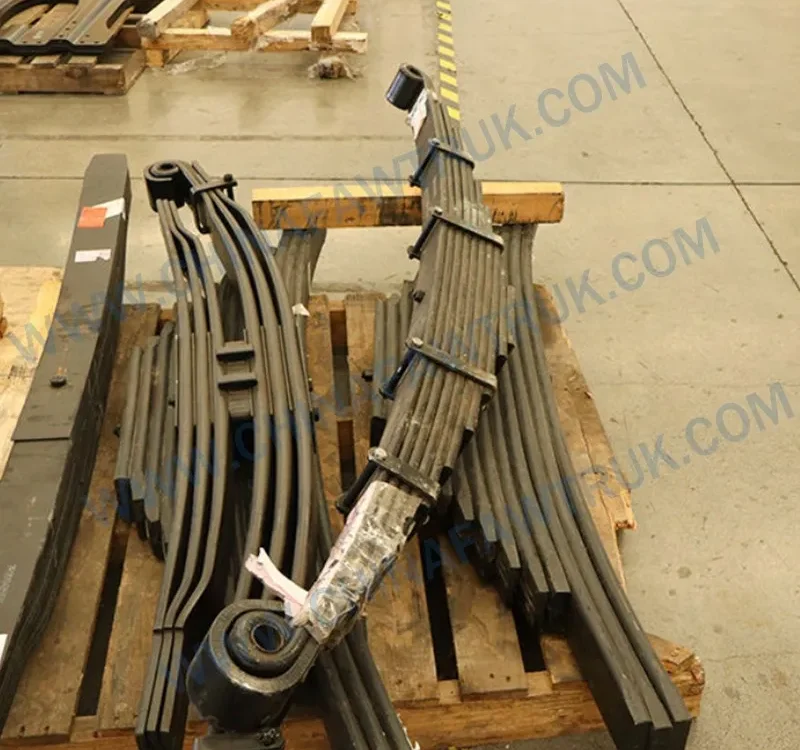
FAW parts, including the Cylinder Block Assembly, are packaged with care to ensure safe delivery. Each component is secured in protective materials to prevent damage during transit. The logistics network guarantees timely shipments worldwide, supporting efficient maintenance operations. Below is an image illustrating the standard packaging for FAW truck parts, showcasing the attention to detail in handling and storage.
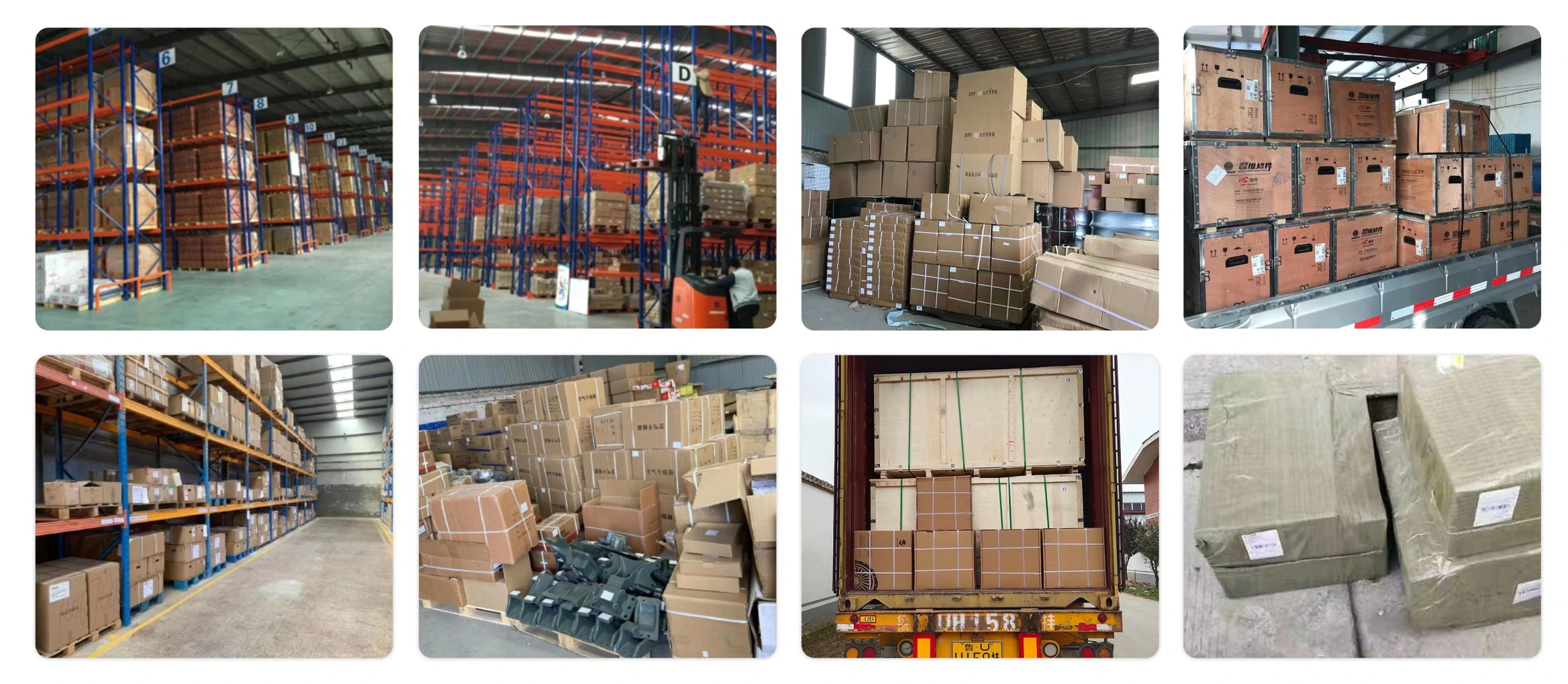
This packaging approach minimizes the risk of corrosion or impact damage, ensuring that parts like the FAW Cylinder Block Assembly arrive in perfect condition. Customers can rely on FAW’s logistics for consistent quality and reliability.