by 


Welcome to this critical safety analysis of the FAW Seat Belt assembly (Assembly 697). This is the complete, 3-point “Outer” (driver’s side) seat belt system for the FAW Jiefang CA4251P66K24T1A3E5 6×4 tractor. This is the single most important “logic” assembly for driver safety, and it is a sophisticated, multi-part system that combines mechanical “G-force” sensors, webbing-sensitive locks, and pyrotechnic pre-tensioners.

The “logic” of the FAW Seat Belt (P/N 8212010-A86-C00) is to provide “passive” safety, “active” restraint, and “all-day” comfort. It is designed to be comfortable and unrestrictive during normal driving, but to instantly and immovably lock the driver in place during a collision or rollover, working in perfect synchronization with the cab’s airbag system.
This in-depth guide is essential for fleet safety managers, collision specialists, and technicians. We will deconstruct the entire FAW Seat Belt assembly into its core logical and serviceable units. We will analyze the “dual-lock” logic of the main ‘Retractor’, the “pyrotechnic” logic of the pre-tensioner, the “energy-absorbing” logic of the webbing, and the critical, single-use fasteners that anchor this life-saving system to the cab’s frame.
The ‘Outer seat belt assy’ (8212010-A86-C00) is the primary component. This is the main “black box” of the FAW Seat Belt system. It is a sealed, non-repairable serviceable unit that contains the webbing, the spool, and the two critical “locking” mechanisms.
1. The “Vehicle-Sensitive” Logic (The Pendulum):
This is the primary “crash lock.” Inside the retractor is a “G-force sensor,” which is a “logic” system consisting of a weighted pendulum or a ball in a ramp.
How it Works: During normal driving, this pendulum is held in place by gravity. In a sudden deceleration (a crash, a rollover, or even a severe braking event), the truck’s “inertia” (G-force) causes this pendulum to swing. This “swinging logic” actuates a small lever, which in turn releases a “pawl” (a toothed “catch”). This pawl instantly “jams” into a toothed gear on the webbing spool, locking the FAW Seat Belt solid. This is the “vehicle-sensitive” lock.
2. The “Webbing-Sensitive” Logic (The Clutch):
This is the “logic” that locks the belt when *you* pull it too fast. This system works completely independently of the pendulum.
How it Works: The webbing spool (the part the belt winds onto) has a built-in centrifugal clutch. During a slow, normal “pull” of the FAW Seat Belt, the spool spins slowly and the clutch is disengaged.
However, if the driver “yanks” the belt quickly (simulating the body being thrown forward), the spool spins *so fast* that centrifugal force throws small weights or “fly-arms” outward. This “logic” of the fly-arms causes them to engage a second locking mechanism, which also jams the spool. This “webbing-sensitive” lock is what holds the driver during the “pre-crash” phase, before the main G-force lock engages.
This is the “active” safety logic of the FAW Seat Belt, and it is the most critical serviceable part. The ‘Outer seat belt assy’ (8212010-A86-C00) is a “pyrotechnic” device, meaning it contains a small explosive charge.
The “Logic” of “Pre-Tensioning”:
The two mechanical locks (pendulum and clutch) are “passive”—they only work *after* a high-G or high-speed event has begun. The pre-tensioner is “active.”
In a crash, the truck’s “Airbag Control Unit” (ACU) detects the impact *in milliseconds*. *Before* the driver has even moved, the ACU sends an electric signal to the FAW Seat Belt retractor.
This signal ignites a “gas generator” (a small, controlled explosive). This explosion drives a piston that, in a fraction of a second, *violently spins the retractor spool backwards*. This “logic” instantly and forcefully *pulls* the driver back, “pinning” them deep into their seat, removing all “slack” from the belt.
This “pre-tensioning” is what positions the driver perfectly for both the airbag and the “mechanical” lock. It is the “logic” that ensures the driver makes contact with the airbag at the correct time and angle.
Serviceability (One-Time-Use):
This pyrotechnic charge is **strictly a one-time-use component**. After *any* collision that “fires” this pre-tensioner, the entire FAW Seat Belt assembly (8212010-A86-C00) is “spent” and *must* be replaced. It is a critical, non-negotiable service procedure.
This part of the FAW Seat Belt is the “interface” between the driver and the locking mechanisms.
The Webbing “Logic”: The “strap” itself is a high-tech serviceable part. It is not simple cloth; it is a “controlled-elongation” webbing, woven from high-tensile polyester fibers.
Its “logic” is to act as a “shock absorber.” In a crash, after the pre-tensioner fires, the webbing is designed to *stretch* slightly (a “controlled elongation”). This “stretch logic” is critical. It *decelerates* the driver’s torso over a few, crucial extra milliseconds. This “softens” the impact and reduces the peak G-force on the driver’s ribs and internal organs, preventing catastrophic internal injuries.
Serviceability: This “logic” is why any FAW Seat Belt with *any* visible damage (a cut, a fray, sun-fading/UV damage, or chemical stains) *must* be replaced. A damaged belt has lost its “stretch logic” and will fail in a crash.
The Latch Plate: This is the metal “tongue” that clicks into the buckle. (The buckle itself is part of the ‘Front Seat Assembly’ 696). This is a simple, robust MSU, designed to withstand thousands of pounds of tensile force.
This final group of components is the “installation logic” for the FAW Seat Belt.
Component 2: ‘Right side fixed cover-seat belt’ (8212058-A01): This is a “cosmetic” and “protective” component. Its “logic” is to provide a clean, “automotive-grade” finish, hiding the B-pillar’s upper “D-Loop” anchor bolt. It also acts as a “UV Shield,” protecting the webbing and anchor from sunlight, and a “comfort” logic, preventing the driver from snagging clothes on the bolt head.
The Fastener “Logic” (Implied): The most critical serviceable parts are the (unlisted) high-tensile bolts. A 3-point FAW Seat Belt has three “anchor” logic points:
These are **Class 10.9 (or higher), “torque-to-yield”** bolts. Their “logic” is that they are *designed to stretch* once (like the webbing) to absorb impact. This makes them **strictly single-use**. Any FAW Seat Belt fastener that is removed *for any reason* (even just for inspection) *must* be discarded and replaced with a new, OEM-specified bolt. Re-using them is a critical safety failure.
The following table provides the complete, detailed breakdown of all component types identified in the FAW Seat Belt assembly (697) for the FAW CA4251P66K24T1A3E5 tractor.
| Mark | Part No. | Part Name | Quantity |
|---|---|---|---|
| 1 | 8212010-A86-C00 | Outer seat belt assy | 1 |
| 2 | 8212058-A01 | Right side fixed cover-seat belt (see 8212057-A01) | 1 |
The specifications for the FAW Seat Belt assembly are defined by its function as a primary, life-saving, pyrotechnic restraint system.
| Vehicle Application | FAW Jiefang CA4251P66K24T1A3E5 6×4 Tractor |
| Component Group | FAW Seat Belt (Outer) |
| System Type | 3-Point Emergency Locking Retractor (ELR) |
| Locking Logic 1 | Vehicle-Sensitive (G-Force Pendulum) |
| Locking Logic 2 | Webbing-Sensitive (Centrifugal Clutch) |
| Active Safety Logic | Pyrotechnic Pre-tensioner (One-Time-Use) |
| Webbing Logic | Controlled Elongation (Energy Absorbing) |
| Component 1 (Main) | ‘Outer seat belt assy’ (8212010-A86-C00) |
| Component 2 (Cover) | ‘…fixed cover-seat belt’ (8212058-A01) |
| Fastener Type (Implied) | Class 10.9+ Torque-to-Yield (Single-Use) |
| Serviceability | MANDATORY replacement of Component 1 and all fasteners after any collision. |
FAW parts, including the Cylinder Block Assembly, are packaged with care to ensure safe delivery. Each component is secured in protective materials to prevent damage during transit. The logistics network guarantees timely shipments worldwide, supporting efficient maintenance operations. Below is an image illustrating the standard packaging for FAW truck parts, showcasing the attention to detail in handling and storage.
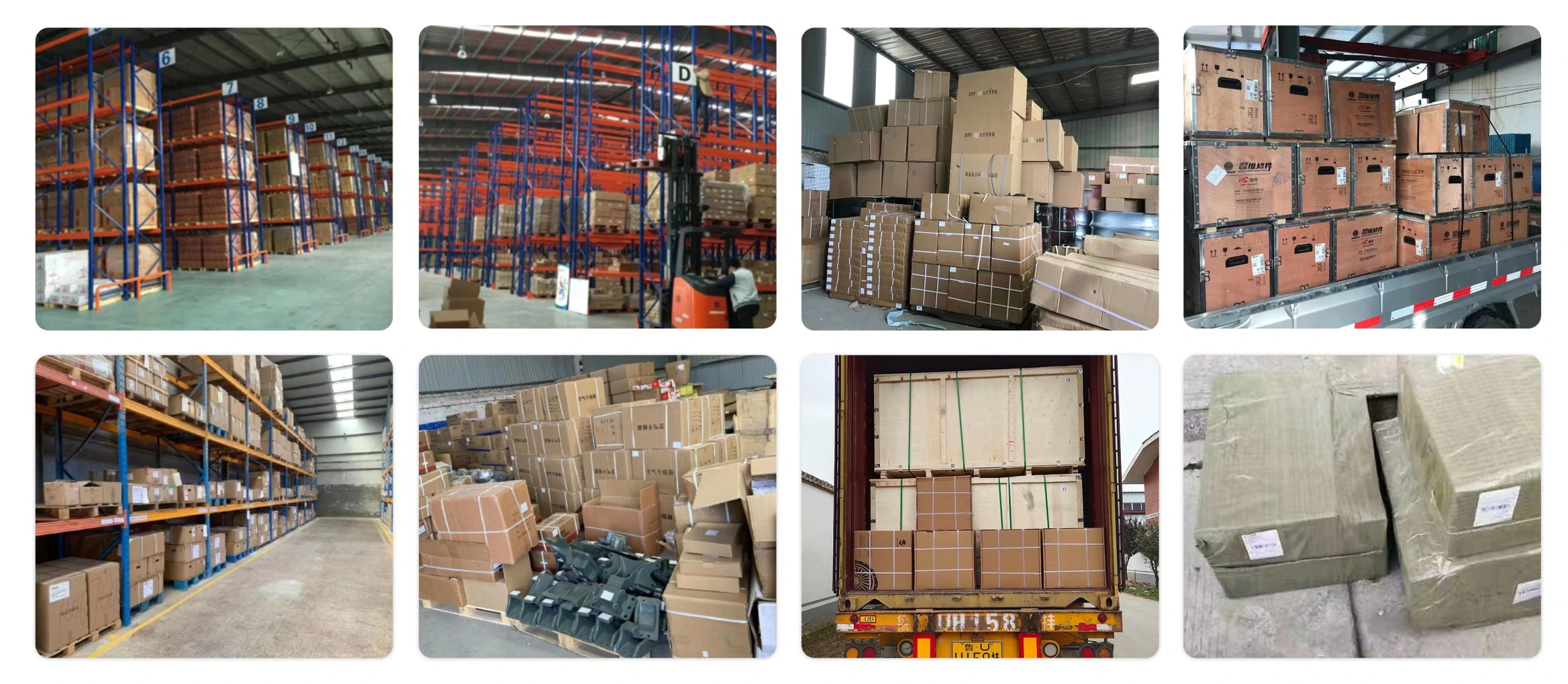
This packaging approach minimizes the risk of corrosion or impact damage, ensuring that parts like the FAW Cylinder Block Assembly arrive in perfect condition. Customers can rely on FAW’s logistics for consistent quality and reliability.