FAW Russian Coolant Identification Logic: Safeguarding 1 Critical Fluid Standard for Extreme Cold
The FAW Russian Coolant Identification Logic assembly acts as the visual command center for the CA3250P66K24L1TE5Z dump truck’s thermal defense. It defines the specific chemical protocols required to keep the engine operational in -40°C Siberian conditions. This guide explores the engineering behind this single, critical component, ensuring fleet compliance and preventing catastrophic engine freeze-ups.
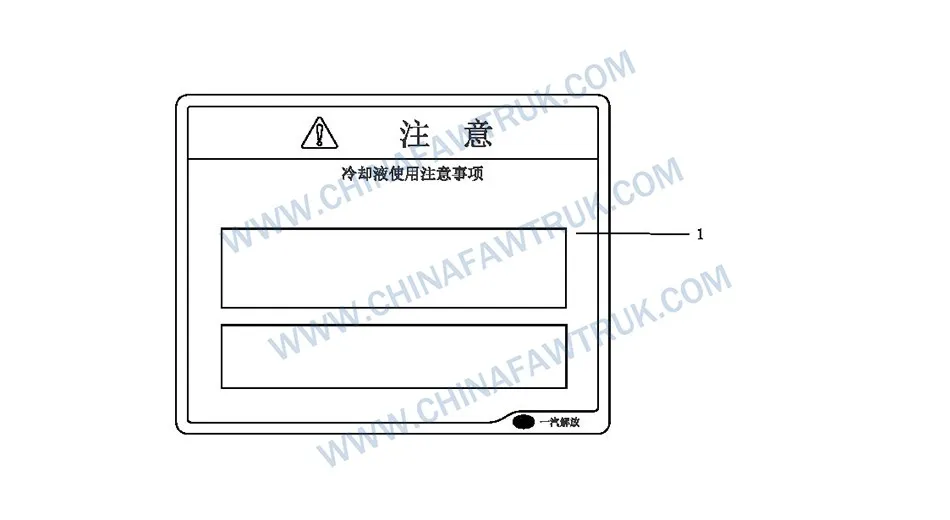
FAW Russian Coolant Identification Logic
Chemical Standards: Defining the Mixture
The core purpose of the FAW Russian Coolant Identification Logic is to enforce a strict chemical standard. In the Russian automotive context, “coolant” is not a generic term. It refers to a precise mixture of ethylene glycol and deionized water, often formulated at a 60/40 ratio to achieve a freezing point below -45°C. The identification component (Part No. 1301401A51W) serves as the immutable reference point for this mixture.
Without the guidance of the FAW Russian Coolant Identification Logic, maintenance personnel might default to a standard 50/50 mix. While acceptable in central China, a 50/50 mix can turn into a slushy gel in the depths of a Siberian winter. This gel fails to circulate through the radiator core, leading to localized overheating in the engine block despite the freezing ambient air. The identification logic prevents this fatal error.
Furthermore, the FAW Russian Coolant Identification Logic specifies the additive package. Modern heavy-duty diesel engines require Supplemental Coolant Additives (SCAs) to prevent cylinder liner cavitation. Using a standard automotive coolant without these nitrates and molybdates will lead to engine block perforation. The identification plate communicates these technical requirements clearly in both Chinese and English, bridging the language gap for cross-border logistics teams.
Material Science: Surviving the Environment
The Coolant Identification (Chinese/English) plate is not a simple paper sticker. In the context of the FAW Russian Coolant Identification Logic, this component must survive the same harsh environment as the chassis itself. It is typically manufactured from a high-grade polymer composite or anodized aluminum sheet designed to resist extreme thermal cycling.
Located near the expansion tank or radiator, the FAW Russian Coolant Identification Logic component is exposed to engine heat exceeding 90°C and ambient cold dropping to -40°C. A standard adhesive label would peel, crack, and fade within weeks. FAW utilizes industrial-grade adhesives or mechanical rivets to ensure this critical data plate remains attached for the vehicle’s lifespan.
Resistance to chemical attack is also paramount. The engine bay is a hostile environment filled with oil mist, diesel fumes, and road salt spray. The print on the FAW Russian Coolant Identification Logic plate is UV-stabilized and chemically resistant. This ensures that the warnings regarding “Do Not Open Hot” and the coolant specification remain legible after years of pressure washing and exposure to corrosive de-icing agents used on Russian highways.
Operational Safety: Eliminating Guesswork
The FAW Russian Coolant Identification Logic serves as a critical barrier against human error. In mixed fleets, where trucks might run on different fluid standards (e.g., OAT vs. IAT coolants), cross-contamination is a major risk. Mixing Organic Acid Technology coolant with Inorganic Acid Technology coolant causes a chemical reaction that creates a thick, brown sludge.
This sludge clogs the fine passages of the oil cooler and the heater core. By clearly displaying the required specification (e.g., “Heavy Duty Extended Life – Red”), the FAW Russian Coolant Identification Logic plate informs the technician exactly what fluid to add. This simple visual check prevents thousands of dollars in cooling system flushes and repairs.
Moreover, the bilingual nature of the FAW Russian Coolant Identification Logic (Chinese and English) is a strategic feature for the Russian market. Many service manuals may not be available in the local dialect at remote mining sites. The English markings provide a universal standard that can be understood by technicians globally, ensuring that the correct “Low Silicate” formula is used to protect the water pump seals.
Integration: The Expansion Tank Interface
The FAW Russian Coolant Identification Logic is physically integrated with the expansion tank assembly. This location is strategic. It is the single point of entry for fluid maintenance. By placing the identification logic directly at the fill point, FAW engineers ensure it is the last thing a mechanic sees before pouring fluid.
This proximity acts as a final “check-gate” in the maintenance workflow. If the technician holds a jug of green standard coolant but sees the FAW Russian Coolant Identification Logic specifying red OAT coolant, the visual dissonance triggers a pause. This psychological engineering is as important as the mechanical engineering of the truck.
Additionally, the logic implies a pressure warning. The FAW Russian Coolant Identification Logic often includes safety warnings about system pressure. In the CA3250P66K24L1TE5Z, the cooling system operates under high pressure to raise the boiling point. Opening the cap without checking the temperature can result in severe burns. The clear, durable warnings provided by this assembly are an essential part of the workplace safety protocol for the vehicle.
Component Breakdown: 90. Coolant Identification Logic Assembly
| No. |
Part Number |
Part Name |
Qty |
| 1 |
1301401A51W |
Coolant Identification (Chinese/English) |
1 |
Conclusion: The Smallest Critical Component
The FAW Russian Coolant Identification Logic assembly proves that size does not dictate importance. While it is the smallest component in the cooling system breakdown, its role in defining the operational parameters of the truck is immense. It acts as the guardian of the engine’s chemistry, preventing the catastrophic mistakes that come from using the wrong fluids in extreme environments.
For fleet managers, verifying the presence and legibility of the FAW Russian Coolant Identification Logic plate should be part of every inspection. If the plate is missing or unreadable, it should be replaced immediately with the genuine part (1301401A51W). Preserving this logic ensures that every technician, regardless of language or location, understands the strict requirements necessary to keep the CA3250P66K24L1TE5Z running through the coldest Russian nights.
Packaging and Logistics
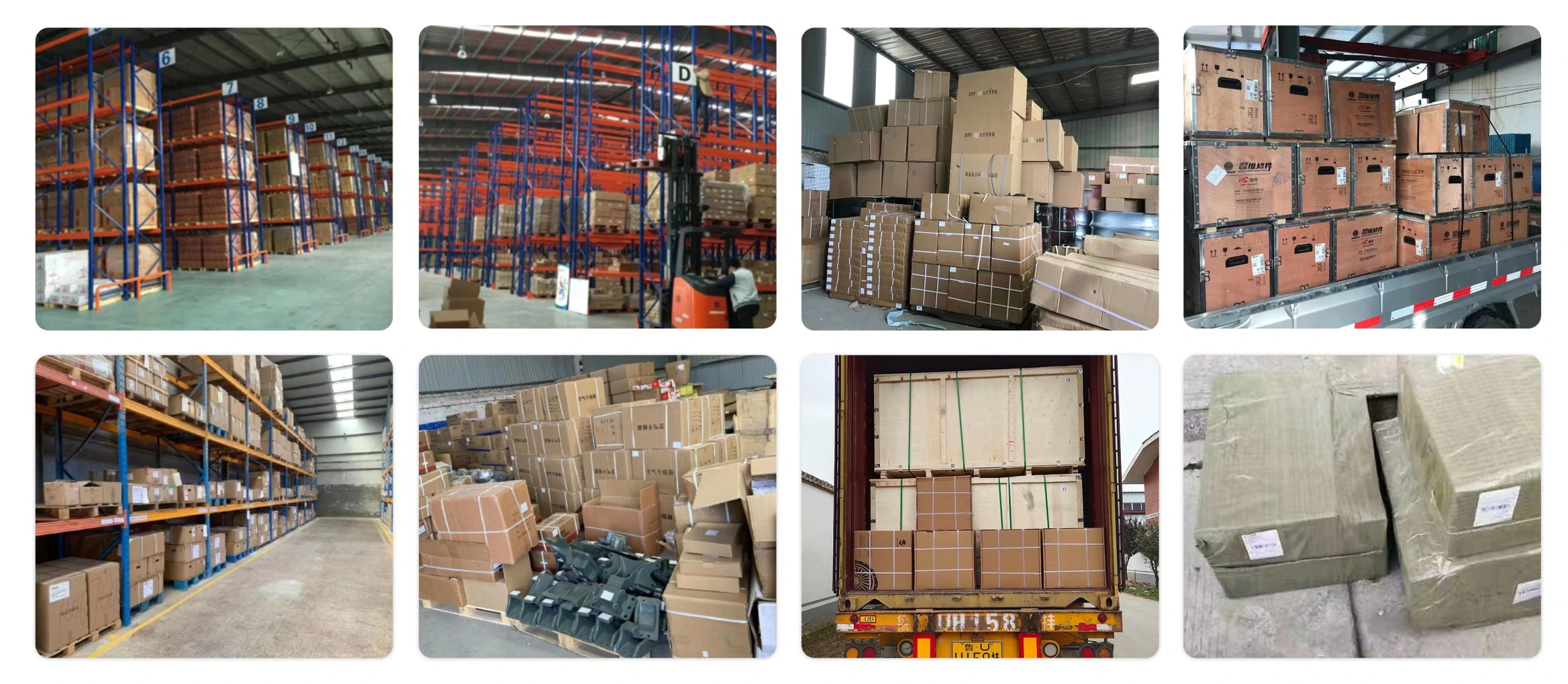
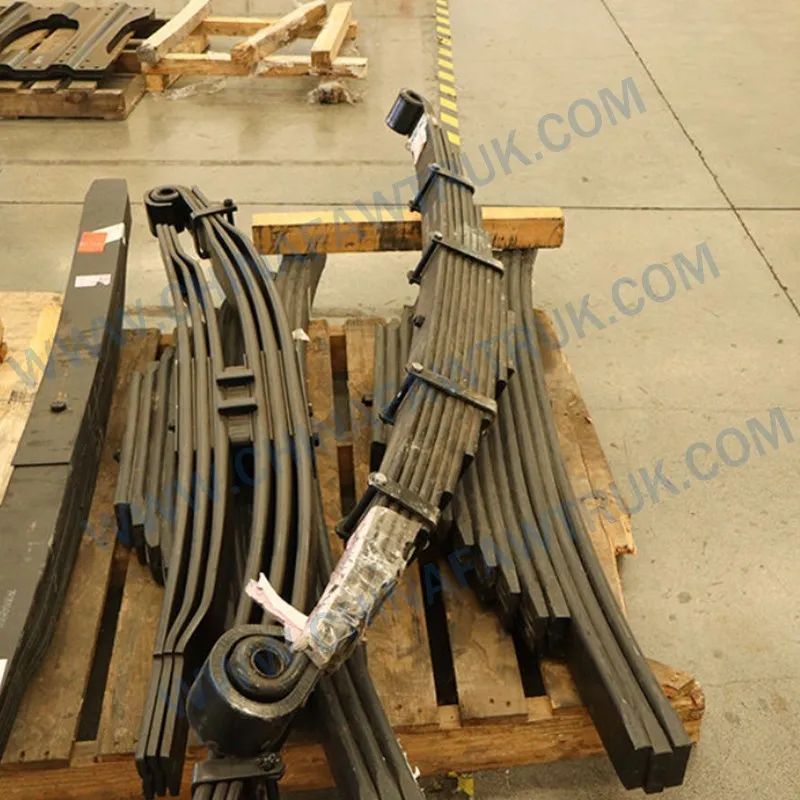
FAW parts, including the Cylinder Block Assembly, are packaged with care to ensure safe delivery. Each component is secured in protective materials to prevent damage during transit. The logistics network guarantees timely shipments worldwide, supporting efficient maintenance operations. Below is an image illustrating the standard packaging for FAW truck parts, showcasing the attention to detail in handling and storage.
This packaging approach minimizes the risk of corrosion or impact damage, ensuring that parts like the FAW Cylinder Block Assembly arrive in perfect condition. Customers can rely on FAW’s logistics for consistent quality and reliability.