Lógica del sensor del eje trasero ruso FAW: Salvaguardia 12 Elementos de precisión para una integridad de datos ABS impecable
El Sensor de eje trasero ruso FAW El conjunto lógico actúa como sistema nervioso digital para la arquitectura de frenado del camión volquete CA3250P66K24L1TE5Z.. Operar en el implacable clima siberiano requiere algo más que fuerza mecánica; exige retroalimentación electrónica precisa. Este conjunto captura datos críticos de velocidad de las ruedas., Activación del sistema de frenos antibloqueo (abdominales) para modular la presión y evitar derrapes peligrosos en pendientes heladas. Garantizar la calibración y protección del Sensor de eje trasero ruso FAW Es el factor más importante para mantener el control de la estabilidad del vehículo durante las operaciones invernales..
Sensor de eje trasero ruso FAW
| No. |
Número de pieza |
Nombre de la pieza |
Cantidad |
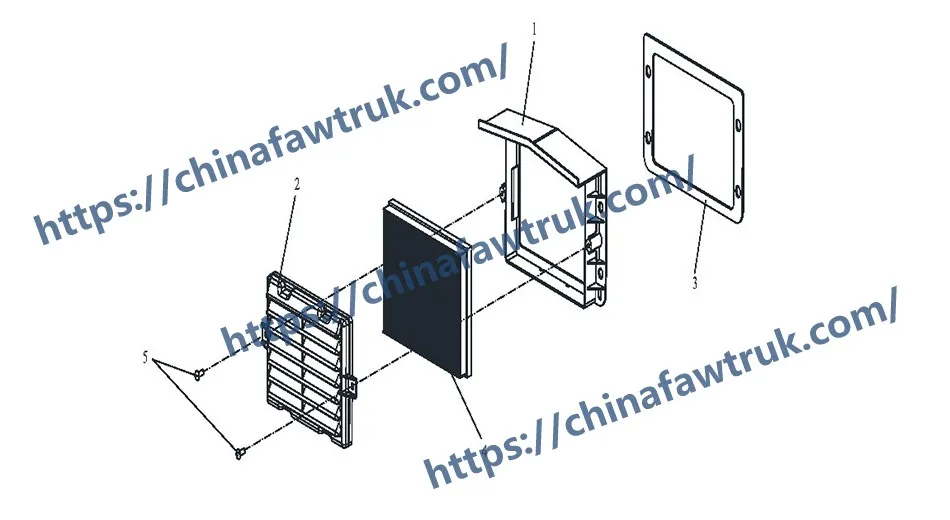
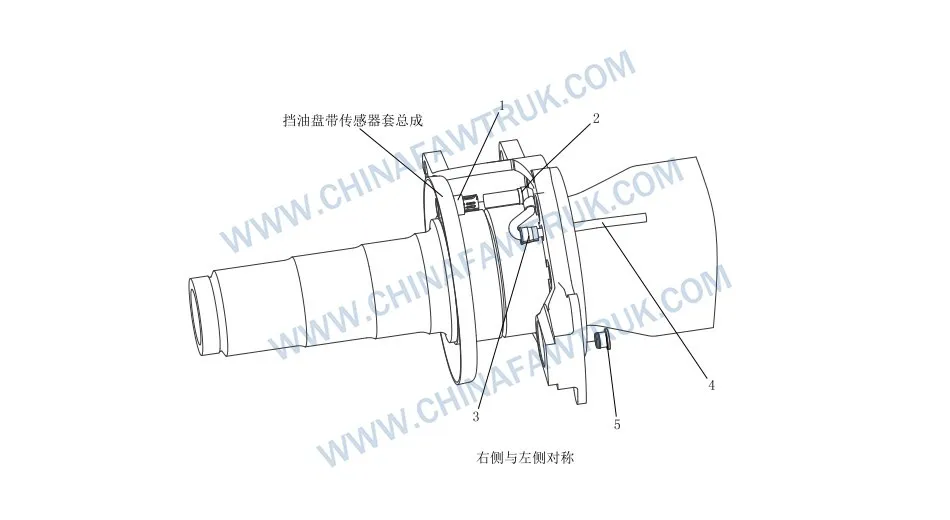
| 1 | 3550361-6S | Manga del sensor | 2 |
| 2 | 3550360-6S | Conjunto del sensor de velocidad de la rueda | 2 |
| 3 | 3550381Ba0s | Manga de posicionamiento | 4 |
| 4 | 3550351Ba0s | Funda protectora de goma | 2 |
| 5 | 3502861-A0B | Enchufar – Soporte de freno trasero | 2 |
La tecnología central: Sensor de velocidad inductivo
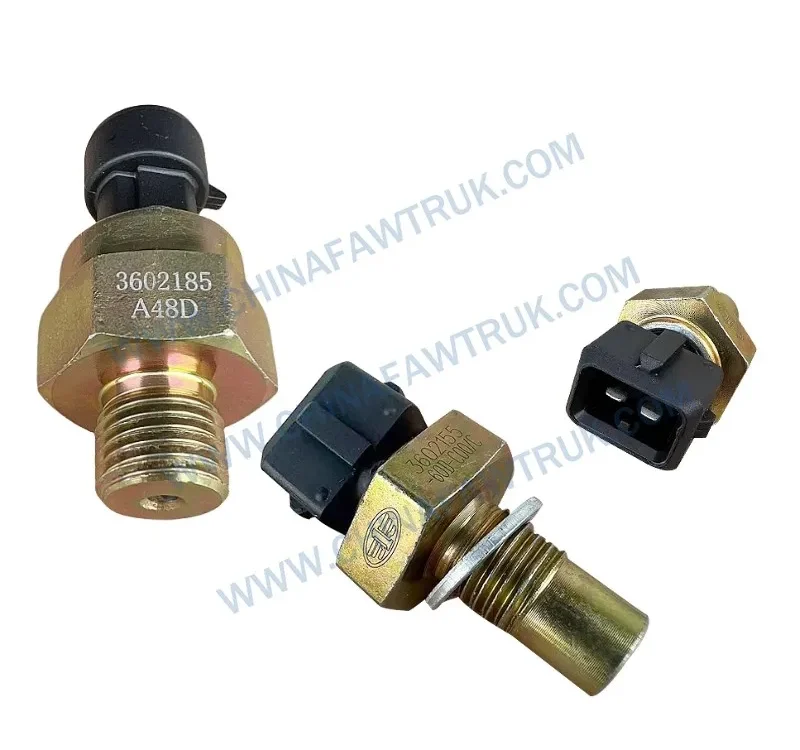
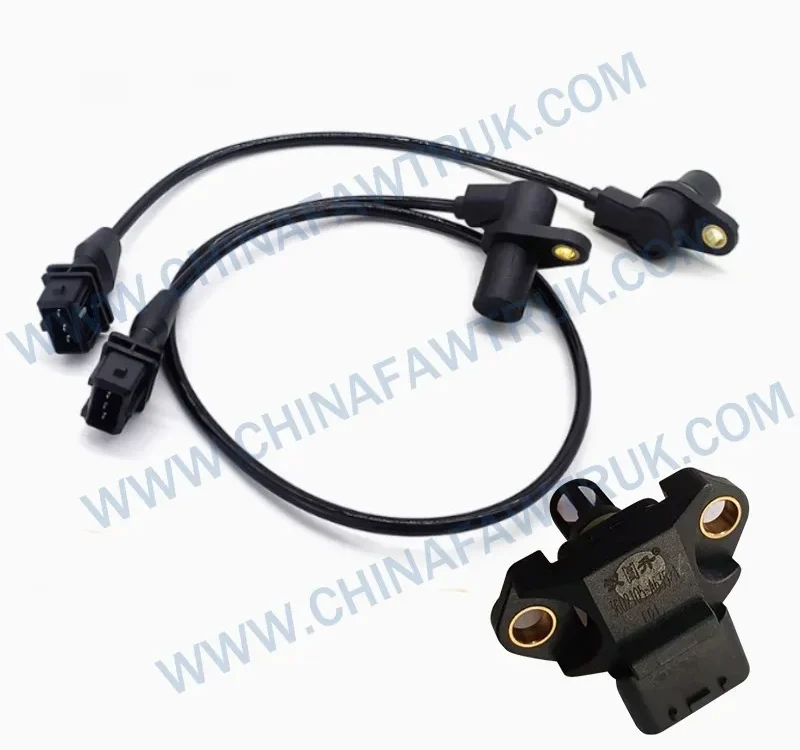
En el epicentro de la Sensor de eje trasero ruso FAW El ensamblaje lógico es el Conjunto del sensor de velocidad de la rueda (Número de pieza. 3550360-6S). Este componente utiliza tecnología de reluctancia variable para detectar la velocidad de rotación del cubo de la rueda.. Como el anillo excitador (rueda de tono) gira con el cubo, sus dientes atraviesan el campo magnético del sensor, inducir una señal de voltaje CA. La frecuencia de esta señal es directamente proporcional a la velocidad de la rueda.. En el contexto de la Sensor de eje trasero ruso FAW, Los devanados de la bobina y los imanes internos están encapsulados en una resina especializada.. Este proceso de encapsulado es fundamental para los rusos. “Zona Fría” especificación, ya que evita que el choque térmico rompa los devanados internos de cobre cuando el sensor pasa de un aire ambiente de -50 °C al calor radiante del tambor de freno..
La integridad de la señal del Sensor de eje trasero ruso FAW es primordial para el funcionamiento de la EBS (Sistema de frenado electrónico) y ABS. Si la señal del sensor es errática o se pierde, la ECU pasa por defecto a un modo sin ABS, que puede ser catastrófico en carreteras heladas. El Conjunto del sensor de velocidad de la rueda cuenta con un alto grado, Cable blindado que resiste interferencias electromagnéticas. (EMI) del alternador del camión y del retardador de transmisión. Además, El revestimiento del cable está formulado a partir de polietileno reticulado para mantener la flexibilidad a temperaturas criogénicas., Evitar que el aislamiento se agriete y se produzca un cortocircuito debido a la articulación del chasis..
El Sensor de eje trasero ruso FAW El conjunto está diseñado para ofrecer redundancia y confiabilidad.. El cabezal del sensor está sellado herméticamente según los estándares IP69K., lo que le permite resistir lavados a alta presión y la inmersión en aguanieve. Este nivel de protección es esencial porque los sensores del eje trasero son bombardeados constantemente por spray de carretera que contiene sales de deshielo corrosivas.. Al mantener una limpieza, señal fuerte, el Sensor de eje trasero ruso FAW permite que la computadora del camión realice microajustes en la presión de los frenos milisegundos antes de que se produzca un bloqueo de la rueda, Preservar la autoridad de dirección y evitar el efecto tijera..
Precisión de montaje: La brecha de aire crítica
El desempeño de la Sensor de eje trasero ruso FAW Depende completamente de su posición física en relación con el anillo de tono.. Esta relación es gestionada por el Manga del sensor (Número de pieza. 3550361-6S) y el Manga de posicionamiento (Número de pieza. 3550381Ba0s). Estos componentes crean una interfaz de ajuste por fricción que sujeta el sensor de forma segura y al mismo tiempo permite la calibración inicial.. El espacio de aire (la distancia entre la punta del sensor y el diente del anillo fonético) debe ser microscópico., normalmente menos de 0,7 mm. El Sensor de eje trasero ruso FAW utiliza el manguito de posicionamiento para mantener este espacio dinámicamente.
En el entorno pesado de un camión volquete, Los cojinetes de las ruedas tienen una cantidad de juego designada., y la carcasa del eje se flexiona bajo carga. Un soporte rígido destruiría el sensor inmediatamente al entrar en contacto con el anillo giratorio.. El Manga de posicionamiento en el Sensor de eje trasero ruso FAW El conjunto actúa como un mecanismo de embrague específico.. Mantiene el sensor lo suficientemente apretado como para evitar que se salga debido a la vibración, pero permite empujarlo hacia atrás si el anillo fónico lo toca debido al descentramiento del rodamiento.. Este “empujar hacia fuera” La capacidad es una característica a prueba de fallos del Sensor de eje trasero ruso FAW diseño, sacrificar el ajuste del espacio de aire en lugar de cortar el cabezal del sensor.
La composición material del Manga del sensor Utiliza una aleación de berilio-cobre o un material de resorte de acero inoxidable que conserva sus propiedades de tensión en condiciones de frío extremo.. El acero para resortes estándar puede perder su fuerza de sujeción o volverse quebradizo en el invierno ruso. Usando estos materiales avanzados, el Sensor de eje trasero ruso FAW garantiza que el sensor no vibre y se suelte en caminos de transporte ondulados. Un sensor flojo genera un “ruidoso” señal que la ECU interpreta como fallo, lo que lleva a una falsa activación del ABS o al apagado del sistema.
Defensa Ambiental: Sellado y Protección
La ubicación del Sensor de eje trasero ruso FAW en el extremo de la rueda lo expone a los elementos más duros imaginables: lodo, rocas, hielo, y calor intenso. Para combatir esto, el montaje incluye el Funda protectora de goma (Número de pieza. 3550351Ba0s). Esta funda se ajusta sobre la salida del cable y el cuerpo del sensor., evitando que el agua se escurra por el cable y entre en la carcasa del sensor. En el Sensor de eje trasero ruso FAW especificación, Esta goma es un compuesto EPDM a base de silicona que se mantiene flexible a -50°C., asegurando que el sello nunca se vea comprometido por grietas.
Además, el propio soporte del freno actúa como escudo, pero requiere sellado para evitar la entrada de polvo conductor de frenos.. El Enchufar – Soporte de freno trasero (Número de pieza. 3502861-A0B) Sella los puertos de acceso utilizados para la instalación del sensor.. Si falta este enchufe, El polvo del freno magnético se acumula en la punta magnética del Conjunto del sensor de velocidad de la rueda. Esta acumulación, conocido como “borroso,” Altera el campo magnético y amortigua el voltaje de la señal.. El Sensor de eje trasero ruso FAW confía en estos enchufes para mantener el entorno de detección limpio y preciso.
La integridad de la Sensor de eje trasero ruso FAW El mazo de cables también es crítico.. Las rutas de cableado están diseñadas para evitar puntos de pellizco durante el recorrido de la suspensión.. Las instrucciones de montaje dictan bucles de alivio de tensión específicos para evitar que el cable quede tenso cuando el eje alcanza su extensión completa.. Cualquier rotura en el aislamiento del cable permite que entre salmuera en los hilos de cobre., conduciendo a “corrosión del alambre negro” que puede recorrer metros por el arnés, destruyendo el Sensor de eje trasero ruso FAW conexión en la interfaz del arnés del chasis.
Estrategia de diagnóstico y mantenimiento
Solución de problemas del Sensor de eje trasero ruso FAW Requiere una comprensión de sus características de resistencia y voltaje.. Los técnicos suelen medir la resistencia del Conjunto del sensor de velocidad de la rueda (generalmente entre 1000 y 2000 ohmios) para comprobar si hay circuitos abiertos o cortocircuitos. Sin embargo, la prueba más definitiva para el Sensor de eje trasero ruso FAW está midiendo la salida de voltaje de CA mientras gira la rueda. Un sensor en buen estado debería generar una onda sinusoidal limpia que aumente en amplitud y frecuencia con la velocidad de la rueda..
Al reemplazar componentes, el Manga de posicionamiento (Número de pieza. 3550381Ba0s) y Manga del sensor (Número de pieza. 3550361-6S) Siempre debe reemplazarse junto con el sensor.. La reutilización de fundas viejas es la principal causa de migración de sensores y pérdida de señal. En el Sensor de eje trasero ruso FAW protocolo de mantenimiento, El orificio del sensor en el soporte debe limpiarse minuciosamente de óxido y grasa vieja antes de instalar los manguitos nuevos.. Está estrictamente prohibido el uso de una pasta antiagarrotamiento conductora, ya que interfiere con la conexión a tierra y la pureza de la señal del Sensor de eje trasero ruso FAW.
Finalmente, inspección visual del Funda protectora de goma y Enchufar – Soporte de freno trasero debe ser parte de cada servicio de frenos. Prevenir la contaminación es mucho más económico que diagnosticar fallas intermitentes del ABS. Al adherirse a estos protocolos y utilizar piezas originales para el Sensor de eje trasero ruso FAW, Los operadores de flotas se aseguran de que los sistemas de seguridad del vehículo permanezcan alerta., protegiendo al conductor y al activo en cada viaje.
Conclusión: Los datos detrás del poder de detención
El Sensor de eje trasero ruso FAW El ensamblaje lógico es un grupo de componentes pequeño pero indispensable.. Si bien carece de la masa física de los tambores o zapatas de freno., su papel en la gestión de la energía cinética del vehículo es igualmente importante. El 12 componentes, incluyendo el Conjunto del sensor de velocidad de la rueda y el critico Manga de posicionamiento, Formar una unidad cohesiva que traduce el movimiento mecánico en datos de seguridad digitales..
Para equipos de mantenimiento de flotas, tratando el Sensor de eje trasero ruso FAW con el mismo respeto que los componentes mecánicos de fricción es esencial. Un camión con frenos potentes pero sin control ABS es un riesgo en el hielo. Invirtiendo en sensores de repuesto originales y garantizando una instalación precisa, Los operadores garantizan que sus camiones FAW J6P mantienen el control inteligente necesario para navegar en las peligrosas condiciones del sector de transporte pesado ruso..
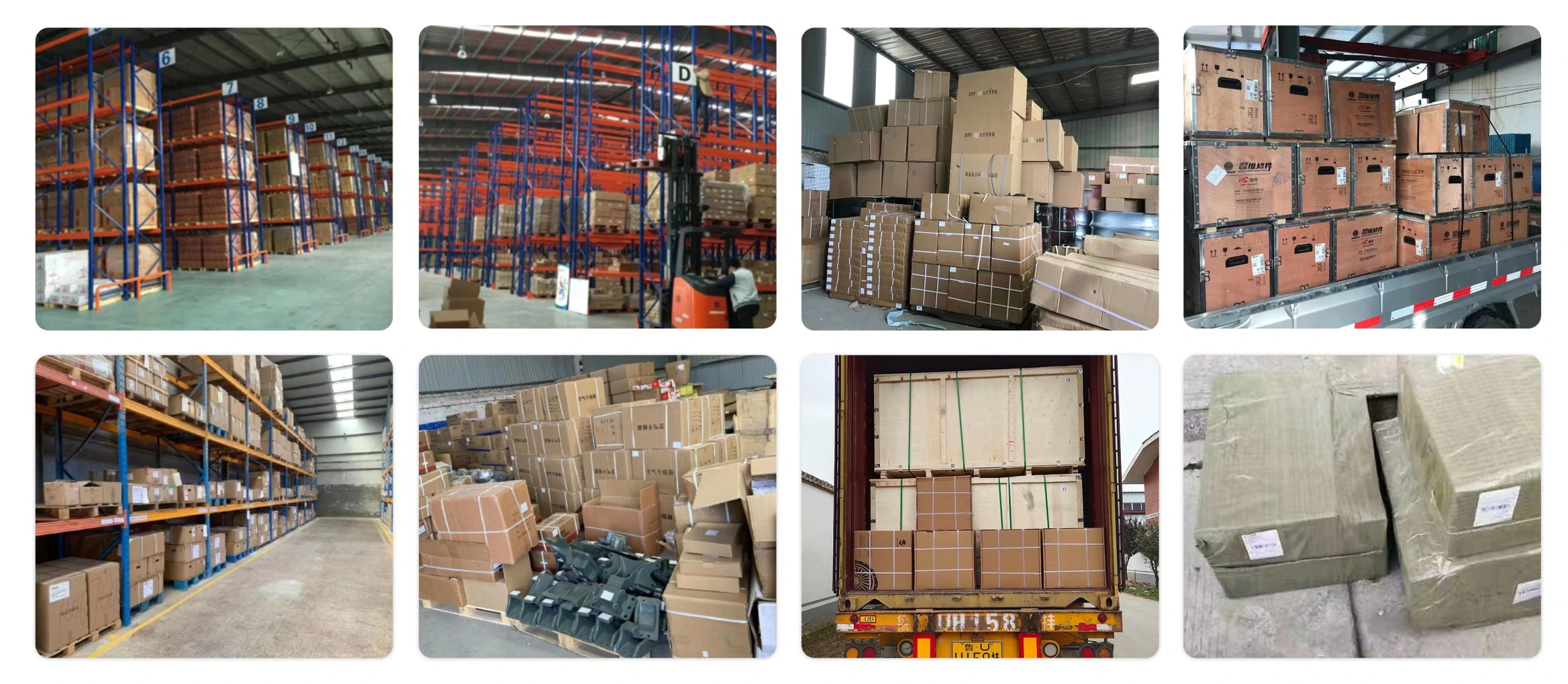
Embalaje y Logística
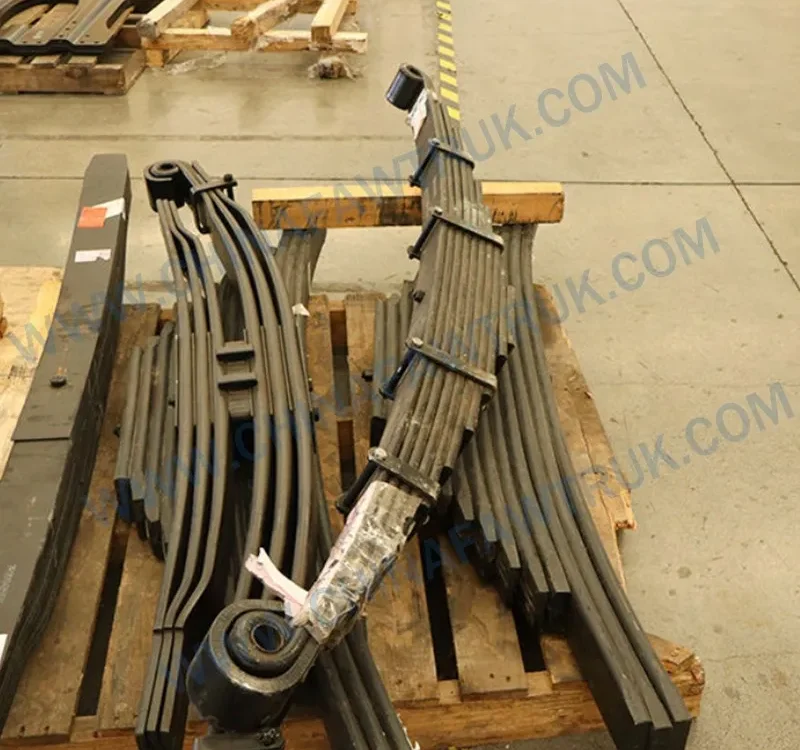
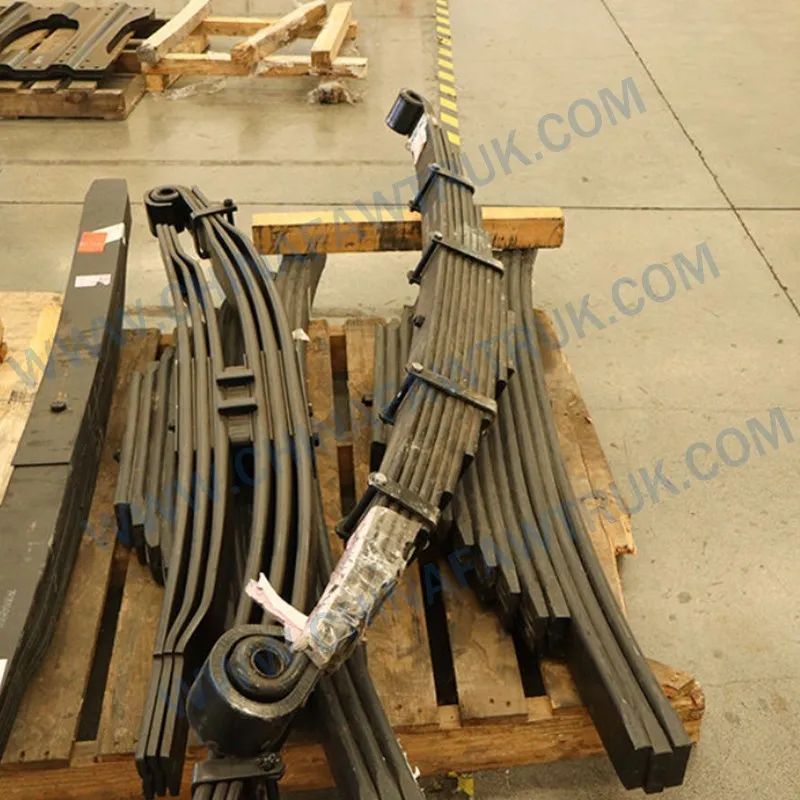
piezas FAW, incluido el conjunto del bloque de cilindros, Se empaquetan con cuidado para garantizar una entrega segura.. Cada componente está asegurado con materiales protectores para evitar daños durante el transporte.. La red logística garantiza envíos puntuales en todo el mundo., apoyando operaciones de mantenimiento eficientes. A continuación se muestra una imagen que ilustra el embalaje estándar de las piezas de camiones FAW., mostrando la atención al detalle en el manejo y almacenamiento.
Este enfoque de embalaje minimiza el riesgo de corrosión o daños por impacto., asegurando que piezas como el conjunto de bloque de cilindros FAW lleguen en perfectas condiciones. Los clientes pueden confiar en la logística de FAW para obtener calidad y confiabilidad constantes.