FAW Russian Floor Insulation Underlay: A Tri-Segmented Thermal Barrier Engineered for Extreme Climate Control
The FAW Russian Floor Insulation Underlay assembly is the primary thermal defense system for the cabin floor of the CA3250P66K24L1TE5Z dump truck. In the severe operational theater of the Russian Federation, the metal floor pan acts as a massive thermal bridge, conducting the freezing ambient temperatures of the chassis directly into the driver’s workspace. Simultaneously, it must shield the interior from the intense radiant heat generated by the transmission and exhaust systems located immediately below. This specialized FAW Russian Floor Insulation Underlay utilizes a three-piece segmented design to provide comprehensive coverage, ensuring that the cabin maintains a stable, habitable temperature regardless of the external environment.
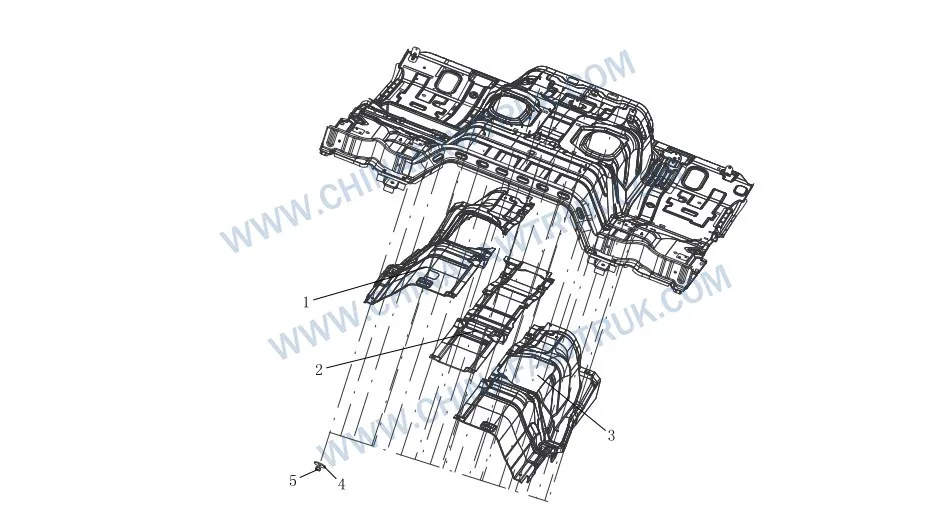
FAW Russian Floor Insulation Underlay
| No. |
Part Number |
Part Name |
Qty |
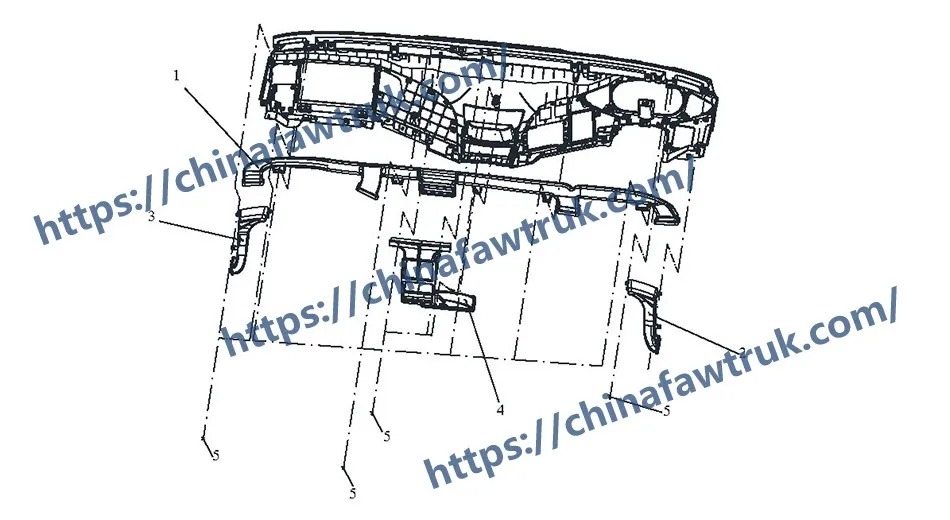
| 1 | 5109311-B35 | Floor Heat Insulation Pad Left | 1 |
| 2 | 5109313-B35 | Floor Heat Insulation Pad Middle | 1 |
| 3 | 5109312-B35 | Floor Heat Insulation Pad Right | 1 |
| 4 | 5109318-A01 | Washer – Floor Heat Insulation Pad | 25 |
| 5 | CQ34006 | Hexagon Nut | 25 |
Thermodynamic Efficiency and Cabin Climate Logic
The design philosophy behind the FAW Russian Floor Insulation Underlay prioritizes the creation of a “thermal break” between the exterior metal shell and the interior cabin space. In the extreme latitudes of the Russian North, the temperature differential between the cabin interior (heated to +20°C) and the exterior chassis (dropping to -40°C) creates a massive gradient. Without the FAW Russian Floor Insulation Underlay, the steel floor pan acts as a heat sink, rapidly conducting precious cabin heat out into the atmosphere. This not only forces the auxiliary heaters to run continuously, consuming excess fuel, but also creates uncomfortable cold drafts around the driver’s feet, which can lead to reduced reaction times and discomfort during long shifts.
The FAW Russian Floor Insulation Underlay assembly employs a high-density, multi-layer composite material. The core layer typically consists of a closed-cell foam or fibrous wool that traps dead air, the most effective natural insulator. This structure prevents conductive heat loss. Furthermore, the material used in the FAW Russian Floor Insulation Underlay features heat-reflective properties on its underside. This is crucial for managing the radiant heat generated by the transmission housing and exhaust downpipe, which run directly beneath the floor tunnel. By reflecting this heat away, the underlay prevents the floor tunnel from becoming uncomfortably hot during heavy uphill hauls, maintaining a balanced internal climate.
The “B35” suffix in the part numbers for the FAW Russian Floor Insulation Underlay components indicates a specification tailored for the J6P cab’s specific floor geometry in the cold-zone configuration. This tailored fit ensures that there are no gaps where thermal leakage can occur. The FAW Russian Floor Insulation Underlay is molded to contour tightly around the gearbox tunnel, seat risers, and pedal box. Any gap in this insulation barrier would act as a “thermal chimney,” sucking warm air out and pulling freezing air in. The precision molding of the FAW components eliminates these weak points, ensuring maximum thermal efficiency.
The Tri-Segmented Architectural Advantage
A key feature of the FAW Russian Floor Insulation Underlay is its segmentation into three distinct parts: the Floor Heat Insulation Pad Left (Part No. 5109311-B35), the Floor Heat Insulation Pad Middle (Part No. 5109313-B35), and the Floor Heat Insulation Pad Right (Part No. 5109312-B35). This modular design is not arbitrary; it is a strategic engineering choice for serviceability. The middle pad, covering the transmission tunnel, is the most likely to require removal for gearbox access or shift linkage maintenance. By separating it from the side pads, the FAW Russian Floor Insulation Underlay allows mechanics to expose the tunnel access plate without dismantling the entire driver or passenger side floor covering.
The Floor Heat Insulation Pad Left is shaped to accommodate the steering column, pedal box, and driver’s seat mounts. This section of the FAW Russian Floor Insulation Underlay endures the most wear and tear from the driver’s heels. Its segregation means that if the driver’s side pad becomes worn or damaged by heavy winter boots, it can be replaced individually, saving the cost of a full floor replacement. Similarly, the Floor Heat Insulation Pad Right is contoured for the passenger footwell and auxiliary heater vents. This modularity reduces long-term ownership costs and simplifies logistics for fleet parts departments.
The interface between these three sections of the FAW Russian Floor Insulation Underlay is designed with overlap zones. When installed, the middle pad typically overlaps the edges of the left and right pads (or vice versa, depending on the specific layering sequence), creating a continuous barrier. This shingled design prevents liquids—such as melted snow from boots or spilled drinks—from seeping between the pads and reaching the metal floor, where it could cause unseen corrosion. The FAW Russian Floor Insulation Underlay thus acts as a secondary moisture barrier, protecting the structural integrity of the cab floor.
High-Density Fastening for NVH Control
The installation of the FAW Russian Floor Insulation Underlay is secured by a remarkably high number of fasteners, specifically 25 units of the Washer – Floor Heat Insulation Pad (Part No. 5109318-A01) and 25 units of the Hexagon Nut (Part No. CQ34006). This high density of fastening points is critical for Noise, Vibration, and Harshness (NVH) control. A loose insulation pad on a vibrating diesel truck floor acts like a drum skin, potentially amplifying chassis noise rather than dampening it. By pinning the FAW Russian Floor Insulation Underlay tightly to the floor pan at multiple points, the assembly effectively adds mass and damping to the steel panels, reducing structural resonance.
The specialized washer, Washer – Floor Heat Insulation Pad, is designed with a wide surface area. This is essential for distributing the clamping force of the nut over the soft, compressible material of the FAW Russian Floor Insulation Underlay. A standard small washer would simply sink into the insulation, tearing the material and failing to provide a secure hold. The specialized washer ensures that the underlay is compressed uniformly, maintaining its position and preventing it from bunching up or interfering with the pedals—a critical safety consideration.
Furthermore, the secure fastening of the FAW Russian Floor Insulation Underlay prevents it from chafing against the metal floor. In a high-vibration environment, any movement between the insulation and the painted metal can sand away the paint, leading to rust. By rigidly securing the pads with the 25 nut-and-washer combinations, the FAW Russian Floor Insulation Underlay becomes an integral part of the floor structure, protecting the paintwork beneath it from abrasion while performing its thermal duties.
Maintenance, Inspection, and Replacement
While the FAW Russian Floor Insulation Underlay is a passive component, it requires inspection to ensure the long-term health of the vehicle. The primary enemy of floor insulation is moisture saturation. If the door seals leak or if the windshield bond fails, water can accumulate in the underlay. A wet FAW Russian Floor Insulation Underlay loses its thermal properties and becomes a breeding ground for mold and rust. During annual maintenance, mechanics should lift the edge of the mats to check for dampness. If the underlay is soaked with water, oil, or diesel fuel, it must be replaced immediately to prevent fire hazards and corrosion.
Replacement of the FAW Russian Floor Insulation Underlay is a straightforward but labor-intensive process, usually requiring the removal of the seats and lower interior trim. Because the assembly relies on stud-welded bolts on the floor pan, care must be taken when removing the 25 Hexagon Nut fasteners. If a nut is seized due to corrosion, snapping the stud requires welding a new one to the floor, significantly complicating the repair. Using penetrating oil on these nuts before removal is a recommended practice when servicing the FAW Russian Floor Insulation Underlay.
Fleet managers should ensure that only genuine FAW parts are used for replacement. Generic bulk insulation materials lack the precise molding, the cutout locations for seat bolts, and the heat-reflective backing of the genuine FAW Russian Floor Insulation Underlay. Poorly fitted aftermarket insulation can interfere with the accelerator or brake pedals, creating a serious safety risk. The genuine pads drop into place perfectly, ensuring that the cabin remains the safe, warm, and quiet environment it was designed to be.
Conclusion: The Foundation of Arctic Survivability
The FAW Russian Floor Insulation Underlay assembly is a vital component in the CA3250 dump truck’s arsenal against the elements. Comprising 5 main parts and 50 pieces of fastening hardware, it forms a comprehensive barrier that manages heat, sound, and vibration. Its segmented design allows for practical maintenance, while its material engineering ensures the driver remains isolated from the harsh reality of the Russian winter.
For fleet operators, the condition of the FAW Russian Floor Insulation Underlay is a direct indicator of cabin integrity. A dry, well-secured underlay protects the vehicle structure and enhances operator efficiency. By prioritizing the maintenance of this thermal shield, operators ensure that their workforce can perform safely and comfortably, maximizing the productivity of the fleet in even the most extreme conditions.
Packaging and Logistics
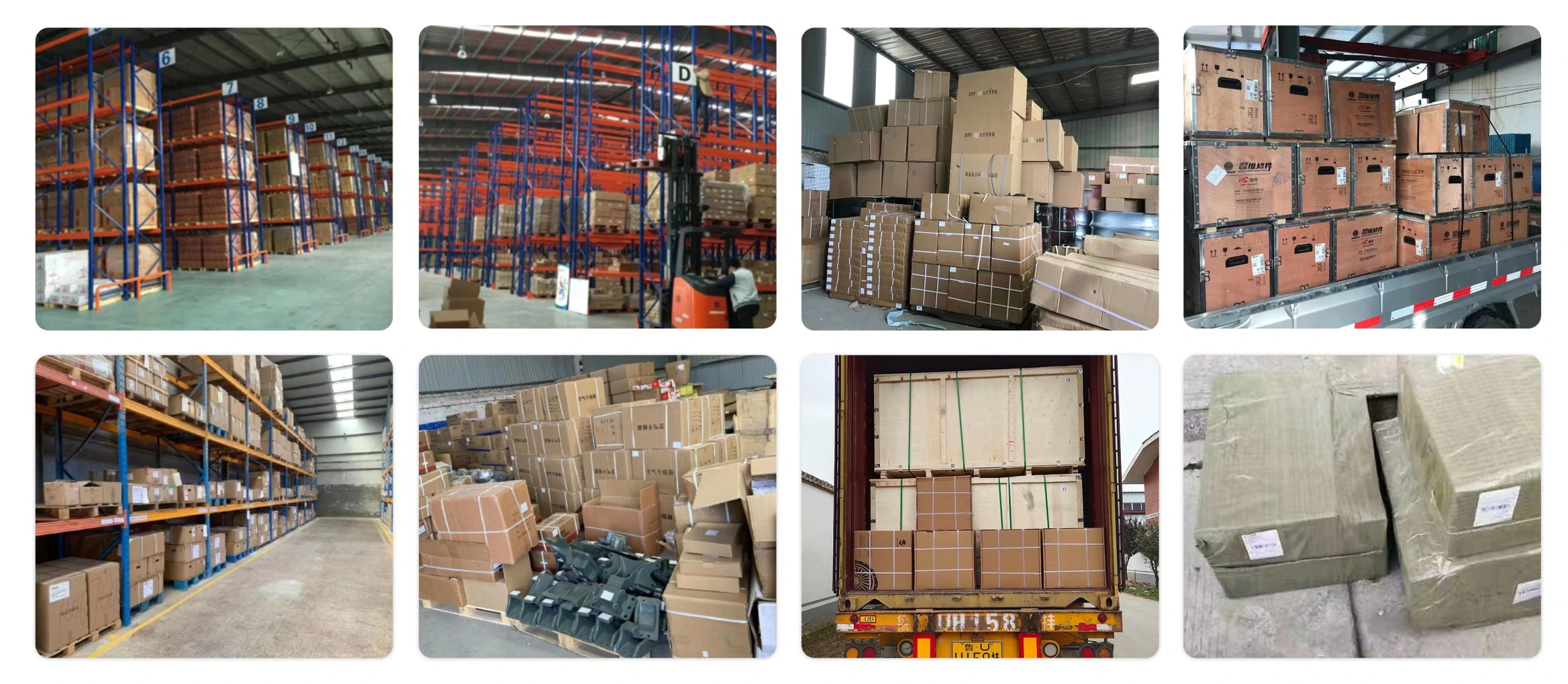
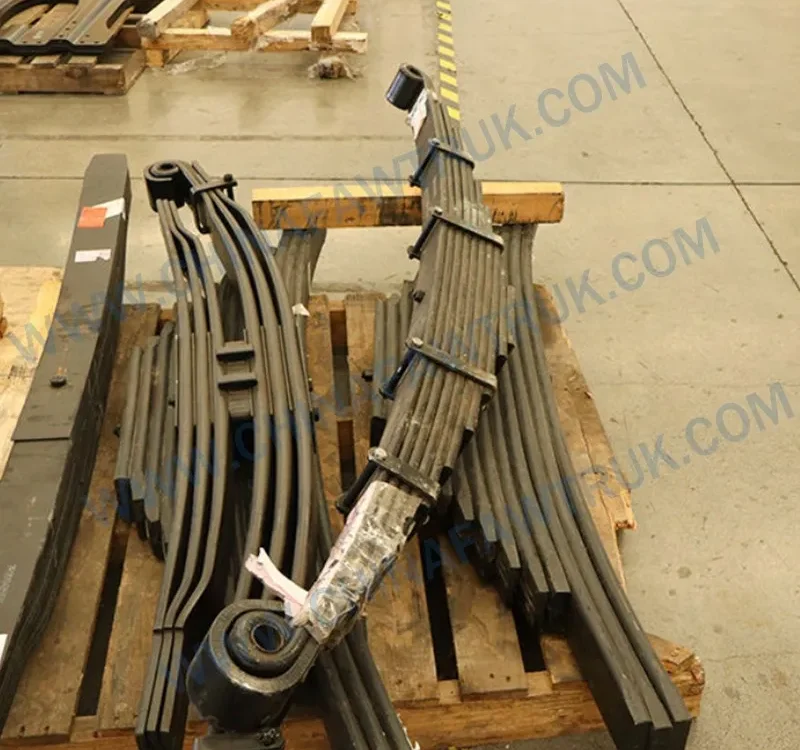
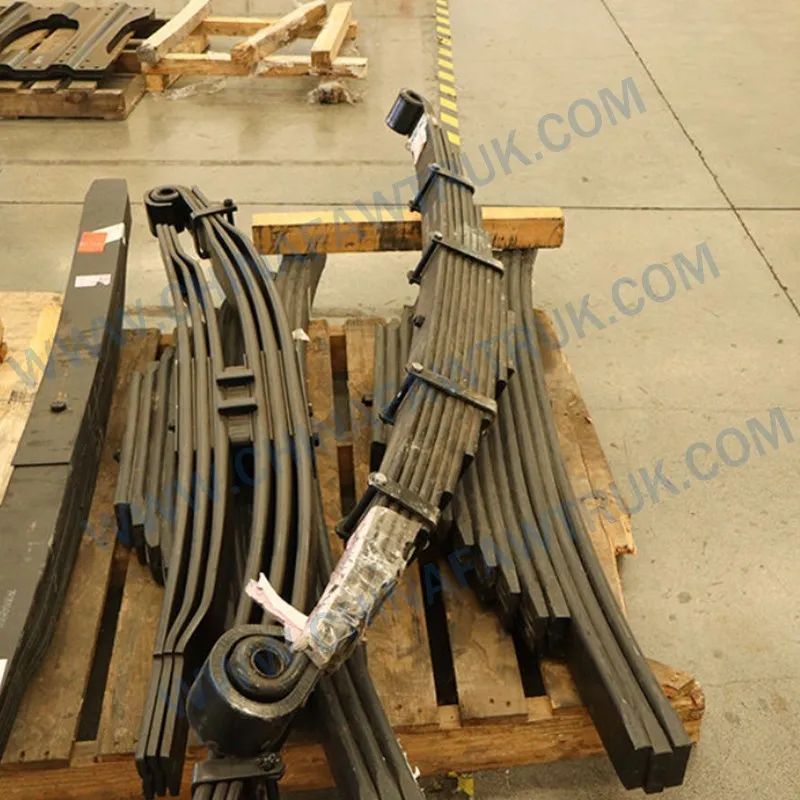
FAW parts, including the Cylinder Block Assembly, are packaged with care to ensure safe delivery. Each component is secured in protective materials to prevent damage during transit. The logistics network guarantees timely shipments worldwide, supporting efficient maintenance operations. Below is an image illustrating the standard packaging for FAW truck parts, showcasing the attention to detail in handling and storage.
This packaging approach minimizes the risk of corrosion or impact damage, ensuring that parts like the FAW Cylinder Block Assembly arrive in perfect condition. Customers can rely on FAW’s logistics for consistent quality and reliability.