FAW Russian Balance Suspension: Engineering 9 Strategic Components for Arctic Load Distribution
The FAW Russian Balance Suspension system is the kinetic heart of the rear bogie on the CA3250P66K24L1TE5Z dump truck. Designed to equalize the massive payload across the two rear drive axles, this trunnion-based architecture ensures that all wheels maintain traction even when navigating the deep, frozen ruts of a Siberian mine. Engineered with “64W” arctic-grade steel and advanced SPL fastening technology, the FAW Russian Balance Suspension prevents frame twisting and axle overload in temperatures as low as -50°C. This guide analyzes the trunnion shaft dynamics, the bushing tribology, and the high-shear bolt logic that defines this heavy-duty assembly.

FAW Russian Balance Suspension
Trunnion Architecture and Load Equalization
The fundamental principle of the FAW Russian Balance Suspension is the mechanical equalization of weight between the middle and rear axles. The centerpiece of this system is the Balance Suspension Shaft and Bracket Assembly (Part No. 2918010-64W). This massive casting is bolted directly to the chassis frame and houses the cross-shaft, or trunnion, upon which the leaf springs pivot. The “64W” material designation indicates a high-strength nodular iron alloy specifically formulated to retain ductility in extreme cold. In the Russian operational theater, where the ground can be as hard as concrete, the trunnion shaft must withstand immense vertical shock loads without snapping.
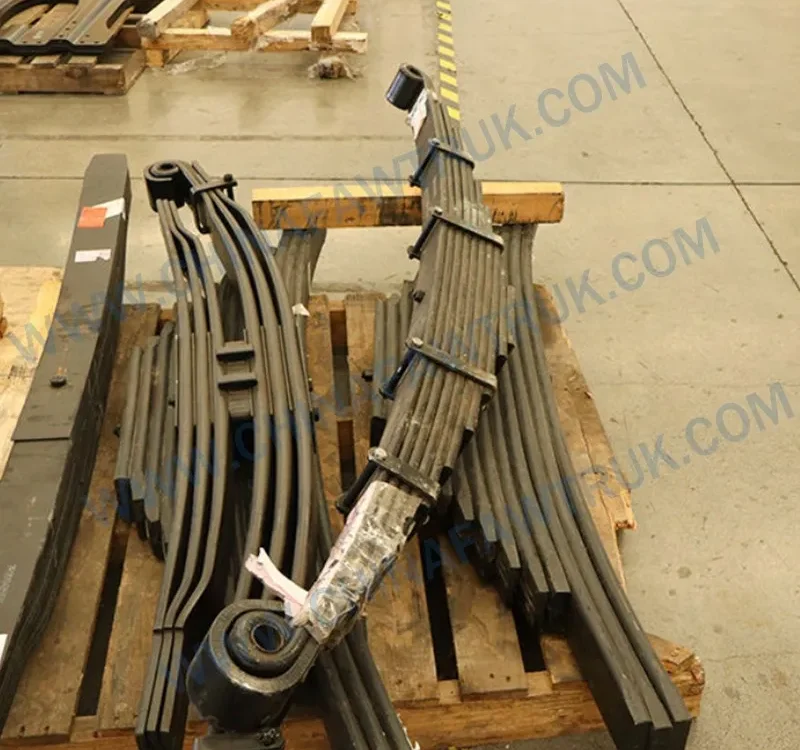
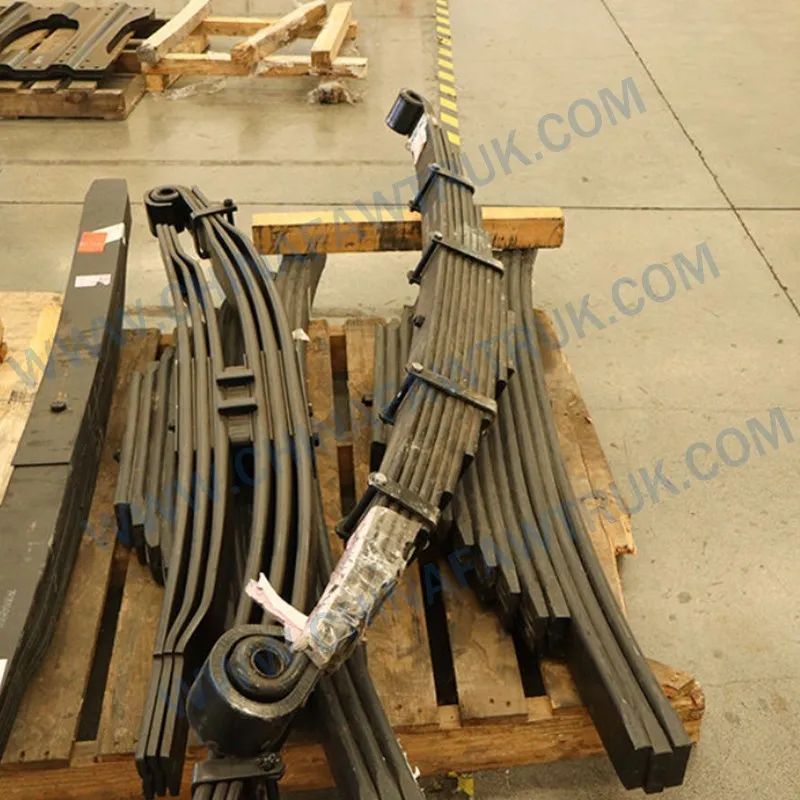
Supporting the leaf spring stack is the Balance Suspension Bracket and Leaf Spring Seat Assembly (Part No. 2918080-64W). This component rocks back and forth on the trunnion shaft. As the front rear axle climbs a bump, the spring seat pivots, forcing the rear rear axle down, ensuring that both sets of tires remain in contact with the ground. This articulation capability is what allows the FAW Russian Balance Suspension to provide superior off-road traction compared to air suspension systems, which can struggle to react quickly enough to sharp terrain changes in freezing conditions.
The interface between the rotating seat and the stationary shaft is a critical wear zone. The Balance Suspension Leaf Spring Seat (Part No. 2918041-64W) must rotate smoothly under a load of 15 tons or more. If this rotation is impeded by rust or ice, the suspension locks up, transferring 100% of the road shock into the chassis rails. To prevent this, the FAW Russian Balance Suspension employs a sealed design that keeps contaminants out while retaining the specialized low-temperature grease required for arctic operation.
The structural rigidity of the trunnion bracket is paramount. It acts as a cross-member, tying the left and right frame rails together. The FAW Russian Balance Suspension design integrates heavy ribbing into the casting to resist the twisting torque generated when the truck turns. This torsional stiffness is essential for maintaining axle alignment; if the brackets flex, the axles will steer passively, leading to dangerous instability at highway speeds.
Bushing Tribology and Sealing Logic
The pivot action of the FAW Russian Balance Suspension relies on the Bushing – Balance Suspension Leaf Spring Seat (Part No. 2918042-64W-C00). This bushing is the sacrificial bearing element of the system. The “C00” suffix often denotes a composite or bi-metal construction designed for high-load, low-speed oscillation. Unlike a wheel bearing that spins constantly, this bushing rocks back and forth, a motion that makes it difficult to maintain a hydrodynamic oil film. Therefore, the material must have excellent self-lubricating properties to prevent galling during the initial movement.
Protecting this critical interface is the Cover – Balance Suspension Leaf Spring Seat (Part No. 2918072-64W). This heavy steel cap seals the end of the trunnion shaft, preventing the ingress of mud, water, and road salt. In the Siberian winter, water ingress is fatal to suspension components; if water enters the bushing cavity and freezes, it expands, cracking the housing or seizing the shaft. The FAW Russian Balance Suspension cover is gasketed and bolted securely to ensure a hermetic seal against the elements.
Lubrication maintenance is vital for the FAW Russian Balance Suspension. The system typically features grease zerks that feed channels within the bushing. Pumping fresh grease into the assembly serves two purposes: it lubricates the bearing surface and purges old, contaminated grease out past the seals. In the FAW Russian Balance Suspension, the use of arctic-grade synthetic grease is mandatory to ensure the lubricant flows at -50°C, reaching the loaded zone of the bushing rather than channeling or blowing out the seal.
Wear monitoring of the FAW Russian Balance Suspension bushings involves checking for radial play. If the seat wobbles on the shaft, the bushings are worn. Excessive wear alters the suspension geometry, causing the rear axles to skew. This misalignment manifests as rapid, uneven tire wear and “dog-tracking” of the vehicle. Replacing the 2918042-64W-C00 bushings before they wear through to the expensive trunnion shaft is a key cost-saving strategy for fleet managers.
High-Shear Fastening System with SPL Technology
The FAW Russian Balance Suspension is subjected to some of the highest shear loads of any component on the truck. To secure the heavy brackets to the chassis, the system utilizes a massive array of high-tensile flange bolts. Specifically, it employs 28 units of Hex Head Flange Bolt (Coarse Shank) (Part No. Q1852070TF38K), 20 units of Hex Head Flange Bolt (Coarse Shank) (Part No. Q1852095TF38K), and 14 units of Hex Head Flange Bolt (Coarse Shank) (Part No. Q1852080TF38K). The varying lengths accommodate the different thicknesses of the frame rails and reinforcement liners.
The “Coarse Shank” specification is critical for the FAW Russian Balance Suspension. It means the unthreaded portion of the bolt is precisely dimensioned to sit within the shear plane of the connection. This maximizes the shear strength of the joint, as the solid steel shank is much stronger than the threaded section. The flange head distributes the clamping force, preventing the bolt from embedding into the bracket, which would lead to a loss of tension.
To counter the extreme vibration of off-road driving, the assembly relies on 48 units of the SPL Hex Small Flange Anti-loose Nut (Part No. T32720TF2K). The SPL (Self-Prevailing Lock) nut features a specialized thread deformation that mechanically locks it to the bolt. This technology is superior to standard nylon lock nuts or split washers, which can lose tension due to thermal contraction in the arctic cold. The FAW Russian Balance Suspension fastening system ensures that once torqued, the bolts stay tight, maintaining the structural integrity of the bogie.
The sheer volume of fasteners—over 60 bolts and nuts in total—highlights the over-engineered nature of the FAW Russian Balance Suspension. This redundancy ensures that even if a single bolt were to fail or loosen, the load is safely distributed among the remaining fasteners, preventing catastrophic detachment of the suspension. Periodic torque checks of these fasteners are a mandatory maintenance protocol for ensuring safety.
Arctic Durability and Material Science
The “64W” suffix found on the major components of the FAW Russian Balance Suspension refers to a specific cold-weather material specification. In standard metallurgy, steel undergoes a ductile-to-brittle transition as temperatures drop. At -50°C, a standard steel bracket acts like glass, shattering upon impact. The FAW “64W” alloy is chemically formulated with nickel and other elements to lower this transition temperature, ensuring the brackets remain tough and ductile in the Siberian winter.
Corrosion is another major enemy. The FAW Russian Balance Suspension sits low to the ground, constantly exposed to a slurry of mud, ice, and road salt. The components are treated with a heavy-duty chassis paint and often a zinc-rich primer to prevent rust. The “TF38K” coating on the bolts suggests a high-grade zinc-flake or Geomet finish, which provides superior corrosion resistance compared to standard galvanizing, ensuring that the bolts can be removed for service even after years of exposure.
The design of the FAW Russian Balance Suspension also considers the accumulation of ice. The open architecture of the brackets allows mud and snow to fall away rather than packing in and freezing solid. Packed ice can restrict suspension movement, effectively locking the bogie. By minimizing debris traps, the FAW design ensures that the suspension retains its full range of articulation, keeping the wheels on the ground and the truck moving forward.
Furthermore, the interaction between the FAW Russian Balance Suspension and the leaf springs is tuned for cold weather. The spring seats are contoured to reduce stress concentrations on the spring leaves, which are also prone to brittleness in the cold. This holistic approach to arctic engineering—considering materials, lubrication, and geometry—makes the FAW J6P a dominant force in northern mining operations.
Component Breakdown: Balance Suspension Logic Assembly
| No. |
Part Number |
Part Name |
Qty |
| 1 | T32720TF2K | SPL Hex Small Flange Anti-loose Nut | 48 |
| 2 | Q1852070TF38K | Hex Head Flange Bolt (Coarse Shank) | 28 |
| 3 | Q1852095TF38K | Hex Head Flange Bolt (Coarse Shank) | 20 |
| 4 | 2918080-64W | Balance Suspension Bracket and Leaf Spring Seat Assembly | 2 |
| 5 | Q1852080TF38K | Hex Head Flange Bolt (Coarse Shank) | 14 |
| 6 | 2918072-64W | Cover – Balance Suspension Leaf Spring Seat | 2 |
| 7 | 2918042-64W-C00 | Bushing – Balance Suspension Leaf Spring Seat | 4 |
| 8 | 2918041-64W | Balance Suspension Leaf Spring Seat | 2 |
| 9 | 2918010-64W | Balance Suspension Shaft and Bracket Assembly | 2 |
Conclusion: The Fulcrum of Load Capacity
The FAW Russian Balance Suspension is the defining component that gives the CA3250P66K24L1TE5Z dump truck its legendary off-road capability. By perfectly balancing the load between the rear axles, it ensures stability, traction, and durability in the harshest environments on Earth. The robust “64W” construction and advanced SPL fastening system are a testament to the engineering focus on reliability and safety.
For fleet operators, the maintenance of this system is critical. Regular lubrication of the trunnion bushings and strict adherence to bolt torque specifications prevent costly failures. Investing in genuine FAW parts for the FAW Russian Balance Suspension ensures that the metallurgical and geometric integrity of the bogie is preserved, guaranteeing that the truck can continue to haul heavy loads through the Siberian winter for years to come.
Packaging and Logistics
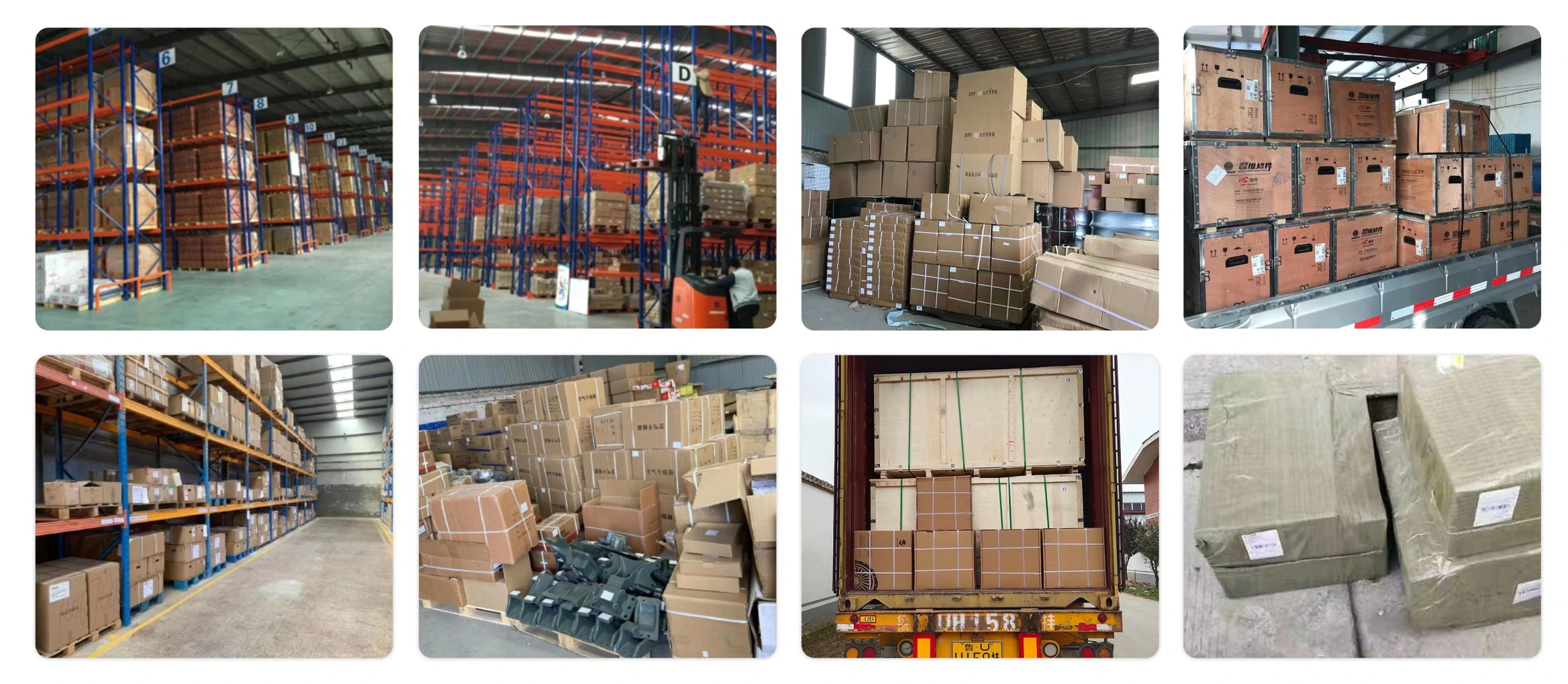
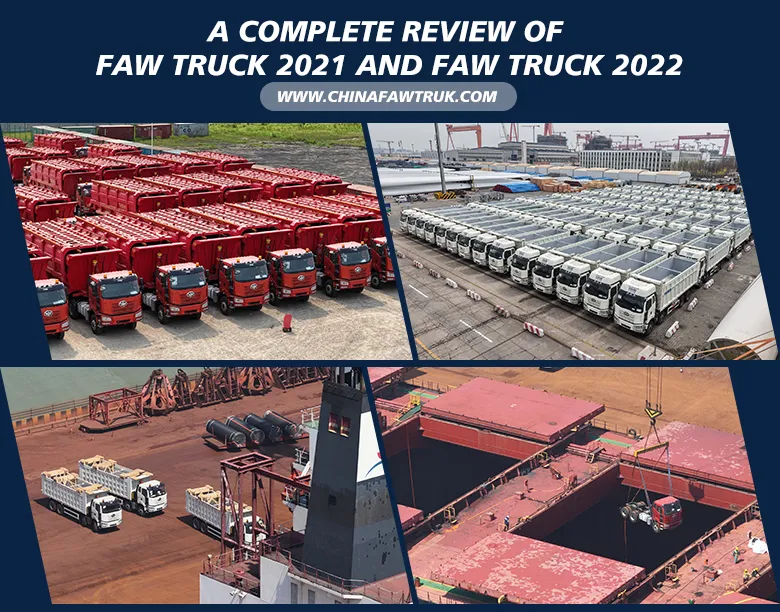
FAW parts, including the Cylinder Block Assembly, are packaged with care to ensure safe delivery. Each component is secured in protective materials to prevent damage during transit. The logistics network guarantees timely shipments worldwide, supporting efficient maintenance operations. Below is an image illustrating the standard packaging for FAW truck parts, showcasing the attention to detail in handling and storage.
This packaging approach minimizes the risk of corrosion or impact damage, ensuring that parts like the FAW Cylinder Block Assembly arrive in perfect condition. Customers can rely on FAW’s logistics for consistent quality and reliability.