FAW Russian Crankcase Ventilation System: 11 Vital Components for Unbeatable Engine Breathing
The FAW Russian Crankcase Ventilation System is the respiratory guardian of the CA3250P66K24L1TE5Z engine, managing internal pressures and reducing emissions. Designed for the extreme cold of the Russian Federation, this assembly prevents dangerous ice blockages and seal blowouts. This guide details the separator technology and piping architecture required for flawless operation.

FAW Russian Crankcase Ventilation System
The Oil-Gas Separator: Advanced Filtration Logic
The functional core of the entire assembly is the Oil-Gas Separator Assembly (Part No. 1014010-81D). Within the FAW Russian Crankcase Ventilation System, this component is tasked with a critical dual function: venting combustion gases while reclaiming suspended oil mist. As the engine runs, high-pressure “blow-by” gases escape past the piston rings into the crankcase. Without extraction, these gases would pressurize the engine, forcing oil out of seals and gaskets.
The separator utilizes inertial impaction technology to coalesce oil droplets from the gas stream. In the Russian Arctic, this process is complicated by condensation. Water vapor created during combustion can mix with oil to form a thick, yellow sludge known as emulsion. The FAW Russian Crankcase Ventilation System is engineered with large internal passages and specific baffling to prevent this sludge from freezing and blocking the airflow, which is a common cause of engine failure in winter.
Maintaining the efficiency of the Oil-Gas Separator Assembly is vital for oil consumption control. If the separator fails to capture the oil, it is fed into the engine intake, where it is burned during combustion. This not only lowers the oil level but also coats the turbocharger compressor wheel and intercooler in a sticky residue, reducing thermal efficiency. The FAW Russian Crankcase Ventilation System minimizes this carryover, ensuring that only clean gas is recirculated or vented.
The mounting interface of the separator is sealed by the Gasket – Breather (Part No. 1014027-53D). This gasket must withstand the chemical aggression of hot engine oil and the physical stress of thermal expansion. In the FAW Russian Crankcase Ventilation System, a leak at this gasket would result in a messy external oil leak and potentially allow unfiltered air to enter the crankcase under vacuum conditions, accelerating internal wear.
Piping Dynamics: Hoses and Return Lines
Transporting the separated fluids requires a network of robust hoses, specifically the Oil Return Pipe (Part No. 1014019-55R) and the Breather Pipe (Part No. 1014017-55R). In the context of the FAW Russian Crankcase Ventilation System, material selection for these hoses is non-negotiable. Standard rubber hoses turn brittle and glass-like when the temperature drops to -40°C. Engine vibration would cause such hoses to shatter or crack, leading to leaks.
FAW utilizes a specialized synthetic rubber compound, often reinforced with internal braiding, to ensure these pipes remain flexible in extreme cold. The Oil Return Pipe is particularly critical; it channels the reclaimed liquid oil back into the sump. If this pipe becomes kinked or blocked by ice, the separator will flood, eventually forcing a massive amount of oil into the intake. The design of the FAW Russian Crankcase Ventilation System ensures a steep gravity drain angle to prevent pooling.
The Breather Pipe manages the venting of the cleaned gases. In open systems, it directs fumes to the atmosphere; in closed systems, it routes them to the intake. For the FAW Russian Crankcase Ventilation System, ensuring this pipe is free of obstruction is a primary safety check. A blocked breather pipe will cause the dipstick to pop out and oil to spray over the hot engine bay due to excessive internal pressure buildup.
Securing these hoses are the Worm Drive Hose Clamp Type B (Part Nos. CQ67622B and CQ67650B). Unlike spring clamps which can lose tension over time, worm drive clamps allow for positive, adjustable torque. This is essential for the FAW Russian Crankcase Ventilation System where hose diameters may shrink slightly in the cold. Mechanics must ensure these clamps are tight but not over-torqued to the point of cutting into the protective hose layer.
Mounting Stability: Brackets and Bolts
To prevent the long hoses from chafing or vibrating loose, the assembly employs specific supports like the Oil Return Pipe Bracket (Part No. 1014027-81D) and the Breather Pipe Bracket (Part No. 1014018-81D). The FAW Russian Crankcase Ventilation System operates in a high-vibration environment. Without these rigid supports, the harmonic resonance of the diesel engine would fatigue the hose connections, leading to premature failure.
These brackets are secured using Hexagon Flange Bolts (Part Nos. Q1841020 and Q1840820). The flange head design is crucial for the FAW Russian Crankcase Ventilation System as it eliminates the need for separate washers, which can be dropped and lost during field maintenance. The wide flange distributes the clamping load effectively, ensuring the brackets stay firmly planted against the engine block or chassis rail.
The connection of the separator itself often uses the Connecting Bolt (Part No. 1014014-81D). This is a specialized hollow bolt (banjo bolt) or a high-strength stud designed to handle the hydraulic flow or structural load. In the FAW Russian Crankcase Ventilation System, proper torque on these bolts is essential. Loose bolts lead to vacuum leaks, while over-tightening can strip the threads in the aluminum housings common in modern ventilation components.
Surface protection on these metal parts is also a priority. The brackets and bolts in the FAW Russian Crankcase Ventilation System are treated with zinc-nickel or similar plating to resist the heavy salting of Russian roads. Corrosion here could lead to a bracket snapping, allowing a hose to fall against the hot exhaust manifold, posing a significant fire risk to the vehicle.
Component Breakdown List
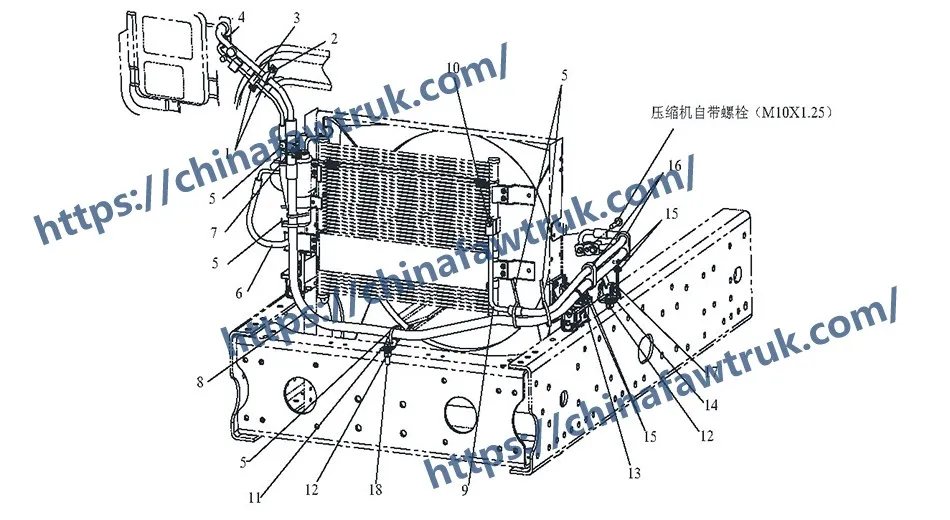
The following table lists the complete parts breakdown for the FAW Russian Crankcase Ventilation System. Fleet managers should use these specific part numbers to ensure that replacement hoses and separators meet the cold-weather specifications required for the CA3250P66K24L1TE5Z.
| No. |
Part Number |
Part Name |
Qty |
| 1 |
1014027-53D |
Gasket – Breather |
1 |
| 2 |
1014010-81D |
Oil-Gas Separator Assembly |
1 |
| 3 |
CQ67622B |
Worm Drive Hose Clamp Type B |
2 |
| 4 |
1014019-55R |
Oil Return Pipe |
1 |
| 5 |
1014027-81D |
Oil Return Pipe Bracket |
1 |
| 6 |
Q1841020 |
Hex Flange Bolt (Coarse/Standard) |
1 |
| 7 |
1014014-81D |
Connecting Bolt |
2 |
| 8 |
CQ67650B |
Worm Drive Hose Clamp Type B |
1 |
| 9 |
1014017-55R |
Breather Pipe |
1 |
| 10 |
1014018-81D |
Breather Pipe Bracket |
1 |
| 11 |
Q1840820 |
Hex Flange Bolt (Coarse/Standard) |
1 |
Diagnostics: Preventing Ice and Sludge Blockages
The most dangerous failure mode for the FAW Russian Crankcase Ventilation System is freezing. In winter, moisture from short run cycles condenses in the separator and hoses. If this water freezes, it blocks the ventilation path. Mechanics must regularly inspect the Oil Return Pipe for signs of yellow sludge or ice. Heating the pipe or insulating it may be necessary in extreme northern latitudes to maintain flow.
Check the condition of the Oil-Gas Separator Assembly diaphragm (if equipped internally). If the separator is clogged with carbon deposits, crankcase pressure will rise. This can be diagnosed by checking for excessive “blow-by” pressure at the oil filler cap. A healthy FAW Russian Crankcase Ventilation System should maintain a slight vacuum or neutral pressure; puffing smoke indicates a blockage or worn engine rings.
Finally, verify the tightness of all Worm Drive Hose Clamps. Cold flow of the rubber hoses can cause connections to loosen over time. A loose hose on the suction side can draw in dust, while a loose hose on the pressure side will leak oily fumes into the cabin. Periodic retightening ensures the FAW Russian Crankcase Ventilation System remains a closed loop, protecting both the engine and the environment.
Conclusion: Essential for Arctic Operations
The FAW Russian Crankcase Ventilation System is more than just emissions equipment; it is a critical survival system for the engine in cold climates. By effectively separating oil from gases and preventing pressure buildup, it safeguards the main seals and turbocharger from damage. Every component, from the freeze-resistant hoses to the inertial separator, plays a vital role.
For fleet operators, understanding the maintenance needs of this system is key to avoiding winter breakdowns. Neglecting the FAW Russian Crankcase Ventilation System can lead to frozen breathers and catastrophic oil loss. By using genuine FAW parts and performing regular inspections for sludge and ice, you ensure that your CA3250P66K24L1TE5Z dump truck remains reliable and efficient, no matter how low the mercury drops.
Packaging and Logistics
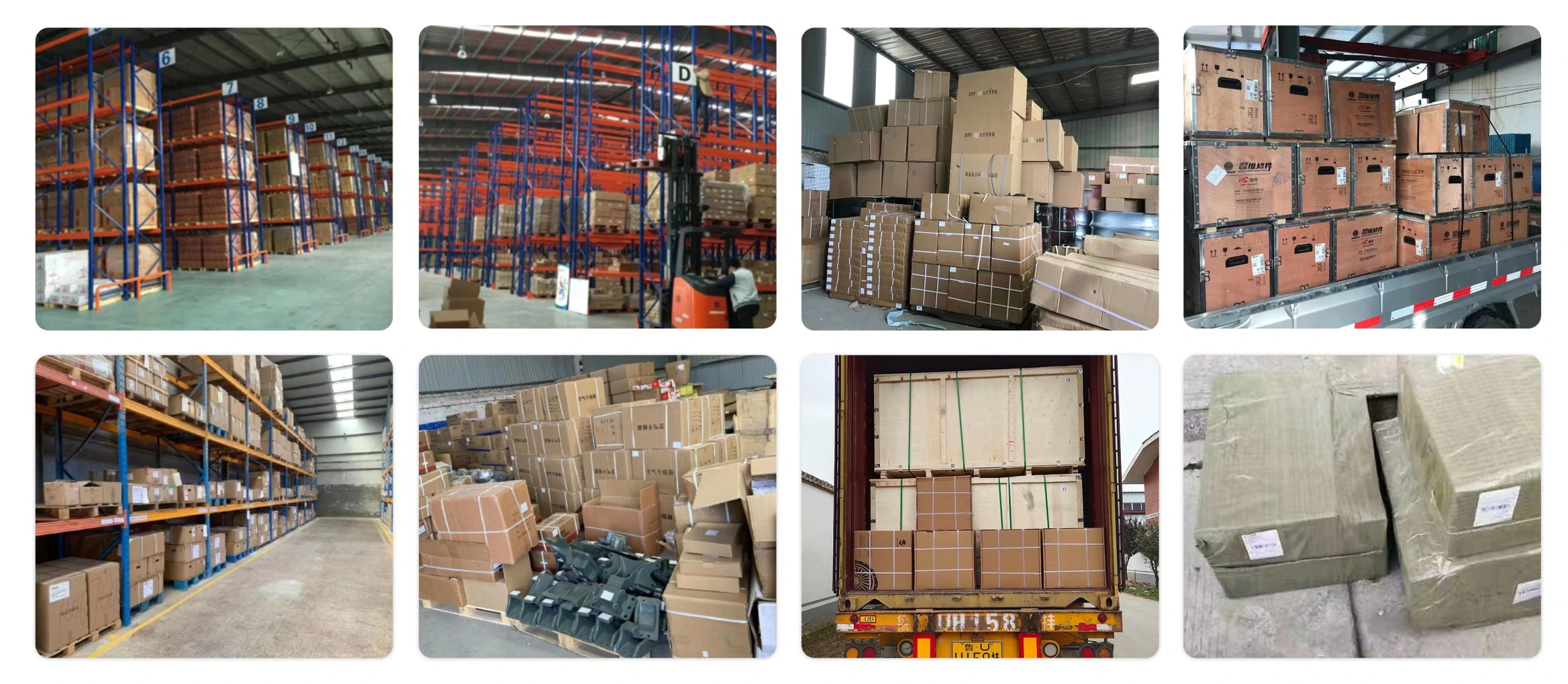
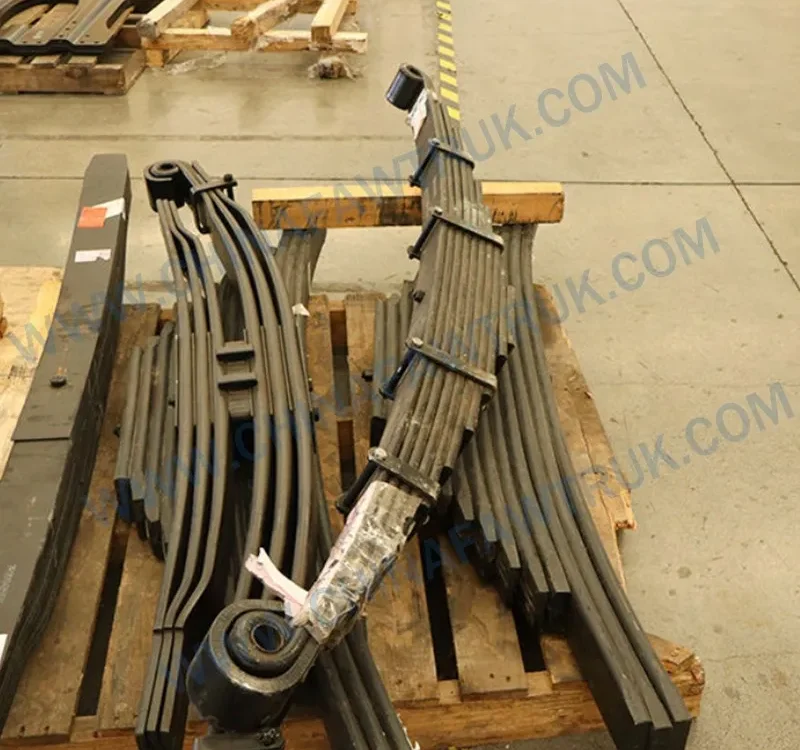
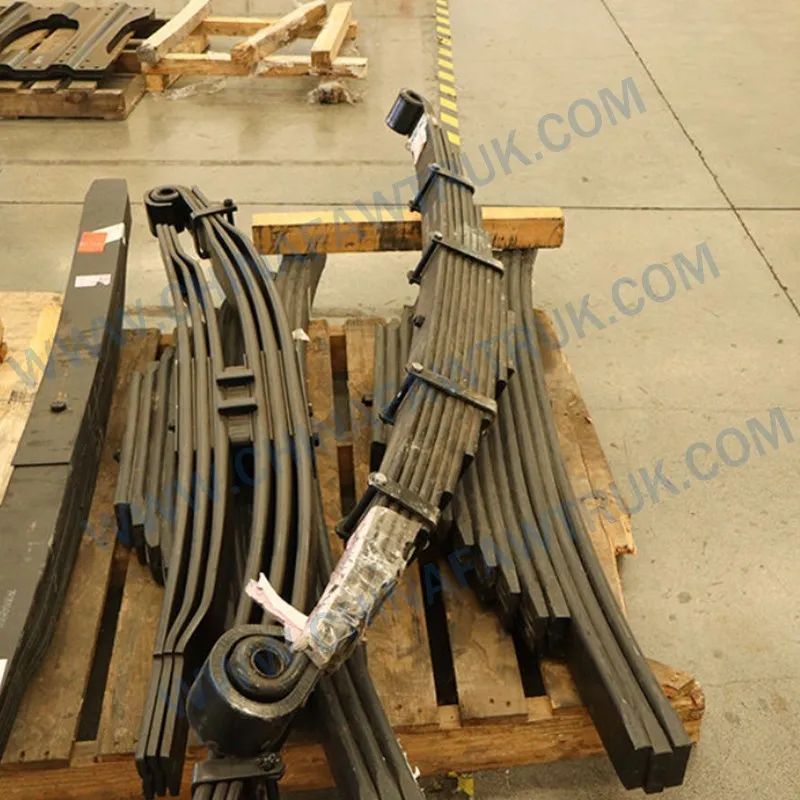
FAW parts, including the Cylinder Block Assembly, are packaged with care to ensure safe delivery. Each component is secured in protective materials to prevent damage during transit. The logistics network guarantees timely shipments worldwide, supporting efficient maintenance operations. Below is an image illustrating the standard packaging for FAW truck parts, showcasing the attention to detail in handling and storage.
This packaging approach minimizes the risk of corrosion or impact damage, ensuring that parts like the FAW Cylinder Block Assembly arrive in perfect condition. Customers can rely on FAW’s logistics for consistent quality and reliability.