by 


This is a complete technical guide to the FAW J6P Dashboard (Model 5310020-B27) for the FAW Jiefang CA3250P66K2L1T1E 6×4 dump truck. This deconstruction analyzes the 6 serviceable component types, detailing the main structural body and the complex, integrated network of HVAC air ducts.

The FAW J6P Dashboard is the central command and control unit of the vehicle’s cab. It is far more than a simple trim piece; it is a complex, structural component that serves as the foundation for the instrument cluster, all driver-facing function switches, the audio system, and the entire HVAC (Heating, Ventilation, and Air Conditioning) control interface. In a heavy-duty dump truck, the dashboard must be exceptionally robust.
This deconstruction will analyze the key serviceable components of the FAW J6P Dashboard, focusing on the ‘Dashboard main body assy’ (Comp 1) and the critical network of air ducts that are integrated within it. A properly installed, vibration-free FAW J6P Dashboard is essential for driver comfort, concentration, and the longevity of the sensitive electronic components it houses. We will explore every part of this FAW J6P Dashboard module.
This component is the primary structural foundation of the FAW J6P Dashboard. It is the large, single-piece molding that defines the cab’s interior-facing architecture and supports all other components.
1. Component: ‘Dashboard main body assy’ (5310020-B27) – Qty 1
This (Comp 1) is the main structural skeleton. The Structural Logic requires this component to be incredibly rigid. It is typically manufactured using a high-pressure injection molding process with a durable polymer blend (like polypropylene or ABS) that often includes a steel subframe or reinforcement beam embedded within. This subframe is the crucial anchor point that bolts the entire FAW J6P Dashboard to the cab’s steel firewall.
The Ergonomic Logic is also critical. The main body is designed with a “wrap-around” contour, placing the instrument cluster directly in the driver’s line of sight and the function switch panel (for PTO, diff locks, etc.) within easy reach. The surface of the FAW J6P Dashboard is treated with a specific, low-glare texture to prevent dangerous reflections from the sun or headlights onto the windshield.
2. Component: Failure Modes and Serviceability
While it is a single assembly, its failure modes are complex. Common failures include stress cracks from vibration (especially around the heavy instrument cluster or stereo), broken switch mounting tabs, or warping from long-term UV/heat exposure. Servicing the FAW J6P Dashboard is a high-labor task, as it often requires removing the steering wheel, A-pillar trim, and center console. A failure in the main structural body (Comp 1) almost always necessitates a complete replacement. This component is the foundation for all in-cab electrical modules.
This group of components is the “respiratory system” of the cab, integrated directly into the FAW J6P Dashboard structure. It is responsible for distributing all heated, cooled, and fresh air.
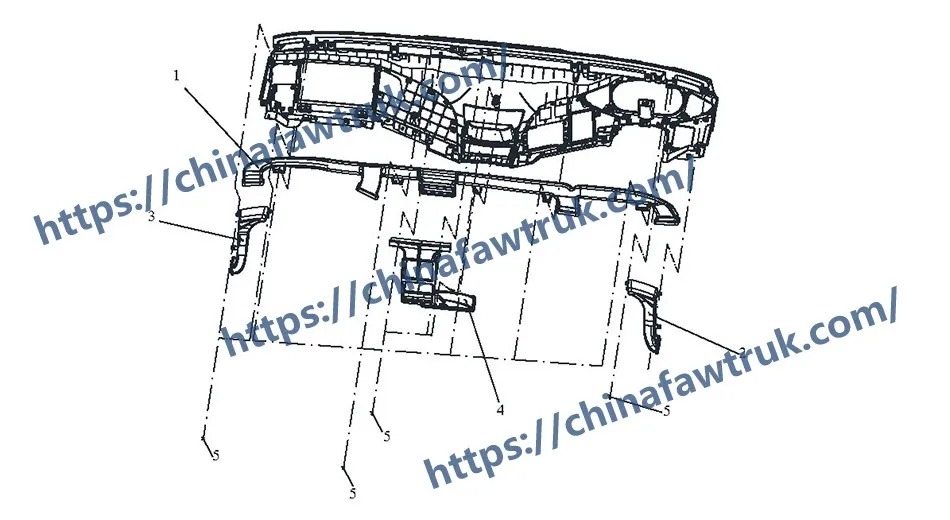
1. Component: ‘Face air duct assy’ (8102010-B27-C00) – Qty 1
This (Comp 2) is the main duct assembly that channels air from the central HVAC plenum to the driver and passenger-facing dash vents. It is a large, complex-molded polypropylene piece. The Sealing Logic is critical: it must form a perfect, foam-gasketed seal with the main HVAC box. A leak here results in air “whistling” behind the FAW J6P Dashboard and a significant loss of airflow to the vents.
2. Component: ‘Center transition duct assy’ (8102050-B27-C00) – Qty 1
This (Comp 4) is a crucial Y-splitter or adapter. It takes the main airflow and diverts it to multiple locations simultaneously, most often to the main windshield (defrost) and the floor (heat). Its internal flaps (not listed) are what control this “mode” of airflow. A failure in this transition duct can result in a system “stuck” on one mode, a common HVAC problem.
3. Component: ‘Left/Right side door defrost transition duct assy’ (8102065/070-B27-C00) – Qty 1 each
This (Comp 3, 5) is a specialized duct system. The Side Window Defrost Logic is a critical safety feature. These small-diameter ducts run from the main HVAC plenum, through the extreme left and right ends of the FAW J6P Dashboard, and connect to dedicated vents aimed at the side windows. This is essential for a dump truck, as it ensures the driver’s view of the side mirrors is not obscured by fog or frost. This is a key safety function of the FAW J6P Dashboard‘s integrated design.
The integration of this entire duct network into the main FAW J6P Dashboard (Comp 1) simplifies factory assembly but makes service complex. A rattling, buzzing, or whistling noise from the dash area is often a loose duct connection, where a foam seal has compressed or a mounting screw has backed out.
This final group includes the hardware specified for securing the HVAC ducting. A rigid, vibration-free installation is critical for the long-term, quiet operation of the FAW J6P Dashboard.
1. Component: ‘Cross recessed pan head self-tapping screw and flat washer assy’ (CQ2214216F6) – Qty 12
This (Comp 6) is the specified fastener. The Vibration Damping Logic is key. These 12 screws, which feature an integrated flat washer, are used to secure the various duct assemblies (Comp 2, 3, 4, 5) to the plastic mounting bosses on the main ‘Dashboard main body assy’ (Comp 1).
The Fastener Logic is specific: the “self-tapping” design allows the screw to cut its own threads into the plastic boss, creating a tight, vibration-proof fit that resists backing out. The integrated washer is crucial, as it distributes the clamping load over a wide area, preventing the screw head from cracking the plastic duct’s mounting flange. This is a common point of failure if a technician over-torques a standard screw.
While the BOM only lists these 12 screws, it is implied that the main FAW J6P Dashboard (Comp 1) is secured to the cab’s steel firewall by a series of much larger, high-strength bolts and nuts (not listed). These 12 screws are purely for the internal components. A single loose screw in this system can cause an incredibly annoying, hard-to-find rattle or buzz, which is why their correct installation is critical during any service of the FAW J6P Dashboard.
The following table provides the complete, detailed breakdown of all 6 component types in the FAW J6P Dashboard assembly for the FAW Jiefang CA3250P66K2L1T1E 6×4 dump truck. This list is essential for ordering spare parts and performing a complete service of the FAW J6P Dashboard.
| Mark | Part No. | Part Name | Quantity |
|---|---|---|---|
| 1 | 5310020-B27 | Dashboard main body assy | 1 |
| 2 | 8102010-B27-C00 | Face air duct assy | 1 |
| 3 | 8102065-B27-C00 | Left side door defrost transition duct assy | 1 |
| 4 | 8102050-B27-C00 | Center transition duct assy | 1 |
| 5 | 8102070-B27-C00 | Right side door defrost transition duct assy | 1 |
| 6 | CQ2214216F6 | Cross recessed pan head self-tapping screw and flat washer assy | 12 |
The specifications for the FAW J6P Dashboard are defined by its function as a single, integrated structural and ergonomic module that houses all driver controls and HVAC ducting.
| Vehicle Application | FAW Jiefang CA3250P66K2L1T1E 6×4 Dump Truck |
| System Group | FAW J6P Dashboard |
| Primary Logic | Structural support for instrumentation and HVAC air distribution |
| Main Body P/N | 5310020-B27 |
| Integrated HVAC Ducts | Face, Center, Left Door, Right Door |
| Safety Feature | Side door defrost ducts (8102065-B27-C00, 8102070-B27-C00) |
| Hardware | CQ2214216F6 (Self-tapping screw & washer assy) |
| Total Component Types | 6 |
| Associated System | Cab Interior / HVAC System. The FAW J6P Dashboard is the core. |
FAW parts, including the Cylinder Block Assembly, are packaged with care to ensure safe delivery. Each component is secured in protective materials to prevent damage during transit. The logistics network guarantees timely shipments worldwide, supporting efficient maintenance operations. Below is an image illustrating the standard packaging for FAW truck parts, showcasing the attention to detail in handling and storage.
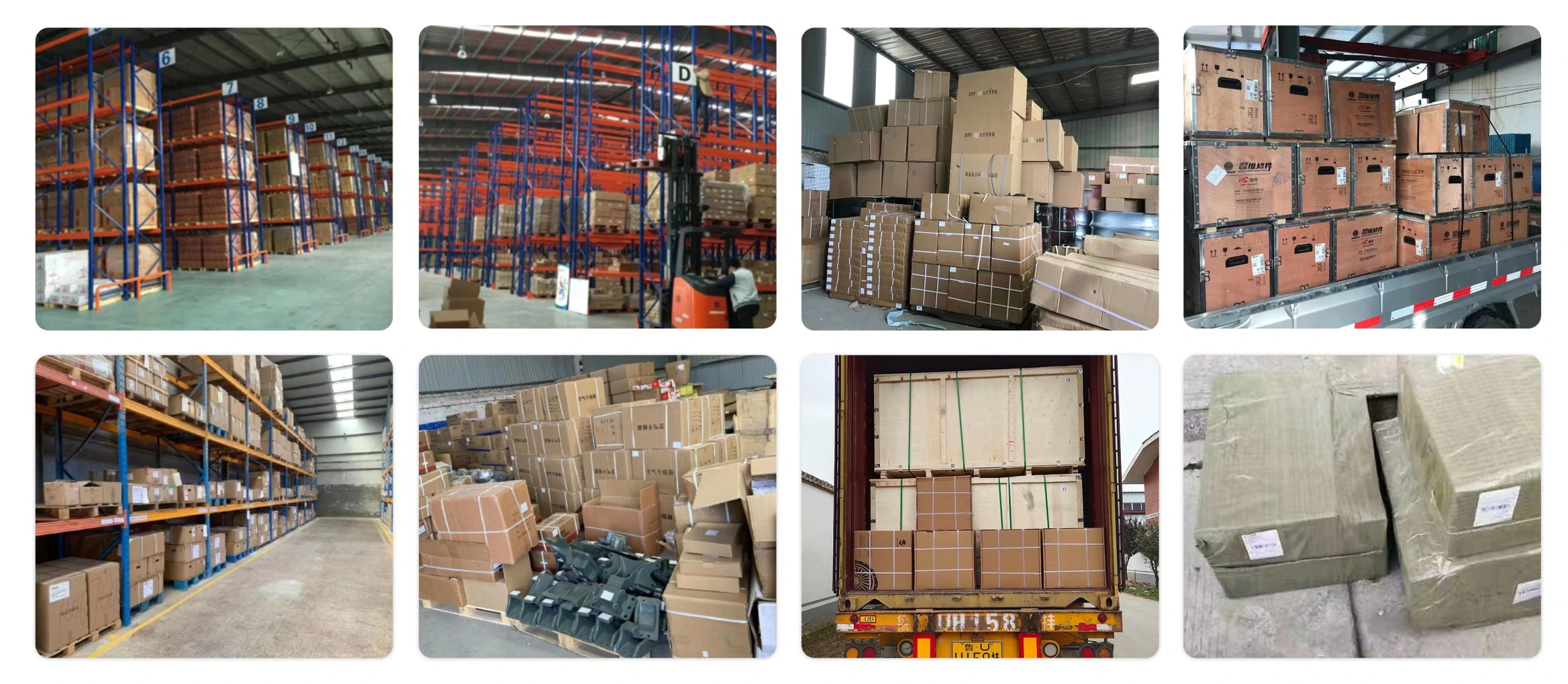
This packaging approach minimizes the risk of corrosion or impact damage, ensuring that parts like the FAW Cylinder Block Assembly arrive in perfect condition. Customers can rely on FAW’s logistics for consistent quality and reliability.