Dispositivo de soporte hidráulico para cabina: Estableciendo el punto de anclaje inferior para 6 Elementos de sujeción críticos en operaciones de inclinación en el Ártico
El Dispositivo de soporte hidráulico para cabina (Instalación inferior) es la interfaz mecánica fundamental que ancla el mecanismo de elevación de la cabina al chasis del camión volquete FAW CA3250P66K24L1TE5Z. En el duro entorno operativo de la Federación de Rusia, donde se debe realizar el mantenimiento de rutina del motor independientemente de las temperaturas bajo cero, la fiabilidad del sistema de inclinación de la cabina no es negociable. Este conjunto específico se centra en el punto de fijación inferior del cilindro hidráulico., una zona de alta tensión que soporta todo el peso de la cabina durante el proceso de inclinación. Utilizando pasadores mecanizados con precisión, cojines suaves que amortiguan las vibraciones, y hardware de bloqueo especializado, el Dispositivo de soporte hidráulico para cabina garantiza que la geometría de elevación permanezca estable y segura, Prevención de desprendimientos catastróficos durante los intervalos de mantenimiento..
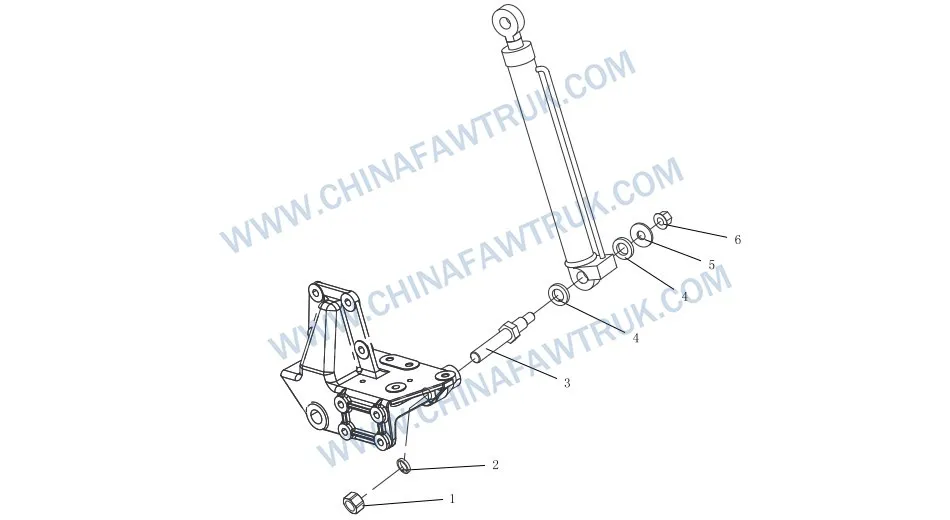
Dispositivo de soporte hidráulico para cabina
| No. |
Número de pieza |
Nombre de la pieza |
Cantidad |
| 1 | CQ34124 | Tuerca hexagonal | 1 |
| 2 | Q40324 | Arandela de resorte | 1 |
| 3 | 5002023-76A | Eje del pasador – Punto de anclaje inferior del cilindro hidráulico | 1 |
| 4 | 5002027-A01 | Cojín suave – Punto de anclaje inferior del cilindro hidráulico | 2 |
| 5 | Q40218 | Lavadora grande | 1 |
| 6 | Q32918 | Tipo 1 Tuerca de seguridad hexagonal con inserción no metálica | 1 |
La lógica del pivote estructural
El Dispositivo de soporte hidráulico para cabina Depende completamente de la integridad de su punto de pivote inferior para funcionar de forma segura.. Este conjunto no es un soporte estático.; Es una bisagra dinámica que debe permitir una rotación significativa mientras soporta cargas que pueden exceder el peso estático de la cabina durante la fase inicial de elevación.. El componente central que facilita esta acción es el Eje del pasador – Punto de anclaje inferior del cilindro hidráulico (Número de pieza. 5002023-76A). Este eje está rectificado con precisión a partir de acero de alta resistencia., Diseñado para soportar las inmensas fuerzas de corte generadas cuando el cilindro hidráulico empuja la cabina hacia arriba contra la gravedad y la resistencia del viento..
En el contexto de la Dispositivo de soporte hidráulico para cabina, El acabado superficial del eje del pasador es fundamental.. Debe ser lo suficientemente suave como para permitir la rotación sin atascarse., pero lo suficientemente resistente como para resistir el desgaste bajo carga. El “76A” La especificación implica un tratamiento térmico específico o un proceso de endurecimiento de la superficie., probable nitruración o endurecimiento por inducción, para proporcionar una capa exterior resistente al desgaste manteniendo al mismo tiempo una dureza, núcleo dúctil. Esta combinación es esencial para la Dispositivo de soporte hidráulico para cabina para sobrevivir a las cargas de choque de la conducción todoterreno cuando la cabina está bloqueada, así como la fricción de rotación cuando la cabina se inclina para realizar el servicio.
Además, El eje del pasador actúa como mecanismo de transferencia de carga.. La fuerza hidráulica generada por el cilindro se transmite a través del ojo del vástago del cilindro., en este pin, y luego en los soportes del chasis. Cualquier falla en el Dispositivo de soporte hidráulico para cabina pasador resultaría en el colapso inmediato del cilindro de elevación, potencialmente dejar caer la cabina peligrosamente. Por lo tanto, Las tolerancias dimensionales de este pasador están estrictamente controladas para garantizar un ajuste preciso que distribuya la carga uniformemente., Prevenir concentraciones de tensión que podrían provocar fatiga del metal durante la vida útil del vehículo..
Tecnología de aislamiento de vibraciones y casquillos
Un rasgo definitorio de la Dispositivo de soporte hidráulico para cabina es su integración del aislamiento de vibraciones. El conjunto utiliza dos unidades del Cojín suave – Punto de anclaje inferior del cilindro hidráulico (Número de pieza. 5002027-A01). Estos cojines actúan como interfaz entre el pasador de acero y el soporte de montaje o el ojo del cilindro.. Su papel principal dentro del Dispositivo de soporte hidráulico para cabina es absorber las vibraciones de alta frecuencia transmitidas desde el chasis antes de que puedan alcanzar los sellos hidráulicos del cilindro de elevación. Sin estos cojines, El contacto rígido de metal sobre metal transmitiría cada imperfección de la carretera directamente al cilindro., lo que lleva a un rápido desgaste del sello y fugas de fluido.
La composición del material de estos suaves cojines está diseñada específicamente para los rusos. “Zona Fría.” Los casquillos de goma estándar se vuelven duros y quebradizos a -40°C, pierden su capacidad para amortiguar las vibraciones y, a menudo, se agrietan bajo carga. El Dispositivo de soporte hidráulico para cabina Emplea una mezcla especializada de elastómero o poliuretano que conserva la flexibilidad en condiciones criogénicas.. Esto asegura que las características de amortiguación del Dispositivo de soporte hidráulico para cabina permanecer constante durante todo el año, Proteger los componentes hidráulicos de daños por impacto durante las operaciones invernales en condiciones heladas., caminos de transporte llenos de baches.
Además, Estos cojines desempeñan un papel fundamental en la alineación.. Al proporcionar un ligero grado de cumplimiento, ellos permiten el Dispositivo de soporte hidráulico para cabina para acomodar desalineaciones menores entre los soportes del chasis y la estructura de la cabina. Esta propiedad de autoalineación reduce la carga lateral en el vástago del cilindro hidráulico., que es la causa principal de varillas dobladas y fallas en el sello.. Manteniendo las fuerzas que actúan sobre el cilindro puramente axiales., el Dispositivo de soporte hidráulico para cabina Maximiza la vida útil de todo el sistema de inclinación..
Seguridad de Sujeción y Distribución de Carga
La integridad estructural del Dispositivo de soporte hidráulico para cabina Se mantiene mediante un sistema de sujeción robusto diseñado para resistir el aflojamiento bajo vibraciones extremas.. La asamblea utiliza un Tipo 1 Tuerca de seguridad hexagonal con inserción no metálica (Número de pieza. Q32918). Esta no es una tuerca estándar.; Cuenta con un inserto de anillo de nailon o polímero que se deforma elásticamente sobre las roscas del perno.. Este ajuste de interferencia crea un par predominante que evita que la tuerca retroceda., incluso bajo la fuerte sacudida de un motor diésel o conducción todoterreno. En el Dispositivo de soporte hidráulico para cabina, Esta característica de bloqueo es una redundancia de seguridad crítica..
Trabajar en conjunto con la contratuerca es el Lavadora grande (Número de pieza. Q40218). El uso de un “Grande” especificación de la lavadora en el Dispositivo de soporte hidráulico para cabina es deliberado. Proporciona una superficie significativamente mayor para distribuir la fuerza de sujeción de la tuerca contra la cara suave del cojín o del soporte.. Esto evita que la tuerca se incruste en el material., lo que conduciría a una pérdida de precarga y eventualmente a una articulación floja. La arandela grande también actúa como escudo., Proteger el material del casquillo de la abrasión directa durante el proceso de apriete..
La asamblea también enumera un estándar Tuerca hexagonal (Número de pieza. CQ34124) y Arandela de resorte (Número de pieza. Q40324), probablemente utilizado en el lado opuesto o en un punto de retención secundario del pasador. La arandela elástica proporciona tensión activa., Compensar la contracción térmica de las piezas metálicas en el Dispositivo de soporte hidráulico para cabina durante el enfriamiento rápido. Este enfoque de sujeción de múltiples capas, utilizando la fricción, bloqueo mecánico, y tensión activa: garantiza que el punto de anclaje inferior permanezca seguro durante la vida operativa del vehículo..
Protocolo de mantenimiento e inspección
Inspección de rutina del Dispositivo de soporte hidráulico para cabina es esencial para la seguridad. El modo de falla más común es la degradación del Cojín suave. Los operadores deben inspeccionar visualmente estos cojines en busca de grietas., lágrimas, o conjunto de compresión excesivo. Si el eje del pasador parece estar descentrado dentro del buje, o si hay contacto de metal con metal visible, los cojines del Dispositivo de soporte hidráulico para cabina han fallado y deben ser reemplazados inmediatamente para evitar daños al cilindro..
El Eje del pasador Se debe comprobar si hay signos de corrosión o “pisando” (ranuras de desgaste). Mientras el pasador está endurecido, la entrada de polvo abrasivo de minería puede actuar como una pasta abrasiva, desgastando el diámetro del eje con el tiempo. Un alfiler desgastado en el Dispositivo de soporte hidráulico para cabina crea juego excesivo, lo que provoca ruidos metálicos cuando la cabina se inclina y posibles atascos.. Lubricación, si hay un accesorio zerk en la carcasa (aunque a menudo estos son diseños de lubricante seco), debe realizarse de acuerdo con el programa de servicio severo.
Finalmente, el par en el Tipo 1 Tuerca de seguridad hexagonal con inserción no metálica debe ser verificado. Sin embargo, Las tuercas de seguridad generalmente no deben reutilizarse después de quitarlas., ya que el inserto de nailon pierde su poder de agarre. si el Dispositivo de soporte hidráulico para cabina está desarmado por cualquier motivo, Siempre se deben instalar nuevas tuercas de seguridad.. Los administradores de flotas deben asegurarse de que se utilice el grado correcto de hardware.; sustituir una tuerca estándar por la contratuerca especificada compromete la seguridad de todo el sistema de inclinación de la cabina.
Conclusión: La base del acceso seguro
El Dispositivo de soporte hidráulico para cabina (Instalación inferior) Es un montaje engañosamente simple que conlleva una gran responsabilidad.. que comprende solo 6 tipos de componentes, Forma el anclaje crítico para el sistema de elevación de la cabina.. Su diseño equilibra la necesidad de un soporte estructural rígido con el requisito de aislamiento y articulación de vibraciones..
Para operadores de flotas, el Dispositivo de soporte hidráulico para cabina es un punto de control crítico para la seguridad. Asegurándose de que el pasador, cojines, y los accesorios de bloqueo están en buenas condiciones permiten un acceso seguro y confiable al motor, que es fundamental para mantener el sistema de propulsión del camión.. Respetando la lógica de ingeniería de este conjunto y utilizando piezas de repuesto originales FAW., Los operadores protegen a sus técnicos y garantizan la disponibilidad a largo plazo de sus vehículos..
Embalaje y Logística
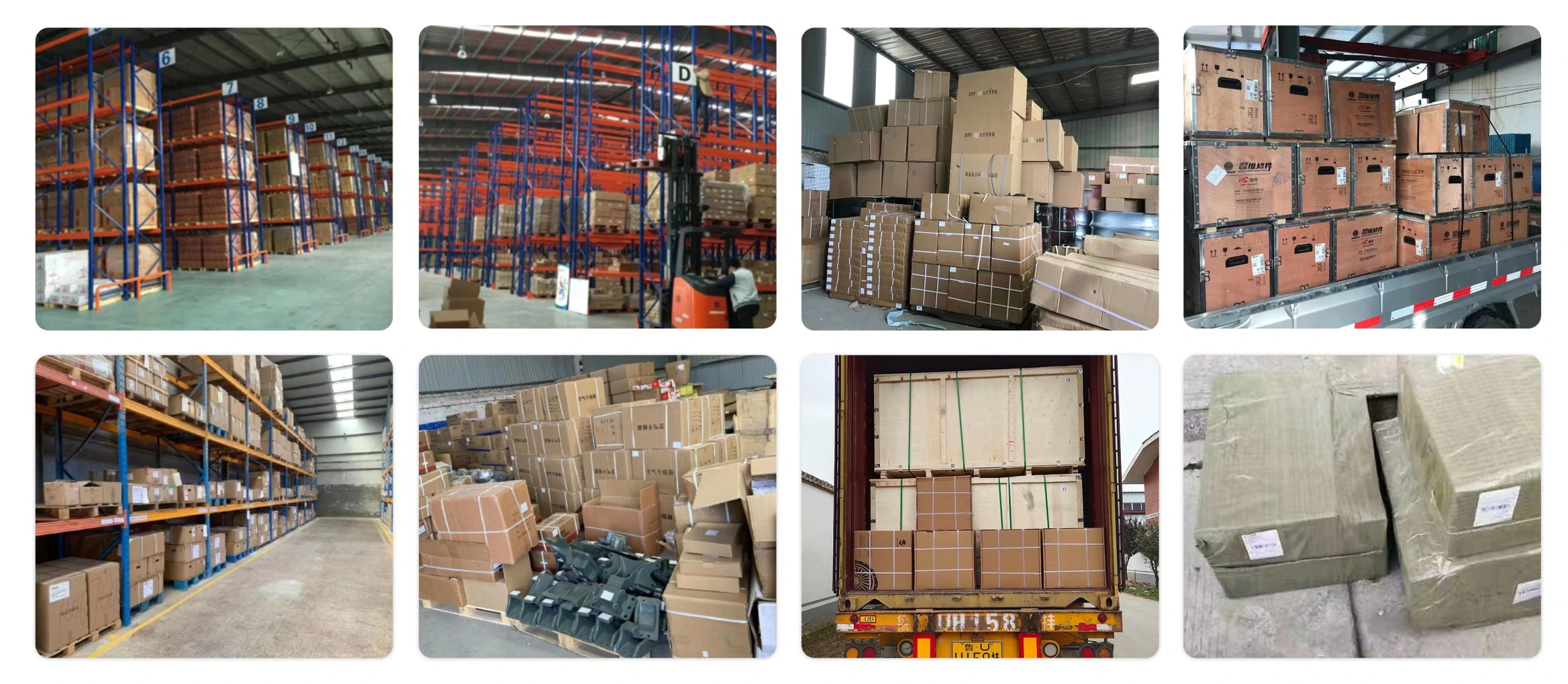
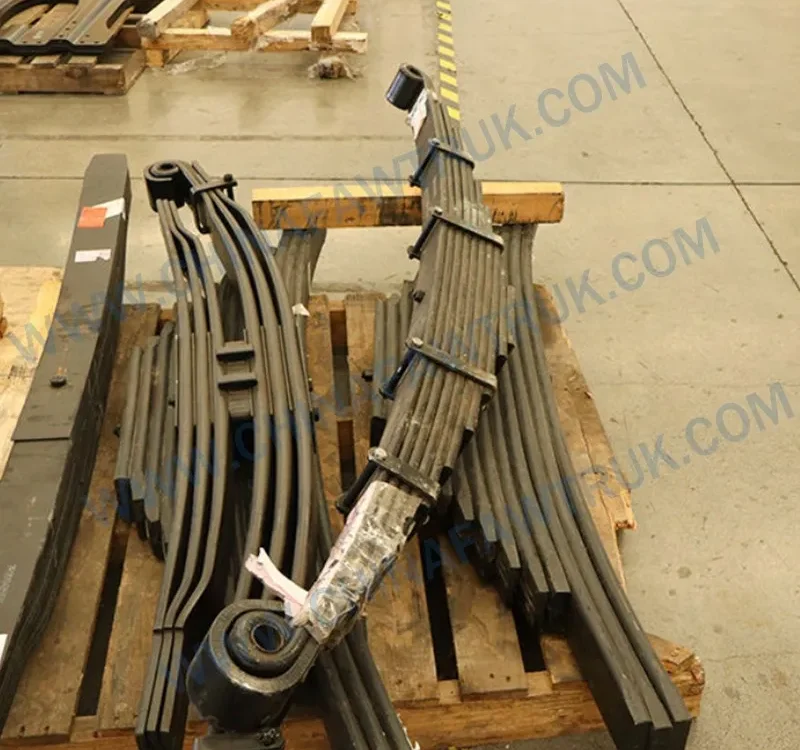
piezas FAW, incluido el conjunto del bloque de cilindros, Se empaquetan con cuidado para garantizar una entrega segura.. Cada componente está asegurado con materiales protectores para evitar daños durante el transporte.. La red logística garantiza envíos puntuales en todo el mundo., apoyando operaciones de mantenimiento eficientes. A continuación se muestra una imagen que ilustra el embalaje estándar de las piezas de camiones FAW., mostrando la atención al detalle en el manejo y almacenamiento.
Este enfoque de embalaje minimiza el riesgo de corrosión o daños por impacto., asegurando que piezas como el conjunto de bloque de cilindros FAW lleguen en perfectas condiciones. Los clientes pueden confiar en la logística de FAW para obtener calidad y confiabilidad constantes.