por 


Bienvenidos a la guía técnica definitiva para el Ventilación trasera FAW J6P, un componente vital para el FAW Jiefang CA3250P66K2L1T1E 6×4 camión volcado. Este análisis deconstruye la 3 Partes críticas que forman este conjunto.. Este sistema es esencial para la comodidad del operador., ecualización de presión, y proteger los sellos de la cabina.

El Ventilación trasera FAW J6P El montaje puede parecer una pieza sencilla., pero cumple una función crucial y compleja. Ubicado en la pared trasera de la cabina., Actúa como una válvula de retención unidireccional., Permitir que el aire escape de la cabina y al mismo tiempo evitar el polvo., agua, y escape de entrar. Esta guía desglosará el montaje., sus sujetadores especializados, y la lógica detrás de su diseño.
El componente principal de este sistema es el propio conjunto de ventilación.. Es un módulo prediseñado diseñado para una tarea específica y crítica.: gestionar la presión del aire.
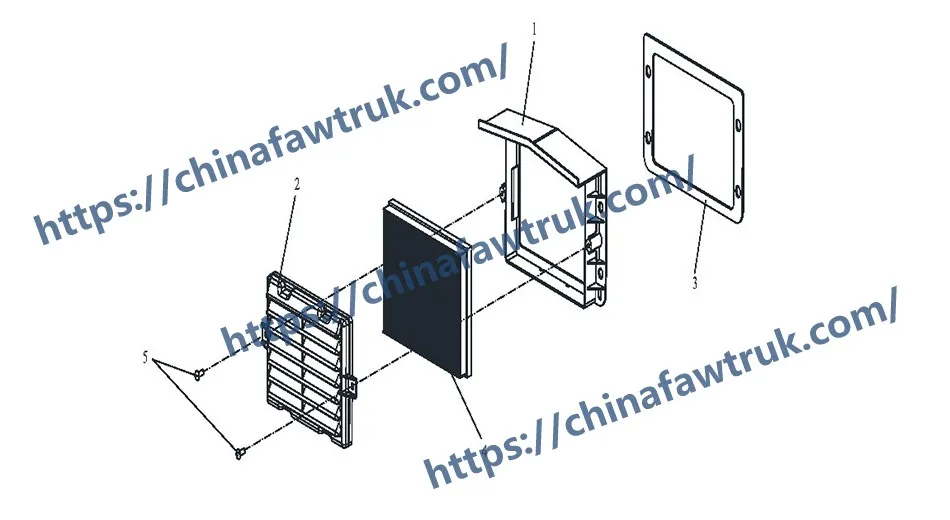
1. Componente: 'Conjunto de ventilación de aire trasera’ (5610010-A86-C00) – Cantidad 1
Este (compensación 1) es el completo Ventilación trasera FAW J6P asamblea. El número de pieza C00 significa una completa, unidad no reparable. No se pueden comprar las solapas internas ni los sellos por separado.; toda la unidad es la parte reparable.
La lógica de ecualización de presión es su función más importante.. Cuando un conductor cierra la puerta resistente de una cabina J6P, se comprime un gran volumen de aire. Sin camino de salida, Este pico de presión haría que la puerta fuera extremadamente difícil de cerrar y ejercería una tensión inmensa sobre los sellos de las ventanas y las juntas de las puertas..
El Ventilación trasera FAW J6P actúa como un puerto de escape. La presión repentina empuja las solapas internas para abrirlas., permitiendo que el aire escape instantáneamente. Esto neutraliza la presión., permitiendo que la puerta se cierre suavemente y de forma segura con el mínimo esfuerzo. Esta misma lógica se aplica al potente sistema HVAC del camión., darle al ventilador un lugar para ventilar el aire viciado cuando está en modo de aire fresco.
La lógica de la válvula unidireccional es lo que hace que esta pieza sea especial.. El Ventilación trasera FAW J6P no es solo un agujero; es una valvula check. Las solapas internas, típicamente hecho de caucho EPDM flexible, están diseñados para abrirse solo hacia afuera.
Este diseño es fundamental para un camión volquete.. Cuando el camión está en movimiento o en un sitio polvoriento, presión del aire exterior, viento, polvo, y el agua intentan constantemente entrar en la cabina. Las trampillas se mantienen cerradas gracias a esta presión externa., formando un sello hermético. Esto evita que el aire contaminado, agua del lavado a alta presión, y los gases de escape al ser forzados *a entrar* en la cabina, Garantizar un entorno limpio y seguro para el conductor..
Este grupo representa el sistema completo de fijación para el Ventilación trasera FAW J6P. La elección de los sujetadores es una decisión de ingeniería deliberada para manejar vibraciones y materiales mixtos..
1. Componente: 'Tornillo roscador de cabeza plana empotrada en cruz’ (CQ2714816F6) – Cantidad 1
Este (compensación 2) es el sujetador principal. es un “autorroscante” tornillo, lo que significa que está diseñado para cortar sus propios hilos en el material en el que se introduce..
2. Componente: 'Tuerca de plástico con inserto de orificio pasante’ (Q39805) – Cantidad 1
Este (compensación 3) es la contraparte femenina del tornillo. es un “tuerca de plastico,” a menudo llamado un “tuerca de ojal” o “tuerca de velocidad.” Está diseñado para insertarse primero en un orificio en la chapa de la cabina..
La lógica de materiales mixtos es la razón por la que se utiliza este sistema.. El Ventilación trasera FAW J6P (compensación 1) está hecho de plástico (probablemente ABS o polipropileno). Se fija al cuerpo de acero pintado de la cabina.. Un sistema de fijación de metal sobre metal sería problemático.
la tuerca de plastico (compensación 3) Se inserta en el cuerpo de acero de la cabina., proporcionando un no corrosivo, hilo de plástico no conductor. El tornillo autorroscante (compensación 2) luego pasa a través de la carcasa de ventilación de plástico y se enrosca *dentro* de la tuerca de plástico.
Esto aísla los tres componentes.. Evita que el tornillo raspe la pintura de la carrocería de la cabina. (lo que causaría oxidación) y evita que un tornillo de acero rompa la carcasa de plástico del Ventilación trasera FAW J6P. También previene la corrosión galvánica entre diferentes metales..
La lógica de amortiguación de vibraciones también es clave. Una conexión rígida de metal a metal transmitiría vibraciones y eventualmente se aflojaría.. el suave, naturaleza flexible de la tuerca de plástico (compensación 3) Actúa como fijador de roscas y amortiguador de vibraciones., Absorber golpes y evitar que el tornillo se salga.
La vida útil del Ventilación trasera FAW J6P Está definido por sus partes móviles y su entorno.. Comprender cómo falla es clave para un correcto diagnóstico y reemplazo.
La lógica del modo de falla es sencilla. El principal punto de falla son las aletas internas de EPDM.. Durante muchos años (8-10+), exposición constante al aire, ciclos de temperatura, y la flexión hará que la goma se endurezca, volverse quebradizo, o rasgar.
cuando esto sucede, las solapas ya no crearán un sello perfecto. El conductor puede informar síntomas como una corriente fría en el cuello., ruido excesivo en la carretera, o el olor a escape o polvo en la cabina. Esto indica que la válvula unidireccional ha fallado y todo el Ventilación trasera FAW J6P el conjunto debe ser reemplazado.
Un modo de falla secundario es el daño por impacto.. Los desechos del cuerpo del volquete o el movimiento de la carga pueden golpear el conjunto de ventilación., agrietando la carcasa de plástico (compensación 1). Esto también compromete el sello y requiere un reemplazo completo..
Service Logic está diseñado para un reemplazo rápido. Un técnico simplemente retira el revestimiento interior de la cabina, Localiza el único tornillo de cabeza cruzada. (compensación 2), y lo elimina. el viejo Ventilación trasera FAW J6P Luego se puede retirar el conjunto de la pared de la cabina..
Fundamentalmente, la tuerca de plastico (compensación 3) debe ser inspeccionado. Estas nueces suelen ser quebradizas con el tiempo y pueden romperse al retirarlas.. Es una buena práctica reemplazar la tuerca de plástico. (Q39805) y el tornillo (CQ2714816F6) cada vez un nuevo Ventilación trasera FAW J6P esta instalado. Esto asegura que la nueva ventilación esté asegurada con una nueva, a prueba de vibraciones, y sujetadores libres de corrosión, garantizando una reparación duradera.
La siguiente tabla proporciona la información completa, desglose detallado de todos 3 tipos de componentes en el Ventilación trasera FAW J6P asamblea (Sistema 137) Para FAW Jiefang CA3250P66K2L1T1E 6×4 camión volcado.
| Marca | Número de pieza. | Nombre de la pieza | Cantidad |
|---|---|---|---|
| 1 | 5610010-A86-C00 | Conjunto de ventilación de aire trasera | 1 |
| 2 | CQ2714816F6 | Tornillo autorroscante de cabeza plana empotrada en cruz | 1 |
| 3 | Q39805 | Tuerca de plástico con inserto de orificio pasante | 1 |
Las especificaciones para el Ventilación trasera FAW J6P se definen por su función como válvula de presión unidireccional para la cabina J6P.
| Solicitud de vehículo | FAW Jiefang CA3250P66K2L1T1E 6×4 Camión de la basura |
| Grupo de sistema | Ventilación trasera FAW J6P |
| Referencia de ensamblaje | 137 |
| Lógica primaria | Ecualización de presión de cabina & Válvula unidireccional |
| Componente central | 'Conjunto de ventilación de aire trasera’ (5610010-A86-C00) |
| Mecanismo de ventilación | Aletas internas de caucho EPDM (De una sola mano) |
| Material de la carcasa | Plástico ABS o polipropileno |
| Sistema de sujeción | Tuerca de inserción de plástico & Tornillo autorroscante |
| Utilidad | Reemplazable como un conjunto completo |
| Tipos de componentes totales | 3 |
| Sistema asociado | Estructura de la cabina & climatización |
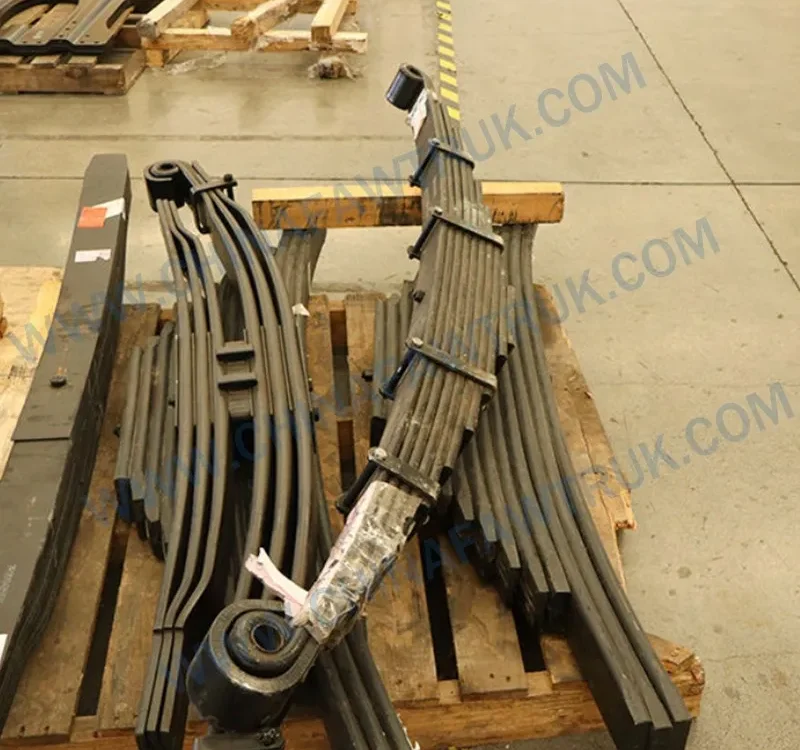
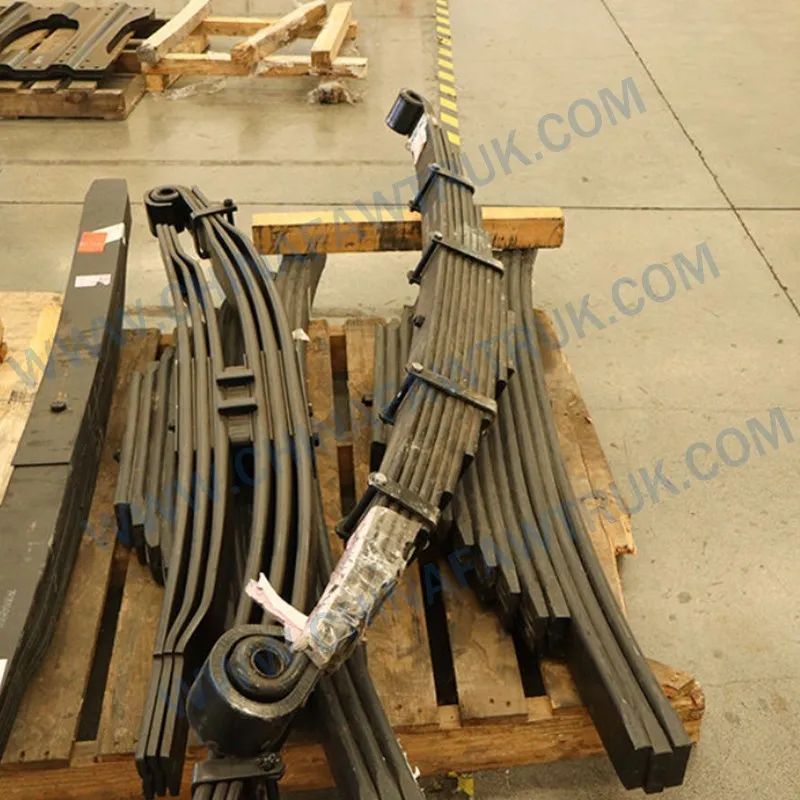
piezas FAW, incluido el conjunto del bloque de cilindros, Se empaquetan con cuidado para garantizar una entrega segura.. Cada componente está asegurado con materiales protectores para evitar daños durante el transporte.. La red logística garantiza envíos puntuales en todo el mundo., apoyando operaciones de mantenimiento eficientes. A continuación se muestra una imagen que ilustra el embalaje estándar de las piezas de camiones FAW., mostrando la atención al detalle en el manejo y almacenamiento.
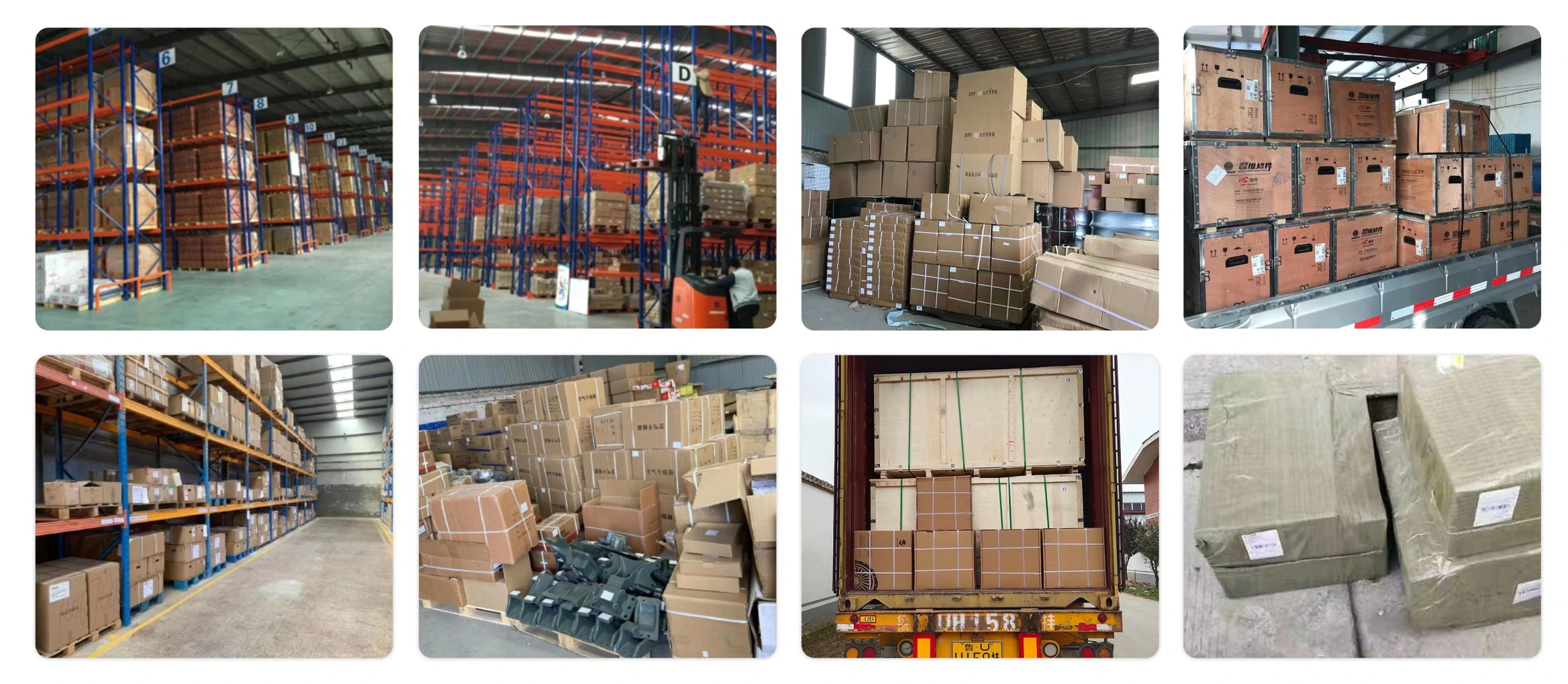
Este enfoque de embalaje minimiza el riesgo de corrosión o daños por impacto., asegurando que piezas como el conjunto de bloque de cilindros FAW lleguen en perfectas condiciones. Los clientes pueden confiar en la logística de FAW para obtener calidad y confiabilidad constantes.