por 


Bem-vindo a esta análise crítica de segurança do Limpador de para-brisa FAW conjunto. Este sistema é o principal recurso de segurança ativa para o FAW Jiefang CA4251P66K24T1A3E5 6×4 trator semirreboque diesel. Sua função não é negociável: para fornecer ao motorista uma clara, campo de visão desobstruído em condições climáticas adversas, incluindo chuva, neve, e spray de estrada.
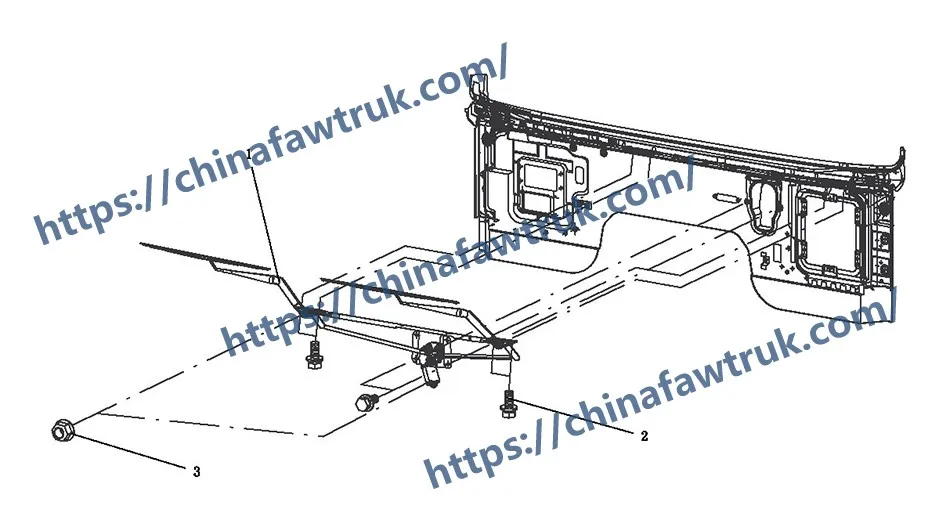
O “Montagem Lógica” para o Limpador de para-brisa FAW (P/N 5205010-A01 / 5205010AA01) é muito mais do que apenas as palhetas do limpador. É um completo, pré-montado, e sistema eletromecânico cronometrado. Esse “lógica” a unidade inclui o motor do limpador, uma ligação pantográfica complexa, e os eixos de articulação, tudo como uma única parte. Este design garante perfeita, geometria de limpador sincronizada e alta confiabilidade.
Este guia detalhado é essencial para técnicos e gestores de frota. Vamos desconstruir todo Limpador de para-brisa FAW sistema em seus três tipos de componentes principais. Iremos analisar o “caixa preta” lógica do principal 'Conjunto do limpador’ (a principal MSU), e os dois conjuntos de críticas, fixadores antivibração (Universidades Estadunidenses 2 & 3) que fixam o sistema à cabine e os braços aos pivôs.
Para entender o Limpador de para-brisa FAW conjunto (5205010-A01), você deve desconstruí-lo em seus três núcleos “lógica” sistemas, que são todos combinados em um MSU: o Motor, a ligação, e os braços/lâminas.
1. O motor & ECU “Lógica” (O “Cérebro”)
O coração do Limpador de para-brisa FAW é o seu motor elétrico de 24V DC. Isto não é um simples “ligar/desligar” motor; é um inteligente “lógica” módulo.
Intermitente & Lógica de velocidade: A carcaça do motor contém uma pequena unidade de controle eletrônico (ECU) ou um conjunto de relés complexos. Quando o motorista seleciona “intermitente,” este módulo “lógica” assume, usando um cronômetro para alternar os limpadores a cada poucos segundos. Quando “Baixo” ou “Alto” a velocidade está selecionada, este módulo envia energia para diferentes “pincéis” (enrolamentos) no motor para alterar sua velocidade de rotação.
O “Parque” Lógica: A lógica mais crítica é a “parque” função. Você já se perguntou como os limpadores sempre param na parte inferior? Dentro da caixa de engrenagens do motor há um came e um “interruptor de estacionamento.” Quando o motorista liga os limpadores “Desligado,” o motor *não* perde potência. O interruptor de estacionamento “lógica” fornece um *segundo* caminho para energia, mantendo o motor funcionando. O motor continua a girar até que um “entalhe” na câmera aperta o interruptor, que corta fisicamente este segundo caminho de energia. Esse “entalhe” está precisamente localizado para parar o motor *exatamente* quando os braços do limpador estão em sua posição mais baixa “estacionado” posição. Uma falha dessa opção é o motivo “ruim” os limpadores param no meio do para-brisa.
2. A ligação do pantógrafo “Lógica” (O “Músculo”)
O motor cria um movimento rotativo (fiação) movimento. Os limpadores precisam de um vaivém (oscilante) movimento. O “lógica” que converte esta é a ligação.
Esse Limpador de para-brisa FAW usa um “pantógrafo” ligação. Este é um sistema complexo de pré-cronometrado, braços de metal pré-lubrificados e juntas articuladas. O motor gira um braço de manivela curto, que empurra e puxa isso “pantógrafo” sistema. Esse “lógica” é essencial para um grande, pára-brisas de trator plano. Um simples “pivô único” sistema (como em um carro velho) deixaria um enorme, não apagado “triângulo” nos cantos superiores.
O pantógrafo “lógica” garante que os dois braços do limpador se movam perfeitamente, paralelo, ou tandem “varrer,” limpando a área máxima possível. Toda esta ligação é o principal componente do conjunto 5205010-A01, pois é selado e cronometrado na fábrica.
3. O braço & Lâmina “Lógica” (O “Patch de contato”)
Embora não esteja nesta lista de peças específica (eles são MSUs separados), o “lógica” do Limpador de para-brisa FAW é completado pelos braços e lâminas. Os *braços* do limpador são acionados por mola. Esse “lógica de primavera” é crítico; aplica vários quilos de precisão, pressão descendente, forçando a lâmina de borracha a se conformar à curva do vidro. Uma mola fraca é a razão pela qual os limpadores antigos “conversa” ou “pular” em alta velocidade.
A *lâmina* do limpador é o MSU final. Isso é “lógica” é um flexível, “rodo” borda. Ele é projetado para “virar” seu ângulo de ataque em cada direção da limpeza, garantindo uma limpeza, remoção de água sem riscos.
Este é o principal componente do Limpador de para-brisa FAW sistema. O 'conjunto do limpador’ é o inteiro, pré-montado, “caixa preta” unidade contendo o motor e a ligação, conforme descrito acima. Os dois números de peça provavelmente se referem a um “base” modelo e um “atualizado” (AA01) modelo, ou uma ligeira revisão de design.
Lógica de serviço: O “lógica” desta parte ser uma única MSU é a capacidade de manutenção. As engrenagens internas do motor são lubrificadas para sempre. A ligação do pantógrafo é sincronizada com precisão e suas juntas são seladas. Não foi projetado para ser reparado em campo.
Um técnico não perde horas tentando diagnosticar um defeito “interruptor de estacionamento” ou uma engrenagem de plástico descascada dentro do motor. O “lógica” é tratar toda a montagem como uma parte.
Modos de falha:
Em todos esses casos, o serviço “lógica” é substituir todo Limpador de para-brisa FAW conjunto (5205010-A01) como uma única MSU.
O Limpador de para-brisa FAW é um sistema de alto torque que está em constante partida, parando, e mudando de direção. Isso cria uma vibração imensa. O fixador “lógica” foi projetado *especificamente* para combater isso.
Universidade Estadual de Moscou 2: 'Parafuso combinado’ (CQ1460825F6) – Quantidade 6
O “lógica” destes seis parafusos é montar todo o 'Conjunto do limpador’ (Universidade Estadual de Moscou 1) à estrutura de firewall/capa da cabine. Este é um “três pontos” sistema de montagem, com dois parafusos por ponto, ou um sistema de seis pontos.
O “Combinação” (combinação) a lógica é crítica. Esses parafusos têm um *cativo, arruela de pressão pré-instalada* (uma arruela de pressão ou cabeça serrilhada). Esta arruela de pressão fornece tensão constante, mordendo o metal do suporte do limpador e da carroceria da cabine. Esse “antivibração” a lógica é essencial para evitar que o motor e a ligação se soltem, o que destruiria a geometria do limpador.
Universidade Estadual de Moscou 3: ‘Porca de fixação flangeada de cabeça hexagonal’ (Q032608) – Quantidade 2
O “lógica” destas duas porcas é fixar os *braços do limpador* nos eixos estriados dos pivôs. Um braço do limpador *deve* ser montado em um suporte em forma de cone, estriado (ranhurado) eixo para que não escorregue.
Esta noz fornece o “força de aperto” que “mordidas” o metal macio do braço na ranhura de aço endurecido. Mas é mais importante “lógica” é que é um **”Porca da trava do flange”**.
Ambos os tipos de fixadores são MSUs essenciais. As porcas de fixação (Q032608) são **de uso único**. Eles devem ser substituídos sempre que os braços do limpador forem removidos.
A tabela a seguir fornece o completo, detalhamento de todos 3 tipos de componentes identificados no Limpador de para-brisa FAW montagem para o trator FAW CA4251P66K24T1A3E5.
| Marca | Parte não. | Nome da peça | Quantidade |
|---|---|---|---|
| 1 | 5205010-A01 | Conjunto do limpador | 1 |
| 5205010AA01 | Conjunto do limpador | 1 | |
| 2 | CQ1460825F6 | Parafuso de combinação | 6 |
| 3 | Q032608 | Porca de fixação flangeada com cabeça hexagonal | 2 |
As especificações para o Limpador de para-brisa FAW são definidos por sua função como um produto crítico para a segurança, sistema eletromecânico. Todos os fixadores são de alta resistência, componentes antivibração.
| Aplicação em veículos | FAW Jiefang CA4251P66K24T1A3E5 6×4 Trator |
| Grupo de Componentes | Limpador de para-brisa FAW |
| Tipo de sistema | Sistema limpador eletromecânico de pantógrafo |
| Tensão do sistema | 24Em DC (Nominal) |
| Universidade Estadual de Moscou 1 (Principal) | ‘Conjunto do limpador’ (5205010-A01 / 5205010AA01) |
| Universidade Estadual de Moscou 1 Lógica | Motor, ECU (Lógica de velocidade/estacionamento), & Articulação Pantográfica |
| Universidade Estadual de Moscou 2 (Hardware) | 'Parafuso combinado’ (CQ1460825F6) – Quantidade 6 |
| Universidade Estadual de Moscou 3 (Hardware) | ‘Porca de fixação flangeada de cabeça hexagonal’ (Q032608) – Quantidade 2 |
| Lógica do Fixador | Antivibração (Parafuso de combinação & Porca de travamento flangeada) |
| Facilidade de manutenção | Alto. Substitua o conjunto principal do limpador’ como um MSU. As porcas de fixação são descartáveis. |
Peças FAW, incluindo o conjunto do bloco de cilindros, são embalados com cuidado para garantir uma entrega segura. Cada componente é protegido por materiais de proteção para evitar danos durante o transporte. A rede logística garante envios pontuais em todo o mundo, apoiando operações de manutenção eficientes. Abaixo está uma imagem ilustrando a embalagem padrão para peças de caminhão FAW, mostrando a atenção aos detalhes no manuseio e armazenamento.

Esta abordagem de embalagem minimiza o risco de corrosão ou danos por impacto, garantindo que peças como o conjunto do bloco de cilindros FAW cheguem em perfeitas condições. Os clientes podem confiar na logística da FAW para obter qualidade e confiabilidade consistentes.