por 


Bem-vindo a esta análise técnica aprofundada do Conjunto de suspensão traseira FAW para a cabine. Este conjunto de componentes é um dos grupos estruturais mais críticos do FAW Jiefang CA4251P66K24T1A3E5 6×4 trator semirreboque diesel. Este não é apenas um simples ponto de montagem; é um produto altamente projetado “lógica” conjunto. Seu núcleo “lógica” é realizar simultaneamente dois trabalhos de alto estresse: serve como âncora traseira para todo o sistema de suspensão da cabine *e* suporte fixo traseiro para as molas dianteiras do chassi.
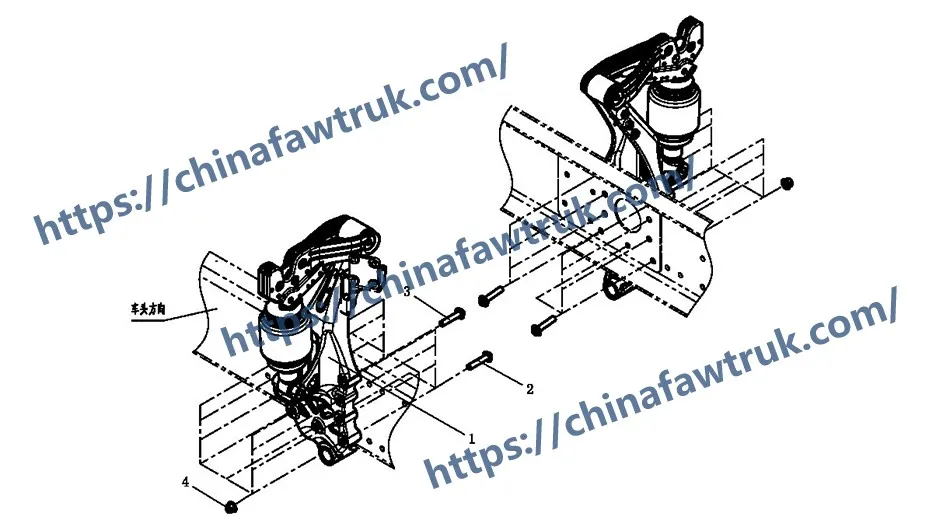
O Conjunto de suspensão traseira FAW para a cabine é a principal interface de suporte de carga que conecta a cabine do motorista à estrutura do chassi do caminhão. Os componentes detalhados aqui (Parte não. 5001280B91W) são responsáveis por lidar com enormes forças longitudinais da suspensão do chassi *e* forças verticais da suspensão da cabine (ambos os tipos de mola pneumática e mola helicoidal). Esta dupla função “lógica” é uma obra-prima da engenharia, economizando peso e espaço no quadro.
Este guia especializado é um recurso essencial para técnicos de chassis, gestores de frota, e especialistas em peças. Vamos desconstruir todo Conjunto de suspensão traseira FAW para a cabine em seu 4 tipos de componentes primários. Iremos analisar o “lógica dupla” do suporte estrutural principal, e então dividir os dois diferentes, grupos de fixadores de alta resistência que são críticos para sua segurança e integridade.
Este componente é o “mais longo” e a parte mais substancial do Conjunto de suspensão traseira FAW para a cabine. A ‘Suspensão traseira da cabine & mola de placa de aço frontal conjunto de suporte combinado fixo traseiro’ (5001280B91W) é a principal MSU estrutural. A lista de peças pede dois (2), um para o trilho esquerdo e outro para o trilho direito do chassi.
O “lógica” disso “Suporte Combinado” é brilhante, economia de espaço, design de dupla função. Ele executa dois trabalhos que normalmente exigiriam dois trabalhos separados, colchetes pesados.
Função 1 Lógica: Montagem de mola no chassi
A primeira função é servir como *suporte fixo traseiro* para a *mola dianteira do chassi*. A frente da mola de lâmina é presa a uma manilha que gira. A parte traseira dessa mesma mola deve ser fixada em um suporte fixo, ponto imóvel no quadro. Este colchete é aquele ponto.
Isso significa que o suporte deve ser incrivelmente forte, uma vez que lida com todos os longitudinais (para frente e para trás) forças do eixo dianteiro. Todas as forças de aceleração e frenagem das rodas dianteiras são transferidas através da mola de lâmina e para o chassi *através deste suporte único*. É por isso que é fabricado em material pesado, aço de alta resistência, projetado para resistir a imensos esforços de cisalhamento e torção.
Função 2 Lógica: Suporte de suspensão da cabine
A segunda função do Conjunto de suspensão traseira FAW para a cabine serve como ponto de montagem principal para a suspensão traseira da *cabina*. Este é o ponto onde a mola pneumática traseira da cabine ou o conjunto da bobina sobre o amortecedor são montados.
Esta parte do colchete “lógica” é lidar com a vertical (para cima e para baixo) cargas da cabine, isolando o ambiente do motorista do chassi. Combinando essas duas funções em uma parte, Os engenheiros da FAW economizaram peso, complexidade reduzida, e economizou espaço valioso no trilho do chassi, tudo isso enquanto aumenta a rigidez geral do quadro naquela junção.
Facilidade de manutenção (Universidade Estadual de Moscou):
Esse “Suporte Combinado” é uma MSU primária. Não é reparável, componente crítico de segurança. Falhas são raras, mas pode ser causado por graves danos de colisão ou (se os fixadores estiverem soltos) rachaduras por fadiga devido à vibração. Um suporte danificado deve ser substituído imediatamente, pois uma falha aqui comprometeria o chassi e a suspensão da cabine, levando à perda de controle do veículo.
Os três tipos de componentes restantes constituem o sistema de fixação crítico para o Conjunto de suspensão traseira FAW para a cabine. Esta não é uma simples coleção de hardware; é um projeto precisamente projetado “lógica” sistema projetado para força de fixação e resistência à vibração.
O sistema consiste em 18 parafusos e 18 nozes no total. Isso indica um padrão de montagem de 9 parafusos para *cada* um dos dois suportes principais.
Os fixadores:
Esse 1:1 proporção de 18 parafusos para 18 porcas confirma que estas são conexões de parafuso passante, passando completamente pelo trilho da estrutura do chassi.
O “lógica” deste sistema está nos detalhes.
Por que dois parafusos diferentes (Universidade Estadual de Moscou 2 & 3)?
O Conjunto de suspensão traseira FAW para a cabine usa dois números de peças diferentes para seus parafusos (Q1851685T e Q1851695T). O “lógica” aqui é simples: diferentes comprimentos de aderência. O 10 parafusos do primeiro tipo são prováveis para fixar o corpo principal do suporte à alma plana da estrutura do chassi. O 8 parafusos do segundo tipo são prováveis para a parte do suporte que monta o olhal da mola, que pode ser mais grosso ou exigir um parafuso de comprimento diferente.
Todos estes são “mesa” parafusos. O flange é uma arruela integrada. Esse “lógica” distribui a força de fixação por uma área mais ampla, evitando que a cabeça do parafuso danifique o suporte. Também torna a montagem mais rápida.
O “Porca do flange” Lógica (Universidade Estadual de Moscou 4)
A 'porca flangeada hexagonal’ (Q039716) é a peça mais crítica. Esses 18 nozes também são “flangeado,” atuando como uma arruela embutida no lado da porca. Mais importante, estes são de alta resistência, torque predominante “bloqueio” nozes. Eles são com trava de metal (com fios distorcidos) ou inserção de náilon (Nyloc) nozes.
Esse “bloqueio” lógica é um requisito de segurança inegociável para o Conjunto de suspensão traseira FAW para a cabine. Uma porca padrão vibraria e se soltaria dos choques da estrada e das harmônicas do motor em um tempo muito curto. Isso faria com que o suporte se deslocasse, levando a uma falha catastrófica da suspensão.
Facilidade de manutenção (Universidade Estadual de Moscou):
Todos 36 fixadores são MSUs. Devido à sua “torque para rendimento” e “travamento automático” natureza, esses fixadores são estritamente **de uso único**. A qualquer momento o Conjunto de suspensão traseira FAW para a cabine está desparafusado para serviço, um novo conjunto completo de 18 parafusos e 18 porcas *devem* ser usadas para garantir a força de fixação de fábrica e a resistência à vibração.
A tabela a seguir fornece o completo, detalhamento de todos 4 tipos de componentes identificados no Conjunto de suspensão traseira FAW para a cabine diagrama para o trator FAW CA4251P66K24T1A3E5.
| Marca | Parte não. | Nome da peça | Quantidade |
|---|---|---|---|
| 1 | 5001280B91W | Suspensão traseira da cabine & mola de placa de aço frontal conjunto de suporte combinado fixo traseiro | 2 |
| 2 | Q1851685T | Parafuso de flange hexagonal | 10 |
| 3 | Q1851695T | Parafuso de flange hexagonal | 8 |
| 4 | Q039716 | Noz de flange hexágono | 18 |
As especificações para o Conjunto de suspensão traseira FAW para a cabine são definidos por sua crítica, função de dupla função como suporte de mola do chassi e suporte de suspensão da cabine. Todos os fixadores são de alta resistência, uso único, componentes antivibração.
| Aplicação em veículos | FAW Jiefang CA4251P66K24T1A3E5 6×4 Trator |
| Grupo de Componentes | Conjunto de suspensão traseira FAW para a cabine |
| Tipo de sistema | Suporte estrutural combinado de dupla função |
| Lógica 1 | Mola dianteira do chassi (Montagem Fixa Traseira) |
| Lógica 2 | Suspensão traseira da cabine (Ar/Bobina) Montar |
| Universidade Estadual de Moscou 1 (Suporte) | '…Conjunto de suporte combinado’ (5001280B91W) – Quantidade 2 |
| Universidade Estadual de Moscou 2 (Loja A) | 'Parafuso de flange hexagonal’ (Q1851685T) – Quantidade 10 |
| Universidade Estadual de Moscou 3 (Parafuso B) | 'Parafuso de flange hexagonal’ (Q1851695T) – Quantidade 8 |
| Universidade Estadual de Moscou 4 (Noz) | ‘Porca flangeada hexagonal’ (Q039716) – Quantidade 18 |
| Fixadores totais | 18 Parafusos, 18 Nozes |
| Lógica do Fixador | Flangeado (Distribuição de carga), Autotravamento (Antivibração) |
| Facilidade de manutenção | Todos os fixadores são MSUs descartáveis. O suporte é um MSU não reparável. |
Peças FAW, incluindo o conjunto do bloco de cilindros, são embalados com cuidado para garantir uma entrega segura. Cada componente é protegido por materiais de proteção para evitar danos durante o transporte. A rede logística garante envios pontuais em todo o mundo, apoiando operações de manutenção eficientes. Abaixo está uma imagem ilustrando a embalagem padrão para peças de caminhão FAW, mostrando a atenção aos detalhes no manuseio e armazenamento.
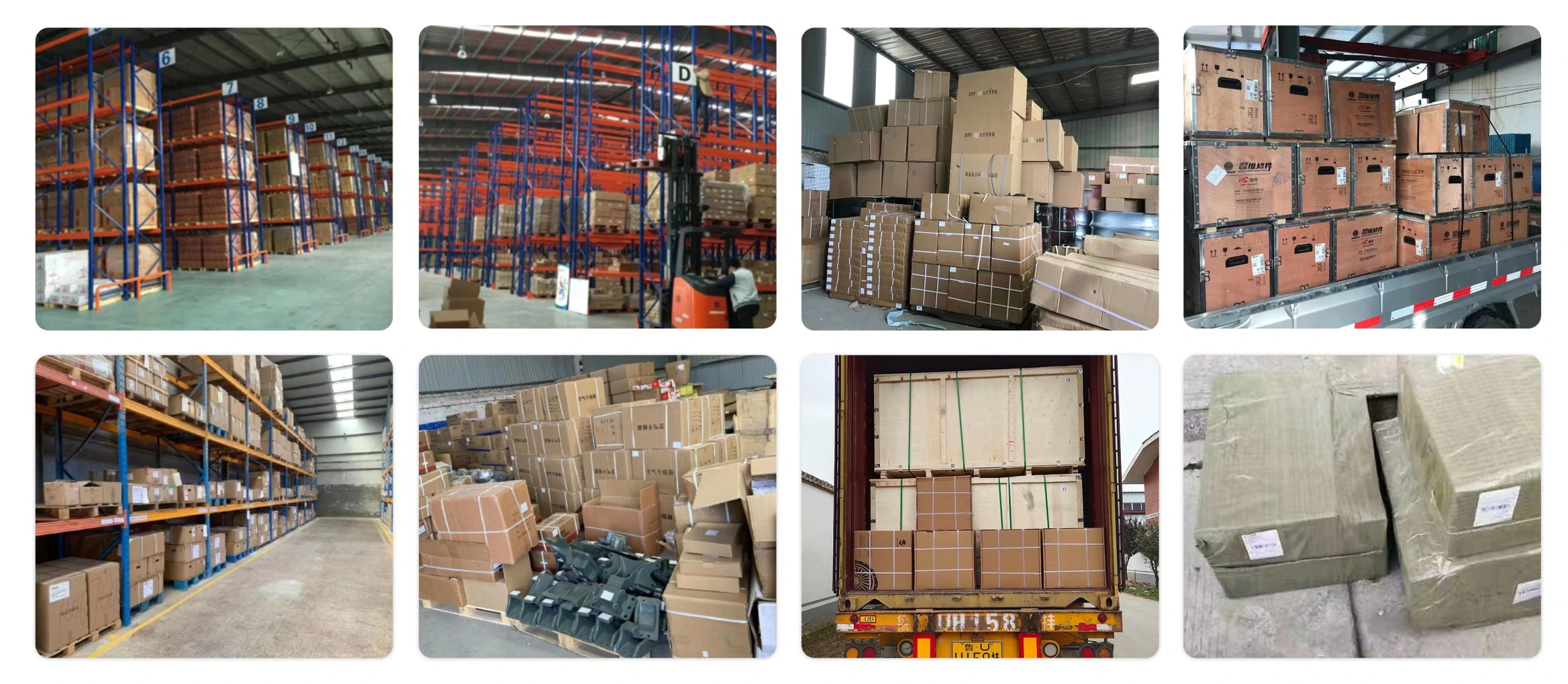
Esta abordagem de embalagem minimiza o risco de corrosão ou danos por impacto, garantindo que peças como o conjunto do bloco de cilindros FAW cheguem em perfeitas condições. Os clientes podem confiar na logística da FAW para obter qualidade e confiabilidade consistentes.