por 


Bem-vindo ao guia técnico completo do Tampa da cabeça do cilindro FAW e tampa de enchimento de óleo sistema, um conjunto crucial de componentes para o FAW Jiefang CA4251P66K24T1A3E5 6×4 trator semirreboque diesel. Esta montagem é a primeira linha de defesa do trem de válvulas do motor.
Este sistema, o Tampa da cabeça do cilindro FAW e tampa de enchimento de óleo, serve múltiplas funções críticas: sela a parte superior do motor, protegendo as delicadas árvores de comando e a engrenagem da válvula contra sujeira e umidade. Ele também contém o óleo do motor que lubrifica esses componentes, evitando vazamentos. Além disso, ele abriga o sistema de ventilação do cárter do motor e fornece o ponto de serviço para adicionar óleo do motor.
Este guia foi desenvolvido para técnicos profissionais e gerentes de peças, fornecendo uma análise detalhada de todo o Tampa da cabeça do cilindro FAW e tampa de enchimento de óleo conjunto. Desconstruiremos o sistema em suas menores unidades utilizáveis, desde a tampa principal e sua junta até os parafusos especializados e o conjunto da tampa de óleo, garantindo que cada serviço seja executado com precisão.
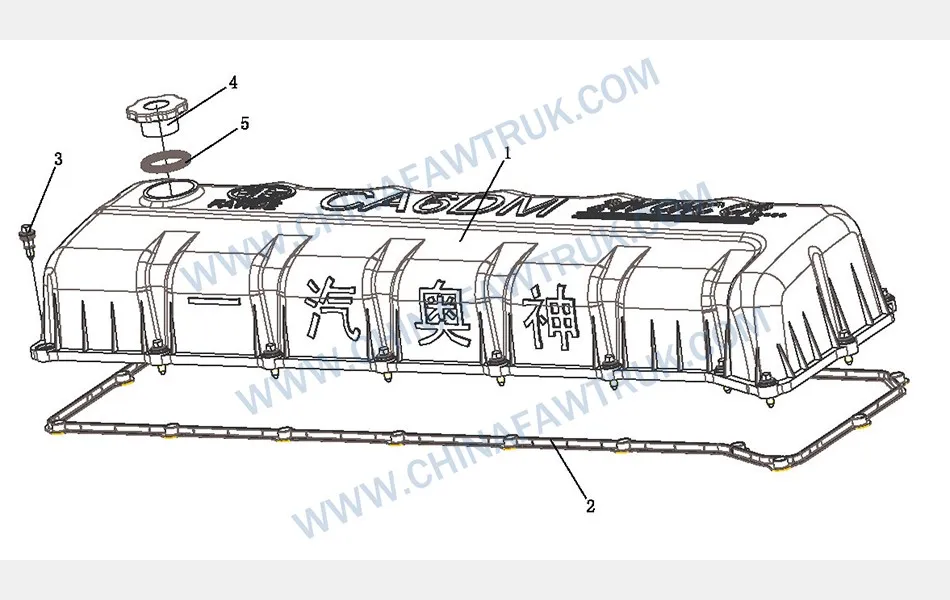
O maior componente nesta montagem é a ‘Tampa da Cabeça do Cilindro’ (1003031-81D). Em motores diesel modernos, esta parte é um componente altamente projetado, muitas vezes feito de um material de alta resistência, compósito cheio de vidro (plástico) ou um alumínio fundido leve. Um design composto é frequentemente preferido, pois reduz o peso da parte superior do motor e é significativamente mais silencioso, amortecendo o “tique-taque” som do trem de válvulas.
A função principal deste componente é atuar como uma vedação estática, mas a sua função secundária é igualmente crítica. Esta tampa contém a Ventilação Positiva do Cárter do motor (PCV) sistema. À medida que o motor funciona, alguns gases de combustão (“golpe”) inevitavelmente passa pelos anéis do pistão e entra no cárter. Isso aumenta a pressão e deve ser ventilado.
No entanto, esses gases são misturados com uma fina névoa de óleo de motor quente. O Tampa da cabeça do cilindro FAW e tampa de enchimento de óleo a montagem é projetada com uma série complexa de canais internos, defletores, e separadores óleo-ar. À medida que os gases do cárter fluem para a tampa, eles são forçados a passar por isso “labirinto.” As gotículas de óleo líquido mais pesadas colidem com as paredes do defletor, condensar, e drene de volta para a cabeça do cilindro, retornando ao cárter de óleo.
O óleo restante *vapor* (juntamente com os gases de escape) é então retirado de uma porta na tampa e direcionado para a entrada de ar do motor, pouco antes do turbocompressor. Isto permite que os hidrocarbonetos não queimados sejam queimados novamente, que é uma função crítica de controle de emissões. Se este sistema defletor interno ficar obstruído ou falhar, o motor atrairá óleo líquido para a admissão, levando ao alto consumo de petróleo, fumaça azul do escapamento, e a sujeira do turbocompressor e do intercooler.
A ‘Tampa da Cabeça do Cilindro’ em si é uma parte estática; a ‘Junta da tampa da cabeça do cilindro’ (1003041-81D) é o componente ativo que faz a vedação. Este é o ponto de falha mais comum no Tampa da cabeça do cilindro FAW e tampa de enchimento de óleo sistema.
Esta não é uma simples junta de papel. É um “perfil” junta, moldado com precisão a partir de um avançado, elastômero resistente a óleo (como silicone ou FKM/Viton). Ele foi projetado para se encaixar perfeitamente em uma ranhura que percorre todo o perímetro da tampa de plástico ou alumínio. Ele também inclui anéis de vedação integrados que circundam os orifícios dos parafusos e os tubos das velas de ignição (se aplicável), criando um completo, solução de vedação de peça única.
Esta junta vive em um ambiente brutal, sujeito à vibração constante do motor, ciclos de calor (da temperatura ambiente até mais de 100°C e vice-versa), e exposição contínua ao óleo de motor quente. Ao longo de muitos milhares de horas, este elastômero vai endurecer, tornar-se frágil, e comprimir. Quando isso acontecer, perde sua capacidade de vedação, e o petróleo começa a chorar.
Uma junta da tampa do cabeçote com vazamento é um item de manutenção comum. O diagnóstico é simples: sinais visuais de “suando” ou óleo ativo escorre da costura entre a cabeça e a tampa. Muitas vezes, este óleo irá pingar no coletor de escape quente, criando um cheiro distinto de óleo queimado. A substituição desta junta é um procedimento de serviço padrão, mas isso deve ser feito corretamente seguindo a sequência precisa de aperto dos parafusos para evitar danificar a nova junta.
A vedação da junta é tão boa quanto a força de fixação aplicada a ela. Este é o trabalho do 17 ‘Conjunto do parafuso da tampa da cabeça do cilindro’ unidades (1003060-81D). A elevada quantidade de 17 parafusos é necessário para distribuir a pressão de fixação uniformemente ao longo do longo, perímetro complexo da junta, garantindo que não haja “pontos soltos” onde o petróleo poderia escapar.
Estes são designados como “montagem de parafuso” porque eles não são apenas parafusos simples. Cada um quase certamente inclui uma arruela de metal cativa e, o mais importante, um isolador de borracha ou “ilhó.” Este ilhó é uma parte crítica do Tampa da cabeça do cilindro FAW e tampa de enchimento de óleo projeto.
Este anel isolante de borracha tem duas funções. Primeiro, ele sela o furo do parafuso, evitando que o óleo vaze pelas roscas dos parafusos e se acumule no topo da tampa. Segundo, ele atua como um “torque suave” parar. Ao instalar uma tampa composta, apertar demais é um grande risco; pode quebrar a tampa ou “dividir” a junta. Esses parafusos não foram projetados para serem apertados com muita força. O técnico os aperta até que a arruela de metal comprima o anel isolante de borracha. Isto fornece um “embutido” limite de torque e isola a tampa da vibração do motor, evitando que os parafusos recuem.
Os dois componentes finais formam o principal ponto de interação do usuário do Tampa da cabeça do cilindro FAW e tampa de enchimento de óleo sistema. A ‘Tampa de enchimento de óleo’ (1003037-29D) é o removível, tampa giratória que permite que um técnico ou operador adicione óleo do motor.
A parte funcional, no entanto, é a ‘Tampa de enchimento de óleo com anel de vedação’ (1003036-29D). Este é um anel de vedação simples ou uma junta de borracha plana que fica em uma ranhura na tampa. A sua função é muito mais importante do que apenas impedir que o óleo “espirrando” fora. Esta vedação é uma parte crítica do sistema de ventilação do cárter.
O sistema PCV, descrito anteriormente, foi projetado para manter um leve *vácuo* dentro do cárter do motor. Se esta vedação da tampa estiver faltando, rachado, ou endurecido, isso cria um “vazamento de vácuo.” Isso permite não medido, *ar não filtrado* para ser sugado diretamente para o trem de válvulas do motor. Este ar sujo contamina o óleo do motor e contorna os defletores de separação de óleo do PCV.
Uma falha na vedação da tampa pode perturbar o delicado equilíbrio do PCV, potencialmente levando a pressão incorreta no cárter. No pior cenário, se o sistema PCV ficar entupido, uma falha na vedação da tampa pode se tornar uma *saída* para a pressão do cárter, empurrando a fumaça oleosa e bagunçando o compartimento do motor. Este pequeno, 'Anel de vedação barato’ é um componente crítico para manter a saúde de todo o motor e o funcionamento adequado do Tampa da cabeça do cilindro FAW e tampa de enchimento de óleo.
A tabela a seguir fornece o completo, detalhamento detalhado de todos os componentes identificados na 'Tampa do cabeçote do cilindro e tampa de abastecimento de óleo’ diagrama para o trator FAW CA4251P66K24T1A3E5.
| Marca | Parte não. | Nome da peça | Quantidade |
|---|---|---|---|
| 1 | 1003031-81D | Tampa da cabeça do cilindro | 1 |
| 2 | 1003041-81D | Junta da tampa da cabeça do cilindro | 1 |
| 3 | 1003060-81D | Conjunto do parafuso da tampa do cabeçote | 17 |
| 4 | 1003037-29D | Tampa de preenchimento de óleo | 1 |
| 5 | 1003036-29D | Tampa de enchimento de óleo com anel de vedação | 1 |
As especificações para o Tampa da cabeça do cilindro FAW e tampa de enchimento de óleo estão centrados em seu papel como sistema primário de vedação e ventilação para o trem de válvulas do motor.
| Aplicação em veículos | FAW Jiefang CA4251P66K24T1A3E5 6×4 Trator |
| Grupo de Componentes | Tampa da cabeça do cilindro e tampa de enchimento de óleo |
| Número da peça da capa principal. | 1003031-81D |
| Nº da peça da junta principal. | 1003041-81D (Junta de elastômero de perfil) |
| Sistema de fixação | 17x Conjuntos de parafusos (1003060-81D) com isoladores |
| Tampa de serviço de óleo, peça nº. | 1003037-29D |
| Número da peça da vedação da tampa de óleo. | 1003036-29D (Anel-O / Anel de vedação) |
| Função Primária | Vedações do trem de válvulas, contém óleo, integra sistema PCV, fornece acesso ao enchimento de óleo. |
Peças FAW, incluindo o conjunto do bloco de cilindros, são embalados com cuidado para garantir uma entrega segura. Cada componente é protegido por materiais de proteção para evitar danos durante o transporte. A rede logística garante envios pontuais em todo o mundo, apoiando operações de manutenção eficientes. Abaixo está uma imagem ilustrando a embalagem padrão para peças de caminhão FAW, mostrando a atenção aos detalhes no manuseio e armazenamento.

Esta abordagem de embalagem minimiza o risco de corrosão ou danos por impacto, garantindo que peças como o conjunto do bloco de cilindros FAW cheguem em perfeitas condições. Os clientes podem confiar na logística da FAW para obter qualidade e confiabilidade consistentes.