Lógica de montagem de motor russa FAW: Desconstruindo 18 Componentes para controle de vibração no Ártico
O Lógica de montagem de motor russa FAW é a interface estrutural entre o coração diesel de alto torque e o chassi rígido do caminhão basculante CA3250P66K24L1TE5Z. No frio extremo da Federação Russa, este sistema faz mais do que simplesmente manter o motor no lugar; atua como um amortecedor harmônico complexo. Ao isolar a cabine e a estrutura das violentas forças de combustão do motor, o Lógica de montagem de motor russa FAW protege a eletrônica sensível e reduz a fadiga do motorista. Este guia disseca a montagem em seus colchetes críticos, almofadas, e fixadores, fornecendo um roteiro para manutenção em condições abaixo de zero.
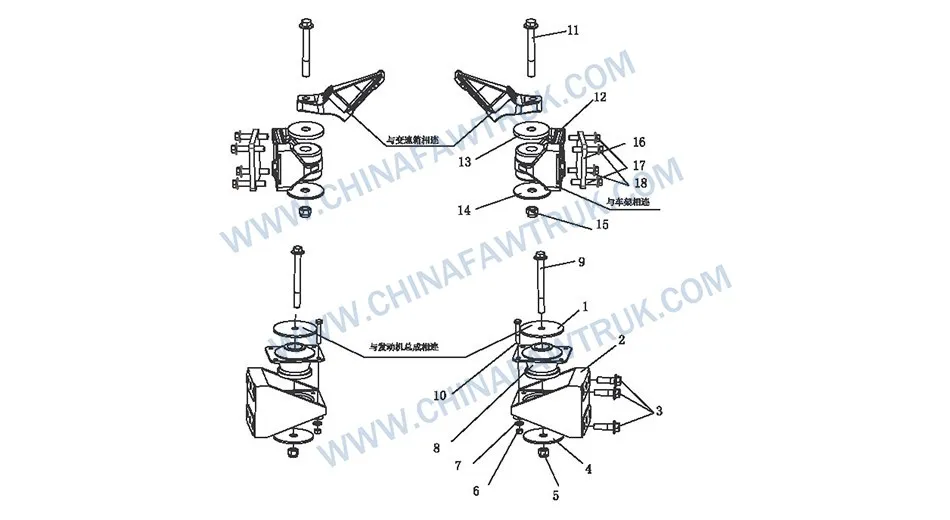
Lógica de montagem de motor russa FAW
Arquitetura Frontal: Gerenciando carga vertical
A seção dianteira do Lógica de montagem de motor russa FAW foi projetado para lidar com a massa vertical primária do bloco do motor. No centro deste subsistema está o Suporte de suspensão dianteira do motor (Parte não. 1001037-76A). Esta fundição resistente atua como ponto de ancoragem, aparafusado firmemente à estrutura do motor. Ele deve suportar não apenas o peso estático do motor, mas também as forças G dinâmicas experimentadas quando o caminhão atravessa estradas de mineração acidentadas ou sulcos congelados.. A metalurgia deste braquete é especificamente escolhida para resistir à fratura frágil em temperaturas tão baixas quanto -50°C, um ponto de falha comum para metais inferiores no Ártico Russo.
Trabalhar em conjunto com o suporte é o Conjunto de almofada de suspensão dianteira do motor (Parte não. 1001025-76A). Este é o elemento de amortecimento, normalmente composto por um sofisticado composto de borracha colado a placas de aço. No Lógica de montagem de motor russa FAW, a formulação da borracha é crítica. Borracha natural padrão torna o vidro duro em frio extremo, perdendo sua capacidade de absorver vibrações. Esta almofada especializada mantém a flexibilidade, garantindo que as vibrações de alta frequência do ciclo de combustão do diesel sejam absorvidas antes que possam se propagar nas estruturas do chassi. A integridade desta almofada é protegida pelo Conjunto da tampa superior da suspensão dianteira do motor (Parte não. 1001030-76A), que protege a borracha contra respingos de óleo e detritos de estrada que podem degradar sua estrutura química.
Para garantir que a montagem permaneça coerente sob carga pesada, o Placa de Almofada Inferior – Suspensão dianteira do motor (Parte não. 1001028-76A) fornece uma base rígida para a pilha de montagem. Esta placa distribui as cargas compressivas uniformemente pelo ponto de montagem do chassi, prevenção de fraturas por estresse localizadas. A interação entre a tampa superior, o conjunto da almofada, e a placa inferior cria um “sanduíche” estrutura dentro do Lógica de montagem de motor russa FAW que desacopla efetivamente o movimento do motor da estrutura do caminhão, fornecendo uma plataforma estável para geração de energia mesmo nos terrenos mais irregulares.
Arquitetura Traseira: Reação de Torque e Estabilidade
Enquanto as montagens frontais suportam o peso, a seção traseira do Lógica de montagem de motor russa FAW tem a tarefa principal de gerenciar a reação de torque. Cada vez que o motor acelera, o bloco tenta girar na direção oposta do virabrequim. O Conjunto de almofada do suporte de suspensão traseira (Parte não. 1001065-50V) está posicionado para neutralizar esta força de torção. Ao contrário das montagens frontais, essas almofadas traseiras geralmente apresentam uma dureza diferente (dureza) borracha para uma resistência mais rígida contra o movimento lateral, ao mesmo tempo que permite o amortecimento vertical. Este equilíbrio é crucial para manter o alinhamento da transmissão entre o motor e a transmissão.
A integridade estrutural na parte traseira é reforçada pelo Placa de Almofada Superior – Suspensão traseira do motor (Parte não. 1001063-483) e o Placa Inferior – Suspensão traseira (Parte não. 1001079-263). Estas placas de aço envolvem a almofada traseira, agindo como limitadores. No caso de um choque severo, como bater em um buraco profundo em alta velocidade, essas placas evitam que o suporte de borracha se estenda demais ou rasgue. O Lógica de montagem de motor russa FAW depende dessas placas para atuar como um mecanismo à prova de falhas, mantendo o motor cativo mesmo que o elemento de borracha se degradasse significativamente.
Adicionalmente, o sistema emprega o Placa de almofada de suspensão traseira (Parte não. 1001064-64C) para ajustar a altura e a pré-carga da montagem. O alinhamento adequado não é negociável no Lógica de montagem de motor russa FAW. Se o motor estiver ligeiramente inclinado devido a um suporte traseiro colapsado, coloca imensa pressão nas juntas universais do eixo de transmissão e no rolamento do eixo de entrada da transmissão. A inspeção regular desses componentes traseiros garante que todo o trem de força opere no eixo geométrico projetado, evitando falhas secundárias na transmissão ou diferencial.
Tecnologia de Fixadores: Protegendo a carga
As peças fundidas robustas e as almofadas de borracha do Lógica de montagem de motor russa FAW são inúteis sem fixadores de alta qualidade para mantê-los juntos. A montagem utiliza Parafusos de flange de cabeça hexagonal (Parte não. Q1851650TS e Q18516160TS) para conexões críticas. O design da cabeça do flange é superior às combinações padrão de parafuso e arruela em ambientes de alta vibração. O flange atua como uma arruela integrada, distribuindo a carga de fixação sobre uma área de superfície mais ampla e evitando que a cabeça do parafuso se incorpore no material mais macio do suporte. Isso garante que a pré-carga de torque permaneça consistente ao longo do tempo.
Para evitar o afrouxamento, o sistema emprega o Tipo 1 Porca de fixação hexagonal de inserção não metálica (Parte não. Q32916T e Q32918T). Estas porcas apresentam um anel de náilon embutido nas roscas superiores. Quando o parafuso é passado através, o náilon se deforma, criando um ajuste de interferência de alto atrito que resiste à energia vibracional constante do motor diesel. No frio da Rússia, onde contratos e lacunas de metal podem abrir, essas inserções de náilon fornecem uma camada crítica de segurança dentro do Lógica de montagem de motor russa FAW, garantindo que as porcas não recuem.
Além disso, a montagem inclui arruelas especializadas como as Arruela cônica da primavera (Parte não. CQ41910). Ao contrário de uma arruela plana, uma arruela cônica atua como uma mola, manter a tensão no conjunto do parafuso mesmo se os componentes sofrerem contração térmica ou leve assentamento. Isto é particularmente importante para o Lógica de montagem de motor russa FAW que opera em um vasto delta de temperatura. Do calor do compartimento do motor ao ar ambiente gelado, esses fixadores devem manter sua aderência para garantir a segurança e estabilidade de todo o trem de força.
Lista detalhada de componentes
A tabela abaixo fornece a lista abrangente de peças para o Lógica de montagem de motor russa FAW. Ao realizar manutenções ou revisões, o cumprimento estrito desses números de peça garante a compatibilidade com as especificações para climas frios do caminhão basculante CA3250P66K24L1TE5Z.
| Não. |
Número da peça |
Nome da peça |
Quantidade |
| 1 |
1001030-76A |
Conjunto da tampa superior da suspensão dianteira do motor |
2 |
| 2 |
1001037-76A |
Suporte de suspensão dianteira do motor |
2 |
| 3 |
Q1851650TS |
Parafuso de flange hexágono |
12 |
| 4 |
1001028-76A |
Placa de Almofada Inferior – Suspensão dianteira do motor |
2 |
| 5 |
Q32916T |
Tipo 1 Porca de fixação hexagonal de inserção não metálica |
2 |
| 6 |
CQ34010T |
Noz hexágono |
8 |
| 7 |
CQ41910 |
Arruela cônica da primavera |
8 |
| 8 |
1001025-76A |
Conjunto de almofada de suspensão dianteira do motor |
2 |
| 9 |
Q18516160TS |
Parafuso de flange hexágono |
2 |
| 10 |
CQ1601060TS |
Parafuso de cabeça hexagonal |
8 |
| 11 |
Q18518140T |
Parafuso de flange hexágono |
2 |
| 12 |
1001065-50V |
Conjunto de almofada do suporte de suspensão traseira |
2 |
| 13 |
1001063-483 |
Placa de Almofada Superior – Suspensão traseira do motor |
2 |
| 14 |
1001079-263 |
Placa Inferior – Suspensão traseira |
2 |
| 15 |
Q32918T |
Tipo 1 Porca de fixação hexagonal de inserção não metálica |
2 |
| 16 |
1001064-64C |
Placa de almofada de suspensão traseira |
2 |
| 17 |
Q1841450TS |
Parafuso de flange hexagonal (Haste Grossa/Padrão) |
4 |
| 18 |
Q1841460TS |
Parafuso de flange hexagonal (Haste Grossa/Padrão) |
4 |
Protocolos de Diagnóstico para Suspensão do Motor
Manutenção eficaz do Lógica de montagem de motor russa FAW começa com inspeção visual. Os componentes de borracha, especificamente o Conjunto de almofada de suspensão dianteira do motor e o Conjunto de almofada do suporte de suspensão traseira, são os itens de desgaste mais suscetíveis à degradação. No clima russo, procure por sinais de “verificando” ou microfissuras na superfície de borracha, que indicam danos por ozônio ou podridão seca. Rachaduras graves ou separação entre a borracha e as placas de ligação metálica exigem a substituição imediata da unidade. Operar com uma montagem recolhida transmitirá vibração excessiva, potencialmente rachando os suportes do radiador ou coletores de escapamento.
A verificação de torque é outro pilar do cronograma de manutenção. O Parafusos de flange de cabeça hexagonal que fixam os suportes ao bloco estão sujeitos a vibrações de alta frequência. Enquanto o Tipo 1 Porcas de fixação hexagonais de inserção não metálica são projetados para resistir ao afrouxamento, eles não são infalíveis. Recomenda-se verificar o torque nesses fixadores durante cada intervalo de serviço importante. Se um parafuso for encontrado solto, não basta reapertá-lo; inspecione as roscas quanto a danos e substitua a porca de travamento, pois a inserção de náilon perde sua eficácia após ser apertada e afrouxada várias vezes.
Finalmente, inspecionar a geometria da posição do motor. Se o Lógica de montagem de motor russa FAW está funcionando corretamente, o motor deve ficar nivelado e o ventilador deve estar centralizado dentro da cobertura. Um motor flácido geralmente indica que a estrutura interna da almofada falhou, mesmo que o exterior pareça intacto. Medindo a folga entre os Placa Inferior – Suspensão traseira e o trilho do chassi pode fornecer uma indicação definitiva do colapso da montagem. A substituição proativa desses suportes preserva o alinhamento do sistema de transmissão e prolonga a vida útil de todo o veículo.
Conclusão: A base da confiabilidade
O Lógica de montagem de motor russa FAW é mais do que apenas um conjunto de parafusos e almofadas de borracha; é um sistema meticulosamente projetado para harmonizar a operação de um enorme motor diesel com as realidades estruturais de um caminhão pesado. Da metalurgia do Suporte de suspensão dianteira do motor à elasticidade dos conjuntos de almofadas, cada componente desempenha um papel para garantir a longevidade do CA3250P66K24L1TE5Z.
Para operadores de frota, entender esse sistema é fundamental para reduzir custos operacionais. Negligenciar os suportes do motor leva a uma cascata de falhas secundárias cujo reparo é muito mais caro do que os próprios suportes. Investindo em peças genuínas FAW e aderindo a um regime de inspeção rigoroso, você garante que sua frota permaneça capaz de conquistar as estradas mais difíceis e os invernos mais frios que a Federação Russa tem a oferecer.
Embalagem e Logística
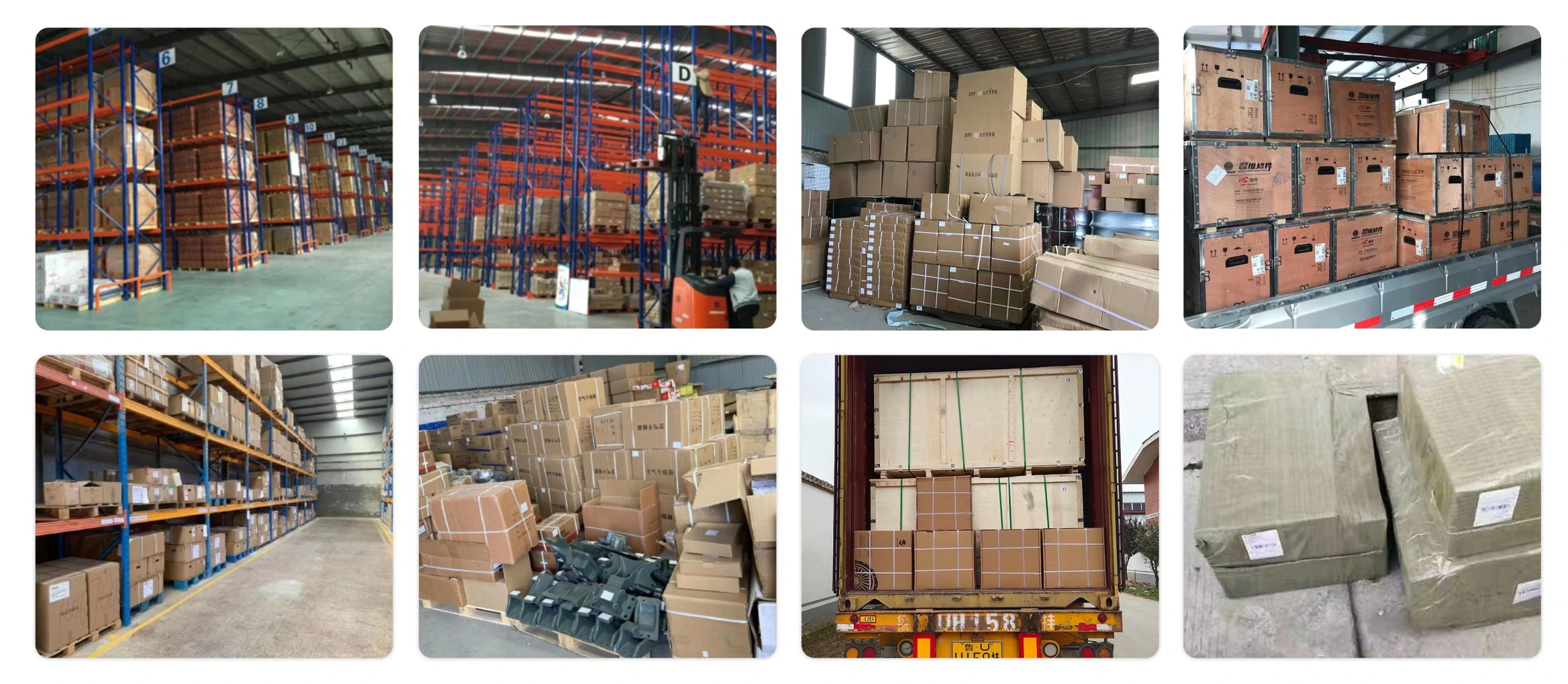
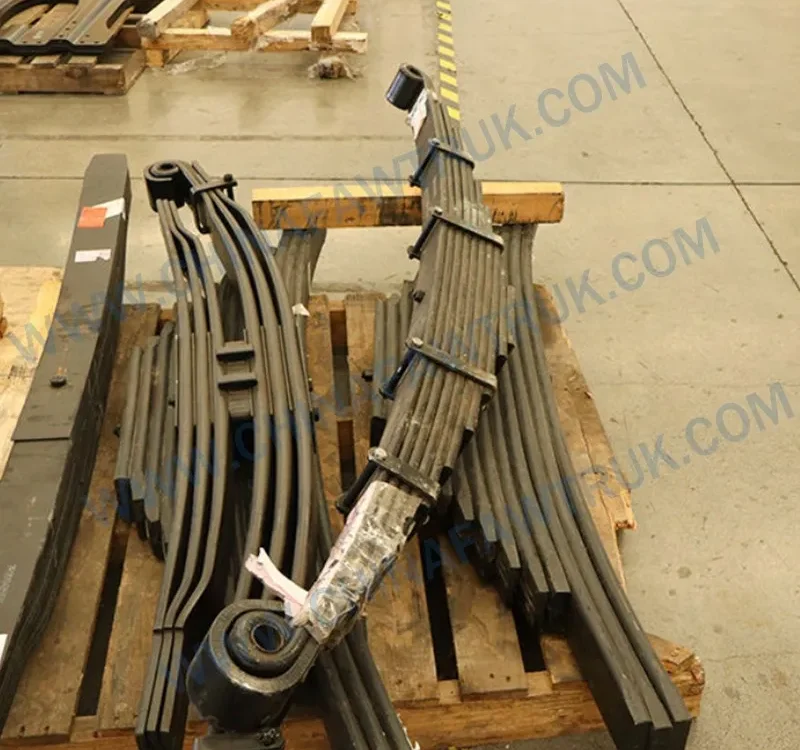
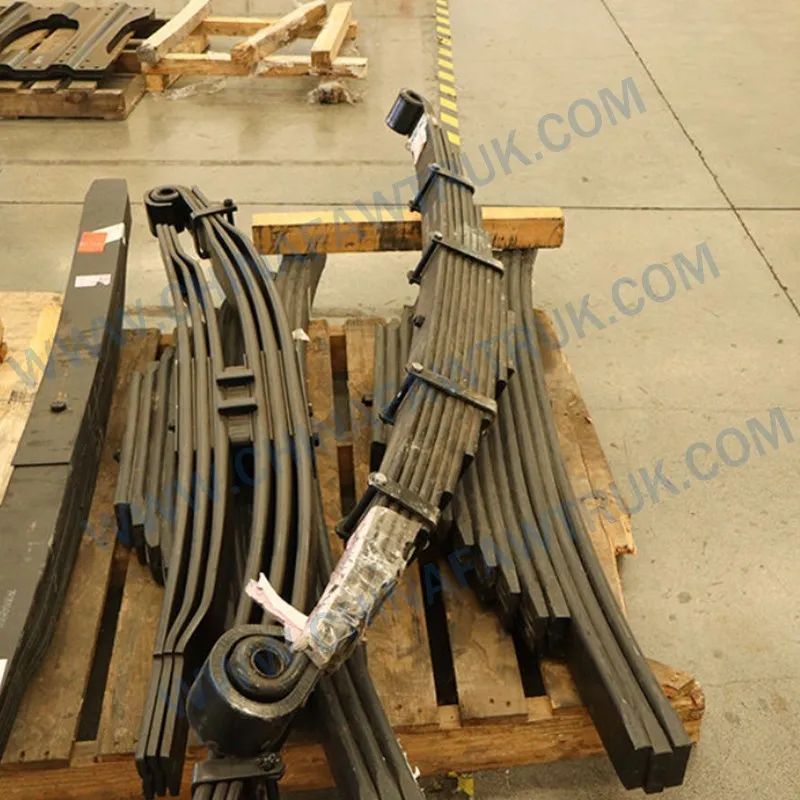
Peças FAW, incluindo o conjunto do bloco de cilindros, são embalados com cuidado para garantir uma entrega segura. Cada componente é protegido por materiais de proteção para evitar danos durante o transporte. A rede logística garante envios pontuais em todo o mundo, apoiando operações de manutenção eficientes. Abaixo está uma imagem ilustrando a embalagem padrão para peças de caminhão FAW, mostrando a atenção aos detalhes no manuseio e armazenamento.
Esta abordagem de embalagem minimiza o risco de corrosão ou danos por impacto, garantindo que peças como o conjunto do bloco de cilindros FAW cheguem em perfeitas condições. Os clientes podem confiar na logística da FAW para obter qualidade e confiabilidade consistentes.