por 


Bem-vindo a este guia técnico vital sobre o Conjunto lógico da árvore de cames FAW, o componente que atua como “cérebro” do trem de válvulas para o FAW Jiefang CA4251P66K24T1A3E5 6×4 trator semirreboque diesel. Esta montagem determina a respiração e o desempenho do motor.
O Conjunto lógico da árvore de cames FAW é responsável pela precisão, tempo não negociável de todas as válvulas de admissão e escape. Isso é “lógica” está fundamentado em seu próprio design, garantindo que cada cilindro absorva ar fresco e expele os gases de escape no exato milissegundo necessário para obter a potência ideal, eficiência, e controle de emissões.
Este guia é um recurso essencial para técnicos profissionais de motores, oficinas mecânicas, e especialistas em peças. Vamos desconstruir todo Conjunto lógico da árvore de cames FAW em suas duas unidades principais utilizáveis: a própria árvore de cames e seu pino-guia crítico. Compreender este sistema é fundamental para qualquer serviço de motor de ponta.
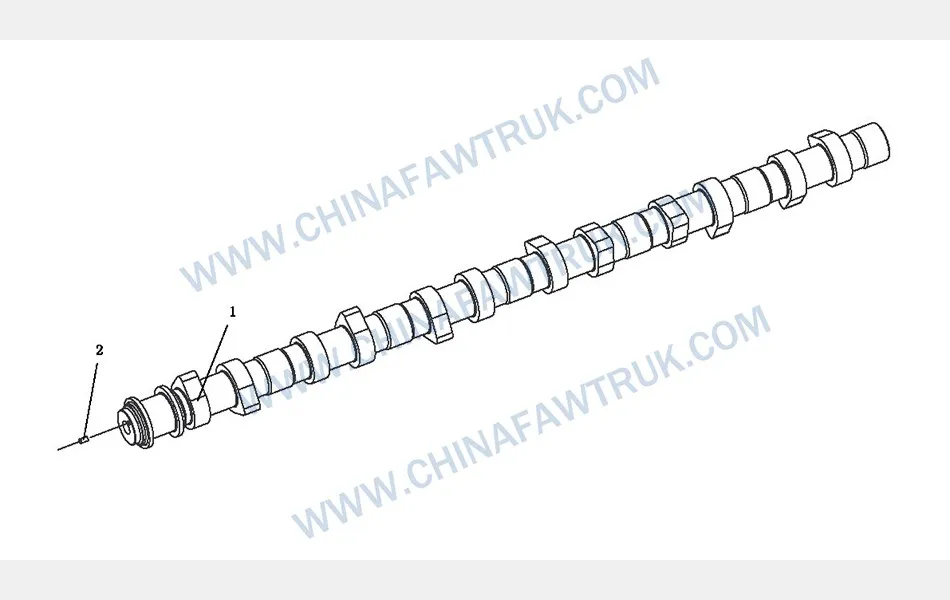
O núcleo do Conjunto lógico da árvore de cames FAW é a ‘árvore de comando’ (1006016-81D). Este é um único, componente altamente projetado que controla todo o trem de válvulas. No motor CA4251P66K24T1A3E5, esta é uma árvore de cames suspensa (OHC), o que significa que fica no topo da cabeça do cilindro, permitindo uma atuação mais direta e precisa da válvula. Este eixo único é responsável por abrir e fechar todos 24 válvulas (12 ingestão, 12 escape) no motor de seis cilindros.
O material e a fabricação desta árvore de cames são críticos. Normalmente é forjado a partir de um único tarugo de aço de alto carbono ou fundido a partir de um aço de alta resistência. “ferro resfriado.” Depois que a forma básica for formada, passa por um complexo processo de usinagem e endurecimento. O “lógica” do Conjunto lógico da árvore de cames FAW é fundamentado no preciso, forma excêntrica de seu 12 ingestão e 12 lóbulos de escape.
Cada um desses lóbulos de came é endurecido por indução para criar uma aparência semelhante a vidro, superfície resistente ao desgaste, enquanto o núcleo do eixo permanece mais dúctil para resistir ao rompimento sob tensão de torção. Os próprios lóbulos são projetados com um “perfil” que dita duas coisas: “elevador” (até que ponto a válvula abre) e “duração” (quanto tempo a válvula permanece aberta). O perfil neste Conjunto lógico da árvore de cames FAW é otimizado para um motor diesel de serviço pesado, priorizando alta elevação e curta duração para criar o torque de baixa rotação característico deste trator.
Esta árvore de cames assenta em sete selas de rolamentos de precisão que são perfuradas na cabeça do cilindro e fixadas pelas tampas da árvore de cames (conforme detalhado em um guia anterior). As superfícies polidas entre os lóbulos do came são os mancais do rolamento. Estas revistas andam sobre uma película hidrodinâmica de petróleo, apenas milésimos de polegada de espessura. A integridade desta película de óleo é o fator mais importante na longa vida útil do Conjunto lógico da árvore de cames FAW. Qualquer falta de óleo ou contaminação levará à pontuação nessas revistas, destruindo a árvore de cames e a cabeça do cilindro.
O segundo e último componente do Conjunto lógico da árvore de cames FAW é o ‘Pino-cavilha’ (Q5210614). Este único pino cilíndrico pode ser a menor peça da montagem, mas é um dos componentes mais críticos para a sobrevivência do motor.
Este pino de aço endurecido é pressionado em um furo perfurado com precisão na “focinho” (frente) da árvore de cames (1006016-81D). Seu objetivo é “chave” ou “índice” a engrenagem de distribuição da árvore de cames principal. A engrenagem de cronometragem, que é acionado pelo virabrequim por meio de uma corrente ou trem de engrenagens, desliza no focinho da árvore de cames. Este pino-guia se encaixa em uma ranhura ou orifício correspondente na engrenagem de distribuição.
Este pino executa uma função não negociável: trava a engrenagem da árvore de cames em um único, posição exata em relação aos lóbulos do came. Isto garante que quando um técnico alinha as marcas de sincronização no trem de engrenagens (contexto “hora do motor”), os lóbulos do Conjunto lógico da árvore de cames FAW estão *também* perfeitamente alinhados com os pistões’ posições.
Sem esse pino, o sincronismo da árvore de cames seria uma questão de suposição, e o parafuso de alto torque na extremidade do came pode escorregar, permitindo que o tempo do came seja “andar.” Se isso acontecer, o motor “lógica” é destruído. As válvulas abririam na hora errada, atingindo o topo dos pistões e causando desastres, danos no motor. A integridade deste único pino é o eixo de toda a Conjunto lógico da árvore de cames FAW.
O Conjunto lógico da árvore de cames FAW não toca diretamente nas válvulas. Como uma câmera suspensa (OHC) projeto, aciona as válvulas através de um mecanismo intermediário, normalmente balancins ou seguidores de rolos. À medida que a árvore de cames gira, o lobo excêntrico gira e seu pico, ou “nariz,” empurra para baixo o balancim. Este braço oscilante então gira, empurrando para baixo e abrindo a válvula contra a pressão de uma mola de válvula pesada.
Toda essa interface é de alto atrito, área de alto desgaste. A superfície do lóbulo do came e a superfície do balancim (muitas vezes um rolo) são duas das superfícies mais tensionadas em todo o motor. É por isso que a lubrificação adequada é tão crítica. Os canais de petróleo dentro do Conjunto lógico da árvore de cames FAW e o cabeçote do cilindro são projetados para inundar esse ponto de contato com um fluxo constante de óleo de alta pressão.
Qualquer falha no fornecimento de petróleo (baixa pressão, viscosidade errada, ou contaminação) fará com que esta película de óleo se quebre. O resultado é rápido, desgaste irritante, onde as superfícies endurecidas do lóbulo do came e do balancim estão “apagado” plano. Esse “câmera plana” é uma falha comum no fim da vida útil de muitos motores. A “lóbulo limpo” no Conjunto lógico da árvore de cames FAW não será mais capaz de fornecer a válvula completa “elevador,” o que significa que a válvula não abrirá totalmente. Isto resulta em um cilindro que não pode “respirar” apropriadamente, levando a um “morto” cilindro, falha de ignição, baixa potência, e fumaça alta.
Portanto, o Conjunto lógico da árvore de cames FAW é um componente que exige uma limpeza meticulosa durante a instalação e a utilização de óleo de motor de alta qualidade durante toda a sua vida útil. Ao instalar um novo Conjunto lógico da árvore de cames FAW, é obrigatório o uso de um especial, lubrificante de montagem com alto teor de molibdênio em cada lóbulo e munhão do rolamento para protegê-los durante os primeiros segundos críticos de operação antes que a pressão do óleo aumente.
Diagnosticando uma falha no Conjunto lógico da árvore de cames FAW normalmente começa com sintomas como falha de ignição persistente em um ou mais cilindros, a “tique-taque” ou “tocando” som vindo da parte superior do motor, ou uma perda gradual de potência ao longo do tempo.
Depois de remover a tampa do cabeçote, um técnico pode inspecionar visualmente os lóbulos do came em busca de qualquer pontuação visível, corrosão, ou descoloração (a “azulado” lóbulo indica calor extremo devido à falta de petróleo). Um método mais preciso envolve o uso de um relógio comparador para medir a “elevador” de cada lóbulo do came conforme o motor é girado manualmente. A elevação medida é então comparada com as especificações de fábrica. Qualquer lóbulo que forneça menos sustentação do que a especificação está desgastado, e o Conjunto lógico da árvore de cames FAW deve ser substituído.
É fundamental lembrar que a árvore de cames faz parte de um conjunto combinado. Se o Conjunto lógico da árvore de cames FAW (1006016-81D) é encontrado danificado, é quase certo que os componentes nos quais ele é montado (os balancins) também estão danificados. A simples substituição do came sem substituir os balancins desgastados resultará na destruição do novo came em um período muito curto de tempo. Um trabalho completo de ponta requer uma inspeção completa de todo o trem de válvulas associado ao Conjunto lógico da árvore de cames FAW.
A tabela a seguir fornece o completo, detalhamento detalhado de todos os componentes identificados no 'Conjunto lógico da árvore de cames’ diagrama para o trator FAW CA4251P66K24T1A3E5. Esse Conjunto lógico da árvore de cames FAW é o núcleo do trem de válvulas do motor.
| Marca | Parte não. | Nome da peça | Quantidade |
|---|---|---|---|
| 1 | 1006016-81D | Eixo de comando | 1 |
| 2 | Q5210614 | Pino-guia | 1 |
As especificações para o Conjunto lógico da árvore de cames FAW são definidos por sua função como controlador mestre do trem de válvulas do motor em uma configuração OHC de 6 cilindros. O inteiro Conjunto lógico da árvore de cames FAW deve ser instalado com precisão.
| Aplicação em veículos | FAW Jiefang CA4251P66K24T1A3E5 6×4 Trator |
| Grupo de Componentes | Conjunto lógico da árvore de cames FAW |
| Número da peça da árvore de cames. | 1006016-81D |
| Número da peça do pino-guia. | Q5210614 |
| Tipo de motor | 6-Cilindro, Câmera suspensa (OHC), 24-Válvula Diesel |
| Contagem de lóbulos | 24 (12 Ingestão, 12 Escape) |
| Material (Eixo de comando) | Tarugo de aço forjado ou ferro fundido resfriado |
| Processo de endurecimento | Endurecimento por indução em lóbulos e revistas |
| Função Primária | Aciona com precisão todos 24 válvulas de motor (admissão e exaustão) na sequência e duração corretas. |
Peças FAW, incluindo o conjunto do bloco de cilindros, são embalados com cuidado para garantir uma entrega segura. Cada componente é protegido por materiais de proteção para evitar danos durante o transporte. A rede logística garante envios pontuais em todo o mundo, apoiando operações de manutenção eficientes. Abaixo está uma imagem ilustrando a embalagem padrão para peças de caminhão FAW, mostrando a atenção aos detalhes no manuseio e armazenamento.
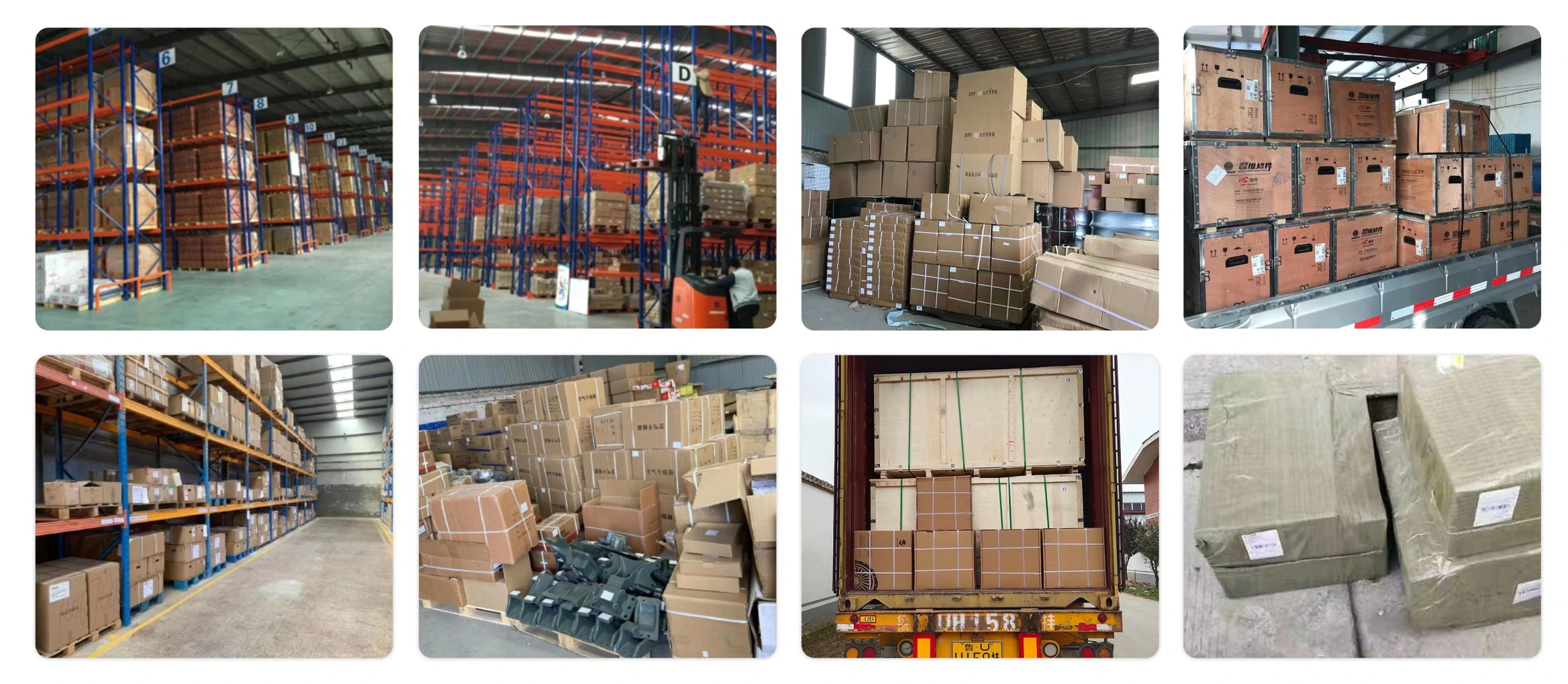
Esta abordagem de embalagem minimiza o risco de corrosão ou danos por impacto, garantindo que peças como o conjunto do bloco de cilindros FAW cheguem em perfeitas condições. Os clientes podem confiar na logística da FAW para obter qualidade e confiabilidade consistentes.