par 


Bienvenue dans cette analyse critique de Terminal de données de véhicule à connexion rapide FAW (Réf.: 7925040-92W). Ce composant est essentiel, mais simple, “logique” assemblage pour le FAW Jiefang CA4251P66K24T1A3E5 6×4 tracteur semi-remorque diesel. Il fonctionne comme le principal, interface standardisée d’accès au réseau informatique de bord du véhicule (Bus CAN). Ce “prêt à l'emploi” le port est la passerelle vers tous les outils télématiques et de diagnostic modernes.
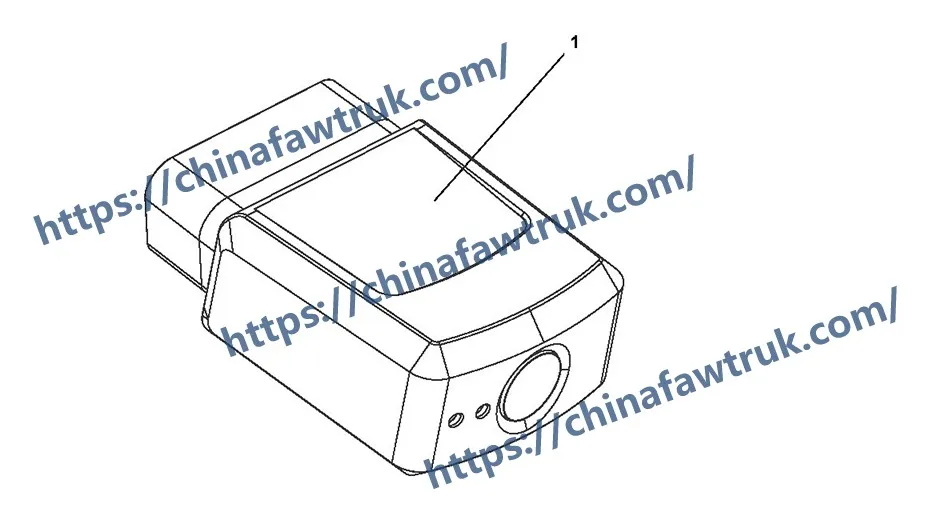
Le “logique” de la Terminal de données de véhicule à connexion rapide FAW est l'un des “accès libre.” Contrairement à un boitier télématique totalement intégré (comme le « Terminal de service d'information sur le véhicule »), ce composant fournit une prise universelle. Ce “logique” permet aux gestionnaires de flotte d'adopter une “Apportez votre propre appareil” (BYOD) stratégie, brancher leur matériel télématique ou de gestion de flotte tiers préféré (Par exemple, Géotab., Samsara, Verizon Connect) sans aucune épissure de fil complexe.
Ce guide approfondi est essentiel pour les gestionnaires de flotte, techniciens, et spécialistes des pièces détachées. Le montage est extrêmement simple, composé d'une seule unité primaire utilisable minimale (MSU). Nous déconstruirons les puissants “logique” de ce terminal unique, expliquant quelles données il fournit, comment il fonctionne à la fois pour la télématique et le diagnostic, et analyser sa construction physique en tant que seul MSU.
Le Terminal de données de véhicule à connexion rapide FAW (7925040-92W) est la réponse à un problème majeur dans l’industrie des flottes: interopérabilité télématique. Dans le passé, l'installation d'un appareil télématique tiers était un risque élevé, procédure coûteuse. Un technicien devrait passer des heures à couper, tapotement, et épissage dans les faisceaux de câbles OEM du camion (comme le bus CAN et les lignes électriques) à “écouter” aux données. Ce processus était sujet aux erreurs, pourrait annuler les garanties du véhicule, et créé plusieurs points de panne électrique potentielle.
Le “logique” de cet assemblage est d'éliminer complètement ce risque. Le Terminal de données de véhicule à connexion rapide FAW est un OEM installé “perte de données” ou “porte.” Il fournit un nettoyage, sécurisé, et prise standardisée (généralement un connecteur Deutsch à 9 broches conforme à J1939 ou un port de style OBD-II à 16 broches) déjà intégré au réseau du véhicule.
Ce “prêt à l'emploi” la fonctionnalité est révolutionnaire pour la gestion de flotte. Il permet à une entreprise qui exploite un “flotte mixte” (Par exemple, FAW, Volvo, Fret de ligne) utiliser un *unique* fournisseur de télématique pour tous leurs camions. Le processus d'installation passe d'un travail de câblage de 3 heures à un travail de 3 minutes “plug-in” tâche.
Le “Pare-feu” Logique:
Ce composant n'est pas seulement un “idiot” rallonge électrique. Le Terminal de données de véhicule à connexion rapide FAW contient souvent sa propre carte mère minimale qui agit comme un système sécurisé “pare-feu.” Il s'agit d'une fonction de sécurité essentielle. Il permet aux appareils tiers de “lire” (écouter) les données de diffusion du véhicule (comme la vitesse, RPM, carburant, etc.) mais *les empêche* de “en écrivant” (envoi) retour des commandes sur le bus CAN.
Ce “en lecture seule” la logique de la passerelle est essentielle. Il empêche un dispositif télématique tiers défectueux ou mal conçu d'interférer accidentellement avec les fonctions critiques du véhicule., comme l'envoi d'une commande parasite qui pourrait perturber l'ABS, transmission, ou calculateurs moteur. Le Terminal de données de véhicule à connexion rapide FAW assure la sécurité et l’intégrité du système d’exploitation principal du camion.
Le “Double usage” Logique:
Ce port dessert deux maîtres. Bien que sa conception principale soit destinée à la télématique, c'est également *exactement le même port* qu'un technicien utilise pour l'entretien et les diagnostics. Lorsqu'un camion s'arrête dans une aire de service, le technicien connecte son ordinateur portable de diagnostic (exécuter un logiciel spécifique à FAW) à ce même «terminal de données de véhicule FAW Quick-Connect».
Ce double objectif “logique” signifie que le port doit être robuste et fiable. C'est le point d'entrée unique pour la lecture des codes défauts (DTC), visualisation des données du capteur en direct, et exécuter des fonctions de service avancées telles que “forcé” Régénération DPF ou recalibrage des capteurs.
Lorsqu'un appareil est branché sur le Terminal de données de véhicule à connexion rapide FAW, il accède immédiatement au riche flux de données diffusé sur le bus CAN J1939 du camion. Ces données sont les “logique” derrière toute gestion de flotte moderne.
Les points de données clés fournis par cette interface incluent:
L'assemblée elle-même, l'ensemble de terminal de données du véhicule à connexion rapide’ (7925040-92W), est l'unité minimale utilisable (MSU). Cette partie n'est pas seulement le port visible sur le tableau de bord; c'est un assemblage complet qui comprend le port, un support de montage, et une courte queue de cochon avec un connecteur à l'arrière.
Construction: Le port est fabriqué à partir de haute qualité, polymère ABS résistant aux chocs. Il est conçu avec un “saisie” (la forme du port) pour garantir que seul le bon connecteur J1939/OBD-II peut être inséré, et seulement dans la bonne orientation. Les épingles à l'intérieur sont de haute qualité, souvent plaqué or, pour assurer un parfait, connexion électrique sans corrosion sur des dizaines de milliers de cycles d'insertion/retrait.
Modes de défaillance & Facilité d'entretien:
En tant que MSU principale du Terminal de données de véhicule à connexion rapide FAW, les échecs sont presque toujours physiques.
Le service est simple. Un technicien déboulonnera le véhicule endommagé Terminal de données de véhicule à connexion rapide FAW sous le tableau de bord, débranchez sa queue de cochon du faisceau principal de la cabine, et installez le nouveau MSU. Aucun câblage n'est requis.
Le tableau suivant fournit l'intégralité, ventilation détaillée du type de composant unique identifié dans le Terminal de données de véhicule à connexion rapide FAW schéma du tracteur FAW CA4251P66K24T1A3E5.
| Marque | Partie no. | Nom de la pièce | Quantité |
|---|---|---|---|
| 1 | 7925040-92W | Ensemble de terminal de données de véhicule à connexion rapide | 1 |
Les spécifications pour le Terminal de données de véhicule à connexion rapide FAW se définissent par son rôle d’universel, “prêt à l'emploi” port d’accès au réseau de données interne du véhicule.
| Demande de véhicule | FAW Jiefang CA4251P66K24T1A3E5 6×4 Tracteur |
| Groupe de composants | Terminal de données de véhicule à connexion rapide FAW |
| Assemblage principal P/N | 7925040-92W |
| Type de système | Passerelle télématique / Port de diagnostic (OBD/J1939) |
| Interface “Logique” | “Prêt à l'emploi” pour la télématique tierce (BYOD) |
| Protocole de données | J1939 (CAN-Bus) |
| Fonctions clés | Données de gestion de flotte, Diagnostic des services, Lecture du DTC |
| Logique de sécurité | Données en lecture seule “Pare-feu” (Typique) |
| Connecteur physique | J1939 style OBD-II à 9 ou 16 broches |
| Unité minimale utilisable | « Ensemble de terminal de données de véhicule à connexion rapide’ (7925040-92W) |
Pièces FAW, y compris l'ensemble bloc-cylindres, sont emballés avec soin pour garantir une livraison en toute sécurité. Chaque composant est sécurisé dans des matériaux de protection pour éviter tout dommage pendant le transport. Le réseau logistique garantit des expéditions ponctuelles dans le monde entier, soutenir des opérations de maintenance efficaces. Vous trouverez ci-dessous une image illustrant l'emballage standard des pièces de camion FAW., mettant en valeur l’attention portée aux détails dans la manipulation et le stockage.
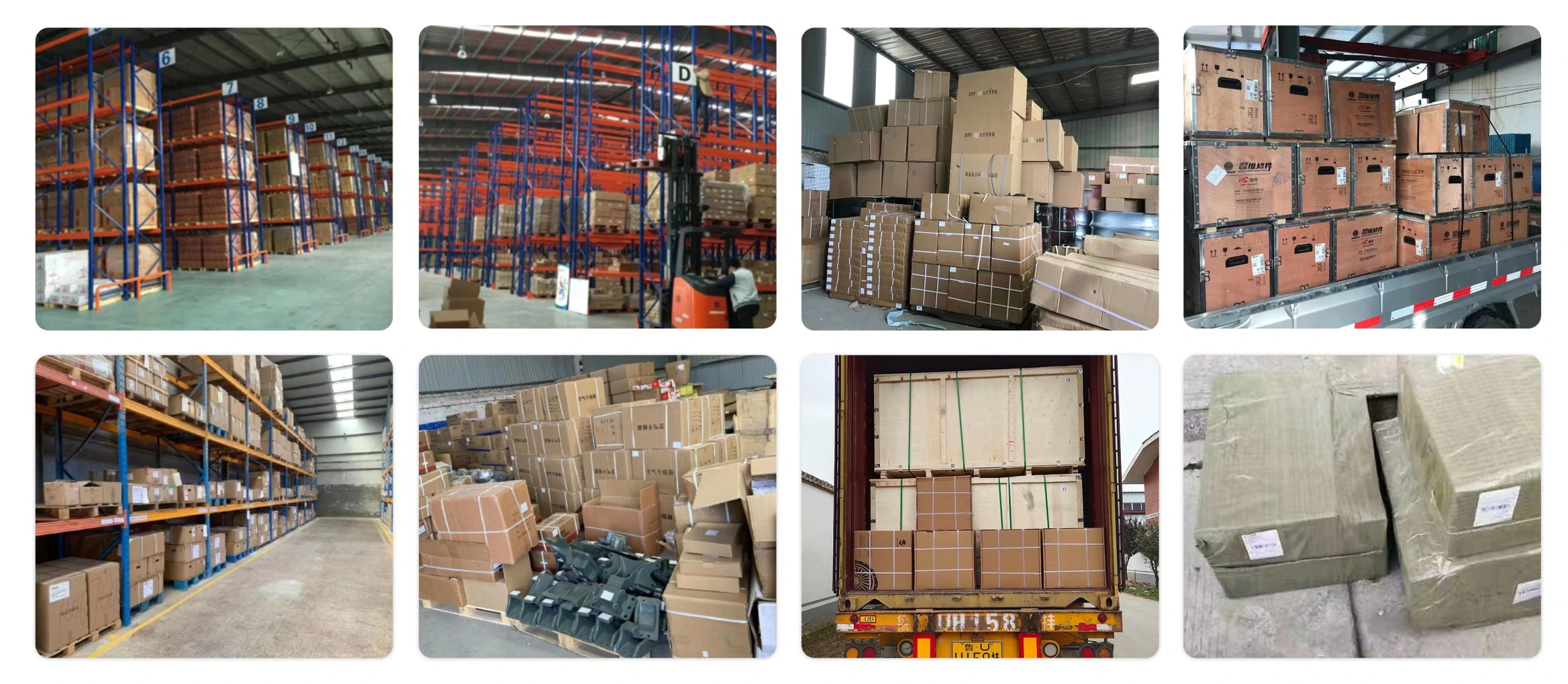
Cette approche d'emballage minimise le risque de corrosion ou de dommages causés par les chocs., s'assurer que les pièces comme l'ensemble bloc-cylindres FAW arrivent en parfait état. Les clients peuvent compter sur la logistique de FAW pour une qualité et une fiabilité constantes.