by 


Welcome to this definitive technical guide to the FAW Wing Panel Logic Assembly. This is the complete, multi-part aerodynamic and access system for the cab of the FAW Jiefang CA4251P66K24T1A3E5 6×4 diesel semi-trailer tractor. This is far more than a simple “fender.” This “logic” assembly has a critical dual-function: 1) to manage airflow and protect the cab from road spray, and 2) to provide a safe, structural, 3-stage step for driver ingress and egress.

The FAW Wing Panel Logic Assembly is a key component of the vehicle’s exterior. It is engineered as a modular system, not a single part, for a very specific “logic”: serviceability. By constructing this high-impact area from multiple, independent Minimum Serviceable Units (MSUs), FAW has ensured that minor damage from road debris or a tight turn doesn’t require a costly, full-body panel replacement.
This in-depth guide is essential for body shop technicians, collision repair specialists, and parts managers. We will deconstruct the entire FAW Wing Panel Logic Assembly into its 15 component types. We will analyze the primary aerodynamic panels, the critical 3-stage step assemblies, the aesthetic trim pieces, and the complex, vibration-proof fastener system that holds it all together.
The largest components of the FAW Wing Panel Logic Assembly are the main ‘Left front wing panel’ (5103121-D04) and ‘Right front wing panel’ (5103122-D04). These are the primary “fenders” and are critical MSUs.
Aerodynamic & Protection Logic: The “logic” of these panels is twofold. First, they are aerodynamic devices. They are precisely shaped to channel air smoothly around the front steer axle and wide tires, reducing turbulence and drag. This “aero logic” is a key contributor to the truck’s overall fuel efficiency.
Second, they are the cab’s primary splash guards. They are responsible for catching the high-velocity spray, mud, gravel, and road salt thrown up by the front tires. This “protection logic” is vital for keeping the cab doors, windows, and (most importantly) the side mirrors clean, which is a critical safety factor for driver visibility.
Construction & Serviceability: These panels are not made of metal. They are molded from a durable, flexible, high-impact polymer (like polypropylene). This material “logic” is superior for this application, as it can absorb minor impacts from road debris without denting or cracking, and it is completely immune to the rust and corrosion that would plague a steel panel. As MSUs, they are designed to be replaced individually after a collision.
This section is the “longer” and most function-critical part of the FAW Wing Panel Logic Assembly. The ‘Left 3-stage step panel’ (5103191-D04) and ‘Right 3-stage step panel’ (5103192-D04) are the primary driver access points.
Ergonomic & Safety Logic: The “logic” of a “3-stage” step is a matter of safety and ergonomics. The floor of a cab-over-engine truck is extremely high off the ground. These MSUs are not an aesthetic trim piece; they are a structural, load-bearing component.
The 3-stage design provides three wide, deep, and evenly spaced steps. This “logic” allows a driver, who may be wearing heavy boots or carrying a bag, to maintain three points of contact (e.g., two feet, one hand on a grab-handle) at all times while climbing into or out of the cab. This is the single most important design feature for preventing slips and falls, a leading cause of driver injury.
Construction: These panels are manufactured from an extremely tough, UV-stabilized polymer. The “logic” of their design is visible in the tread pattern. The steps are not smooth; they feature an aggressive, raised, non-slip texture that is designed to provide maximum grip even when covered in mud, snow, or diesel fuel. The open-grid design of the steps also allows debris to fall through, rather than building up and creating a hazard.
Serviceability (MSU): These step panels are separate MSUs from the main wing panels. This is a critical service “logic.” If a driver damages a step (e.g., in a tight turn or by hitting a high curb), the step panel can be unbolted and replaced *without* replacing the entire, more expensive FAW Wing Panel Logic Assembly.
This group of four components provides the final “fit and finish” for the FAW Wing Panel Logic Assembly. They are the ‘Left/Right front wing panel lower trim’ (5103137-D04 / 5103138-D04) and the ‘Left/Right upper wing panel trim block’ (5103131-A01 / 5103132-A01).
Aesthetic & Aero “Logic”: The “logic” of these MSUs is to act as “gap fillers.” They are designed to cover the seams and mounting hardware where the main wing panel, the step panel, and the cab body all meet.
This provides a clean, seamless, “finished” look. This is also an aerodynamic “logic.” By covering these panel gaps, the trim pieces prevent high-pressure air from getting “trapped,” which reduces both wind noise (improving driver comfort) and parasitic drag (improving fuel economy). These are MSUs that are easily replaced if scuffed or lost.
This final group is the most numerous and arguably one of the most critical. The FAW Wing Panel Logic Assembly is a large, multi-piece component mounted in a high-vibration zone. The fastener system is an engineered “logic” to prevent it from shaking itself apart.
System 1: The Bolted Joint (MSUs 9, 10, 11)
The list calls for eight (8) ‘Hexagon nuts’ (CQ34006), eight (8) ‘Spring washers’ (Q40306), and eight (8) ‘Large washers’ (Q40206). This is the “logic” for the main structural mounts.
System 2: The “Combination” Logic (MSUs 12-15)
The list calls for a total of 31 ‘Combination bolts’ of four different types (CQ1460625F6B, CQ1460825, etc.). The “Combination” (组合) logic is key. These bolts have a *captive, pre-attached lock washer* (like a spring or serrated washer). This is a faster, more error-proof assembly “logic.” It provides the same anti-vibration function as System 1, but is much faster to install on an assembly line. These 31 bolts are used to secure all the trim pieces and secondary panel connections.
The following table provides the complete, detailed breakdown of all 15 component types identified in the FAW Wing Panel Logic Assembly diagram for the FAW CA4251P66K24T1A3E5 tractor.
| Mark | Part No. | Part Name | Quantity |
|---|---|---|---|
| 1 | 5103121-D04 | Left front wing panel | 1 |
| 2 | 5103122-D04 | Right front wing panel | 1 |
| 3 | 5103191-D04 | Left 3-stage step panel | 1 |
| 4 | 5103192-D04 | Right 3-stage step panel | 1 |
| 5 | 5103137-D04 | Left front wing panel lower trim | 1 |
| 6 | 5103138-D04 | Right front wing panel lower trim | 1 |
| 7 | 5103131-A01 | Left upper wing panel trim block | 1 |
| 8 | 5103132-A01 | Right upper wing panel trim block (see 5103131-A01) | 1 |
| 9 | Q40206 | Large washer | 8 |
| 10 | Q40306 | Spring washer | 8 |
| 11 | CQ34006 | Hexagon nut | 8 |
| 12 | CQ1460625F6B | Combination bolt | 14 |
| 13 | CQ1460825 | Combination bolt | 8 |
| 14 | CQ1460616 | Combination bolt | 6 |
| 15 | CQ1460625 | Combination bolt | 3 |
The specifications for the FAW Wing Panel Logic Assembly are defined by its dual-function role as a structural access point and an aerodynamic body panel. All components are designed for high-impact resistance and serviceability.
| Vehicle Application | FAW Jiefang CA4251P66K24T1A3E5 6×4 Tractor |
| Component Group | FAW Wing Panel Logic Assembly |
| System Type | Modular Body Panel & Access Step System |
| Primary Logic | Aerodynamic Airflow, Splash/Debris Protection |
| Secondary Logic | 3-Stage Non-Slip Driver Access |
| Material | High-Impact, UV-Stabilized Polymer/Polypropylene |
| Main Panel MSUs | 5103121-D04 (Left), 5103122-D04 (Right) |
| Step Panel MSUs | 5103191-D04 (Left), 5103192-D04 (Right) |
| Trim Panel MSUs | 5103137-D04, 5103138-D04, 5103131-A01, 5103132-A01 |
| Fastener Logic | Anti-Vibration: 31x Combination Bolts, 8x Spring Washers |
| Total Component Types | 15 |
FAW parts, including the Cylinder Block Assembly, are packaged with care to ensure safe delivery. Each component is secured in protective materials to prevent damage during transit. The logistics network guarantees timely shipments worldwide, supporting efficient maintenance operations. Below is an image illustrating the standard packaging for FAW truck parts, showcasing the attention to detail in handling and storage.
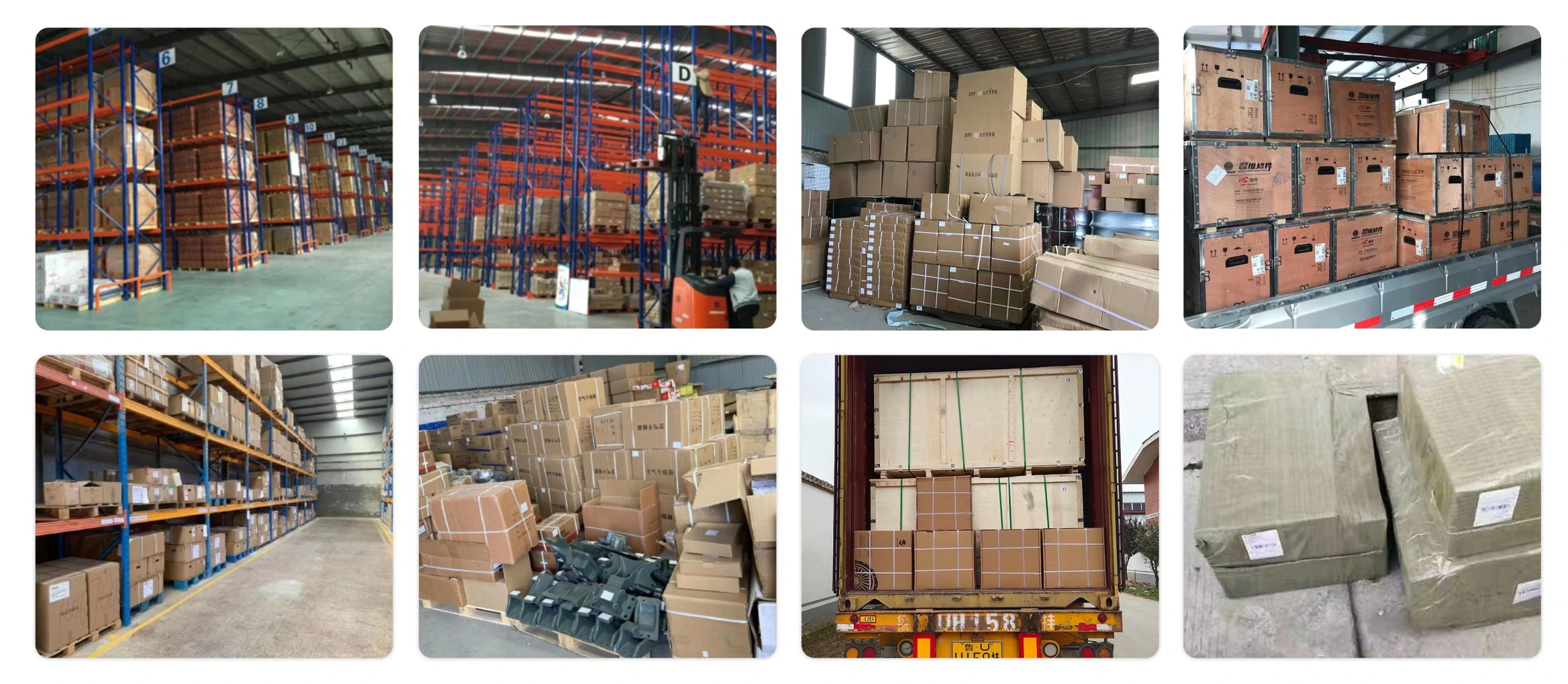
This packaging approach minimizes the risk of corrosion or impact damage, ensuring that parts like the FAW Cylinder Block Assembly arrive in perfect condition. Customers can rely on FAW’s logistics for consistent quality and reliability.