by 


Welcome to this critical component analysis of the FAW Gas Springs And Brackets assembly (Assembly 641). This is the complete, 4-part “lift-and-hold” system for the ‘Front Fascia Outer Panel’ (Assembly 638) on the FAW Jiefang CA4251P66K24T1A3E5 6×4 diesel semi-trailer tractor. This assembly’s “logic” is twofold: it provides the “muscle” to lift the heavy fascia panel and the “safety” to hold it securely open, all while being anchored by a set of robust, dedicated brackets.

The FAW Gas Springs And Brackets assembly is the core of the fascia’s “service logic.” The front fascia panel must be opened to access critical daily-check items like the ‘Windscreen Wiper’ (Assembly 629) motor and the ‘Scrubber’ (Assembly 631) fluid reservoir. This system replaces old, heavy, and dangerous mechanical prop-rods with a sophisticated, safe, and nearly effortless gas-powered “logic.”
This in-depth guide is essential for technicians, parts managers, and collision specialists. We will deconstruct the entire FAW Gas Springs And Brackets assembly into its 4 distinct Minimum Serviceable Unit (MSU) types. We will analyze the “gas-over-oil” logic of the main springs, the “structural anchor” logic of the brackets, and the “anti-vibration” logic of the high-tensile locking nuts.
The ‘Gas spring assy – front panel’ (5302410-A01) is the core technology of the FAW Gas Springs And Brackets system. The parts list calls for two (2) of these, one for each side. This MSU is a sealed, non-repairable unit that provides the “lift” and “hold” logic. It is often called a “gas strut.”
This component’s “logic” is a sophisticated “gas-over-oil” design, combining two principles.
1. The “Lifting Logic” (Nitrogen Gas):
The main body of the strut (the “cylinder”) is filled with high-pressure, inert nitrogen gas (e.g., 200-500N). This gas *wants* to expand, constantly pushing the thinner “rod” *out* of the cylinder. This “pushing” force is the “logic” of the lift.
When the ‘Front Fascia’ (Assembly 638) is unlatched via the ‘Release Handle’ (Assembly 639), this gas pressure, acting on both sides of the panel, provides the “muscle.” It automatically, and with minimal effort from the driver, lifts the heavy fascia panel to its fully open position.
This gas pressure is also the “holding logic.” When fully extended, the pressure is what securely holds the panel open, acting as a critical safety feature that prevents the heavy panel from slamming shut, even in windy conditions.
2. The “Damping Logic” (Hydraulic Oil):
A spring full of only gas would be dangerous; it would “fly open” violently. To control this, the strut also contains a small amount of hydraulic oil. A piston on the end of the rod is forced to move *through* this oil.
This “oil damping logic” is what makes the motion smooth and safe. The oil is forced through a tiny, calibrated hole (an “orifice”) in the piston. This “hydraulic” action slows the movement of the rod, ensuring the fascia panel opens and closes at a controlled, safe speed, not as a “spring-loaded” catapult.
3. Serviceability (MSU):
The ‘Gas spring assy’ is a high-wear MSU. Its internal, high-pressure seals wear out over time, typically 5-7 years. The “logic” of failure is that the nitrogen gas slowly leaks past the seal.
The symptoms are progressive: first, the panel will stop lifting *all* the way on its own. Then, it will not lift *at all*. Finally, and most dangerously, it will *not stay up*, presenting a major safety hazard. As a sealed MSU, it cannot be “re-gassed.” The FAW Gas Springs And Brackets must be replaced, and it is mandatory to replace them *as a pair* to ensure even lifting force and prevent twisting of the fascia panel.
The FAW Gas Springs And Brackets require a rock-solid foundation. This is the “logic” of the ‘Left lower bracket assy’ (5302445-A01) and the ‘Right lower bracket assy’ (5302450-A01).
These two MSUs are the dedicated, heavy-duty “anchor points” for the lower end of the gas springs. The upper ends attach to brackets (Assembly 638, P/N 5302220-D03) on the fascia panel itself.
Construction Logic: These are not simple, flat plates. They are complex, fabricated (welded) brackets made from heavy-gauge, high-strength steel. Their “logic” is to be immensely strong, as they must withstand the constant “pushing” force of the gas springs when the panel is closed, and the “pulling” (tensile) force as the springs hold the panel’s weight when open.
They are mirror-image, “left” and “right” parts, designed to bolt securely to the truck’s main cab bulkhead or chassis frame. They feature a precision-drilled hole or integrated ball-stud to accept the “eye” of the gas spring.
Serviceability (MSU): These brackets are non-wear items. They are MSUs that are only replaced after a front-end collision that has bent, cracked, or deformed them. A damaged bracket will misalign the entire FAW Gas Springs And Brackets system, causing the fascia panel to close unevenly or “bind” on one side.
This final MSU is the “logic” that holds the FAW Gas Springs And Brackets assembly together in a high-vibration environment. The ‘Type 1 non-metallic insert hexagon lock nut’ (032806F6) is a critical safety component.
The “Nyloc” Logic: This is a “Nyloc” or “prevailing torque” lock nut. Its “logic” comes from the “non-metallic insert”—a ring of tough nylon embedded in the nut’s crown.
As the nut is tightened onto the gas spring’s ball-stud (or the bracket’s mounting stud), the threads *cut* into this nylon. This creates an intense, 360-degree frictional “grip” that is *immune to vibration*.
Why is this “Logic” essential? A gas spring is constantly vibrating with the engine and road. A standard nut *would* vibrate loose, back off its threads, and fall off. This would cause the gas spring to detach (often violently), potentially shattering the fascia panel or causing it to slam shut. The “logic” of this Nyloc nut is to prevent this catastrophic failure.
Serviceability (MSU): The quantity of four (4) is key. This provides two nuts for each gas spring: one for the top mounting point (on the fascia) and one for the bottom mounting point (on the bracket). These nuts are **strictly single-use MSUs**. Once removed, the nylon insert is “cut” and compromised. It has lost its locking ability. Re-using these nuts is a critical safety error. A new set *must* be used every time the FAW Gas Springs And Brackets are serviced.
The following table provides the complete, detailed breakdown of all 4 component types identified in the FAW Gas Springs And Brackets assembly for the FAW CA4251P66K24T1A3E5 tractor.
| Mark | Part No. | Part Name | Quantity |
|---|---|---|---|
| 1 | 5302410-A01 | Gas spring assy – front panel | 2 |
| 2 | 5302445-A01 | Left lower bracket assy – gas spring (see 5302451-A01) | 1 |
| 3 | 5302450-A01 | Right lower bracket assy – gas spring | 1 |
| 4 | 032806F6 | Type 1 non-metallic insert hexagon lock nut | 4 |
The specifications for the FAW Gas Springs And Brackets are defined by its function as a safety-critical “lift-and-hold” system for the front fascia panel.
| Vehicle Application | FAW Jiefang CA4251P66K24T1A3E5 6×4 Tractor |
| Component Group | FAW Gas Springs And Brackets |
| System Type | Gas-Over-Oil Damped Spring System |
| Primary Logic | Assisted Lift, Damped Motion, and Safety Hold-Open |
| MSU 1 (Spring) | ‘Gas spring assy’ (5302410-A01) – Qty 2 |
| MSU 2 (Bracket) | ‘Left lower bracket assy’ (5302445-A01) – Qty 1 |
| MSU 3 (Bracket) | ‘Right lower bracket assy’ (5302450-A01) – Qty 1 |
| MSU 4 (Fastener) | ‘…hexagon lock nut’ (032806F6) – Qty 4 |
| Fastener Logic | Anti-Vibration (Nylon Insert Lock Nut) |
| Serviceability | All components are MSUs. Nuts (MSU 4) are **Single-Use**. Springs (MSU 1) must be replaced in pairs. |
FAW parts, including the Cylinder Block Assembly, are packaged with care to ensure safe delivery. Each component is secured in protective materials to prevent damage during transit. The logistics network guarantees timely shipments worldwide, supporting efficient maintenance operations. Below is an image illustrating the standard packaging for FAW truck parts, showcasing the attention to detail in handling and storage.
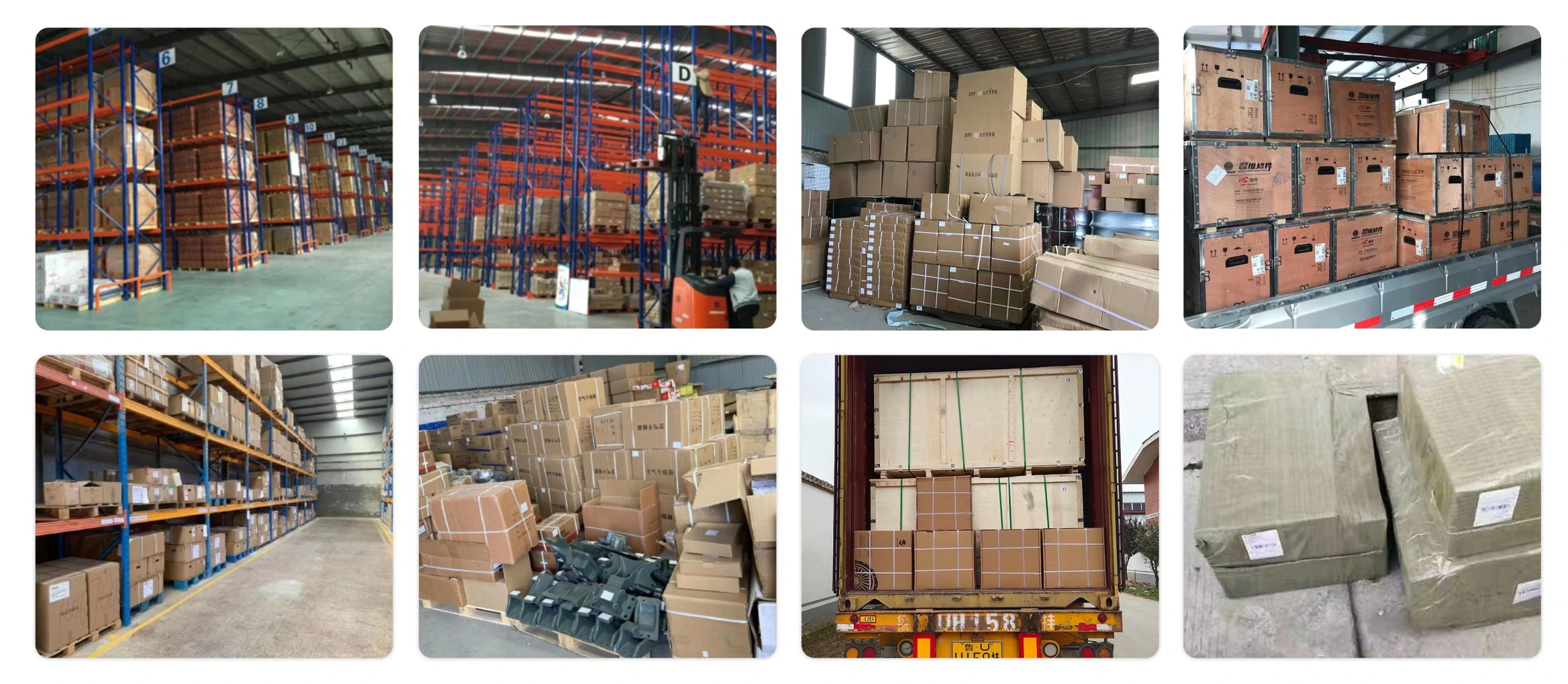
This packaging approach minimizes the risk of corrosion or impact damage, ensuring that parts like the FAW Cylinder Block Assembly arrive in perfect condition. Customers can rely on FAW’s logistics for consistent quality and reliability.