by 


Welcome to this critical dissection of the FAW Front Lock And Release Handle assembly (Assembly 639). This is the complete, 7-type, multi-part mechanical assembly that controls the ‘Front Fascia Outer Panel’ (Assembly 638) on the FAW Jiefang CA4251P66K24T1A3E5 6×4 tractor. This system’s “logic” is to provide a robust, secure, “dual-point” locking system for the fascia, with a convenient, single-point “remote” release.

The FAW Front Lock And Release Handle is a primary safety and serviceability component. Its “locking logic” is essential for safety, ensuring the heavy front fascia (which directs airflow to the radiator) remains securely latched at highway speeds, preventing it from being torn off by wind force. Its “release logic” is essential for service, providing a simple, mechanical way for a driver or technician to unlatch the panel for daily fluid checks (e.g., windscreen washer).
This in-depth guide is a vital resource for technicians and parts managers. We will deconstruct the entire FAW Front Lock And Release Handle system into its 7 distinct Minimum Serviceable Unit (MSU) types. We will analyze the “Human Interface” (the handle), the “Actuation Logic” (the cable), the “Dual-Security Core” (the locks and pins), and the “Anti-Vibration” fasteners that unite the system.
This group of components represents the “remote control” logic of the FAW Front Lock And Release Handle. It is how the driver’s action is transmitted to the locks.
MSU 2: ‘Release handle assy’ (5302530-A01)
This is the “Human Interface” MSU. It is the physical T-handle or lever, typically located in the driver’s footwell or near the door, that the driver pulls to open the front fascia. Its “logic” is to provide a durable, ergonomic, and high-leverage pull-point. It is made from high-impact polymer to withstand years of use. This handle is the “input” for the entire FAW Front Lock And Release Handle system.
MSU 4: ‘Pull cord assy’ (5302550AA01)
This is the “tendon” that connects the handle (MSU 2) to the locks (MSU 1). It is a “Bowden cable” system.
The “logic” of this cable is to transmit a pulling force reliably around corners. It consists of:
This single ‘Pull cord assy’ features an integrated “splitter” or “junction box.” This “logic” is critical, as it takes the single cable from the handle and splits it into *two* separate cables, one for each of the two ‘Lock body’ assemblies. This ensures a single pull actuates both locks simultaneously and with equal force.
As an MSU, this cable is a high-wear item. It can seize from rust, fray, or stretch over time, leading to a “mushy” or non-functional handle. It is replaced as a single, sealed unit.
This is the “business end” of the FAW Front Lock And Release Handle. It is a four-part system (2 locks, 2 pins) that provides the actual security. The “logic” of using two separate lock assemblies is for stability and safety.
A single, central latch on a large, wind-facing panel like the front fascia would allow the corners to “flutter” at high speed, leading to vibration, noise, and eventual fatigue failure. The “dual-point” logic of the FAW Front Lock And Release Handle (one lock on the far left, one on the far right) creates a stable, three-point “triangle” (with the hinges) that holds the panel rigid.
MSU 1: ‘Lock body assy-front fascia’ (5302510-A01) – Qty 2
These are the “active” MSUs of the system. Each ‘Lock body assy’ is a spring-loaded, rotary latch mechanism. They are mounted *inside* the ‘Front Fascia Outer Panel’ (Assembly 638).
“Latching Logic”: When the fascia panel is closed, the ‘Lock pin’ (MSU 3) enters the “jaw” of this lock body. A spring-loaded “fork” or “cam” is triggered, rotating around and securely *capturing* the pin. This is a “slam latch” logic, and it is what holds the panel shut.
“Release Logic”: The ‘Pull cord assy’ (MSU 4) connects to a lever on this lock body. When the driver pulls the handle, the cable pulls this lever, which manually forces the spring-loaded jaw to rotate *open*, releasing the ‘Lock pin’. This action, on both sides simultaneously, allows the panel’s ‘Gas springs’ (Assembly 638) to push the panel open.
These locks are high-wear MSUs, sealed and greased-for-life. They fail if the internal spring breaks, the mechanism seizes with rust, or the plastic/metal housing cracks. They are replaced as a single unit.
MSU 3: ‘Lock pin assy-front fascia’ (5302540-A01) – Qty 2
These are the “passive” MSUs. The ‘Lock pin assy’ is the “striker” or “anchor.” It is a simple, robust, hardened-steel “pin” or “loop” that is securely bolted *to the cab’s main structural bulkhead*.
Its “logic” is simply to be the immovable anchor point that the ‘Lock body’ (MSU 1) can grab onto. The mounting holes for this pin are often slotted, allowing a technician to precisely adjust its depth. This “adjustment logic” is critical for ensuring the FAW Front Lock And Release Handle closes with the perfect amount of “pre-load,” which compresses the ‘Buffer blocks’ (Assembly 638) and creates a tight, rattle-free fit.
This final group of MSUs is the “fastening logic” for the FAW Front Lock And Release Handle. A system that is constantly pulled and slammed must be secured with anti-vibration hardware.
MSU 5: ‘Combination bolt’ (CQ1460820F6) – Qty 4
The “logic” of these four bolts is to secure the *high-stress* components. These are used to mount the two ‘Lock body assy’ (MSU 1) units to the fascia’s frame. A “Combination” (组合) bolt has a pre-attached, captive lock washer. This “anti-vibration” logic is non-negotiable, as it provides constant tension to prevent the latch from shaking loose.
MSU 6: ‘Cross recessed pan head screw’ (Q2140620F6) – Qty 2
The “logic” of these two simple screws is to mount the *low-stress*, “human-interface” component: the ‘Release handle assy’ (MSU 2). These fasten the handle to its bracket inside the cab.
MSU 7: ‘Cable tie type harness clip II’ (3724012-A01) – Qty 2
This is the “routing logic.” These two MSUs are critical for the ‘Pull cord assy’ (MSU 4). A Bowden cable must have a smooth path, free of kinks. These clips are used to secure the cable’s outer sheath to the cab structure, keeping it away from hot exhaust components or sharp metal edges that could chafe it. A missing clip is a primary cause of premature cable failure for the FAW Front Lock And Release Handle.
The following table provides the complete, detailed breakdown of all 7 component types identified in the FAW Front Lock And Release Handle assembly for the FAW CA4251P66K24T1A3E5 tractor.
| Mark | Part No. | Part Name | Quantity |
|---|---|---|---|
| 1 | 5302510-A01 | Lock body assy – front fascia | 2 |
| 2 | 5302530-A01 | Release handle assy | 1 |
| 3 | 5302540-A01 | Lock pin assy – front fascia | 2 |
| 4 | 5302550AA01 | Pull cord assy | 1 |
| 5 | CQ1460820F6 | Combination bolt | 4 |
| 6 | Q2140620F6 | Cross recessed pan head screw | 2 |
| 7 | 3724012-A01 | Cable tie type harness clip II | 2 |
The specifications for the FAW Front Lock And Release Handle are defined by its function as a safety-critical, dual-point mechanical latching system.
| Vehicle Application | FAW Jiefang CA4251P66K24T1A3E5 6×4 Tractor |
| Component Group | FAW Front Lock And Release Handle |
| System Type | Dual-Point Mechanical Latch & Cable Release System |
| Primary Logic | Secure, Rattle-Free Fascia Latching |
| Secondary Logic | Remote, Single-Handle Actuation |
| MSU 1 (Latches) | ‘Lock body assy’ (5302510-A01) – Qty 2 |
| MSU 2 (Strikers) | ‘Lock pin assy’ (5302540-A01) – Qty 2 |
| MSU 3 (Handle) | ‘Release handle assy’ (5302530-A01) – Qty 1 |
| MSU 4 (Cable) | ‘Pull cord assy’ (5302550AA01) – Qty 1 (with splitter) |
| Fastener Logic | Anti-Vibration (Combination Bolts), Secure Routing (Clips) |
FAW parts, including the Cylinder Block Assembly, are packaged with care to ensure safe delivery. Each component is secured in protective materials to prevent damage during transit. The logistics network guarantees timely shipments worldwide, supporting efficient maintenance operations. Below is an image illustrating the standard packaging for FAW truck parts, showcasing the attention to detail in handling and storage.
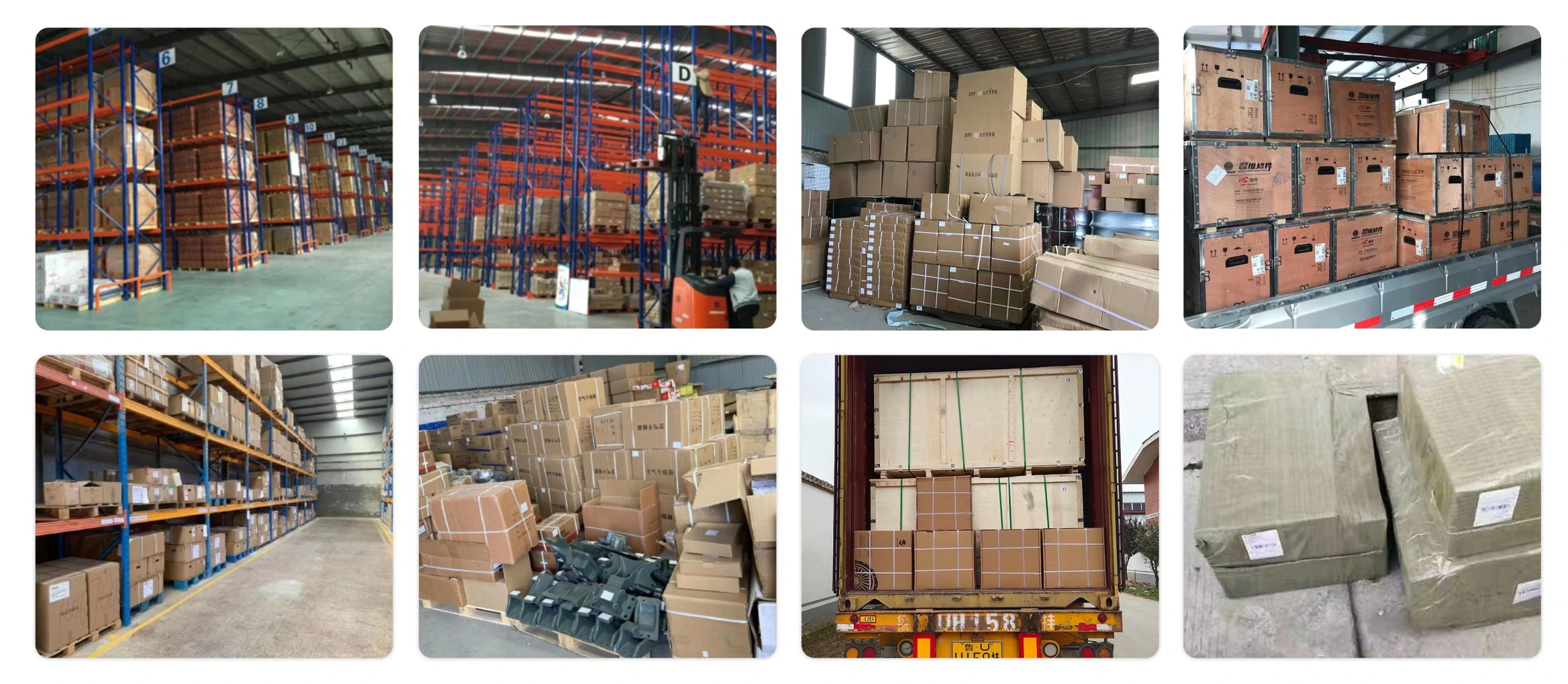
This packaging approach minimizes the risk of corrosion or impact damage, ensuring that parts like the FAW Cylinder Block Assembly arrive in perfect condition. Customers can rely on FAW’s logistics for consistent quality and reliability.